Cognitive Development Tracing Shapes Worksheets for Ages 3-5
4 filtered results
-
From - To
Boost your child's cognitive development with our engaging Tracing Shapes Worksheets, designed specifically for ages 3-5. These printable worksheets are perfect for early learners to enhance their fine motor skills, shape recognition, and hand-eye coordination. Each activity combines fun and learning, guiding kids through tracing circles, squares, triangles, and more! These interactive worksheets pave the way for success in math and handwriting, setting a strong foundation for future learning. Easy to download and print, they offer a fantastic, educational experience both at home and in the classroom. Give your child a head start on their educational journey today!
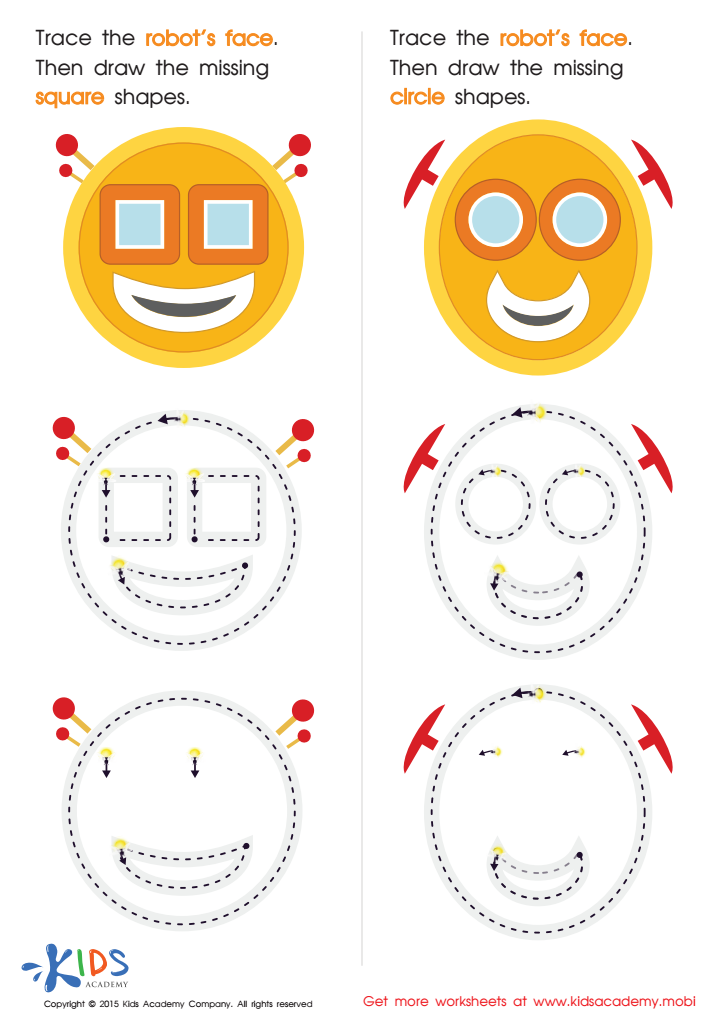
Practicing to Draw Circles And Squares Printable
 Assign to My Students
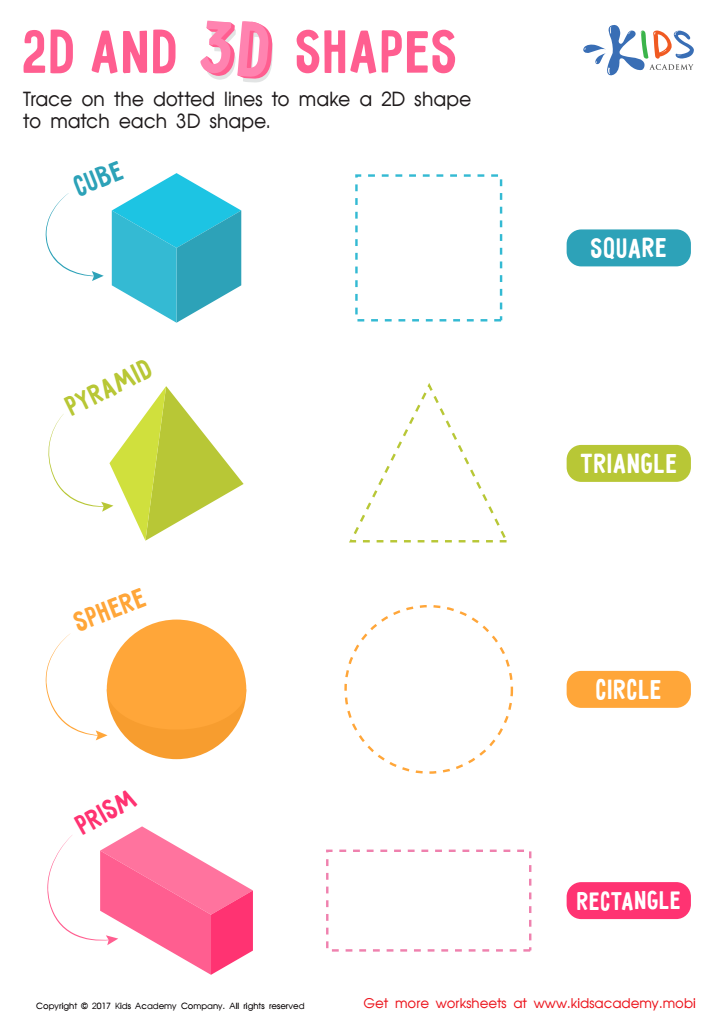
2D and 3D Shapes Worksheet
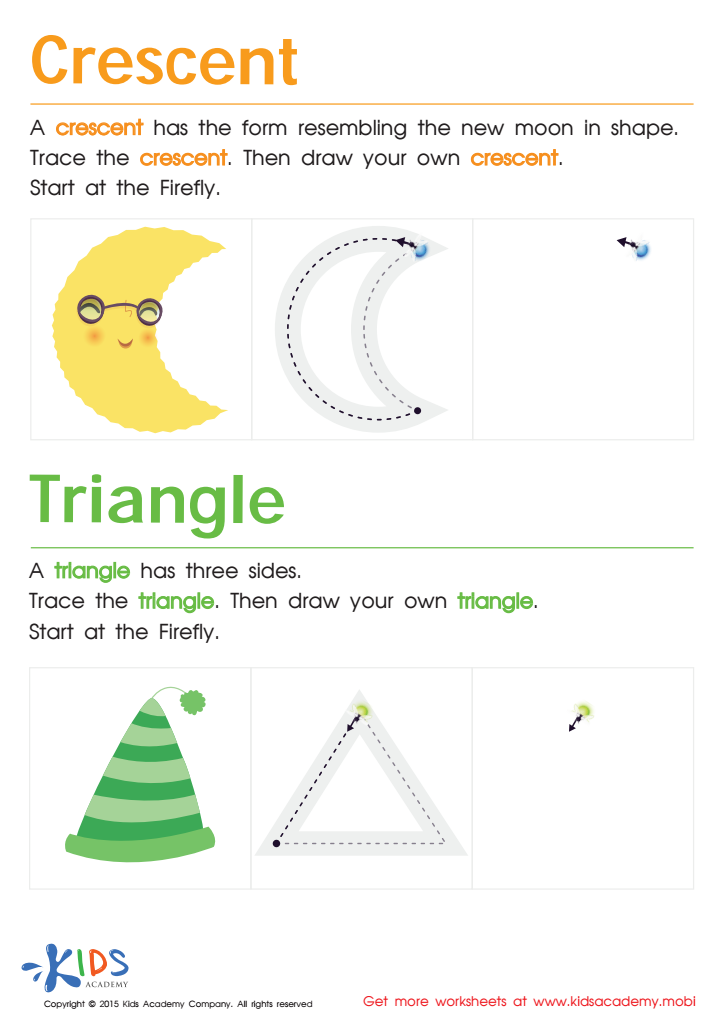
Learning to Draw Crescents And Triangles Worksheet
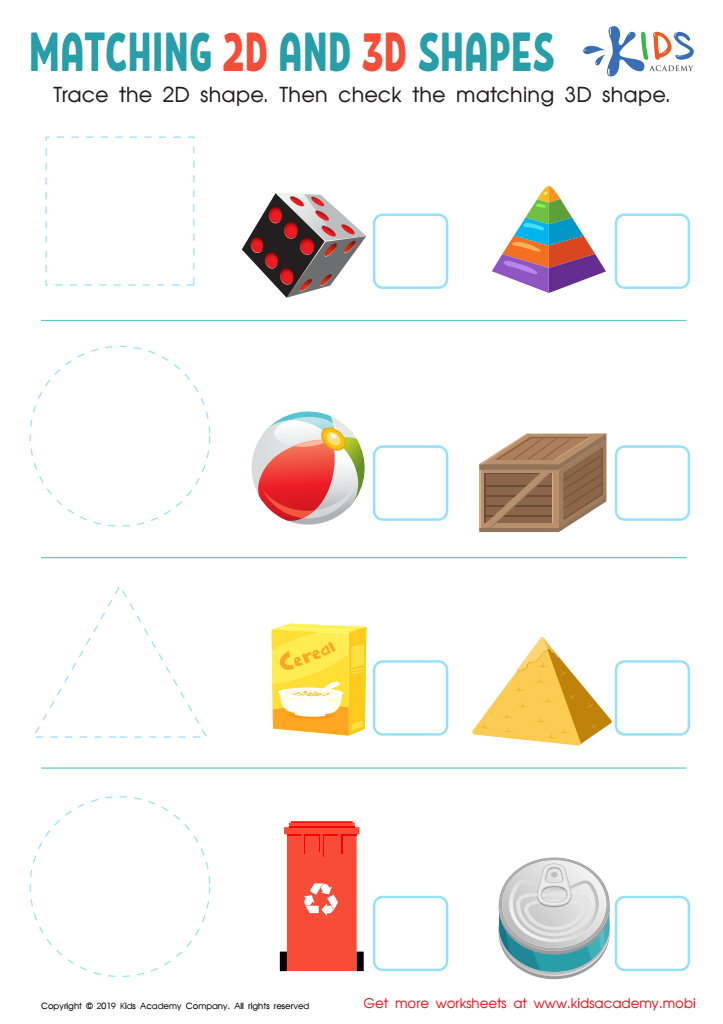
Matching 2D and 3D Shapes Worksheet








Cognitive development tracing shapes for ages 3-5 is crucial because it lays the foundation for various essential skills that children will use throughout their academic journey and daily life. At this early age, tracing shapes is not just about learning geometry but also about enhancing fine motor skills, hand-eye coordination, and spatial awareness. When children trace shapes, they are developing the muscles in their hands and fingers, which are vital for writing and other precise manual activities.
Moreover, this activity promotes concentration and patience, which are key components of cognitive development. As young learners focus on following the lines of each shape, they enhance their ability to pay attention to detail and complete tasks methodically. It also fosters problem-solving skills, as children learn to recognize patterns and predict the shapes, boosting their visual and memory retention abilities.
In addition, tracing shapes introduces basic mathematical concepts such as geometry, size comparison, and positions in space (above, below, next to), which are foundational for more complex mathematical reasoning in later years. Recognizing and understanding different shapes lays the groundwork for object categorization and logical thinking. Thus, parents and teachers should prioritize this activity to support holistic cognitive development in young children, preparing them for future educational success.