Categorization skills Reading Worksheets for Ages 3-5
3 filtered results
-
From - To
Enhance your child’s learning experience with our engaging Categorization Skills Reading Worksheets, designed specifically for ages 3-5. These worksheets focus on helping young learners develop essential skills in sorting and organizing objects and concepts. Through vibrant illustrations and interactive activities, children will practice identifying similarities and differences, reinforcing their understanding of categories. Perfect for at-home learning or classroom activities, these worksheets encourage critical thinking and enhance vocabulary, laying a strong foundation for future reading success. Explore imaginative ways to boost your child's cognitive abilities and make learning fun with our carefully curated resources! Accessibility and creativity come together for little learners.
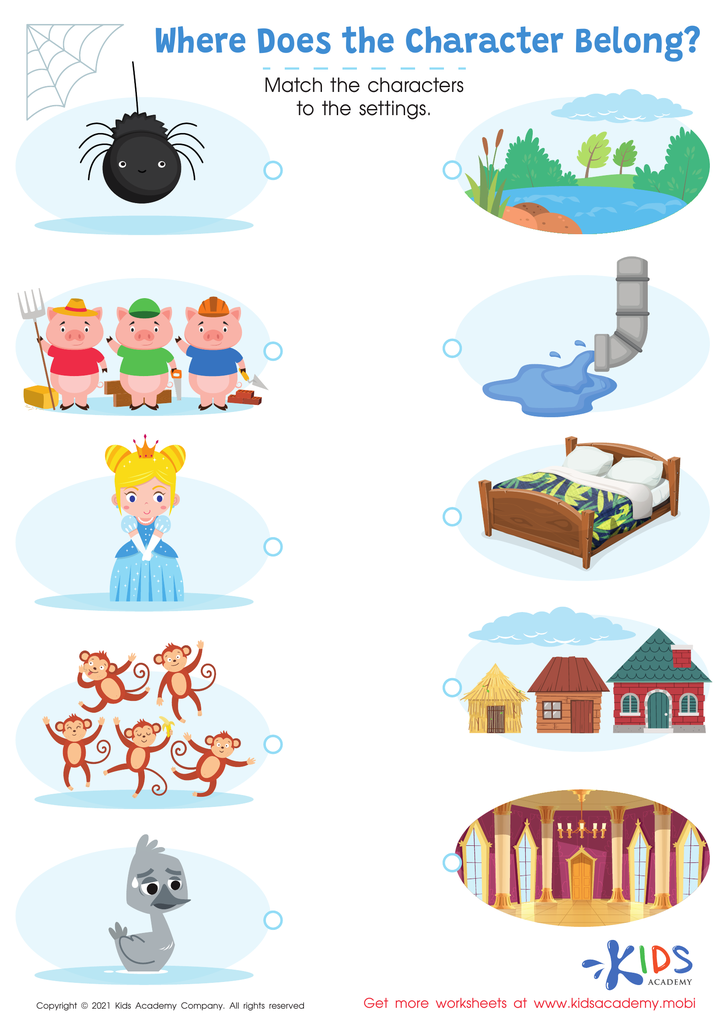
Where Does the Character Belong? Worksheet
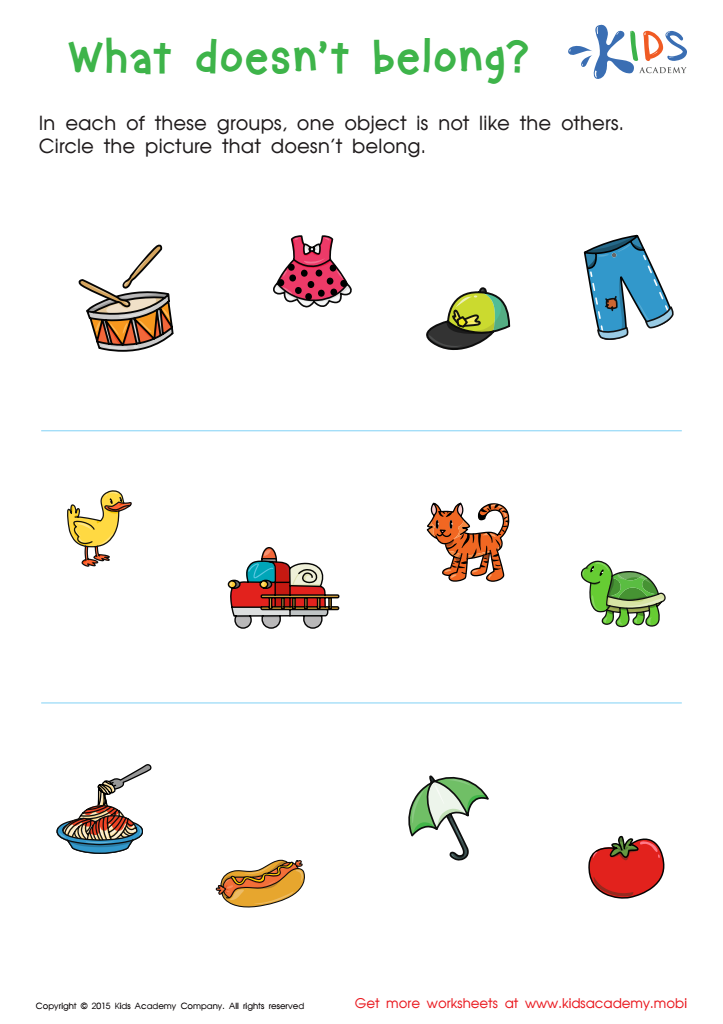
First Words: What Doesn't Belong Worksheet
 Assign to My Students
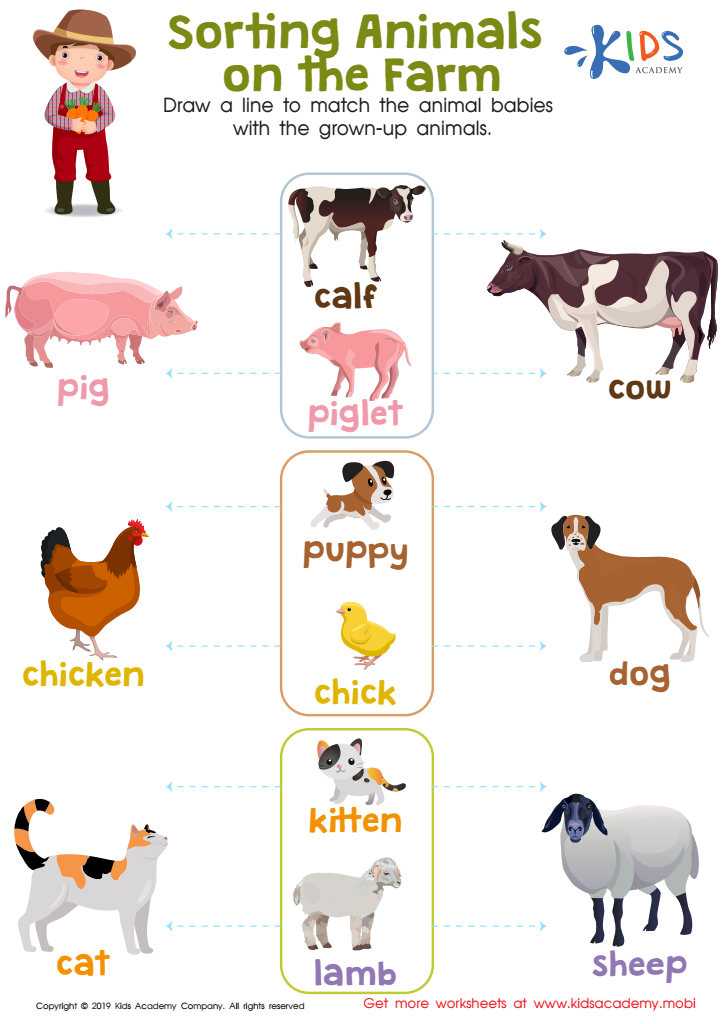
Sorting Animals on the Farm Worksheet



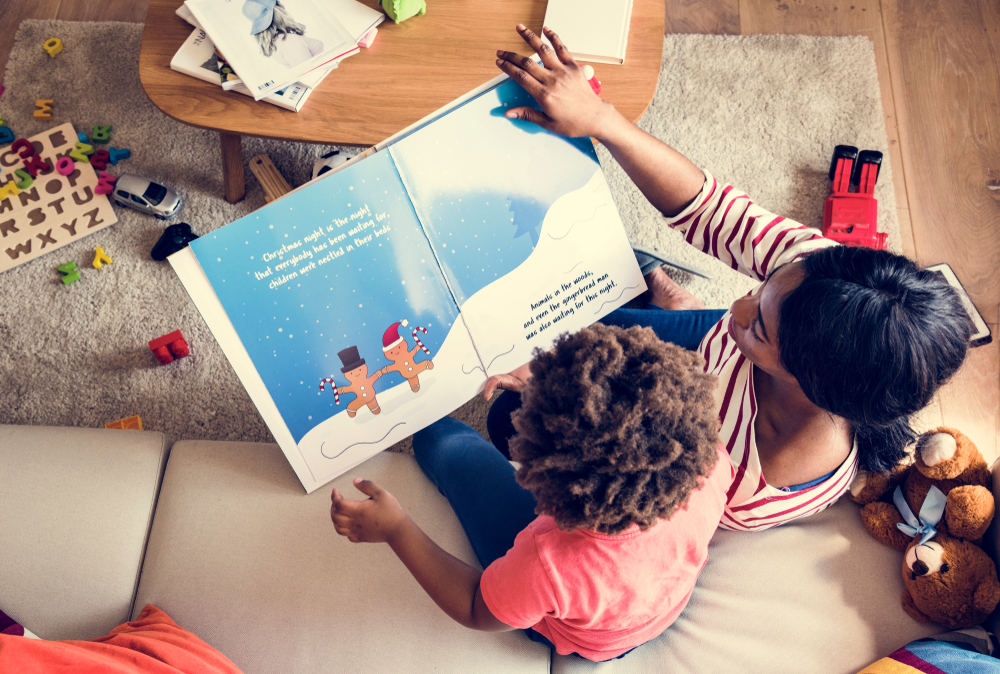

Categorization skills are essential for early reading development in children aged 3-5. At this stage, young learners are not only exploring words and sounds but also beginning to understand how to group objects and ideas based on shared characteristics. Teachers and parents should prioritize these skills because they lay the foundation for critical thinking and comprehension.
First, categorization enhances vocabulary acquisition. When children identify and group similar items—such as animals, colors, or shapes—they begin to make connections between words, which enriches their language skills. For example, learning the group “pets” helps them understand and remember words like "dog," "cat," and "fish".
Additionally, these skills promote cognitive development by encouraging children to use logic and reasoning. Sorting objects or understanding differences and similarities sharpens their analytical thinking, which is essential for problem-solving.
Finally, categorization fosters reading comprehension. Children who can classify and relate information are more skilled at understanding texts and can predict what will happen next in a story. By incorporating categorization activities into daily routines or lessons, parents and teachers can significantly enhance early literacy, setting the stage for successful reading experiences later on.








