Filters

7 filtered results

Clear all filters
Favorites
With answer key
Interactive

7 filtered results

Difficulty Level

Grade


Explore our engaging Cognitive Development Science Worksheets designed for children aged 3-5! These carefully crafted activities promote critical thinking, problem-solving, and observational skills in young learners. Featuring interactive tasks that encourage exploration of their surroundings, our worksheets provide a fun and educational way to support cognitive growth. Children will delight in activities that stimulate curiosity about the world, enhance their ability to categorize and compare, and foster a love for science. Perfect for at-home learning or classroom use, these worksheets set the foundation for future learning experiences. Start your journey into cognitive discovery today!

Check out this FREE Trial Lesson on Science for age 3-5!

What Do Animals Need?

Favorites
With answer key
Interactive
  • 3-5
  • Cognitive Development
  • Science
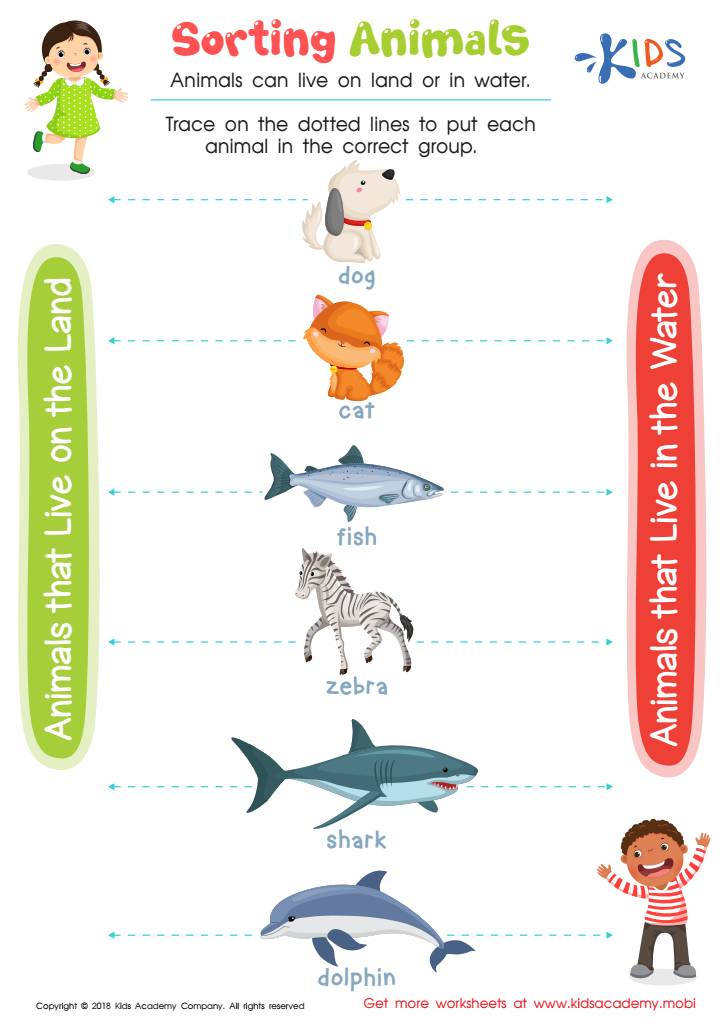
Sorting Animals Worksheet

Sorting Animals Worksheet

Your kids will love this free, interactive worksheet! With image clues, they can read and trace the animal names, and then sort them into groups of land or water animals. It's an enjoyable way to boost their critical thinking, fine motor and prior knowledge skills.
Sorting Animals Worksheet
Worksheet
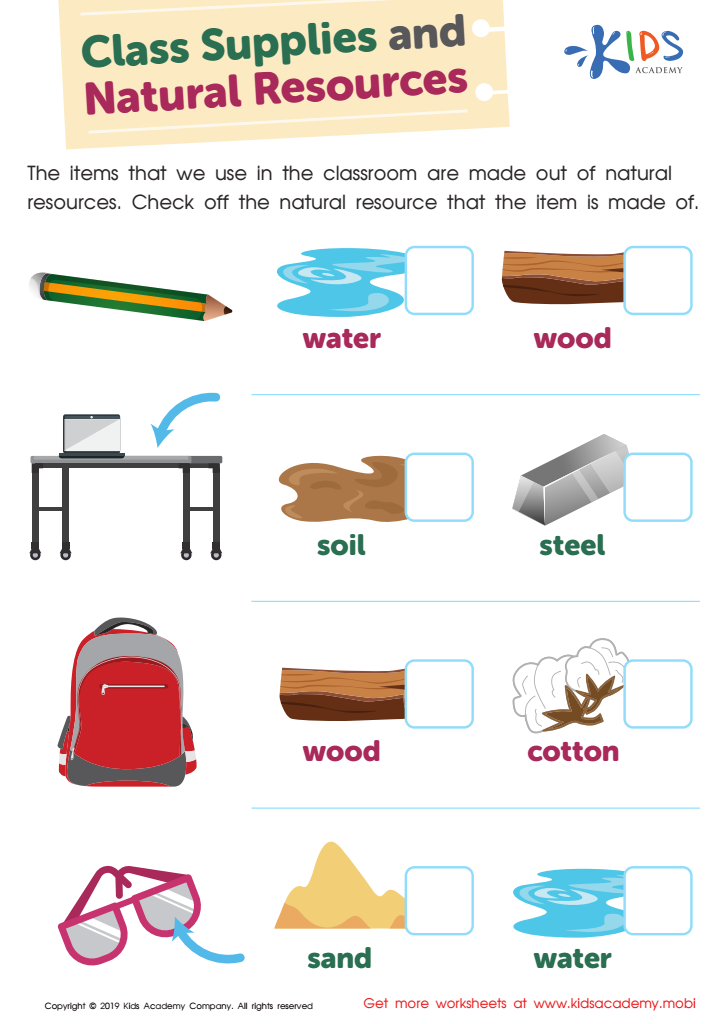
Class Supplies and Natural Resources Worksheet

Class Supplies and Natural Resources Worksheet

Look around the classroom with your students. Can they identify objects and name their natural resources? E.g. wood, cotton, steel. Ask your child to find an object made from wood. Then, look at this worksheet together. Ask your students to identify each object and check off the natural resource it's made from.
Class Supplies and Natural Resources Worksheet
Worksheet
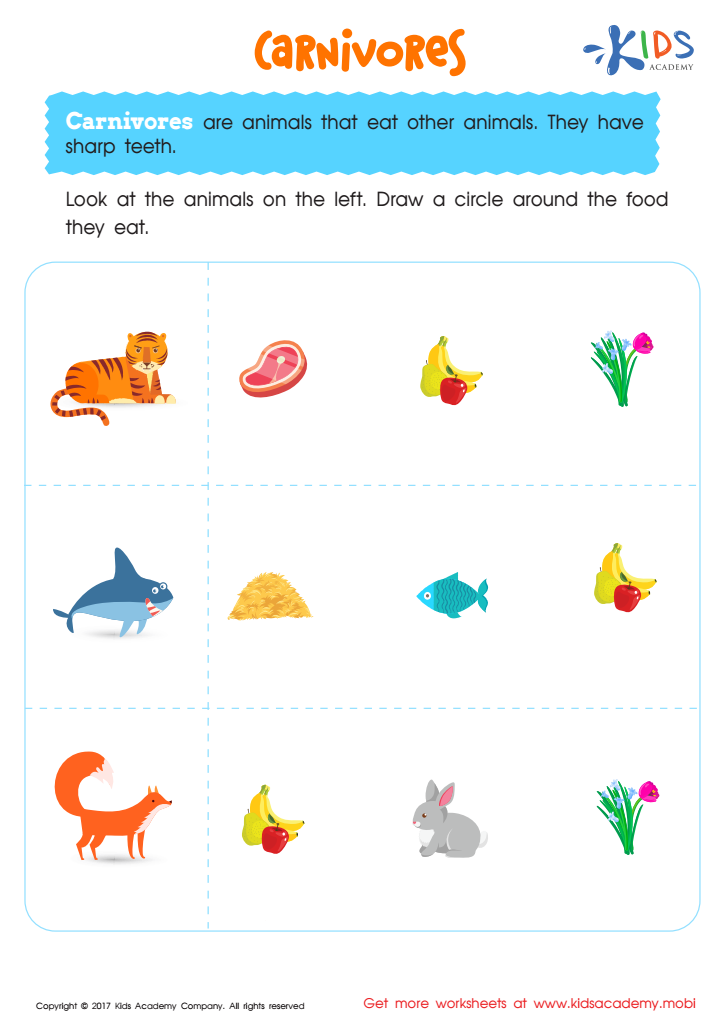
Carnivorous animals worksheet

Carnivores Worksheet

Boost their vocabulary and help them explore the incredible world of carnivores.
Carnivores Worksheet
Worksheet
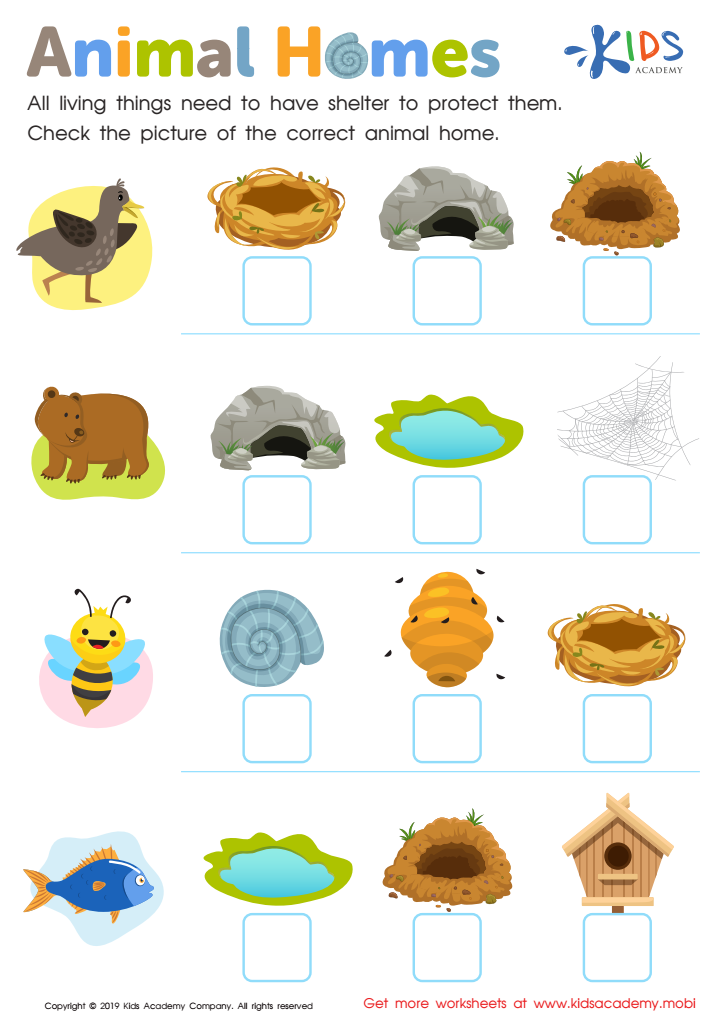
Animal Homes Worksheet

Animal Homes Worksheet

Students have homes where they can do things they love, sleep and stay safe from bad weather. Check the worksheet for animals and their shelters. Ask your kids to identify each and match the animal home to the picture. (80 words)
Animal Homes Worksheet
Worksheet
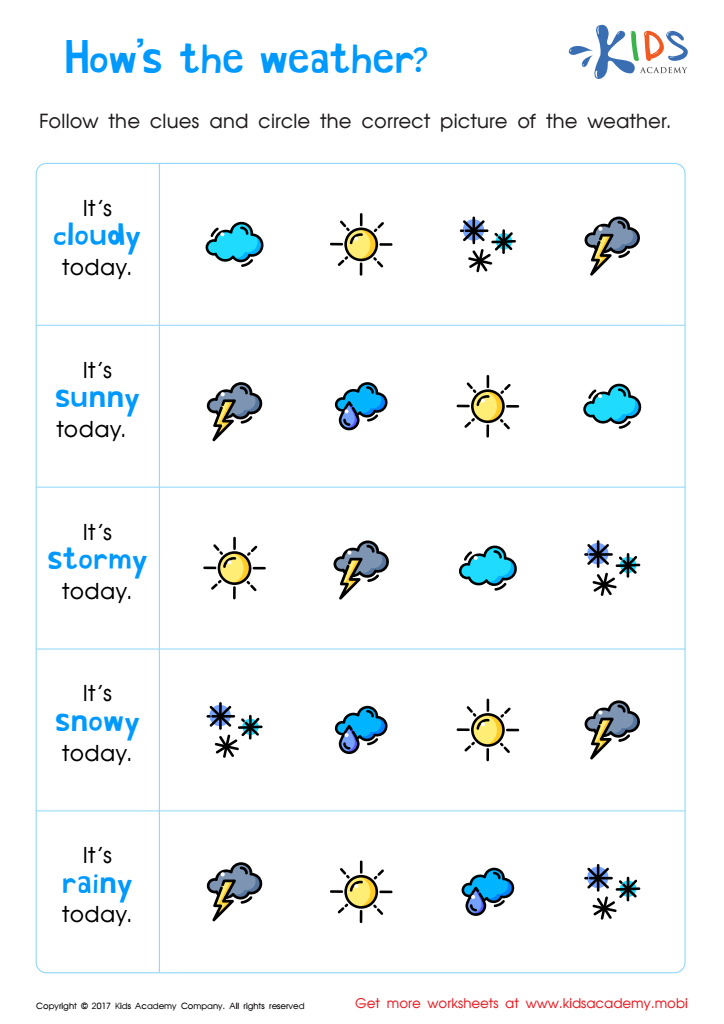
How’s the Weather Printable Worksheet

Hows the Weather Worksheet

Teaching kids about weather is a fun way to start science learning. This worksheet helps recognize symbols, literacy skills and make real world connections. Your child will love it!
Hows the Weather Worksheet
Worksheet
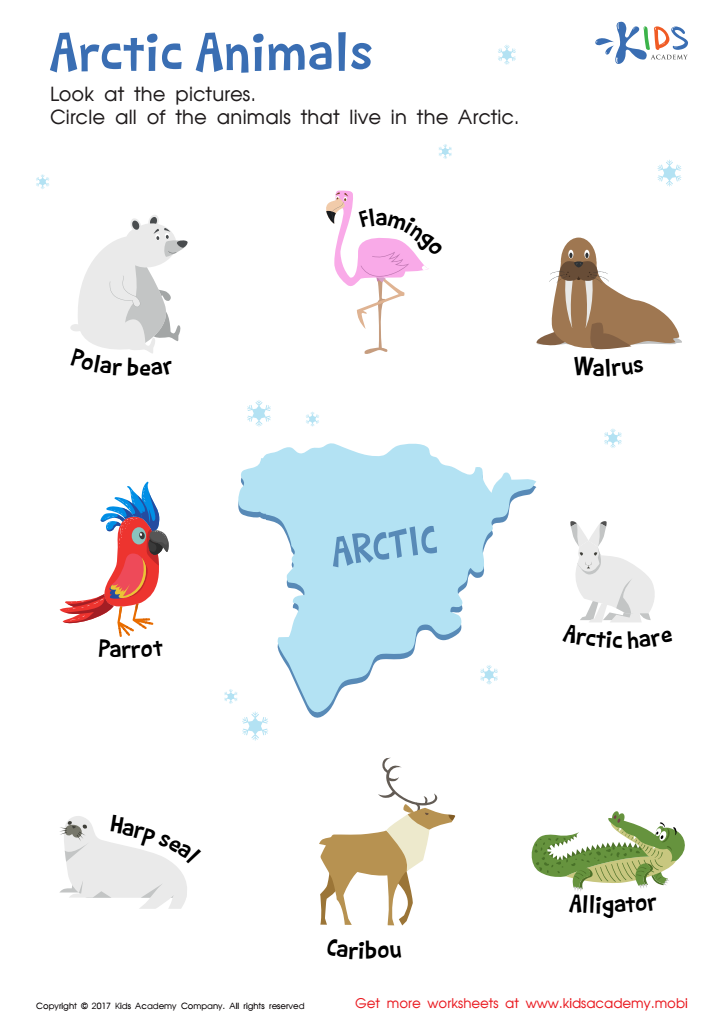
Arctic Animals Worksheet

Arctic Animals Worksheet

Kids love animals and this worksheet is a great way to teach them where they live. It reinforces classification skills and introduces new animals, like the Arctic hare. Use it to discuss the Arctic climate and how these animals live, then ask your child where other animals live to keep the conversation going.
Arctic Animals Worksheet
Worksheet
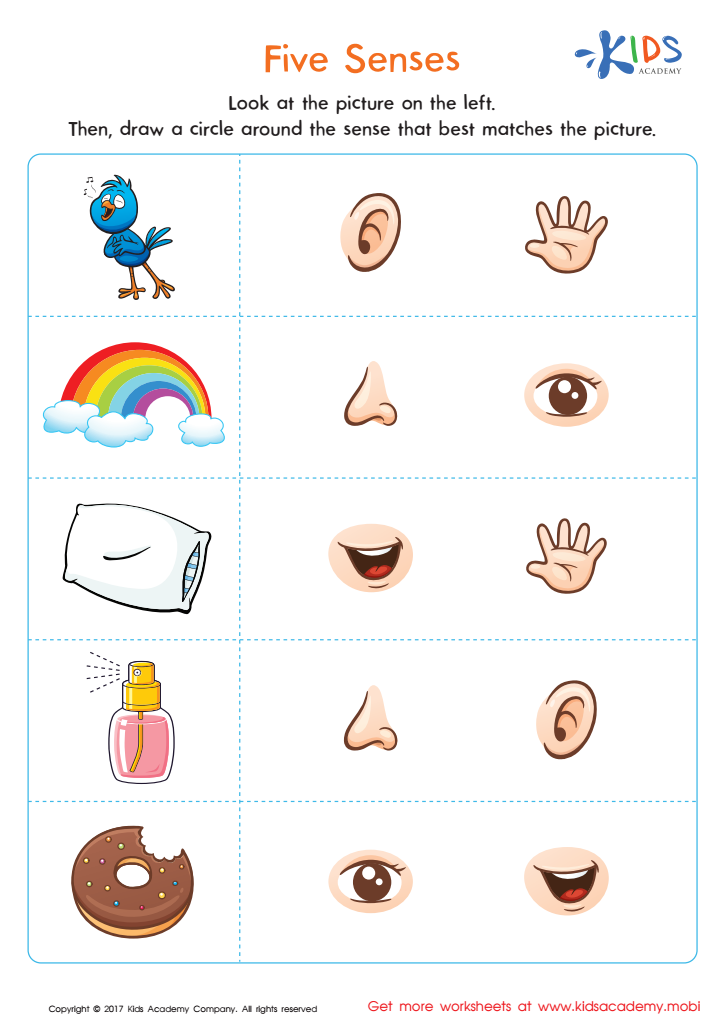
Free Printable Five Senses Worksheets

Five Senses Printable

For an easy way to jumpstart your child's critical thinking and introduce the five senses, print our free worksheets! These are great for reviewing each sense and practicing critical thinking skills. Work with your child and discuss each image. After completing the worksheet, find objects around the house so they can quiz themselves!
Five Senses Printable
Worksheet


Cognitive development science for ages 3-5 is crucial for parents and teachers because this period represents a foundational stage in a child's growth. During these years, children develop vital thinking skills, including problem-solving, memory, and language proficiency that form the bedrock for future academic success and social-emotional wellbeing. Understanding cognitive development helps adults grasp how children learn, process information, and interact with their surroundings.

Moreover, engaging with cognitive development science enables parents and teachers to create enriching environments tailored to children's needs. A solid comprehension of concepts such as the stages of development, the importance of play in learning, and the impact of social interactions allows adults to design age-appropriate activities that foster critical thinking and creativity.

Additionally, early intervention strategies can be identified to support children who may have developmental delays or challenges, setting them on a path to success. Recognizing the significance of cognitive milestones encourages positive reinforcement and facilitates effective communication, enabling children to articulate their thoughts and feelings better.

In essence, cognitively informed parents and teachers actively contribute to nurturing well-rounded, competent learners who are prepared to thrive in school and beyond.