Environmental awareness Science Worksheets for Ages 3-5
5 filtered results
-
From - To
Introduce young learners to the wonders of nature with our "Environmental Awareness Science Worksheets for Ages 3-5". Designed to nurture curiosity and teach responsibility, these fun and engaging activities help children understand the importance of caring for our planet. Through coloring, matching, and simple experiments, preschoolers and kindergarteners will learn about recycling, plant life, and ways to protect the environment. Our worksheets foster a love for science while encouraging eco-friendly habits. Ideal for early childhood educators and parents, these printable resources make early environmental education accessible and enjoyable. Explore today and inspire the next generation of green thinkers!
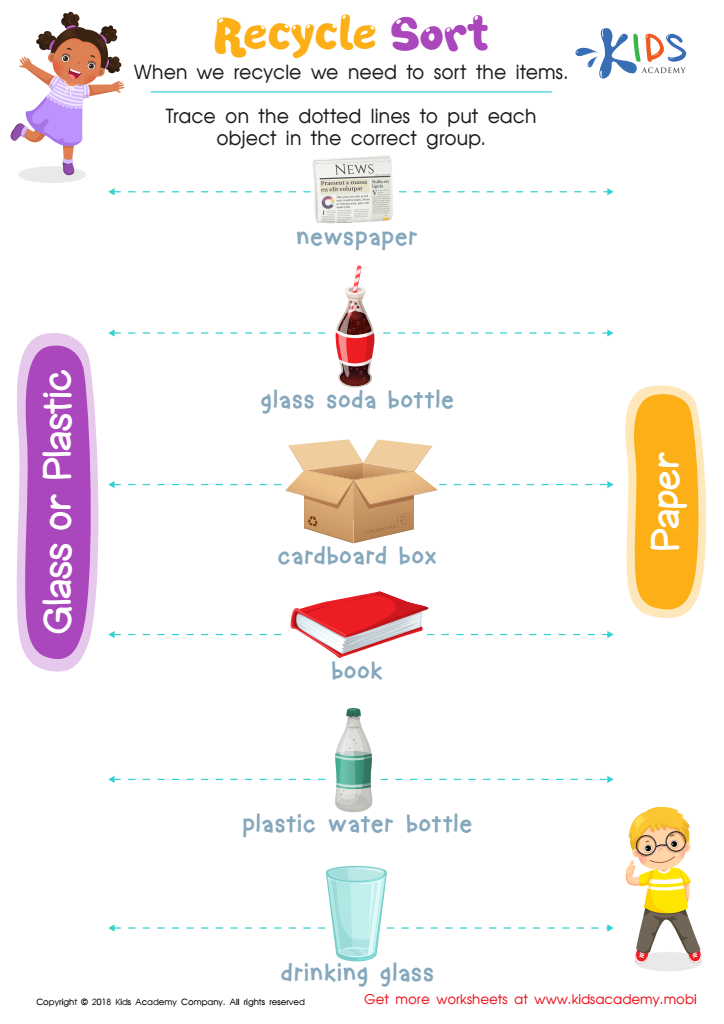
Recycle Sort Worksheet
 Assign to My Students
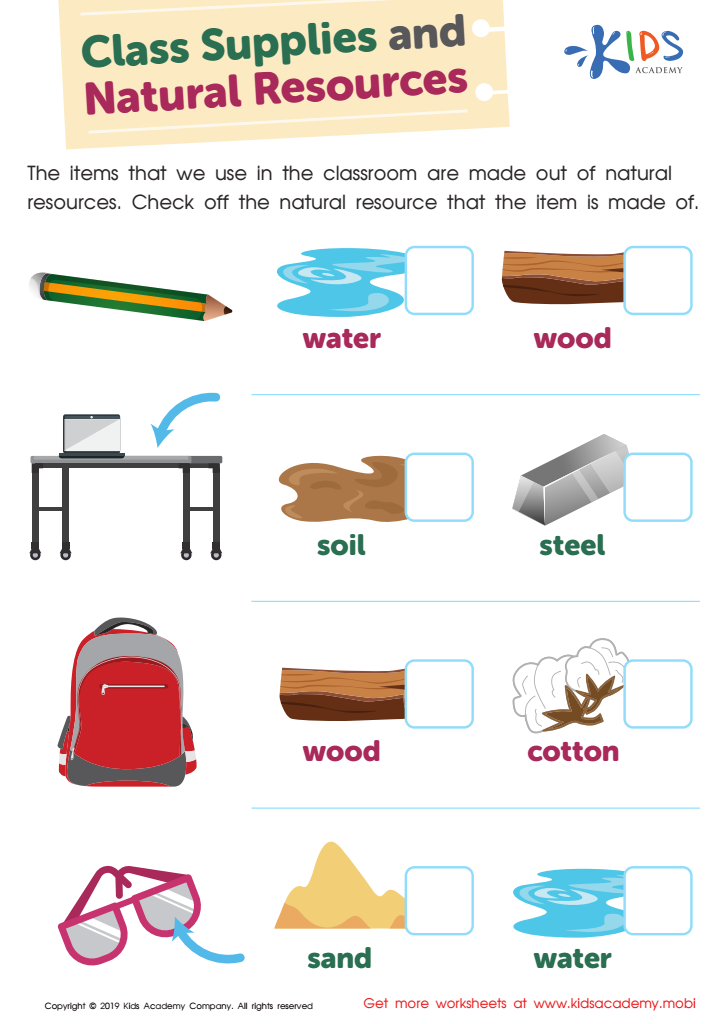
Class Supplies and Natural Resources Worksheet
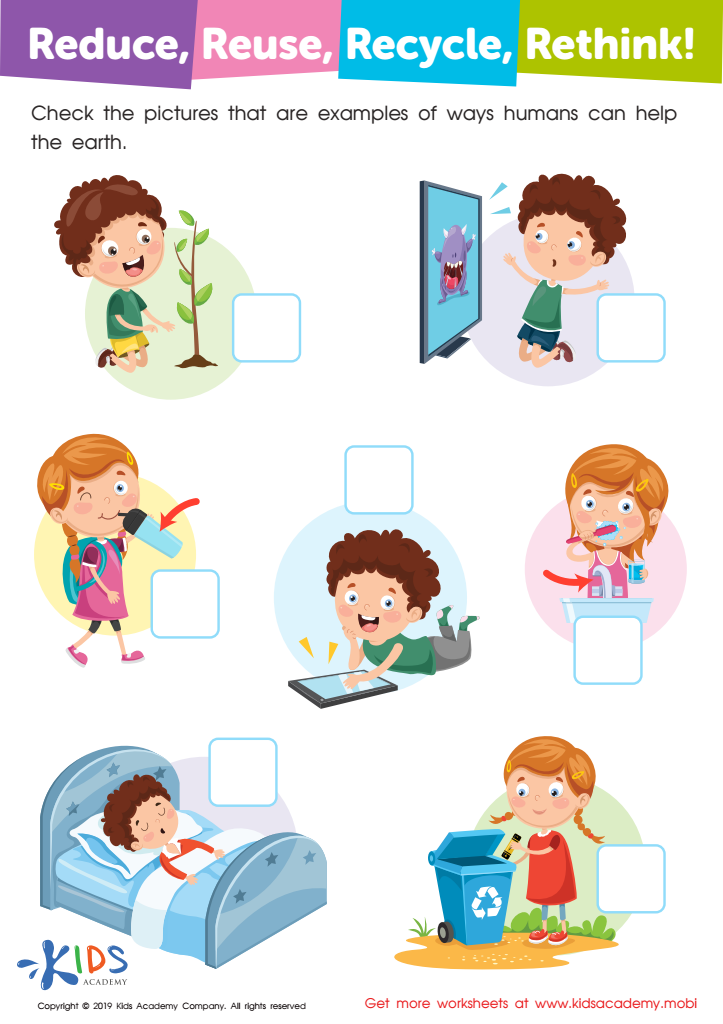
Reduce, Reuse, Recycle, Rethink Worksheet
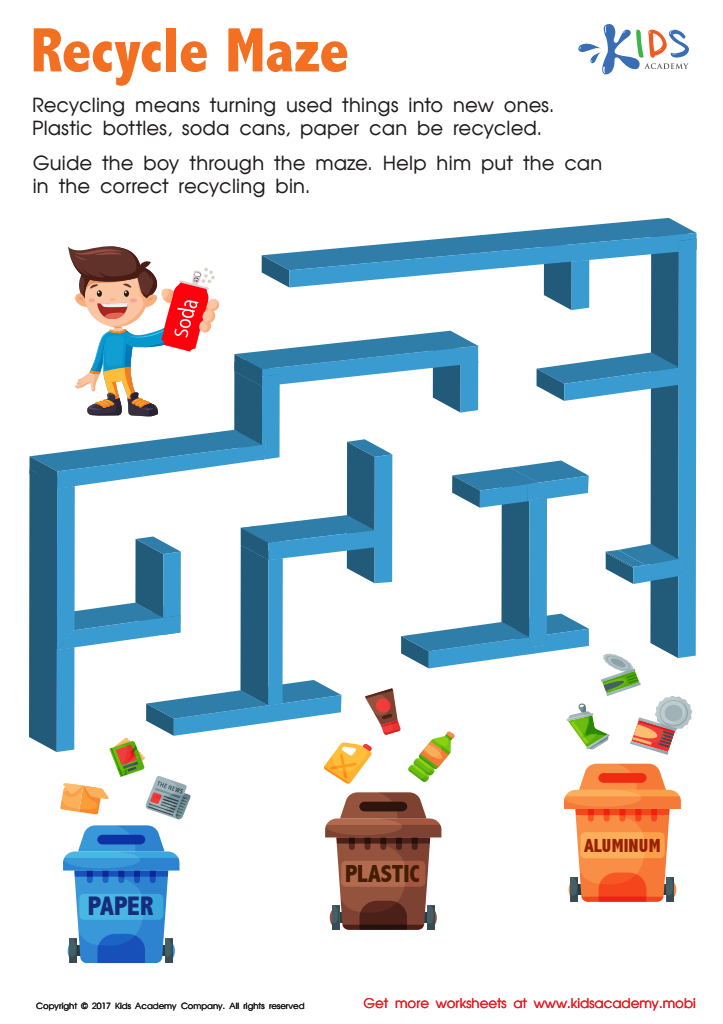
Recycle Maze Worksheet
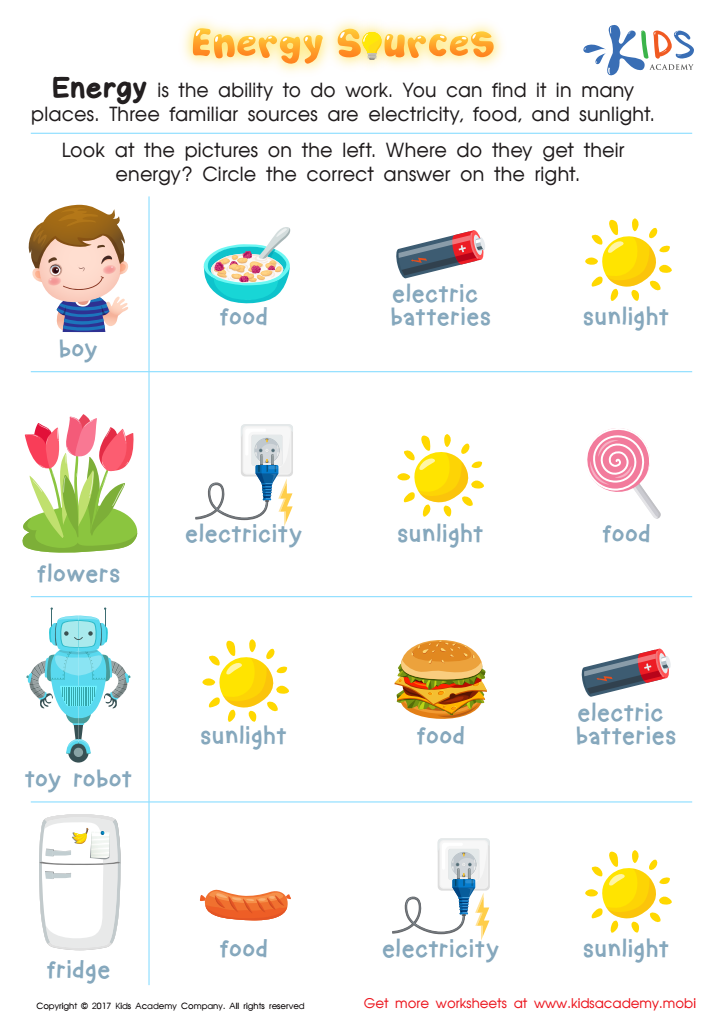
Energy Sources Printable







Environmental awareness is crucial for young children, and fostering this awareness from ages 3-5 has lasting benefits. At this impressionable age, children are developing their understanding of the world around them and forming habits that can last a lifetime. Teaching environmental awareness early on instills a sense of responsibility and respect for the natural world, encouraging behaviors that can lead to sustainable living.
Children who learn about the environment can develop an appreciation for nature, which promotes curiosity, creativity, and a sense of wonder. Simple activities like recycling, conserving water, and understanding where food comes from can make abstract concepts tangible for young minds. This foundational knowledge helps them understand their role in protecting the environment and the impact their actions can have.
Moreover, these early lessons in environmental science can contribute to a healthier lifestyle, as children learn the importance of clean air, water, and nutritious food. Engaging activities, such as planting trees or going on nature walks, not only promote physical activity but also family bonding and critical thinking.
Ultimately, nurturing environmental awareness in young children instills values and skills that benefit both them and the planet. Parents and teachers who prioritize this education are paving the way for a generation that is informed, responsible, and proactive in caring for our world.







