
Observational skills Science Worksheets for Ages 3-5
3 filtered results
Difficulty Level
Grade
Age
-
From - To
Subject
Activity
Standards
Help your child develop keen observational skills with our Science Worksheets for Ages 3-5. At Kids Academy, we offer engaging and educational activities designed to boost your child’s curiosity and attention to detail. Each worksheet encourages young learners to observe, compare, and identify various objects in their environment, aiding in the development of critical thinking and sensory skills. Perfect for early learners, our fun illustrations and interactive exercises make learning an adventure. Foster a love for science and exploration in your little one with our expertly crafted observational skills worksheets. Start your child’s educational journey today!
Favorites
With answer key
Interactive
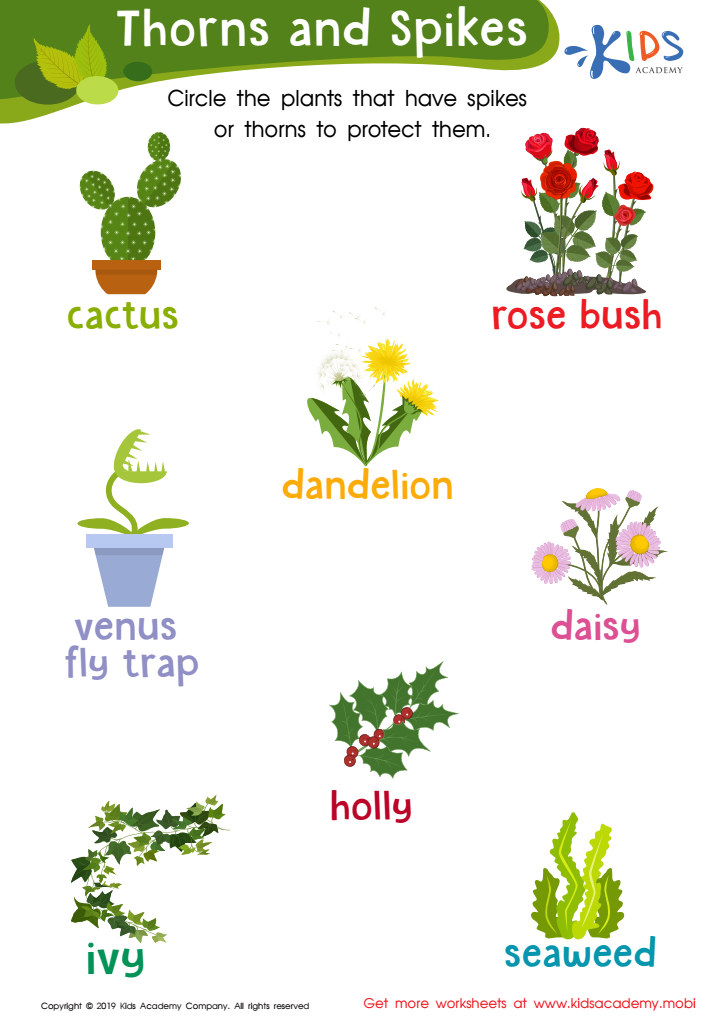
Thorns and Spikes Worksheet
Can your students name and identify the plants and flowers in this worksheet? Ask them to read out the names and circle the ones with spikes or thorns. Help them appreciate nature's beauty and understand how plants protect themselves.
Thorns and Spikes Worksheet
Worksheet
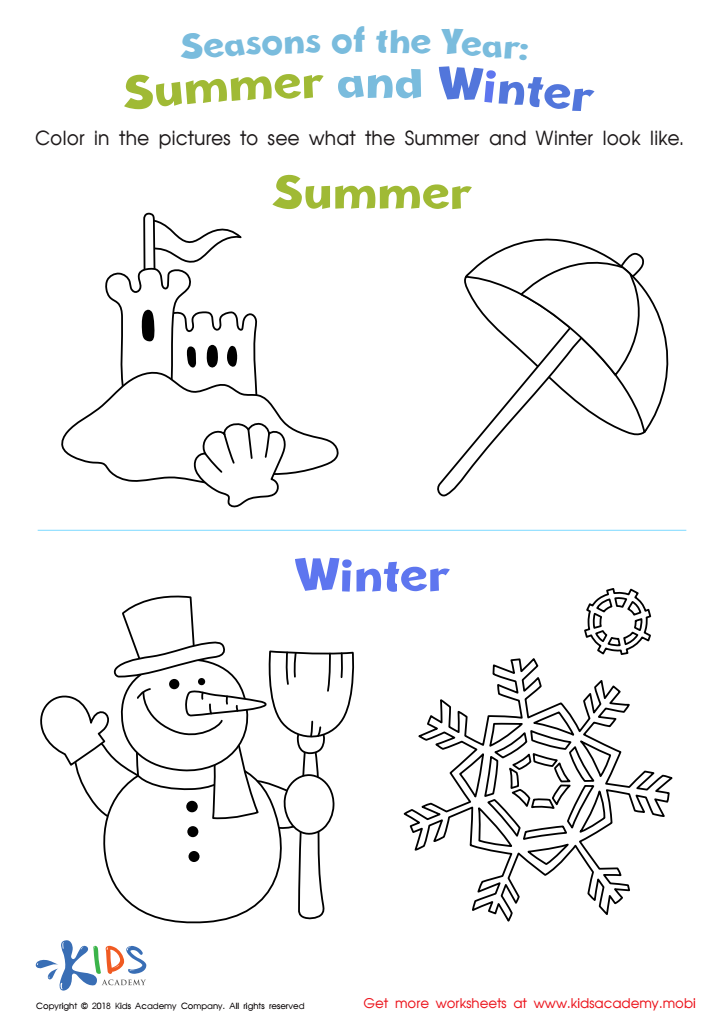
Summer and Winter Worksheet
Ask your child what they associate with winter and summer. What do they look forward to in winter? What colors do they see most? What do they love doing in summer? Help them color in the pictures of winter and summer in the worksheet, choosing the colors they think best represent each season.
Download (PDF)
 Assign to My Students
Assign to My Students
Summer and Winter Worksheet
Worksheet
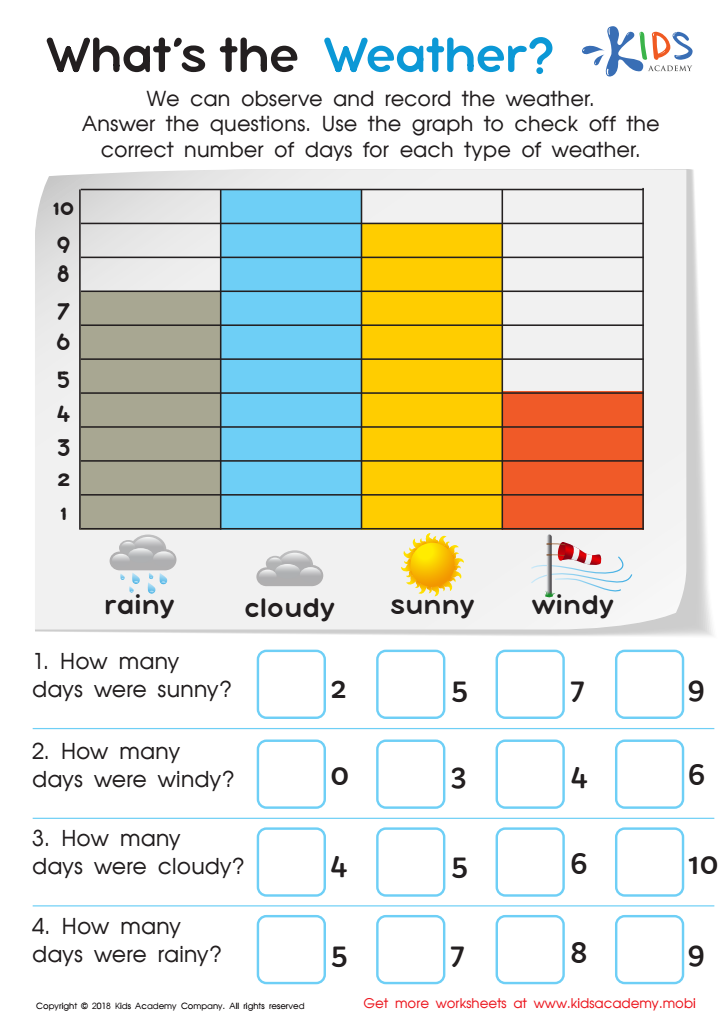
What's the Weather? Worksheet
Check the weather outside. Help kids learn and practice science and math by tracking different types of days using this printable worksheet. Have them count bars next to weather types like cloudy, sunny, windy, and rainy. Answer the questions and take the lesson further by creating a bar graph to show the monthly weather.
What's the Weather? Worksheet
Worksheet
Join Kids Academy for Free
Who is primarily going to use this learning content?


.jpg)





Cultivating observational skills in children aged 3-5 is crucial for their cognitive and social development. During these early years, kids are naturally curious and inclined to explore their environment. By honing their ability to observe, parents and teachers can lay a strong foundation for critical thinking and problem-solving abilities.
Observational skills allow children to notice details, compare and contrast objects, and recognize patterns, which are essential components of early science education. When kids observe changes in the weather, different types of plants, or how objects interact, they start to understand basic scientific concepts about the world around them.
Additionally, developing these skills supports language growth. As children describe what they see, they expand their vocabulary and improve their ability to articulate thoughts. This not only strengthens communication skills but also enhances social interactions as children learn to share observations and cooperate on tasks with peers.
For teachers and parents, fostering observational skills can be as simple as encouraging curiosity during everyday activities. This might involve asking open-ended questions like, "What did you notice about that flower?" or "How is this shape different from that one?" Investing in this natural curiosity at an early age prepares children for future learning, giving them tools to approach challenges thoughtfully and creatively.







