Animal Classification Plants and Animals Worksheets for Ages 3-5
4 filtered results
-
From - To
Explore the fascinating world of animal classification with our engaging worksheets designed for ages 3-5! These printable activities introduce young learners to essential concepts about plants and animals, fostering early science skills. Through fun illustrations and interactive exercises, children will categorize various animals, learn about their habitats, and discover the differences between species. Our worksheets help stimulate curiosity and critical thinking while enhancing fine motor skills. Perfect for classrooms or home learning, these resources provide a playful approach to understanding biodiversity. Dive into animal classification today and watch your little ones' excitement for nature grow!
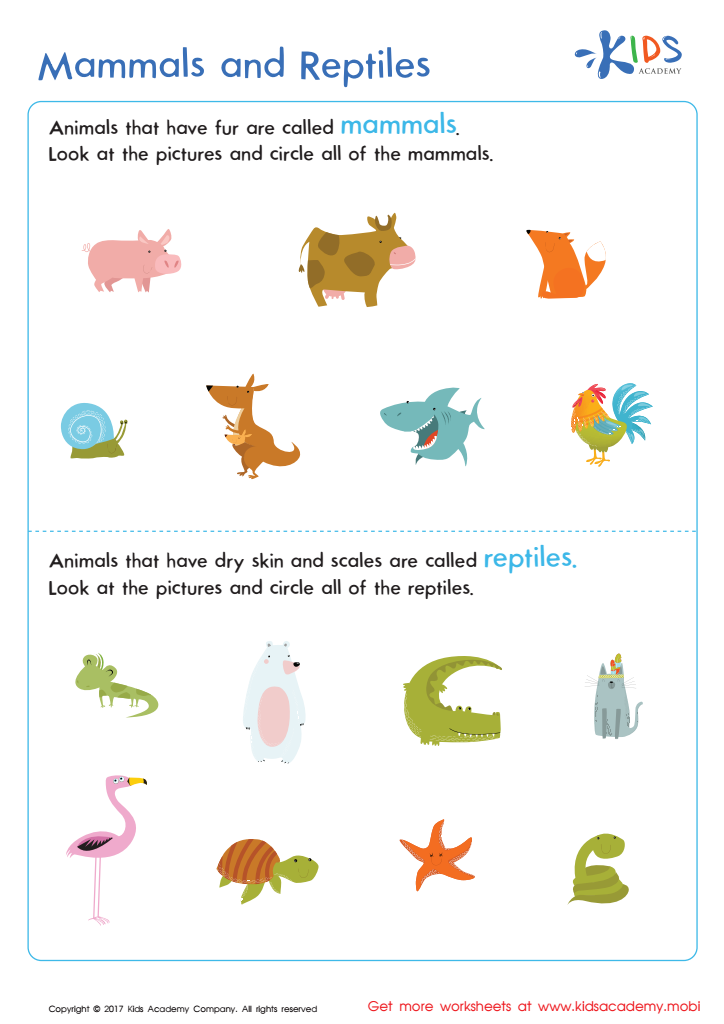
Mammals and Reptiles Worksheet
 Assign to My Students











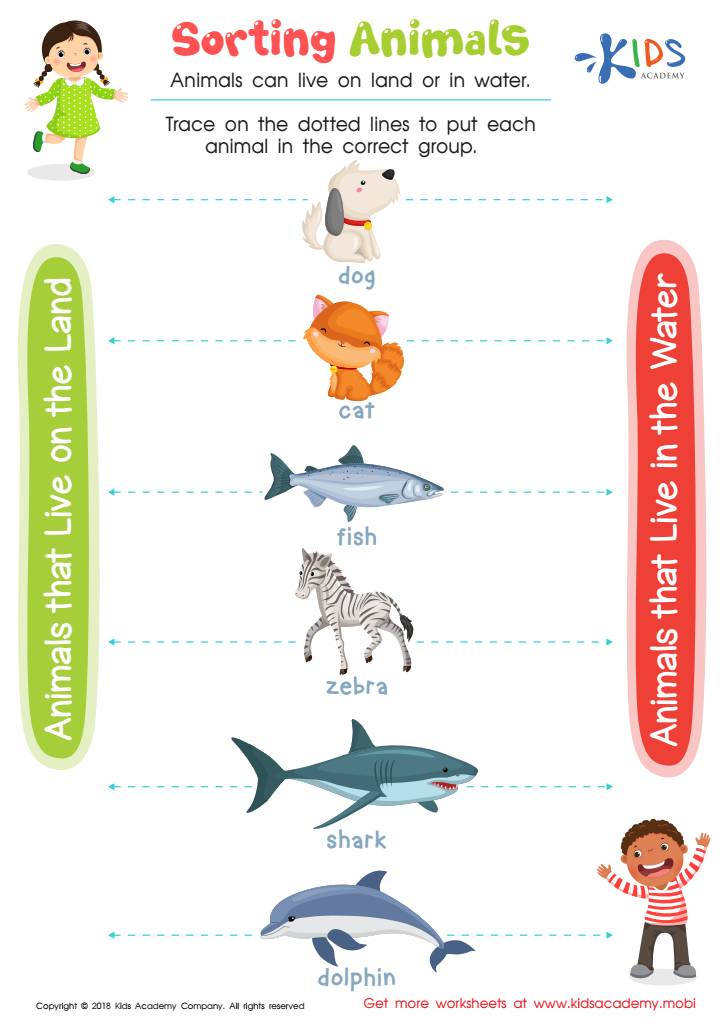
Sorting Animals Worksheet
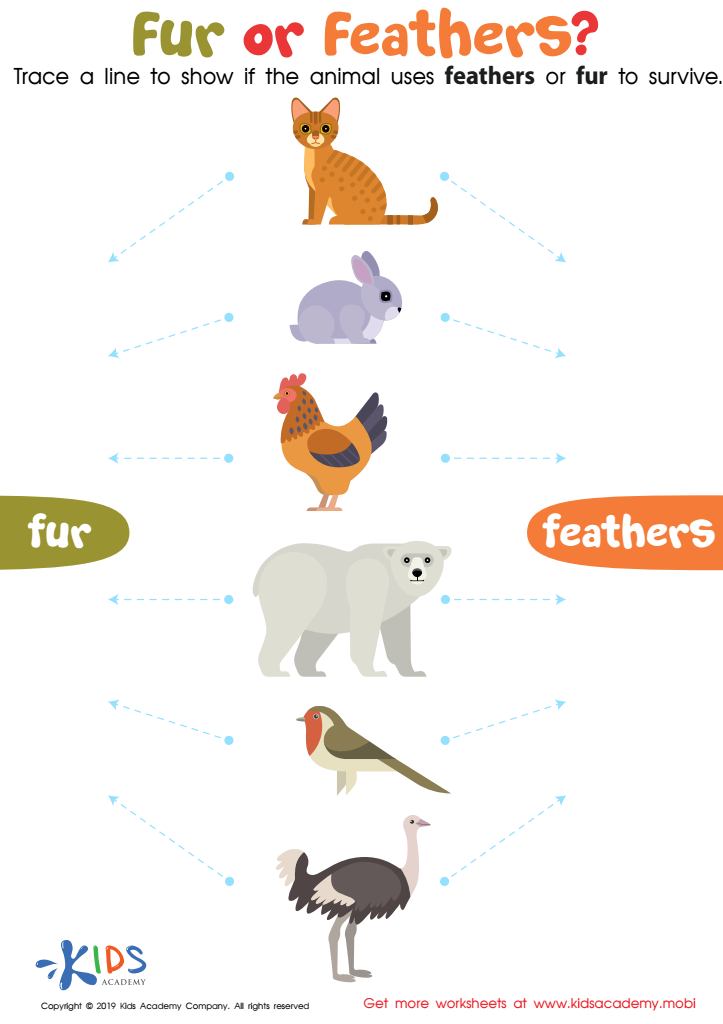
Fur or Feathers? Worksheet
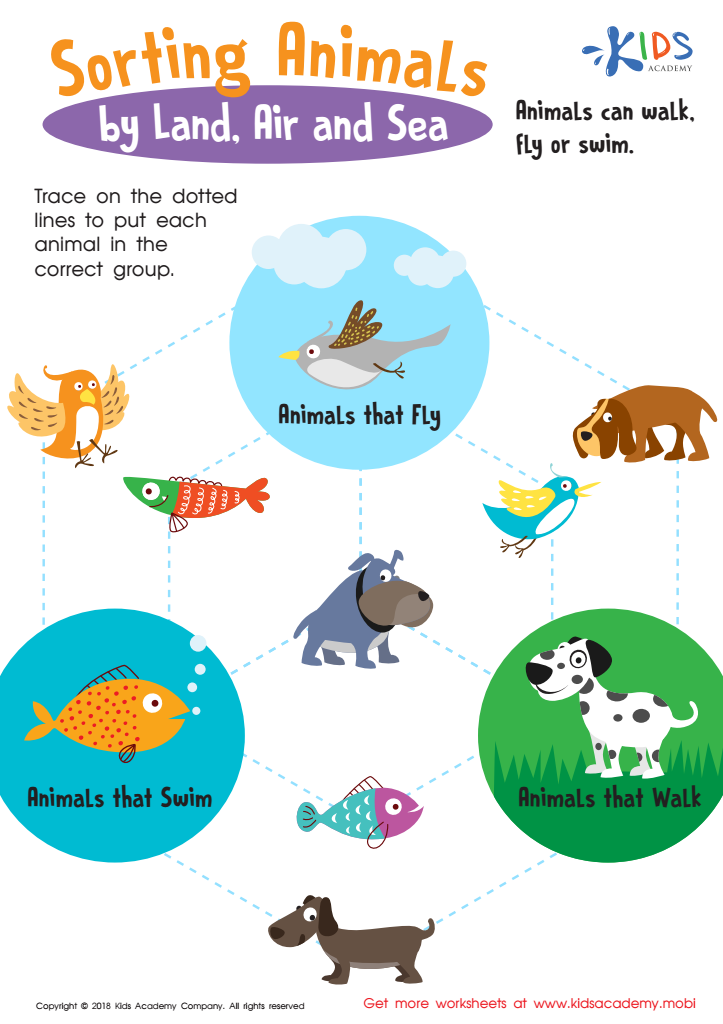
Sorting Animals by Land, Air and Sea Worksheet








Understanding animal classification is crucial for children aged 3-5 as it lays the foundation for their scientific literacy. At this age, curiosity about the natural world is blossoming, and learning about different types of animals and plants sparks that innate curiosity. When parents and teachers engage children in this subject, they facilitate an early appreciation for biodiversity and ecosystems, fostering a sense of stewardship toward the environment.
Animal classification teaches children to recognize patterns and similarities in different species, enhancing cognitive skills such as critical thinking and categorization. It encourages them to ask questions, explore their surroundings, and connect with nature through play-based learning. By introducing children to concepts like mammals, birds, amphibians, and plants, they can develop language skills while expanding their vocabulary.
Furthermore, early exposure to these concepts promotes empathy and respect for all living beings, important values for developing compassionate individuals. Engaging in fun and interactive activities—like sorting animal pictures, visiting zoos, or gardening—helps reinforce these lessons. Overall, fostering a love for animals and plants in young children supports their emotional and intellectual growth, setting the stage for a lifelong interest in science and appreciation for the world's diversity.








