Logical Reasoning Social Studies Worksheets for Ages 3-5
6 filtered results
Difficulty Level
Grade
Age
-
From - To
Subject
Activity
Standards
Discover our engaging Logical Reasoning Social Studies Worksheets for ages 3-5, designed to spark curiosity and develop critical thinking skills in young learners. These interactive worksheets utilize vibrant illustrations and relatable scenarios to foster logical reasoning through fun activities. Perfect for preschool and kindergarten students, they cover themes such as community, cooperation, and cultural awareness, helping kids make connections between concepts and the world around them. Ideal for independent learning or guided classroom activities, our resources support early education while keeping children entertained. Download these worksheets today and watch your little ones grow into confident thinkers!
Favorites
With answer key
Interactive
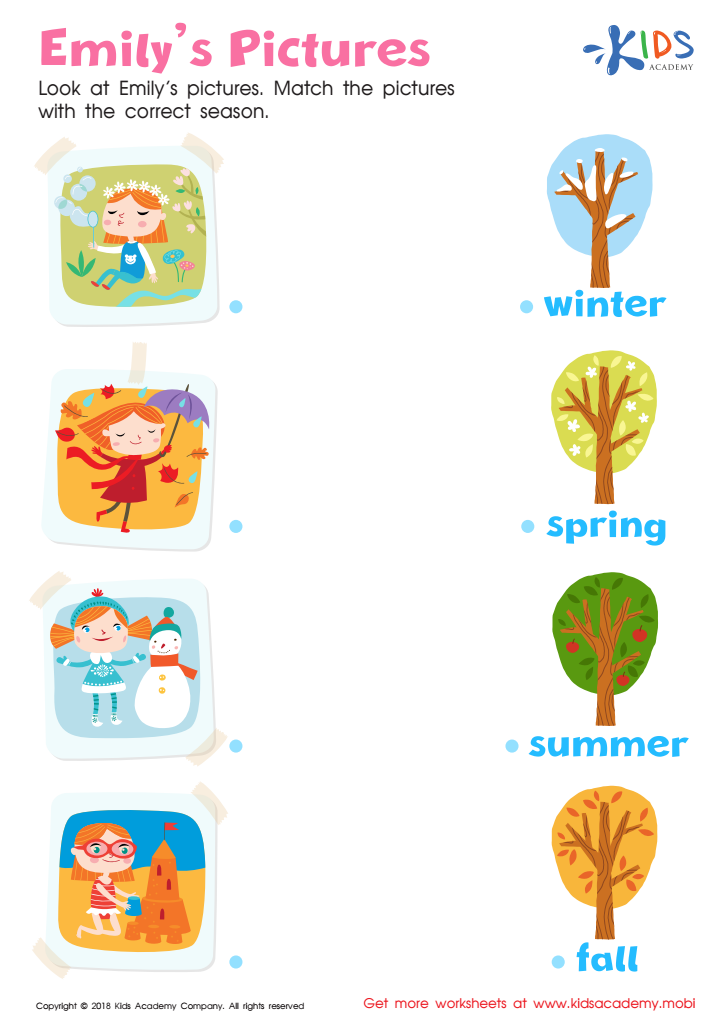
Emily's Pictures Worksheet
Look at the pictures of Emily on the left. Ask your child what she's doing in each one. Then, match the activities to the seasons on the right. Help your kids identify the correct season for each activity. Shorten to 80 words: Look at the pictures of Emily on the left. Ask your child what she's doing in each one, then match the activities to the seasons on the right. Help your kids find the correct season for each activity.
Emily's Pictures Worksheet
Worksheet
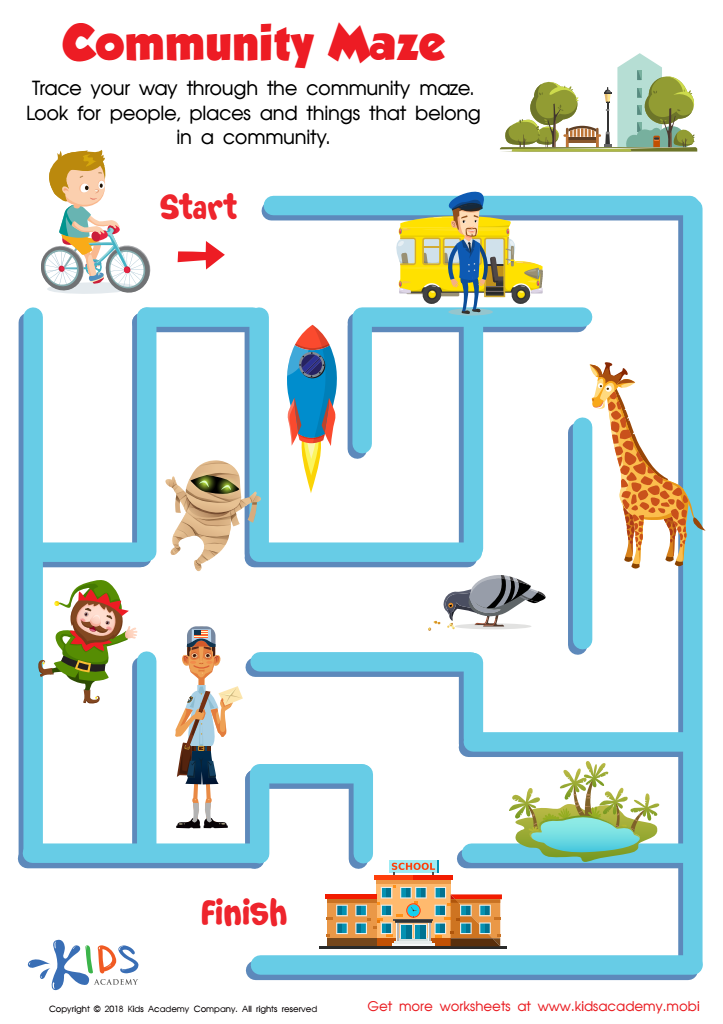
Community Maze Worksheet
Your kids will have a blast as they use their fine motor skills to trace their way through the community maze worksheet. Plus, they'll enjoy meeting people, places, and creatures to sort out who and what belong in a community and who and what don't! Help their friend bike to the neighborhood school and reinforce what life is like in a community.
Community Maze Worksheet
Worksheet
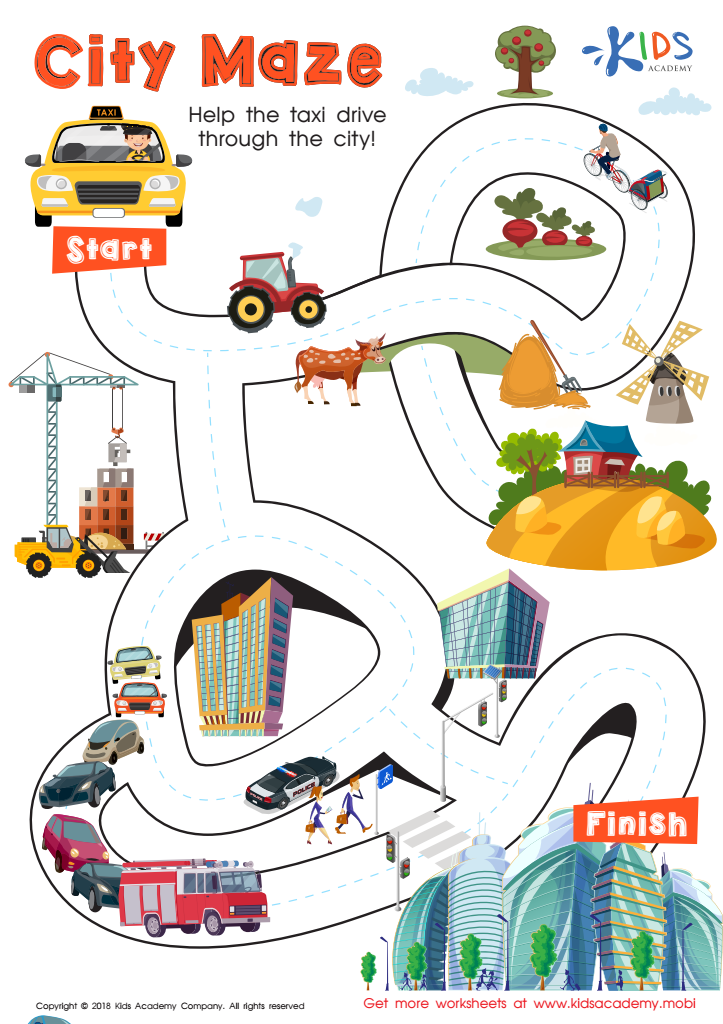
City Maze Worksheet
Kids love mazes! This free PDF city maze worksheet is sure to be a hit. Help your friend the taxi driver get through the maze, following traceable lines through different communities to the big city. It's a fun and challenging way to practice fine motor skills and succeed!
City Maze Worksheet
Worksheet
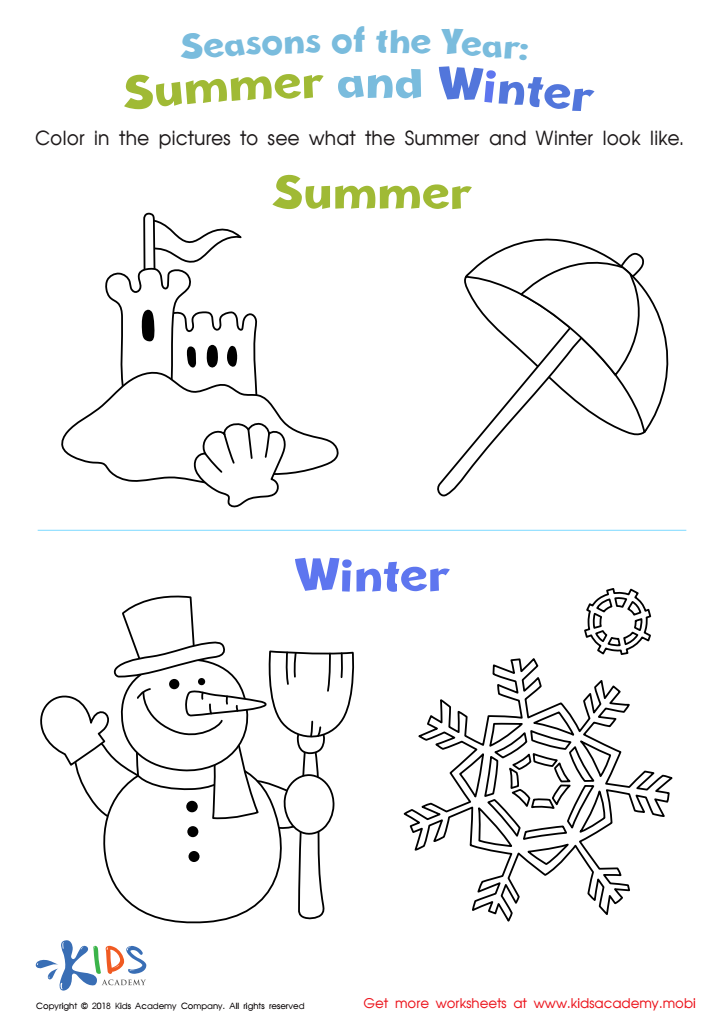
Summer and Winter Worksheet
Ask your child what they associate with winter and summer. What do they look forward to in winter? What colors do they see most? What do they love doing in summer? Help them color in the pictures of winter and summer in the worksheet, choosing the colors they think best represent each season.
Download (PDF)
 Assign to My Students
Assign to My Students
Summer and Winter Worksheet
Worksheet
Fairness: Sequencing Worksheet
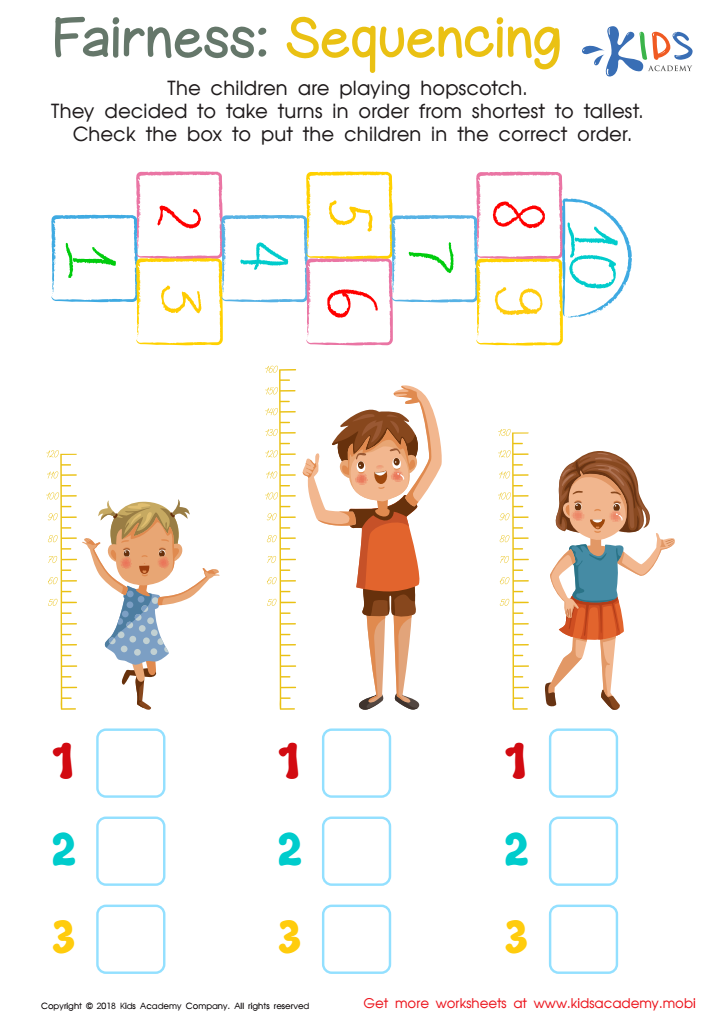
Kids likely already know how to play hopscotch. Ask them to show you the shortest, tallest and middle child in the worksheet. Then, help them order them from shortest to tallest by checking the boxes.
Fairness: Sequencing Worksheet
Worksheet
Join Kids Academy for Free
Who is primarily going to use this learning content?







Logical Reasoning in Social Studies for children aged 3-5 is vital for developing essential cognitive and social skills. At this age, children are naturally curious and eager to understand the world around them. Engaging them in logical reasoning activities fosters critical thinking, enabling them to make connections between concepts, recognize patterns, and develop problem-solving skills.
By exploring social studies topics, such as community roles, cultural differences, and environmental awareness, children learn to empathize with others and understand diverse perspectives. This early exposure helps in shaping respectful and informed citizens who can contribute positively to society.
Moreover, logical reasoning boosts language development, as children learn to articulate their thoughts and questions related to various topics. Parents and teachers can harness these learning moments by introducing age-appropriate discussions and hands-on activities, promoting collaboration and communication among peers.
Encouraging logical reasoning in social studies nurtures not just academic skills but also important life skills such as decision-making, collaboration, and adaptability. When parents and teachers prioritize this aspect of early education, they contribute to building a foundation for lifelong learners who are capable of thinking critically and engaging responsibly with the world around them.