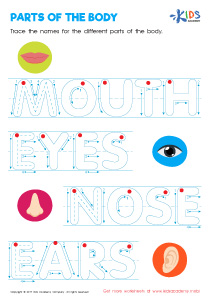
Color Identification World Around Us Worksheets for Ages 3-5
3 filtered results
Difficulty Level
Grade
Age
-
From - To
Subject
Activity
Standards
Explore our engaging "Color Identification World Around Us Worksheets" designed specifically for children aged 3-5! These worksheets provide a fun and interactive way for young learners to develop color recognition skills through vibrant illustrations and relatable themes. From identifying colors in nature to recognizing shades in everyday objects, our resources foster creativity and enhance observational skills. These worksheets encourage parents and educators to create a joyful learning environment while motivating kids to connect colors with the world around them. Perfect for home, classrooms, or playgroups, our printables make learning colors an exciting adventure! Start your color identification journey today!
Favorites
With answer key
Interactive
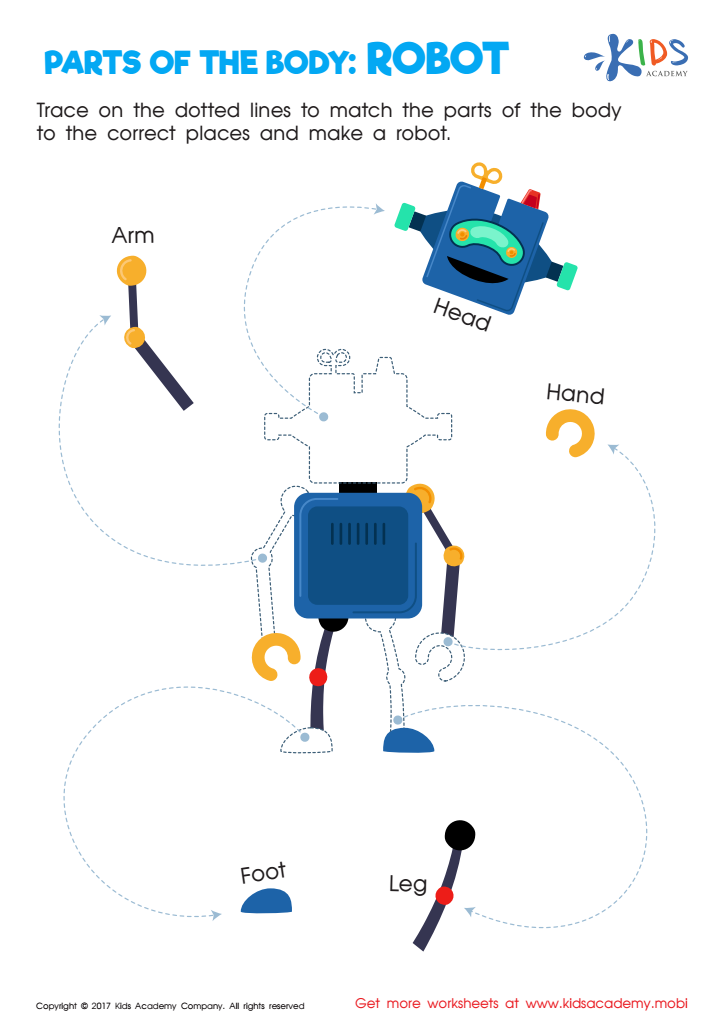
Robot Printable
Introduce your child to a fun robot and help her hone her matching skills with this parts of the body worksheet! Your child will trace dotted lines to match the robot's body parts to the right place, helping her focus, use abstract thinking and reason better. This worksheet is sure to get your child excited and help her build essential skills for future success!
 Assign to My Students
Robot Printable
Worksheet
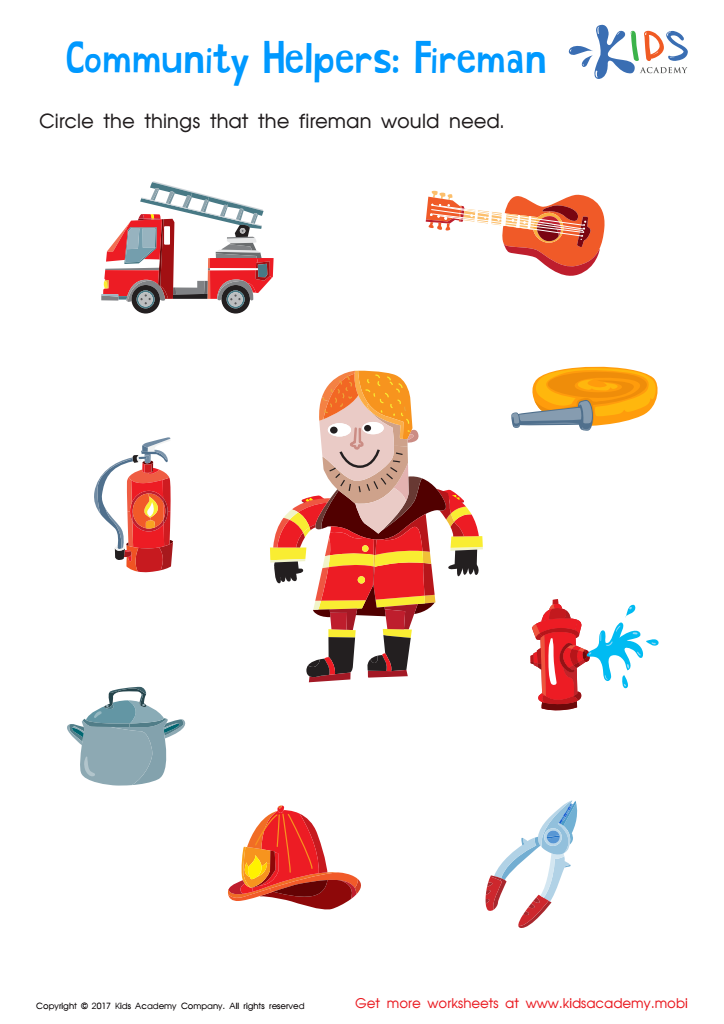
Fireman Worksheet
Kids love firemen and their big fire engines! Inspire your child to learn about their duties with this fun fireman worksheet. It'll help your child understand the role of firemen, as well as develop matching and problem solving skills. Get your kid started on understanding a key role in society and have fun too!
Fireman Worksheet
Worksheet
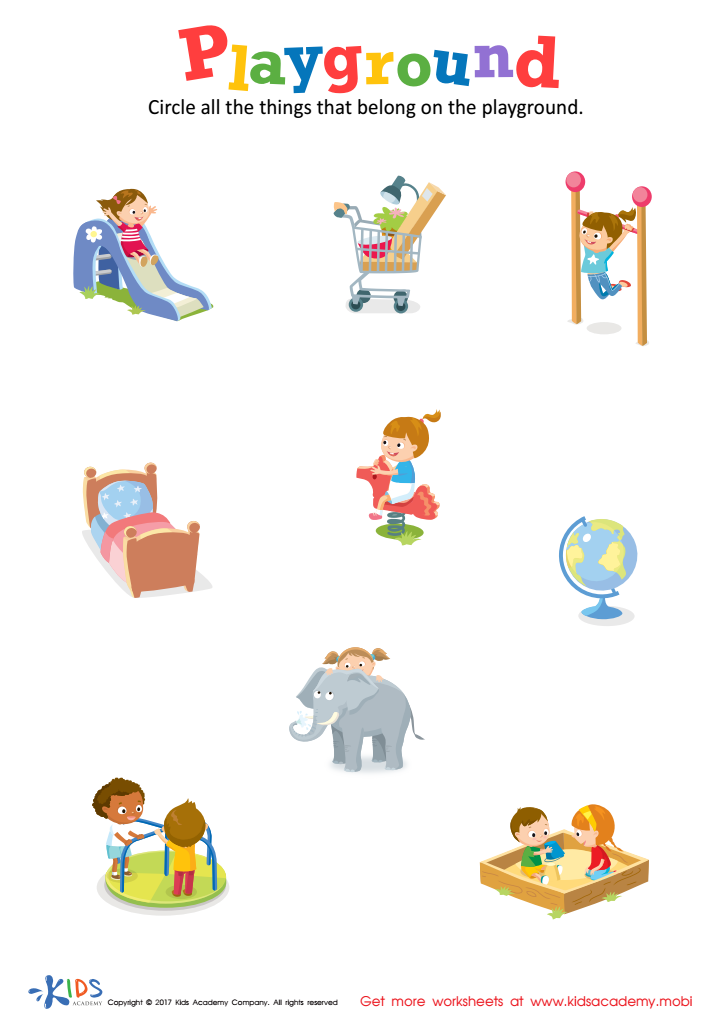
Playground Worksheet
Head to the park with this playground worksheet! It strengthens sorting and cognitive skills while encouraging problem solving. Plus, it's fun-filled and engaging! When finished, head out to the park to see what items your child finds in the playground!
Playground Worksheet
Worksheet
Join Kids Academy for Free
Who is primarily going to use this learning content?







Understanding color identification is crucial for children aged 3-5, as it serves as a foundational skill that impacts various areas of learning and development. For parents and teachers, fostering color recognition in early childhood can enhance children's cognitive development, fine motor skills, and language acquisition.
Colors provide a way for children to categorize and make sense of the world around them. When children learn to identify colors, they are actively engaging in observational skills, building their vocabulary, and enhancing their ability to express themselves. For instance, when children describe their environment or elaborate on their feelings using color terms, they are developing both linguistic and emotional intelligence.
Moreover, color identification can be an engaging and fun way for educators and parents to reinforce social skills. Activities such as sorting colorful blocks or participating in art projects can encourage teamwork and communication. Additionally, incorporating colors into daily routines can stimulate a child’s curiosity and encourage them to explore their surroundings.
Ultimately, focusing on color identification not only enriches a child's sensory experiences but also lays the groundwork for more complex learning, preparing them for future academic challenges. By supporting this learning process, parents and teachers can contribute significantly to a child’s overall growth and development.