Capitalization rules Writing Worksheets for Ages 3-5
4 filtered results
-
From - To
Discover our engaging Capitalization Rules Writing Worksheets designed specifically for children aged 3-5! These interactive resources help young learners master essential capitalization skills through fun activities and hands-on practice. By using colorful illustrations and age-appropriate exercises, your child will gain confidence in identifying and correctly using capital letters, setting the foundation for effective writing. Our worksheets encourage creativity and make learning enjoyable, while also enhancing fine motor skills as children practice their handwriting. Perfect for home or classroom use, these worksheets are a valuable tool for early literacy development. Begin your child’s writing journey today!
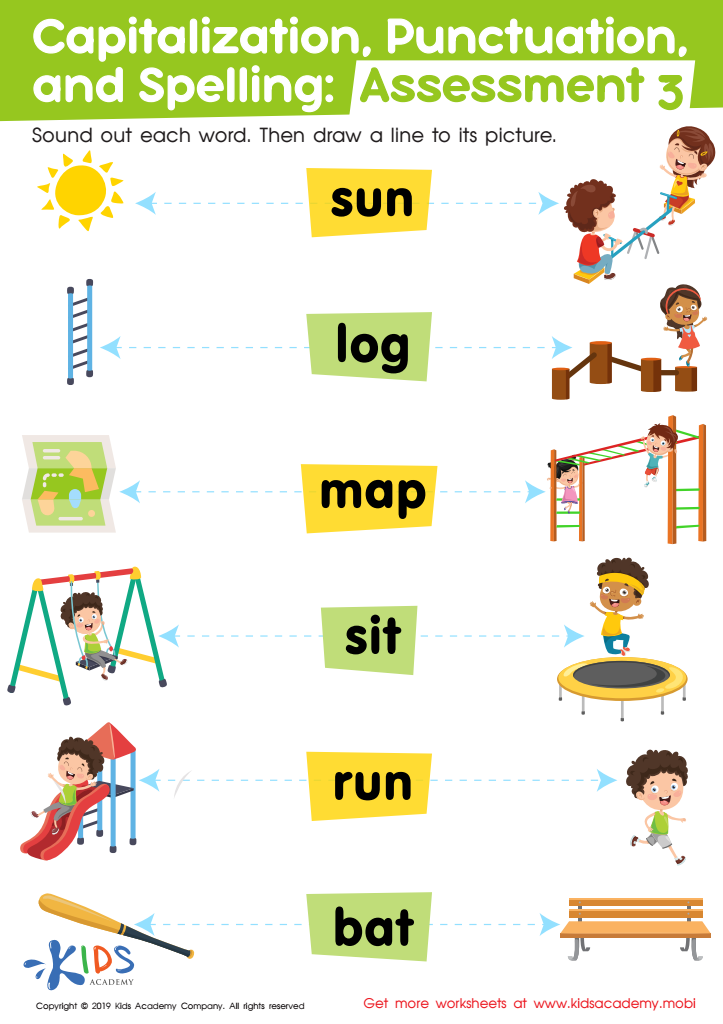
Capitalization. Punctuation. Spelling. Assessment 3 Worksheet
 Assign to My Students
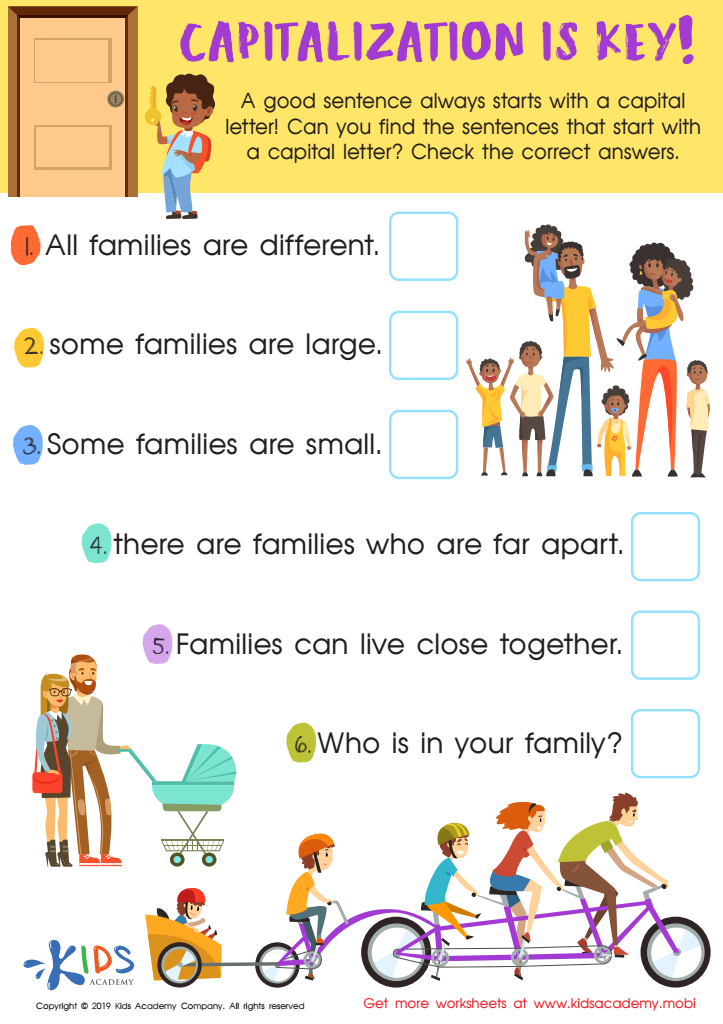
Capitalization Key Worksheet
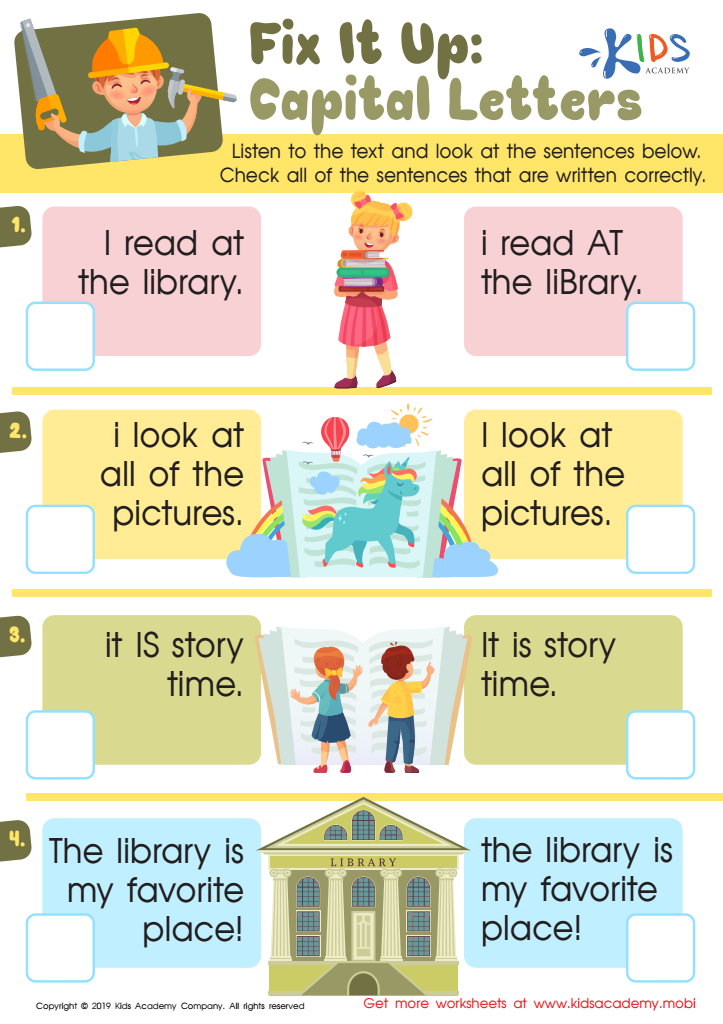
Fix Capital Letters Worksheet
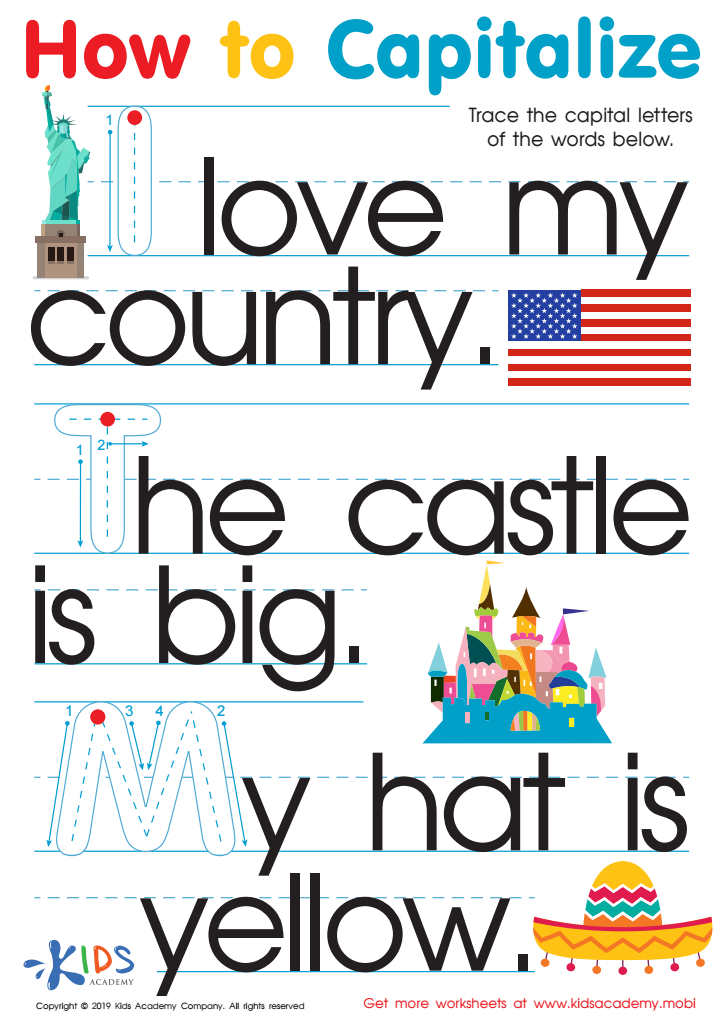
How to Capitalize Worksheet







Capitalization is an essential aspect of writing that early learners must understand, and it becomes increasingly important as children grow and develop their literacy skills. For parents and teachers of children aged 3-5, introducing capitalization rules fosters a strong foundation for effective communication.
Firstly, learning capitalization helps children recognize the importance of proper nouns, such as names of people, places, and specific items. This understanding enhances their reading skills as they begin to identify these words in texts. It also aids them in expressing themselves clearly when they start writing independently.
Additionally, practicing capitalization can boost children’s confidence in their writing. By mastering small concepts like capital letters at the beginning of sentences, children feel a sense of achievement, motivating them to continue developing their skills.
Incorporating capitalization activities into play and daily routines can also make learning more enjoyable. Through engaging games or simple writing tasks, parents and teachers can reinforce these rules in a fun and constructive manner. Overall, understanding capitalization not only shapes young learners’ writing and reading abilities but also serves as a stepping stone for effective communication as they progress in their education.








