
Basic Math Skills Science Worksheets for Ages 3-6
5 filtered results
Difficulty Level
Grade
Age
-
From - To
Subject
Activity
Standards
Discover our engaging Basic Math Skills Science Worksheets designed specifically for children ages 3-6. These worksheets make learning foundational math concepts fun and interactive, blending scientific exploration with essential arithmetic skills. Your little learners will enjoy activities that cover counting, number recognition, and basic addition and subtraction, all while discovering the wonders of science. Tailored to foster curiosity and critical thinking, our worksheets encourage hands-on learning and exploration. Perfect for parents and educators, these resources support early math development in an entertaining way. Enhance your child’s learning journey with our thoughtfully crafted printables, available for easy download and use at home or in the classroom!
Favorites
With answer key
Interactive
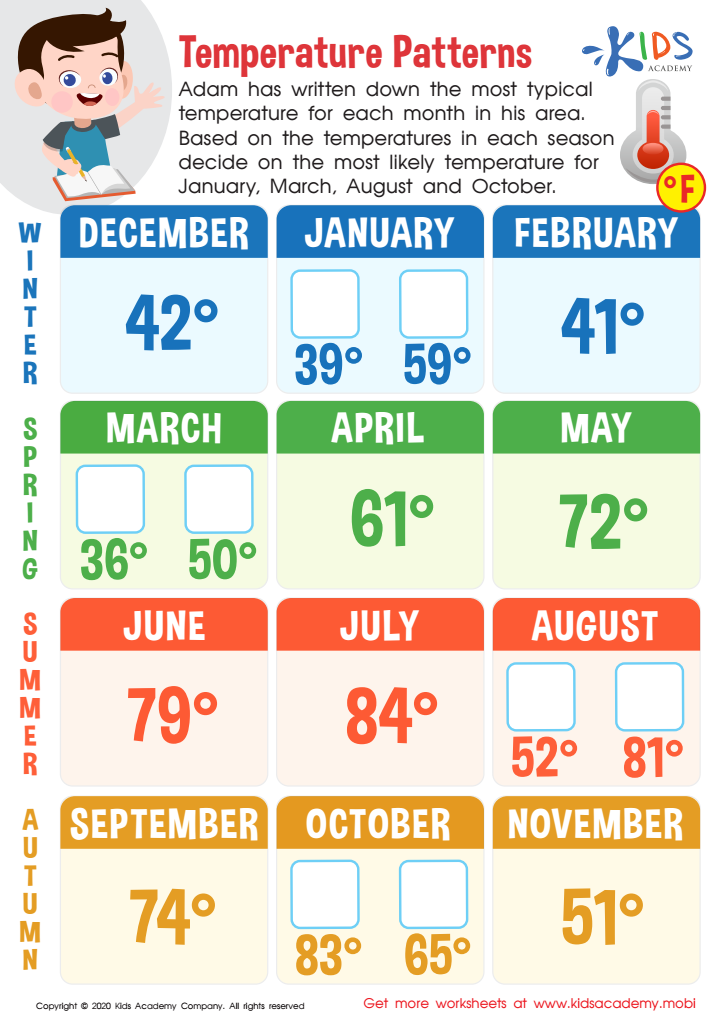
Temperature Patterns Worksheet
Adam has recorded temperatures in his area. Help your child use the data to predict temperatures for one month in each season. Check the box next to the correct temperature for each row in this worksheet. In America, temperatures vary by climate and season - colder in winter, hotter in summer.
 Assign to My Students
Temperature Patterns Worksheet
Worksheet
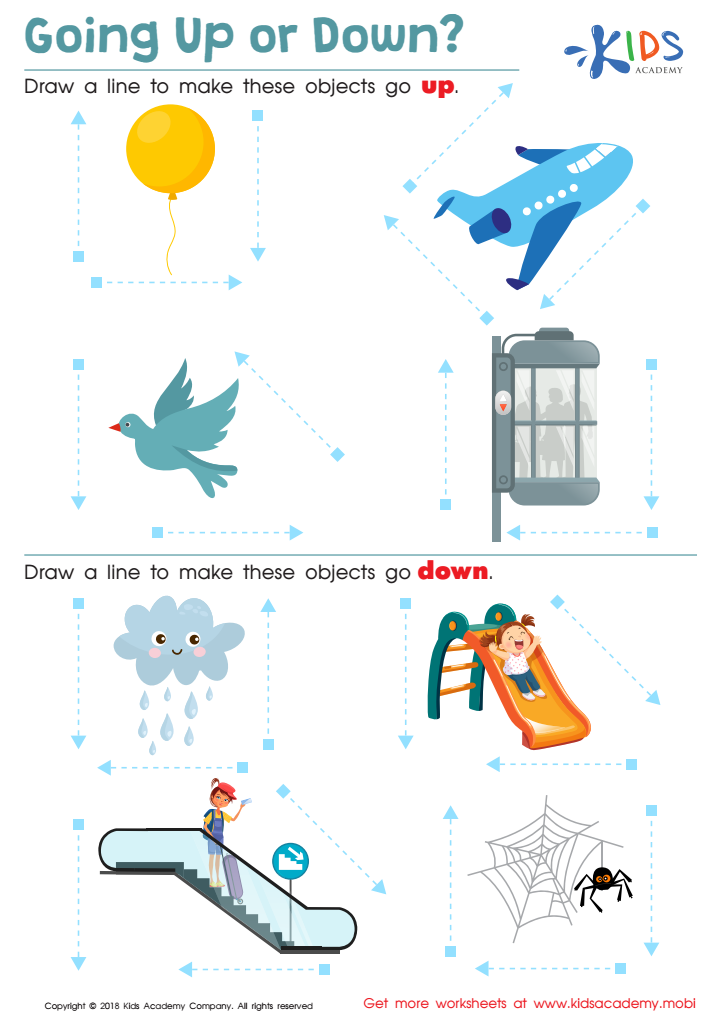
Going up or Down? Worksheet
Young students learn the concept of up and down with this geometry worksheet. They trace lines to identify relative positioning as an object travels. Kids can use position words to describe an object's movement, enhancing their spatial relationship skills - an important geometry foundation.
Going up or Down? Worksheet
Worksheet
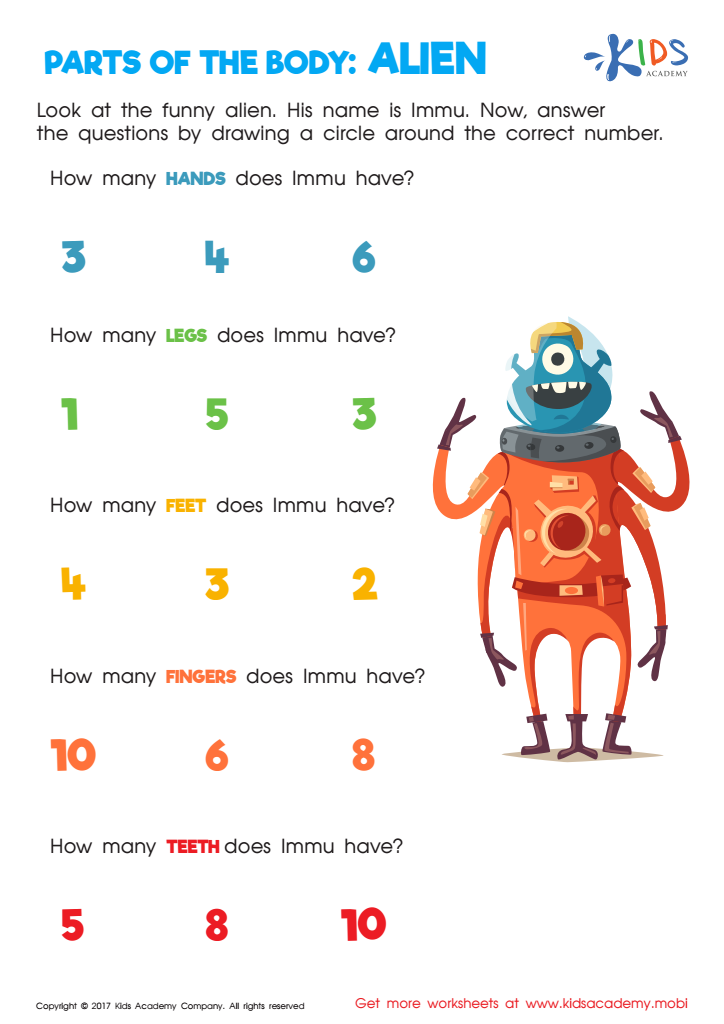
Alien Worksheet
Take your child on an out-of-this-world learning adventure with Immu, our friendly alien! This worksheet helps your child practice counting, recognize body parts and sharpen problem solving skills. Get started with this fun, educational activity today and watch as they learn and grow. Print it now and blast off to outer space!
Alien Worksheet
Worksheet
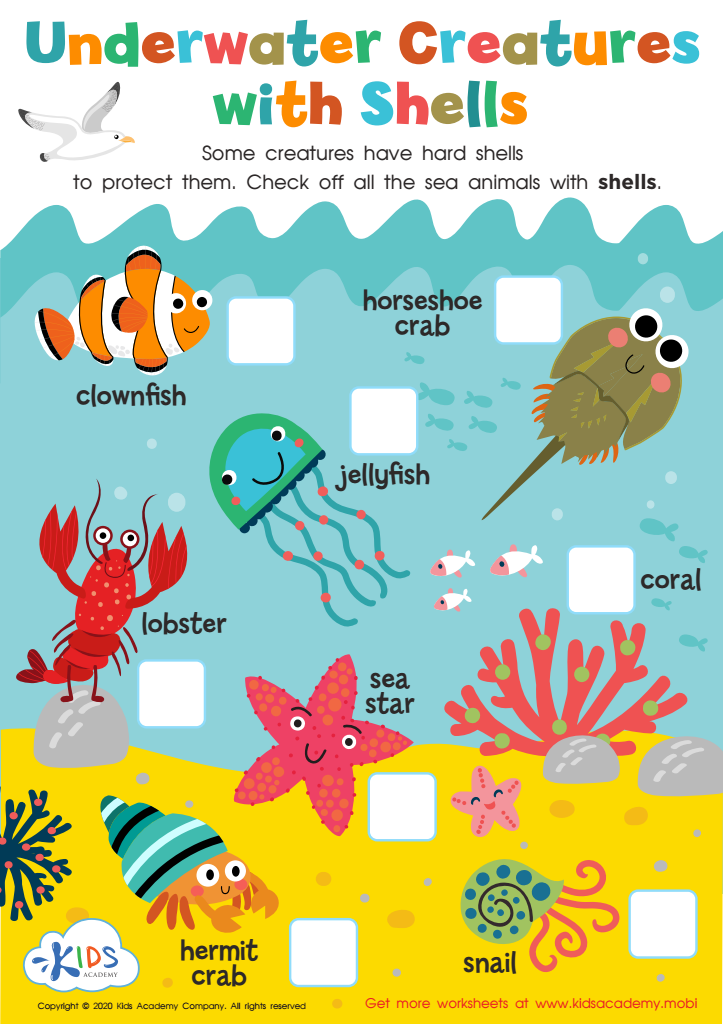
Underwater Creatures with Shells Worksheet
Teach your child about sea creatures with this vibrant PDF science worksheet! Comb through the colorful image to identify animals with shells; compare them to others and check them off. Let them know shells don't just wash up on beach, they serve as protection for sea creatures!
Underwater Creatures with Shells Worksheet
Worksheet
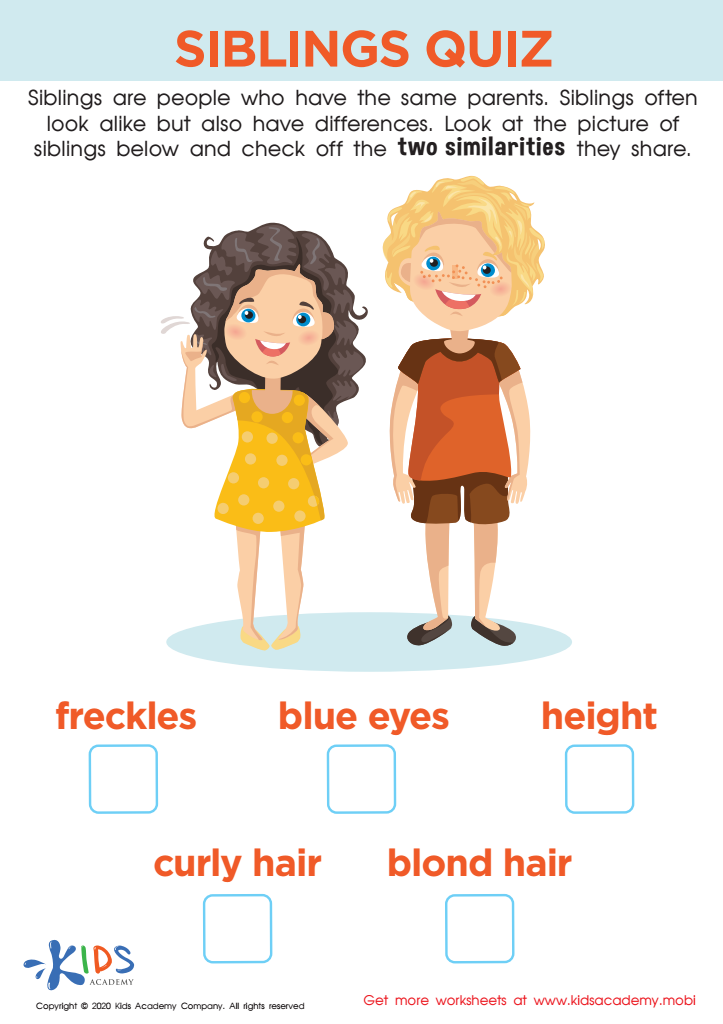
Siblings Quiz Worksheet
Your children may know a sibling is a sister or brother, but not realize what it means to be one. Siblings share the same parents, which means they share many genes. They are alike in many ways, but also have their own unique traits. Help your future scientist understand this early biology concept with this fun worksheet. They'll be tasked with finding similarities between two siblings on the page.
Siblings Quiz Worksheet
Worksheet
Join Kids Academy for Free
Who is primarily going to use this learning content?





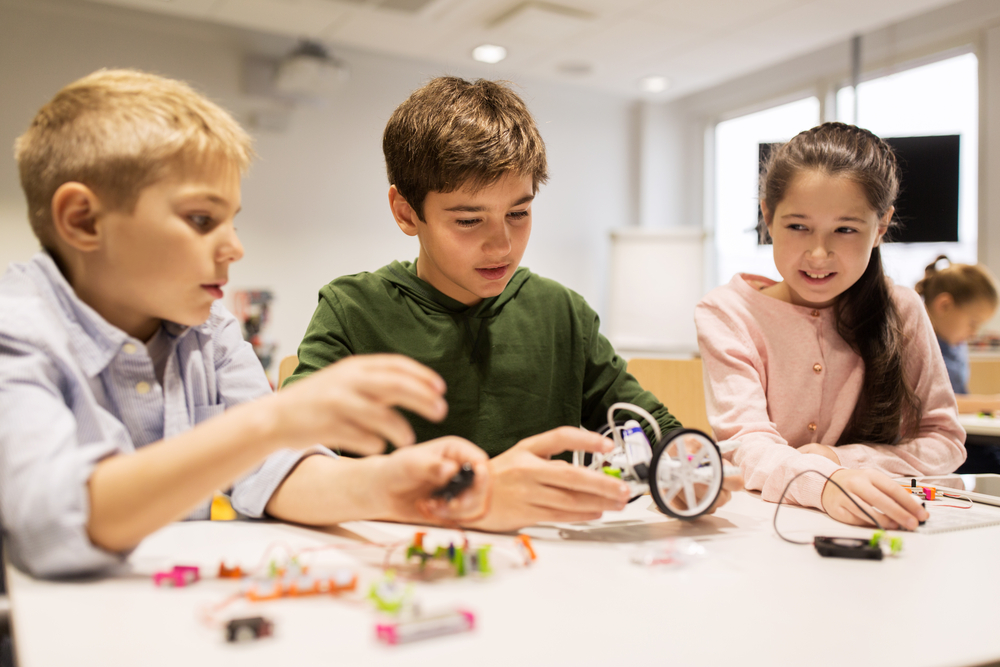

Parents and teachers should prioritize basic math skills science for children ages 3-6 because early mathematical understanding lays the foundation for future academic success. During these formative years, children develop crucial cognitive abilities and problem-solving skills that are enhanced through hands-on and engaging mathematical experiences. Basic math skills, such as counting, recognizing shapes, and understanding simple patterns, promote critical thinking and logical reasoning.
Math-related activities also support language development, as children learn to describe quantities, compare sizes, and articulate patterns, allowing them to express their understanding more clearly. Engaging with math in everyday contexts—like measuring ingredients during cooking or counting toys—makes learning relevant and fun, fostering a positive attitude towards math from an early age.
Moreover, strong math skills correlate with improved performance in later schooling and even in career paths, paving the way for opportunities in various fields. By emphasizing basic math skills science, parents and teachers not only equip children with essential tools for learning but also inspire confidence and curiosity in exploring the world around them. Hence, investing time in developing these skills is fundamental for their intellectual, emotional, and social development.







