
Matching skills Science Worksheets for Ages 3-6
4 filtered results
Difficulty Level
Grade
Age
-
From - To
Subject
Activity
Standards
Discover our engaging Matching Skills Science Worksheets designed specifically for children aged 3-6! These fun and interactive resources help young learners enhance their observational and comparison skills while exploring the wonders of science. With colorful illustrations and exciting themes, kids will match objects, animals, and natural elements, promoting cognitive development and early literacy. Our worksheets are perfect for parents and educators looking to enrich their child's learning experience at home or in the classroom. Foster a love for learning as they develop essential matching abilities through entertaining science-related activities. Start your child's educational journey today with our thoughtfully crafted worksheets!
Favorites
With answer key
Interactive
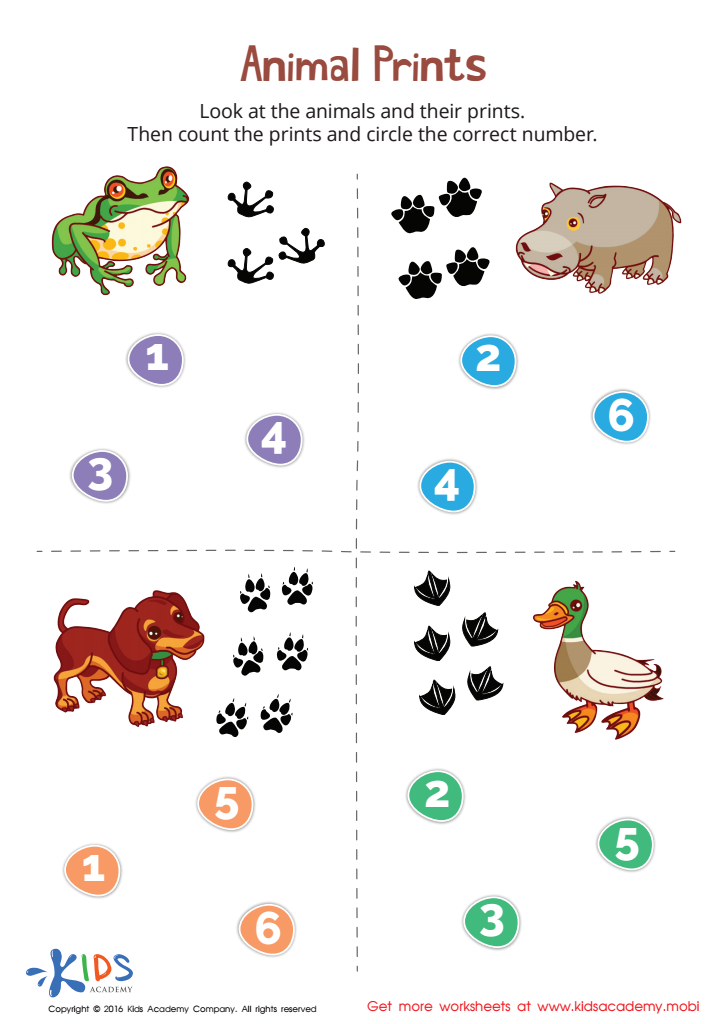
Animal Prints Match-Up Worksheet
Help your little learner build early math skills with this fun animal paw prints worksheet. With it, they'll count, recognize numbers, and learn about the animals that make the paw prints. Talk to them about the prints and ask them to count. They'll love exploring and learning about the different animals, all while sharpening essential math skills!
Animal Prints Match-Up Worksheet
Worksheet
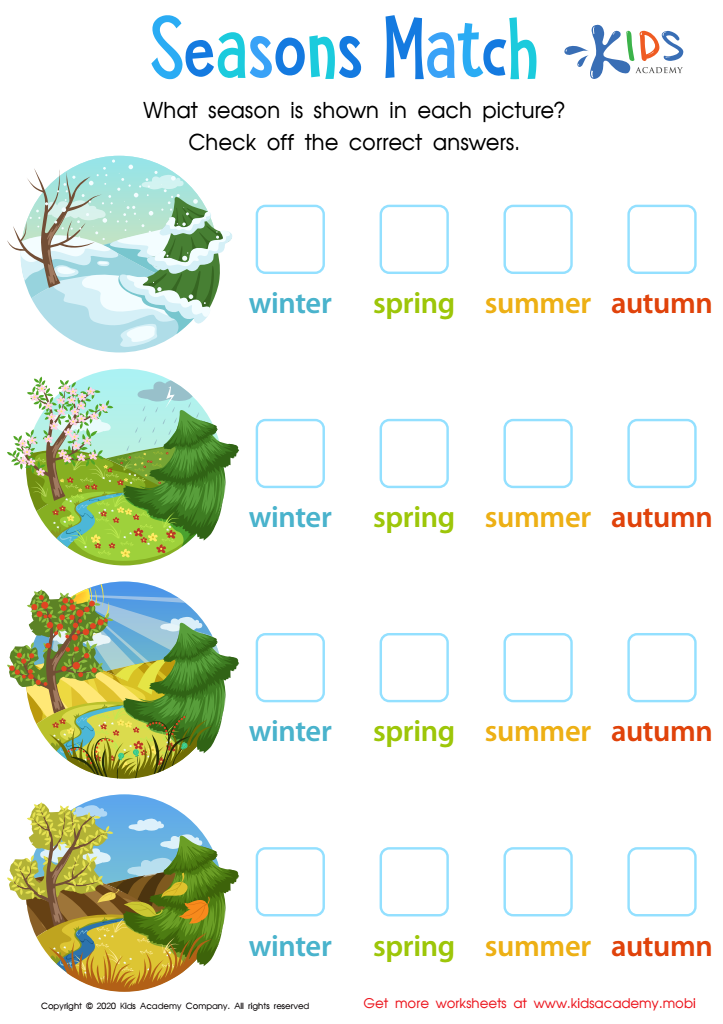
Seasons Match Worksheet
Preschoolers should begin learning about seasons and weather early. Most can tell what season it is by upcoming holidays or school activities. Test their knowledge with a printable PDF worksheet. It asks them to match each image with its corresponding season!
Seasons Match Worksheet
Worksheet
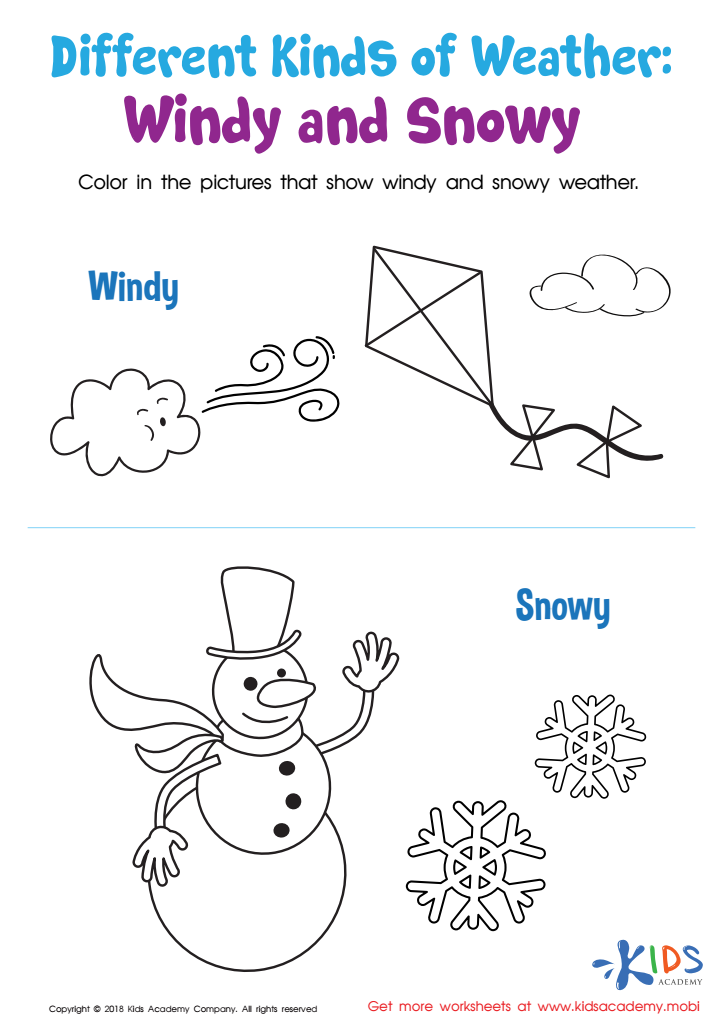
Different Kinds of Weather: Windy and Snowy Worksheet
Invite your little learner to practice their fine motor skills and learn about nature with this fun and charming PDF worksheet! Reinforce weather patterns and examine their environment as they color, giving them a foundation for understanding how weather affects them. No matter the weather, your learner will have a blast!
Download (PDF)
 Assign to My Students
Assign to My Students
Different Kinds of Weather: Windy and Snowy Worksheet
Worksheet
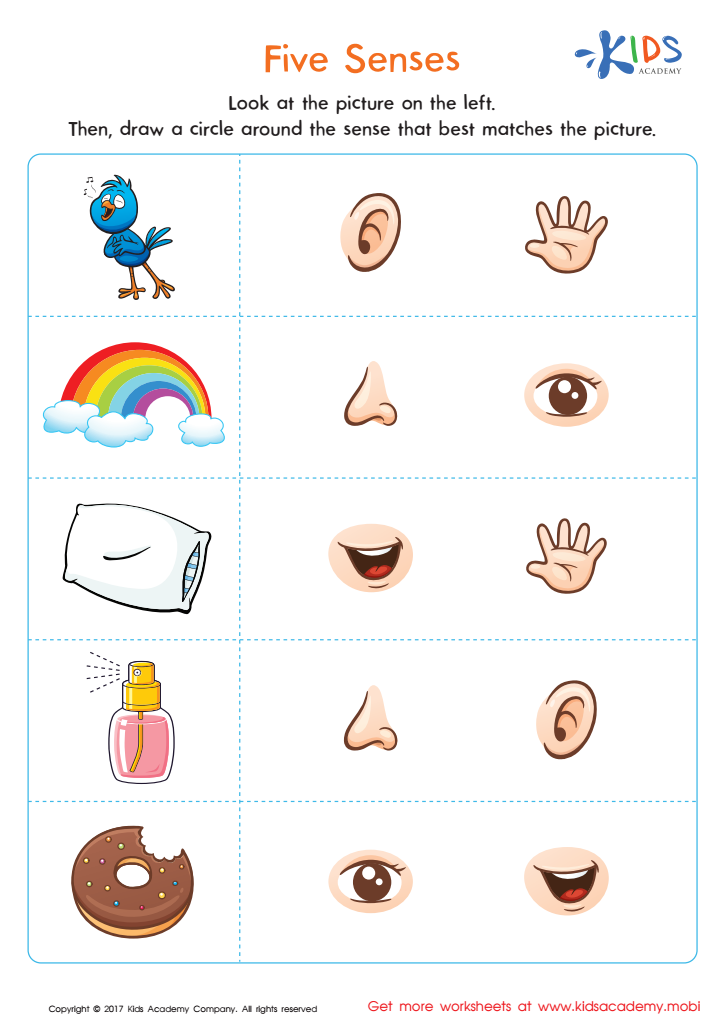
Five Senses Printable
For an easy way to jumpstart your child's critical thinking and introduce the five senses, print our free worksheets! These are great for reviewing each sense and practicing critical thinking skills. Work with your child and discuss each image. After completing the worksheet, find objects around the house so they can quiz themselves!
Five Senses Printable
Worksheet
Join Kids Academy for Free
Who is primarily going to use this learning content?



.jpg)


Parents and teachers should prioritize matching skills in early science education for children ages 3-6 because these skills lay the foundation for critical thinking and problem-solving abilities. During this developmental stage, children are naturally curious, and matching activities provide engaging ways to explore their environment, helping them grasp key scientific concepts.
Matching skills promote cognitive development by fostering categorization, which is essential in biology, earth science, and physical science. For instance, matching shapes or colors enhances visual discrimination, while pairing animals with their habitats teaches children about ecosystems. Furthermore, these activities cultivate observational skills, encouraging children to notice details and similarities, which are pivotal in scientific inquiry.
In addition to cognitive benefits, matching activities enhance fine motor skills through hands-on manipulation of objects. Socially, collaborative matching games can breed cooperation and communication, as children discuss their choices and reasoning.
Finally, incorporating matching skills into science learning nurtures a positive attitude towards exploration. These experiences foster a love for science and inquiry, empowering children to become curious learners equipped for future academic challenges. Overall, the early integration of matching skills in science establishes a robust platform for lifelong learning and discovery.







