Middle Sounds Worksheets for Ages 3-7
4 filtered results
-
From - To
Boost phonemic awareness with our engaging Middle Sounds Worksheets, tailored for kids ages 3-7! Designed to help young learners recognize and master the sounds within words, our worksheets make learning fun and interactive. Perfect for reinforcing classroom instruction or supplementing at-home practice. Each worksheet features vibrant images and fun exercises, transforming phonics lessons into an enjoyable experience. Our expertly crafted materials foster early literacy skills essential for reading success. Discover a world of educational fun and watch your child’s confidence soar with our Middle Sounds Worksheets. Join today and set the foundation for lifelong language skills!
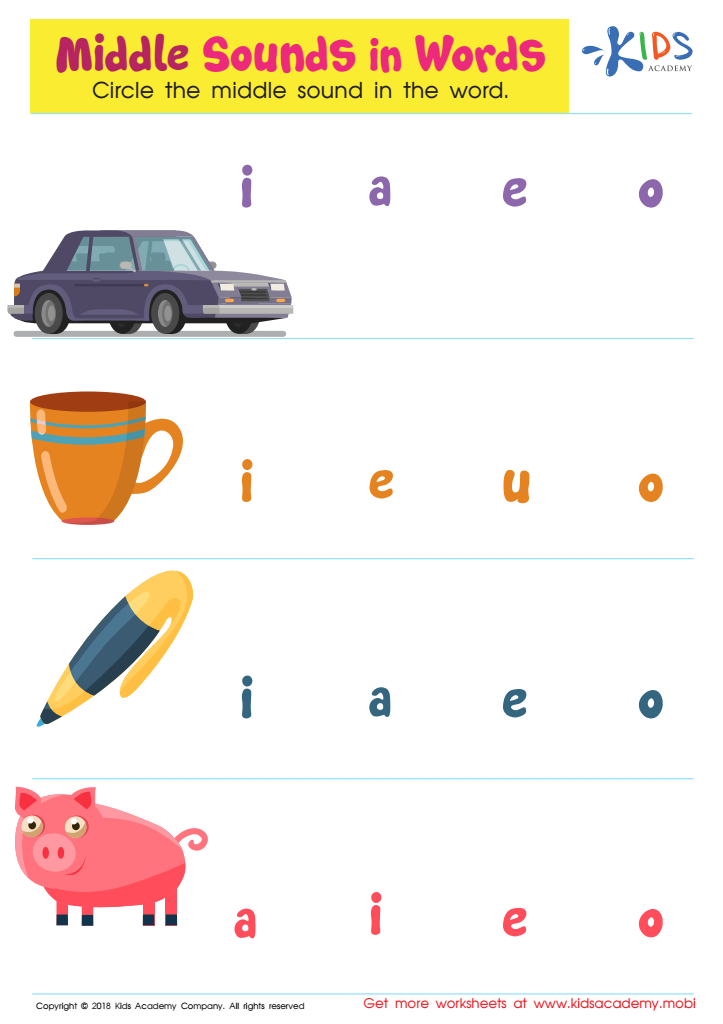
Middle Sounds in Words Worksheet
 Assign to My Students
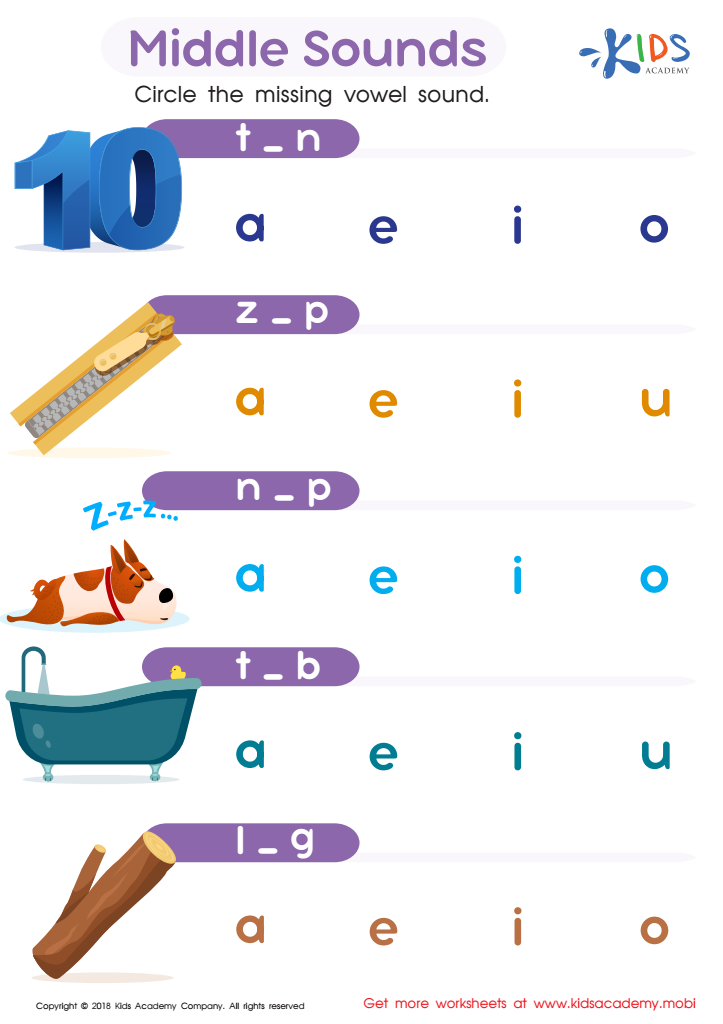
Middle Sounds Worksheet
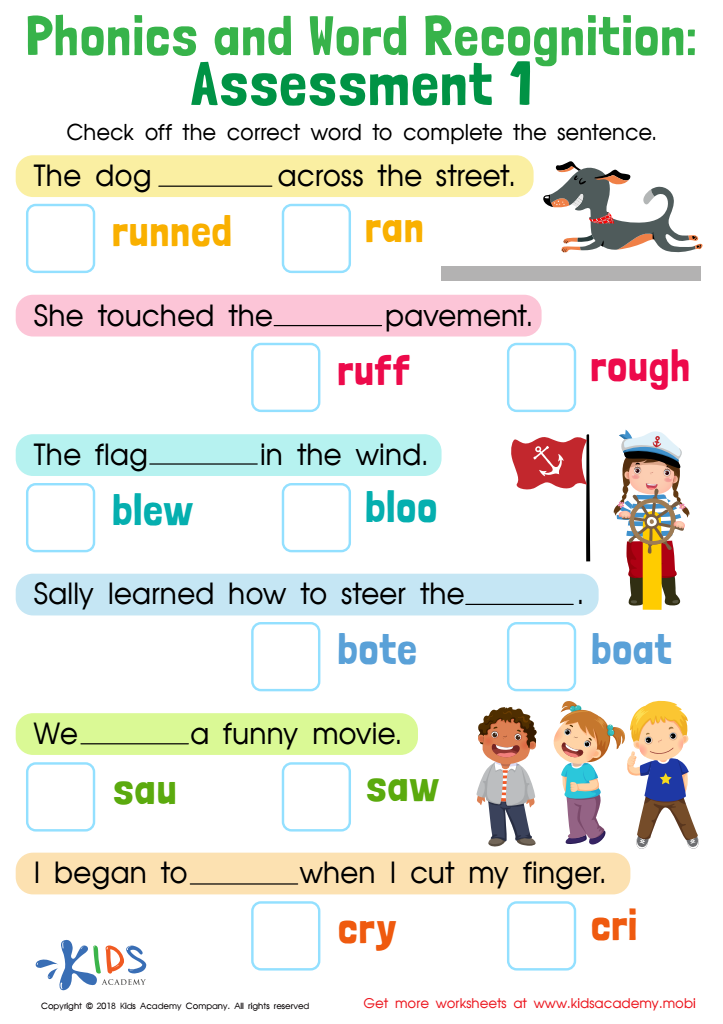
Phonics and Word Recognition: Assessment 1 Worksheet
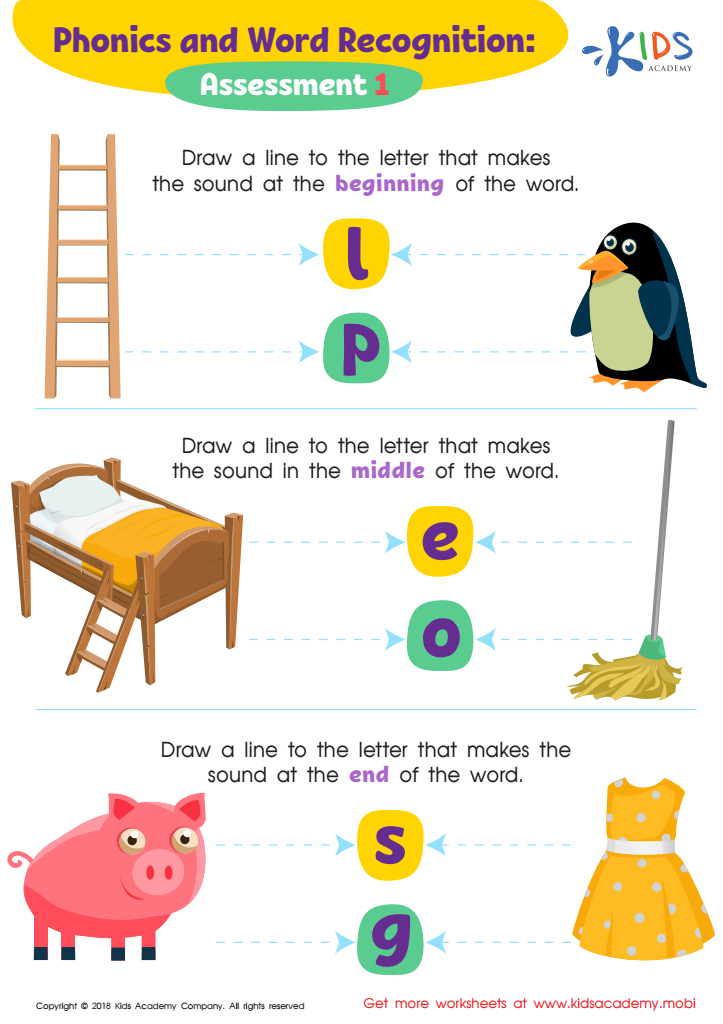
Phonics and Word Recognition: Assessment 1 ELA Worksheet





Middle sounds, or medial phonemes, are crucial for children aged 3-7 as they form the foundation for reading and spelling skills. During this period, children's brains are particularly receptive to learning language patterns and phonemic awareness, which is the ability to hear, identify, and manipulate individual sounds in words. Focusing on middle sounds supports this developmental milestone in several key ways.
Firstly, recognizing middle sounds aids in understanding word structure. Words are composed of beginning, middle, and ending sounds; if a child struggles with identifying middle sounds, they may have difficulty segmenting words into their individual components, which hampers both reading and writing proficiency.
Secondly, familiarity with medial phonemes enhances decoding skills. When children learn to properly identify and pronounce the middle sounds in words, they are better equipped to decode unfamiliar words as they encounter them. This boosts their confidence and fosters a love for reading.
Additionally, strong phonemic awareness, including the knowledge of middle sounds, correlates with improved spelling. Understanding how sounds combine to form words enables children to apply this knowledge when attempting to spell words, thus reducing common spelling errors.
Overall, investing effort in teaching middle sounds during these formative years sets a solid literacy foundation, crucial for academic success and effective communication skills later in life.








