Filters

7 filtered results

Clear all filters
Favorites
With answer key
Interactive

7 filtered results

Difficulty Level

Grade


Enhance your child's vocabulary with our engaging Vowel Blends Worksheets designed for ages 3-7! These interactive resources help young learners master the art of blending vowels to create new sounds and expand their literacy skills. Each worksheet features fun activities that promote reading and pronunciation, encouraging kids to recognize and use vowel blends in everyday language. Perfect for home or classroom use, these colorful and captivating worksheets make learning enjoyable while building essential phonemic awareness. Help your little ones take their first steps toward reading proficiency and boost their confidence as they discover the world of words!

Check out this FREE Trial Lesson on Vowel Blends for age 3-7!

Digraphs

Favorites
With answer key
Interactive
  • 3-7
  • Vocabulary expansion
  • Vowel Blends
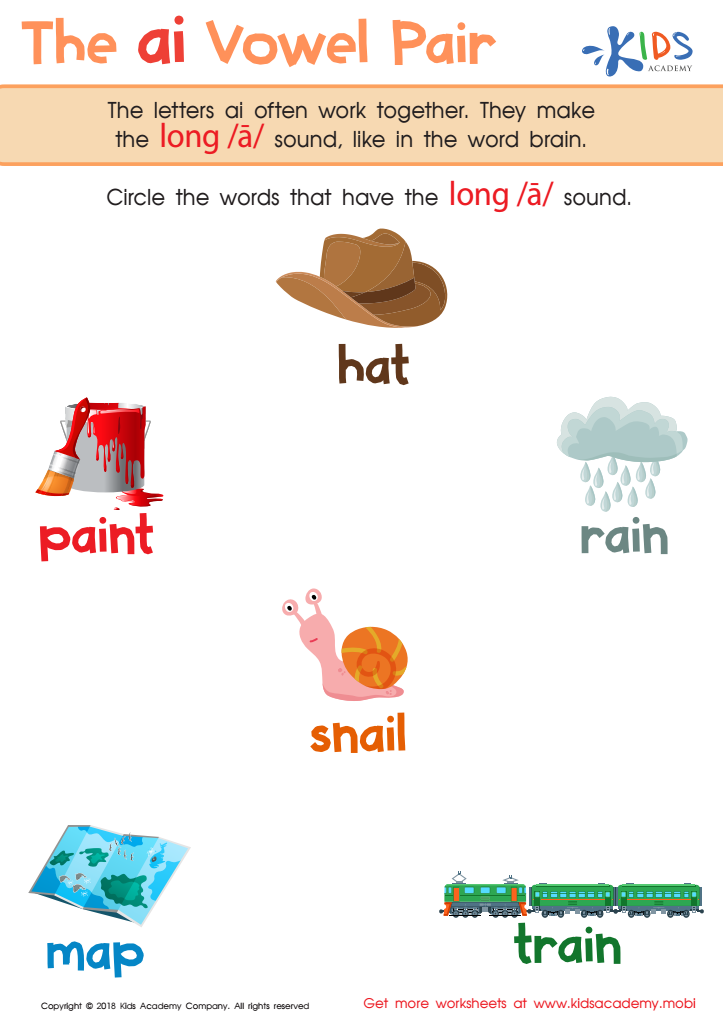
The AI Vowel Pair Worksheet

The AI Vowel Pair Worksheet

Vowel pairs make different sounds than individual letters. The 'ai' combination often forms the long /a/ sound, like in 'brain' and 'strain'. Get your kids to look at the pictures in the worksheet, identify each and say the name aloud. Help them circle the words with the long /a/ sound.
The AI Vowel Pair Worksheet
Worksheet
Reading: OW and OU Words Worksheet

Reading: OW and OU Words Worksheet

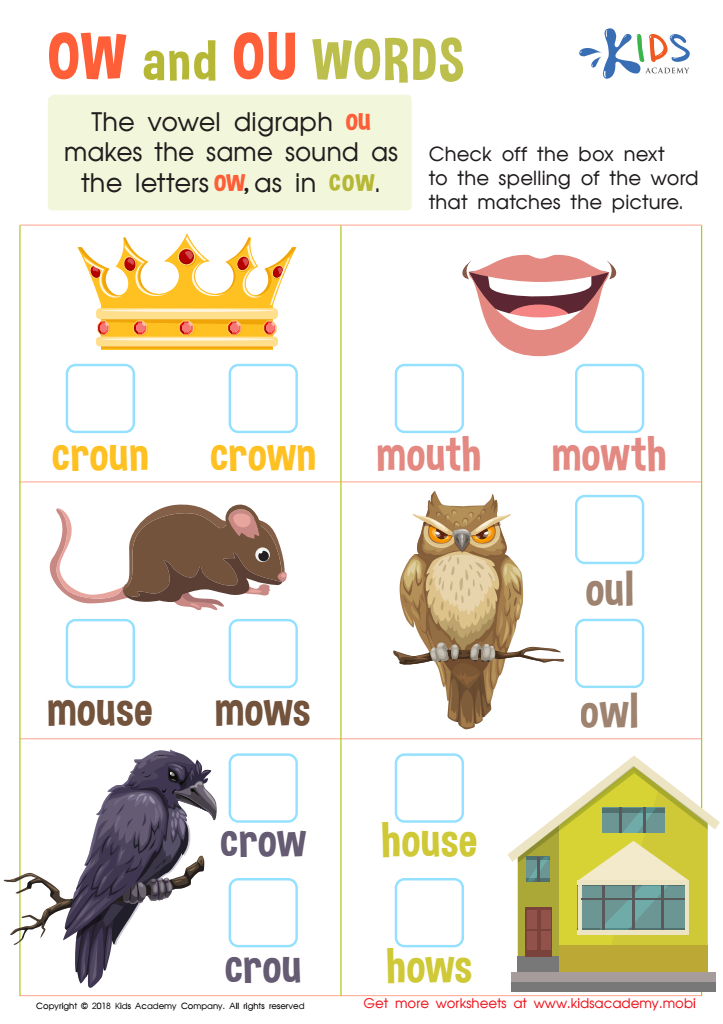
Help your kids learn phonetics! Explain the different sounds and long/short variations. Emphasize that some vowel sounds are the same, e.g. ou = ow in cow. For practice, have them read aloud the words in the worksheet and check the box next to the spelling that matches the picture.
Reading: OW and OU Words Worksheet
Worksheet
Reading: AI Vowel Team Worksheet

Reading: AI Vowel Team Worksheet

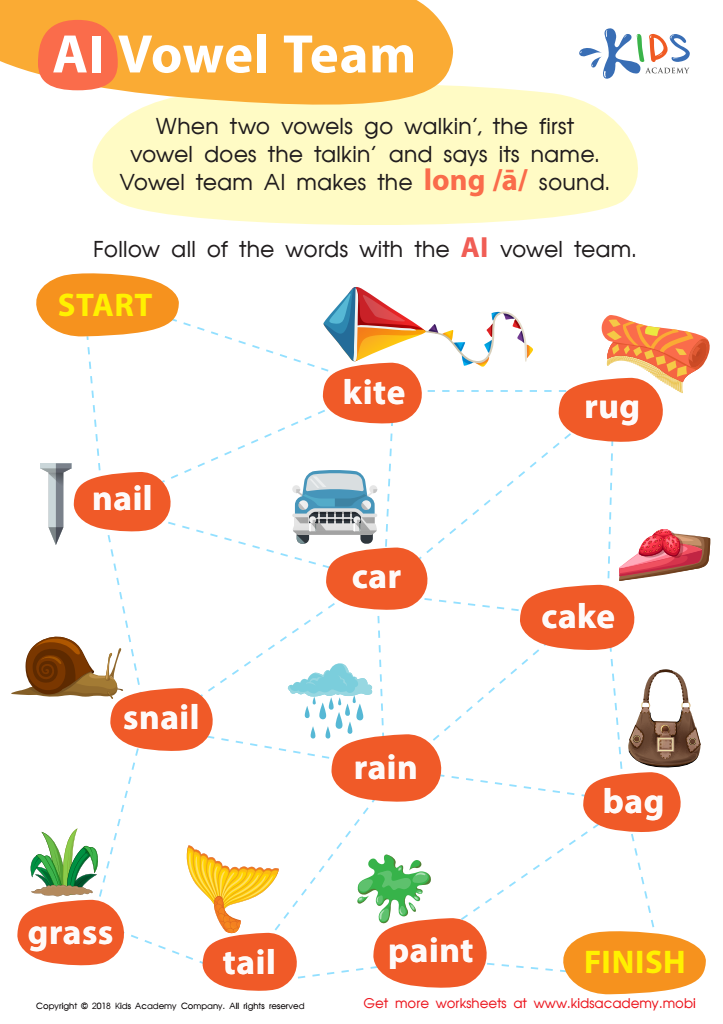
This worksheet focuses on the vowel team /ai/ which makes the long A sound. Students are challenged to find the correct path through the puzzle following only words with the /ai/ sound. Bright illustrations help kids understand unknown words.
Reading: AI Vowel Team Worksheet
Worksheet
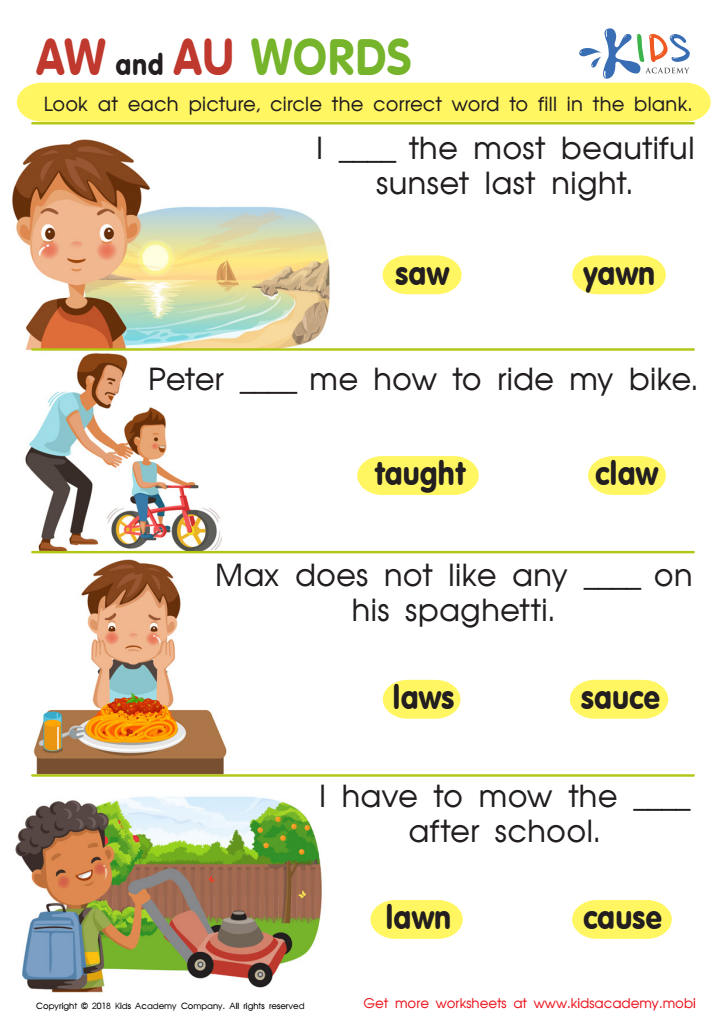
Reading: AW and AU Words Worksheet

Reading: AW and AU Words Worksheet

This worksheet helps kids recognize that /au/ and /aw/ can make the same sound. Students read sentences and pick the correct word with one of the digraphs. Understanding digraphs improves decoding and reading fluency. Perfect for reading and phonics classes.
Reading: AW and AU Words Worksheet
Worksheet
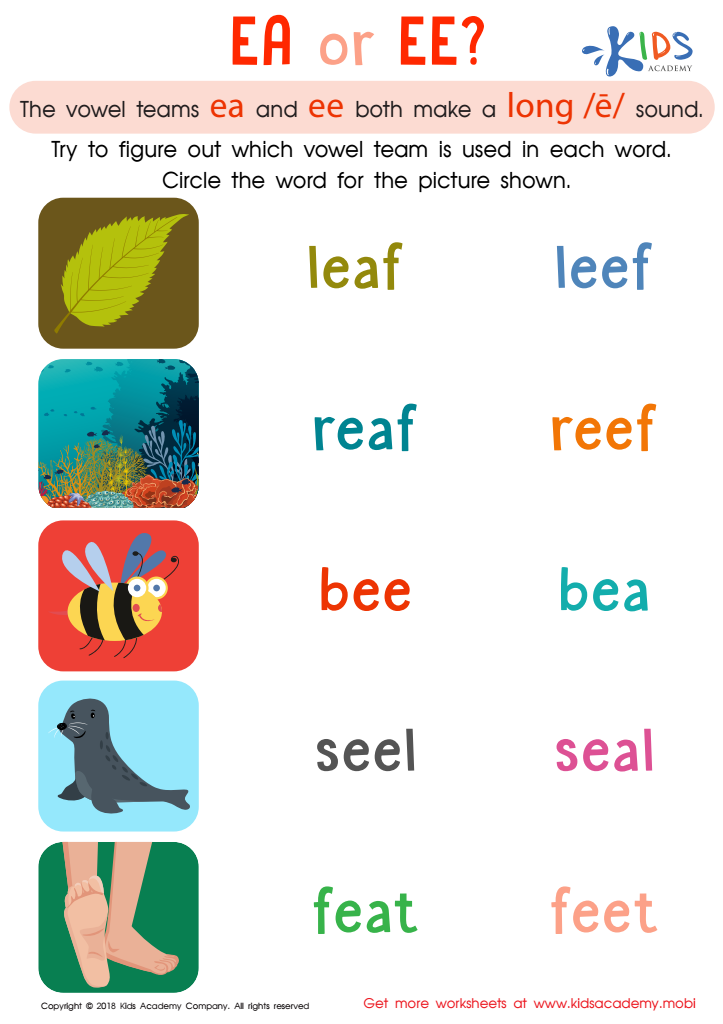
Reading: EA and EE Worksheet

Reading: EA and EE Worksheet

Confused by the long E sound's varying spellings? Give students practice with this printable. It will improve their reading and spelling skills by helping them identify the correct spellings for words with the /ee/ and /ea/ vowel teams. Clear up the confusion and sharpen their skills.
Reading: EA and EE Worksheet
Worksheet
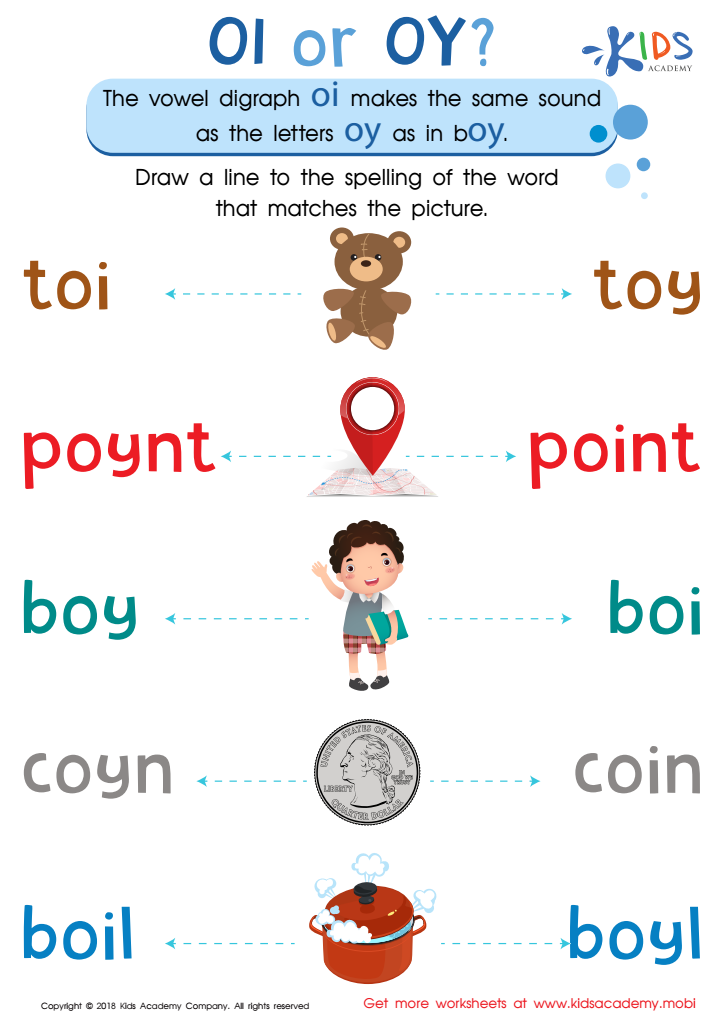
Reading: OI and OY Worksheet

Reading: OI and OY Worksheet

Ask your students if they know the rule for words with /oi/ or /oy/ sound. If not, it's easy to learn! Rule: If /oy/ at end of word, spell with 'oy'; if /oi/ in middle of word, spell with 'oi'. Use this worksheet to help them master these digraphs and improve their ability to decode.
Reading: OI and OY Worksheet
Worksheet
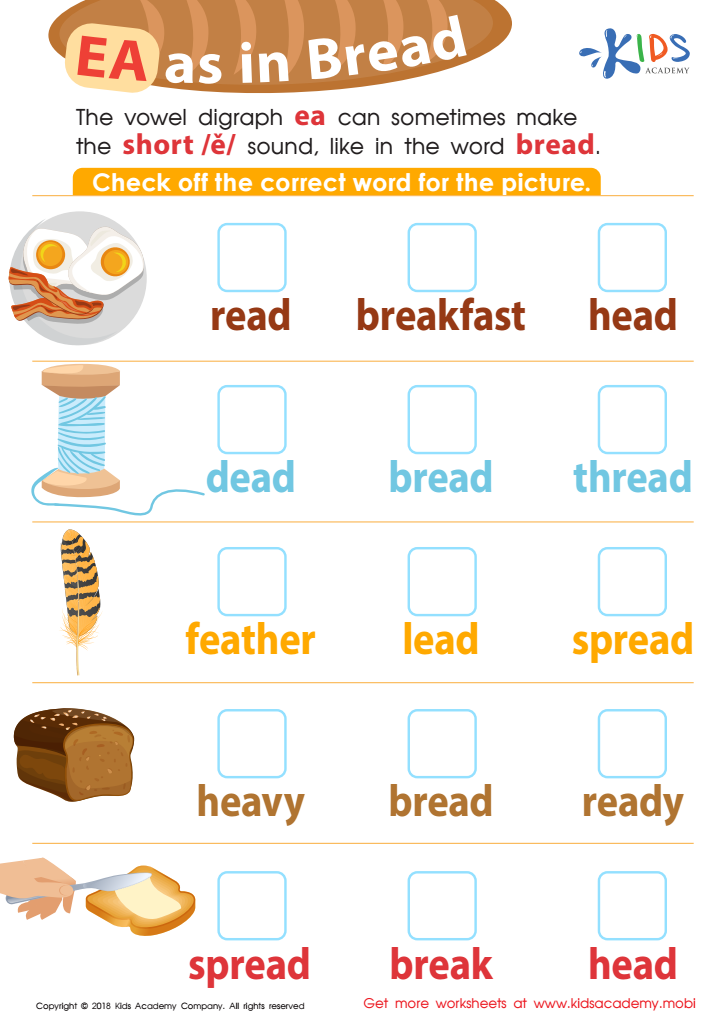
Reading: EA as in Bread Worksheet


Reading: EA as in Bread Worksheet

The vowel digraph ea can be read in two ways. Examples of the long sound are "read" and "lead"; examples of the short sound are "bread" and "head". Ask your kids to give you more examples and then have them check off the correct word for the pictures on this worksheet. This will help them understand the ea sound.
Reading: EA as in Bread Worksheet

Worksheet


Vocabulary expansion and understanding vowel blends are crucial for children aged 3-7 as they lay the foundation for reading and writing proficiency. During these formative years, children are rapidly acquiring language skills, and a strong vocabulary enhances their ability to express ideas, understand concepts, and engage in conversations. Teaching vowel blends, such as "ay," "ea," and "oi," helps children recognize phonetic patterns, which strengthens their decoding skills, an essential component of reading.

When parents and teachers prioritize vocabulary and vowel blends, they support literacy development, improve comprehension, and boost children's confidence in their language abilities. Rich vocabulary equips children with choices in their speech and writing, allowing them to communicate more effectively and creatively. Additionally, an expanded vocabulary enhances critical thinking and inferencing skills, setting the stage for greater academic success.

Furthermore, engaging children with varied vocabulary and vowel blends can make learning enjoyable through interactive games, storytelling, and songs. This playful approach not only nurtures a love for learning but also fosters a positive literacy experience. By actively supporting vocabulary expansion and vowel blend understanding, parents and teachers play a pivotal role in shaping proficient readers and confident communicators for the future.