Vowel Diphthongs Worksheets for Ages 3-7 - Page 2
26 filtered results
-
From - To
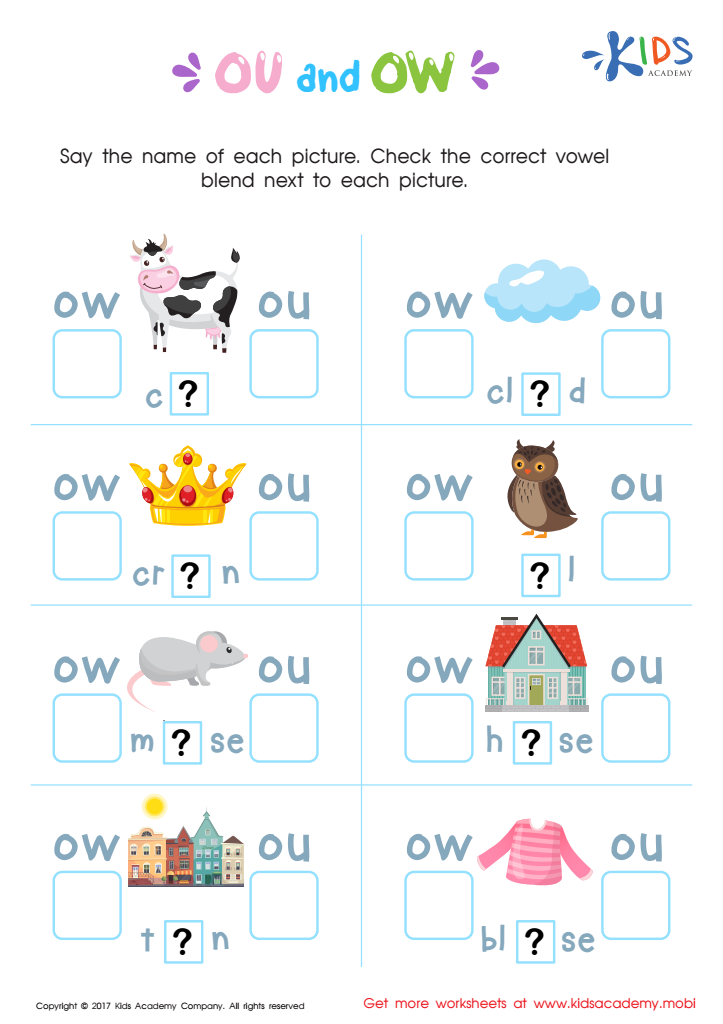
OU and OW Words Worksheet
 Assign to My Students
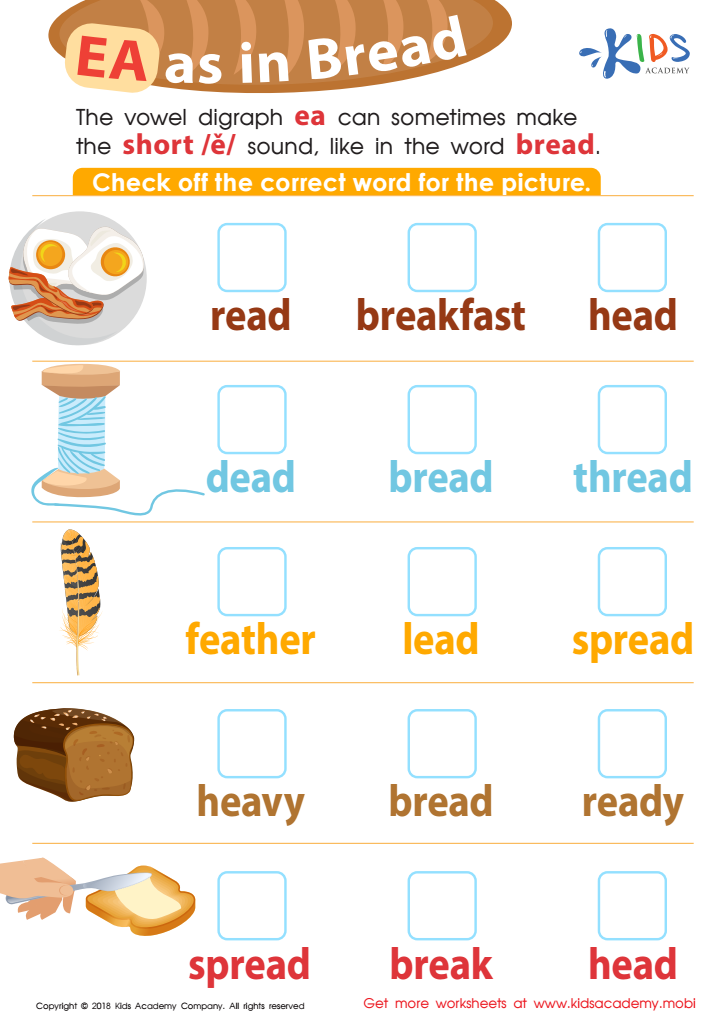
Reading: EA as in Bread Worksheet


Teachers and parents should highly value vowel diphthongs in early education because these complex sound combinations significantly enhance a child's phonetic and linguistic abilities. Vowel diphthongs involve gliding from one vowel sound to another within the same syllable, essential for fluent reading and clear pronunciation. For ages 3-7, learning diphthongs can demystify irregular spellings and provide a strong foundation for reading proficiency.
During these formative years, children's brains are exceptionally receptive to new sounds and language patterns. Introducing diphthongs helps them differentiate between similar-sounding words, improving their listening and comprehension skills. Additionally, mastering diphthongs will expand their vocabulary, enabling them to express themselves better both orally and in writing.
Moreover, understanding diphthongs prepares young learners for more advanced linguistic challenges. It's crucial for decoding words that do not follow straightforward phonetic rules. For example, knowing the 'oy' sound as in "toy" or the 'ow' sound as in "cow" enables more accurate pronunciation and spurs confidence in reading aloud. By focusing on vowel diphthongs early, teachers and parents effectively support their children's language development, setting a solid groundwork for future academic success.