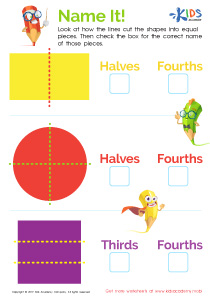
Following instructions 2D Shapes Worksheets for Ages 3-7
3 filtered results
Difficulty Level
Grade
Age
-
From - To
Subject
Activity
Standards
Explore our engaging "Following Instructions 2D Shapes Worksheets" designed for children ages 3-7! These worksheets help young learners develop vital skills in both math and listening comprehension as they practice identifying, drawing, and coloring various 2D shapes. Each activity encourages kids to follow clear, simple instructions, enhancing their ability to process directions effectively. Perfect for early-grade classrooms or home learning, these interactive resources aim to foster a love for shapes and boost confidence in following multi-step tasks. Download now to enhance your child's learning experience and set them up for success in their academic journey!
Favorites
With answer key
Interactive
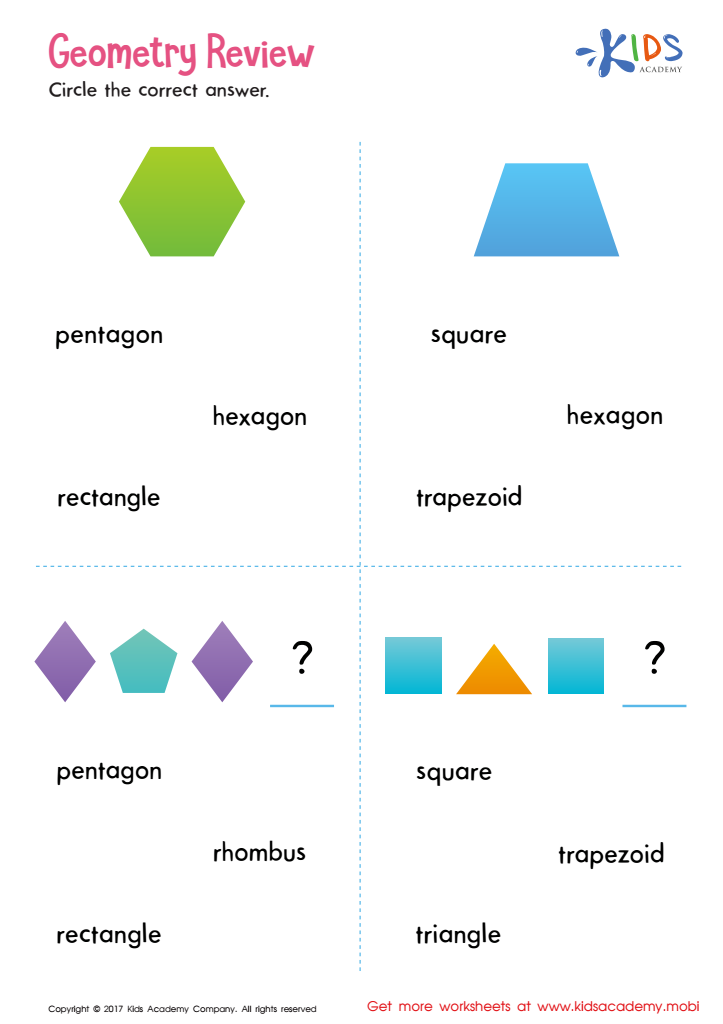
Geometry Review Printable
Repetition is key to success; give your child the practice they need with this geometry worksheet.
 Assign to My Students
Geometry Review Printable
Worksheet


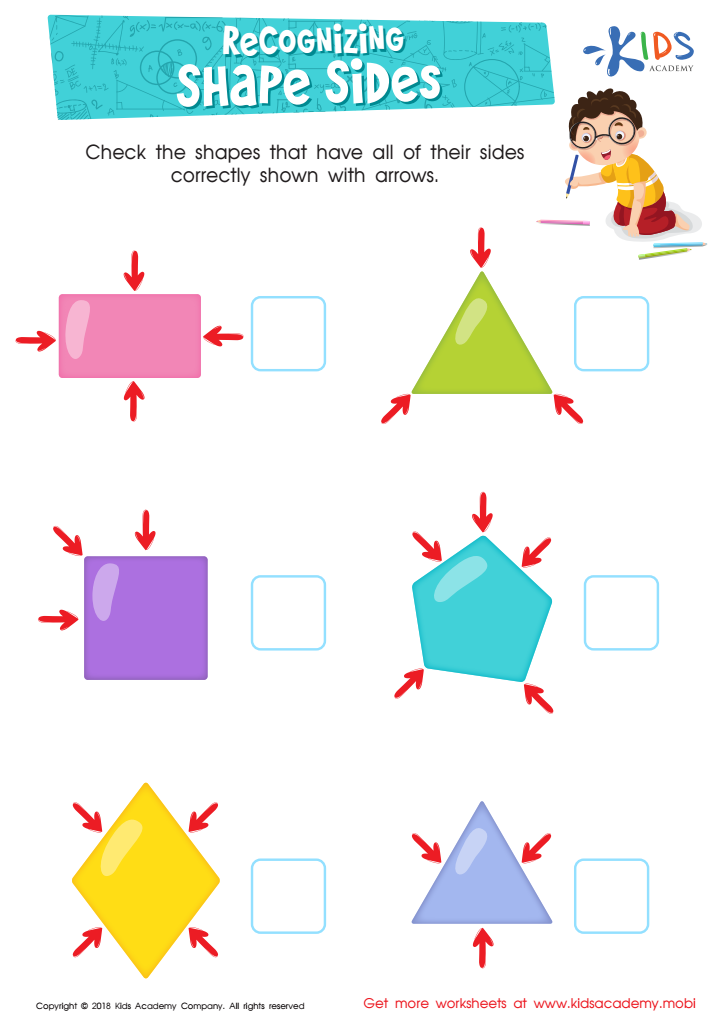
Recognizing Shape Sides Worksheet
This exercise will help your child recognize shape sides. Go over the difference between sides and angles first, then have them check the shapes with arrows to show the sides. They'll quickly get the hang of it and find it much easier after completing the colorful worksheet.
Recognizing Shape Sides Worksheet
Worksheet
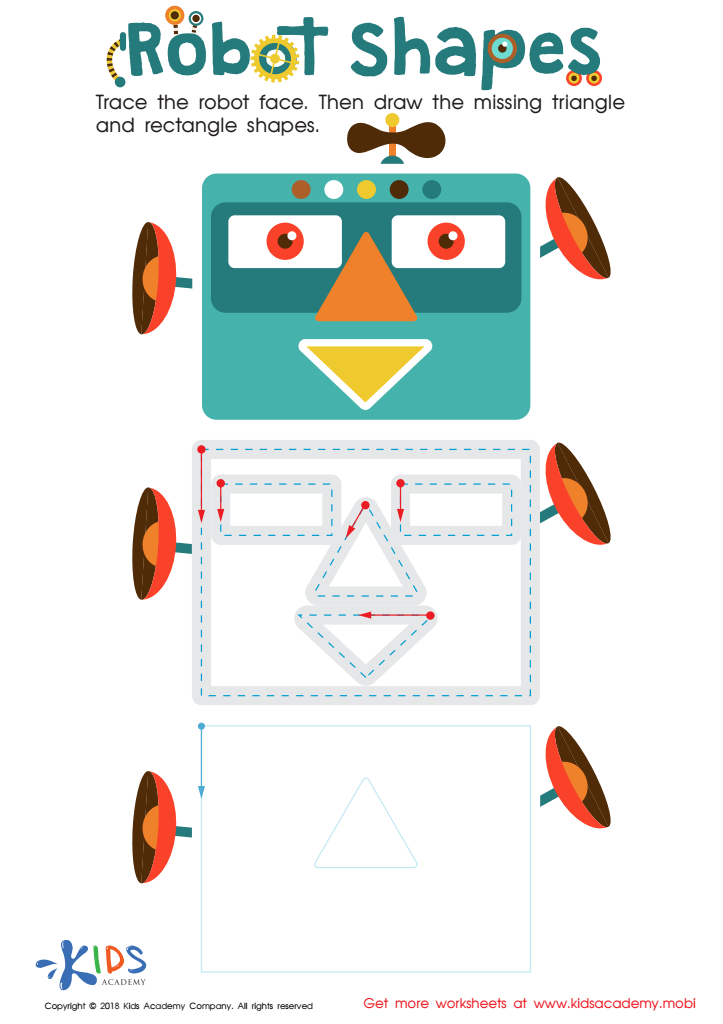
Robot Shapes Worksheet
Help your preschooler get started with math skills while having fun with this shape tracing worksheet featuring a cute robot! Ask them to study the first image, trace the dotted lines to draw the shapes in the second, and color the third. With this activity, they'll learn shapes while enjoying the funny robot pictures!
Robot Shapes Worksheet
Worksheet
Join Kids Academy for Free
Who is primarily going to use this learning content?








Following instructions for 2D shapes is crucial for children ages 3–7 as it lays the foundation for their cognitive, social, and motor skills. At this age, children are developing their ability to understand and process information. Learning to recognize, create, and manipulate shapes not only enhances their spatial awareness but also improves critical thinking and problem-solving abilities. When children follow instructions to identify shapes, they practice listening skills and discipline, which are essential for their overall development.
Additionally, shape recognition often acts as a precursor for more complex mathematical concepts. Early familiarity with shapes helps children make sense of the world around them and fosters an understanding of geometry that will begin in later grades. Activities that involve following instructions related to shapes encourage teamwork and communication, as children often work in groups, learning to articulate their thoughts and ideas.
Moreover, for parents and teachers, facilitating these activities creates opportunities for guided exploration and interaction, enriching their educational experience. This engagement supports children's confidence and offers a platform for them to practice patience and persistence. Overall, prioritizing instruction-following in shape activities is an invaluable investment in young learners’ holistic development.