Adding up to 50 Without Regrouping Worksheets for Ages 3-7
73 filtered results
-
From - To
Introduce your child to basic addition with our "Adding up to 50 Without Regrouping Worksheets for Ages 3-7." Specially designed for young learners, these engaging printable worksheets simplify arithmetic, ensuring kids grasp concepts confidently. Each worksheet fosters foundational math skills through fun exercises that teach students how to add numbers within 50 without regrouping. Perfect for preschool to early elementary stages, they encourage independent learning and build primary numeracy proficiency. Equip your child with the essential tools to succeed in their math journey, making learning enjoyable and effective with our thoughtfully crafted worksheets.
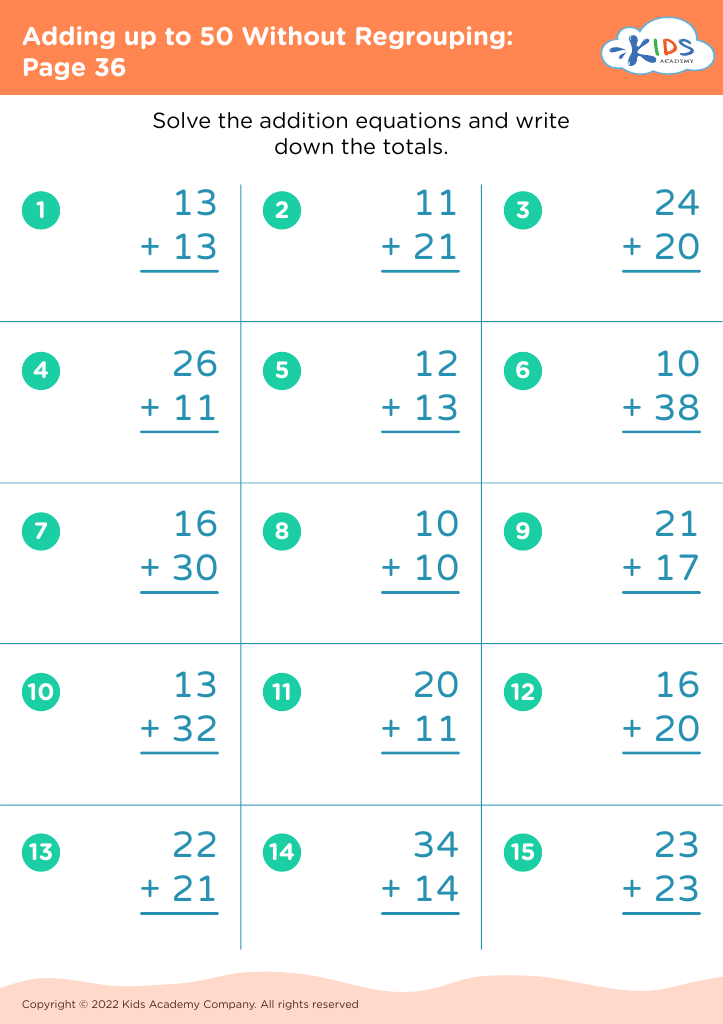
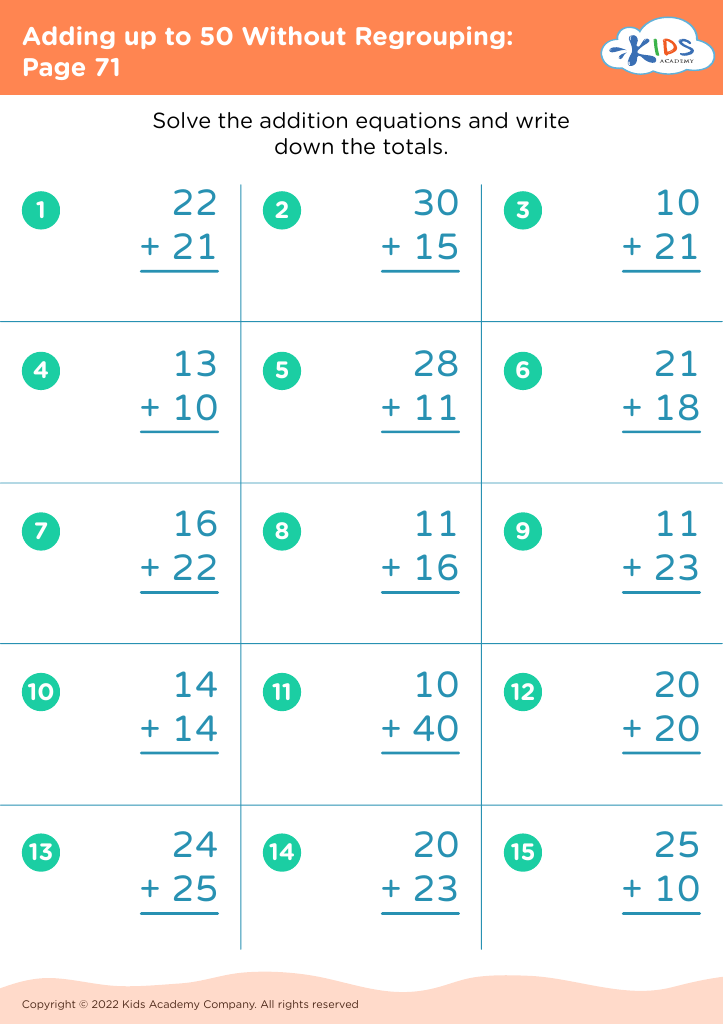
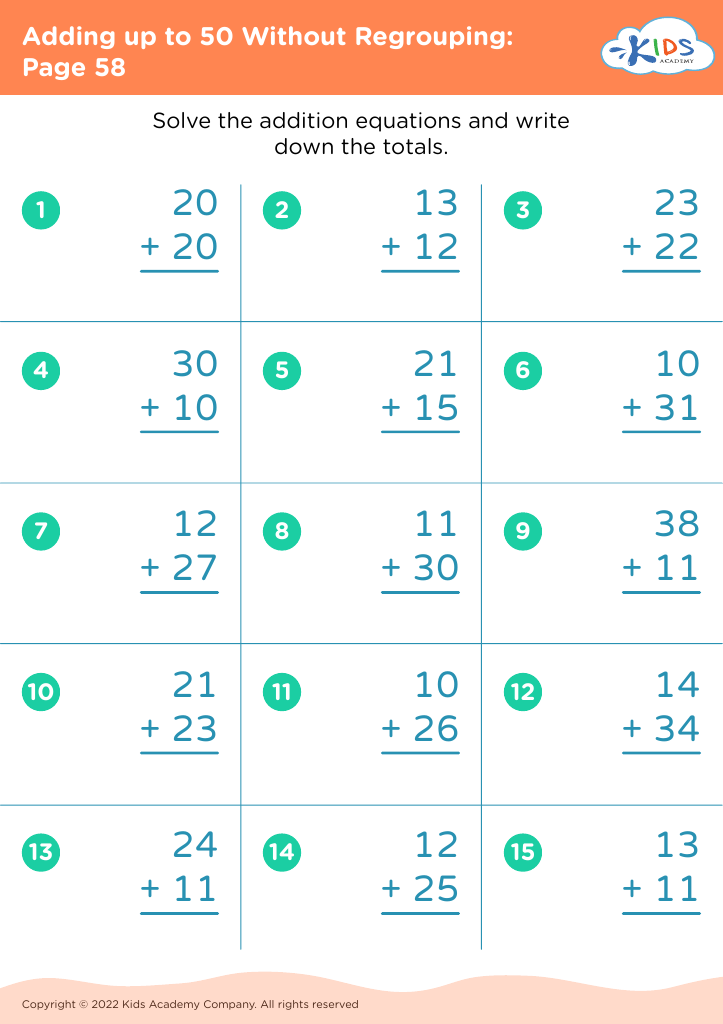
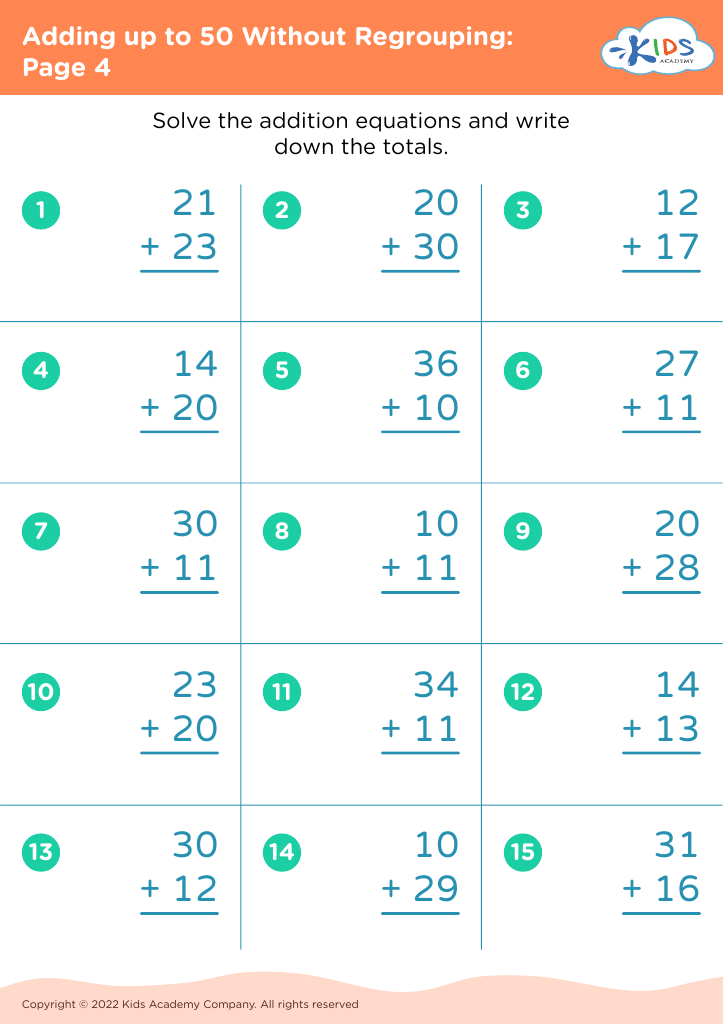
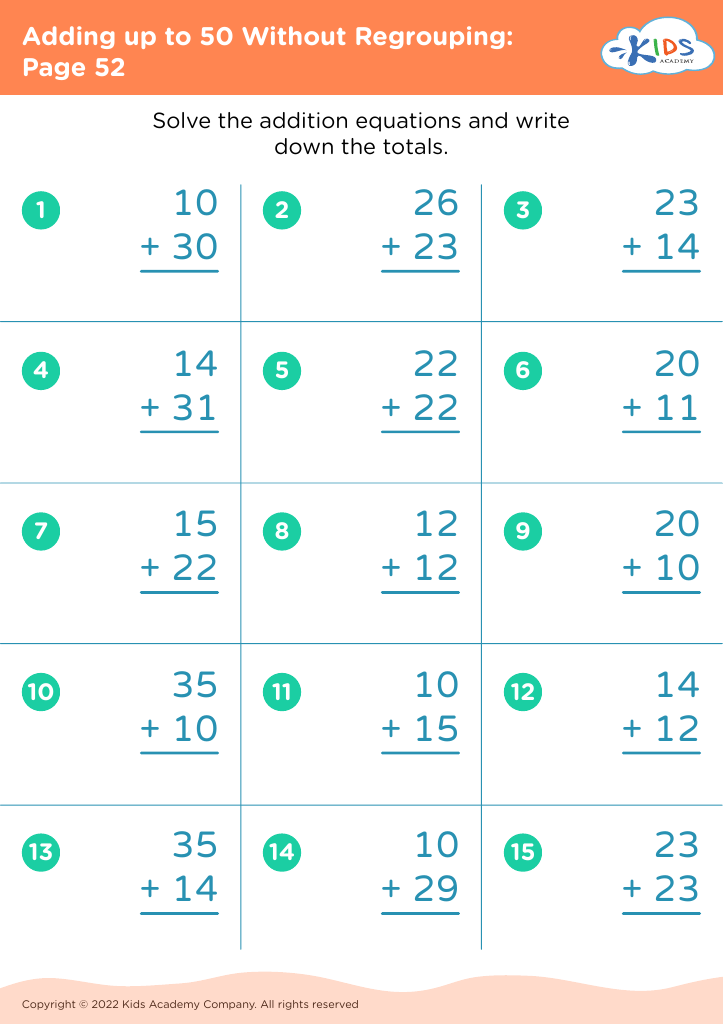
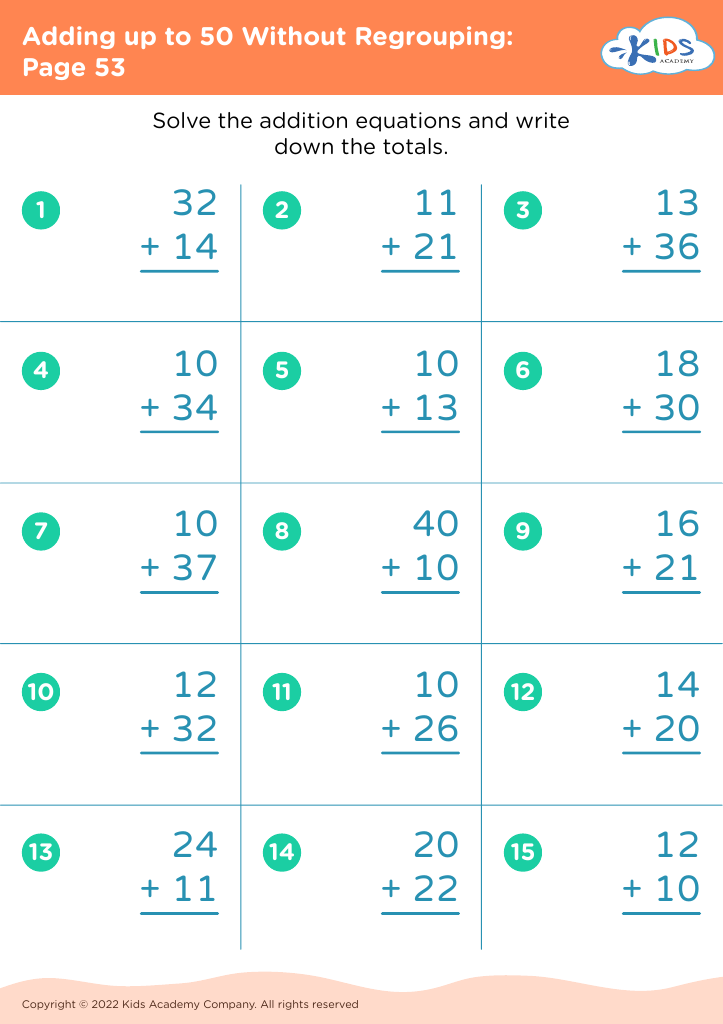
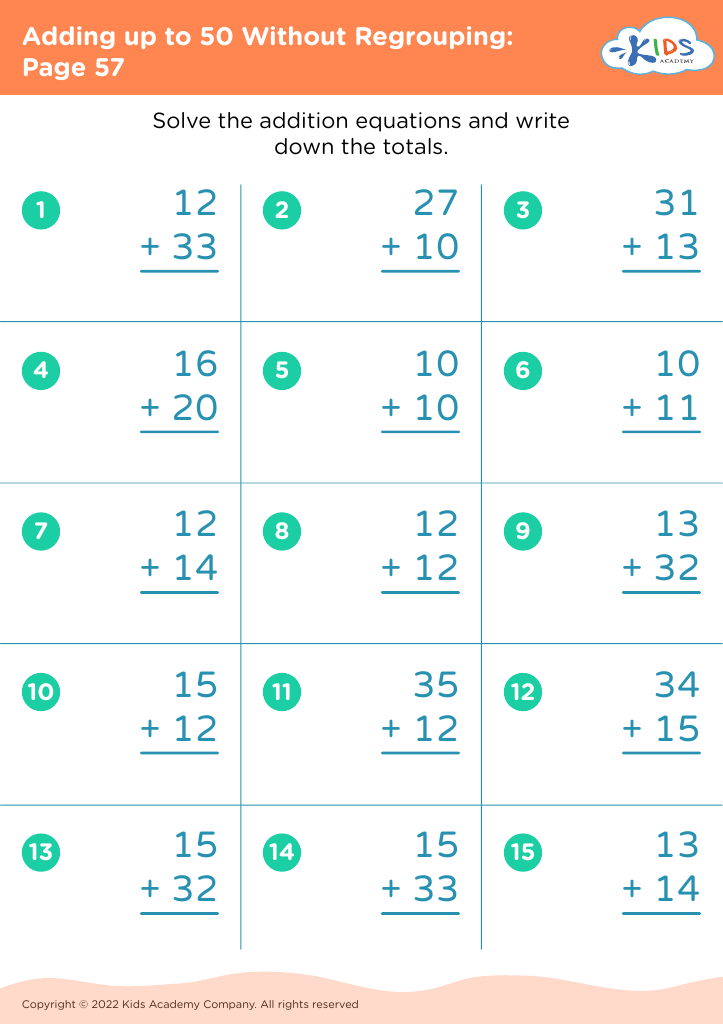
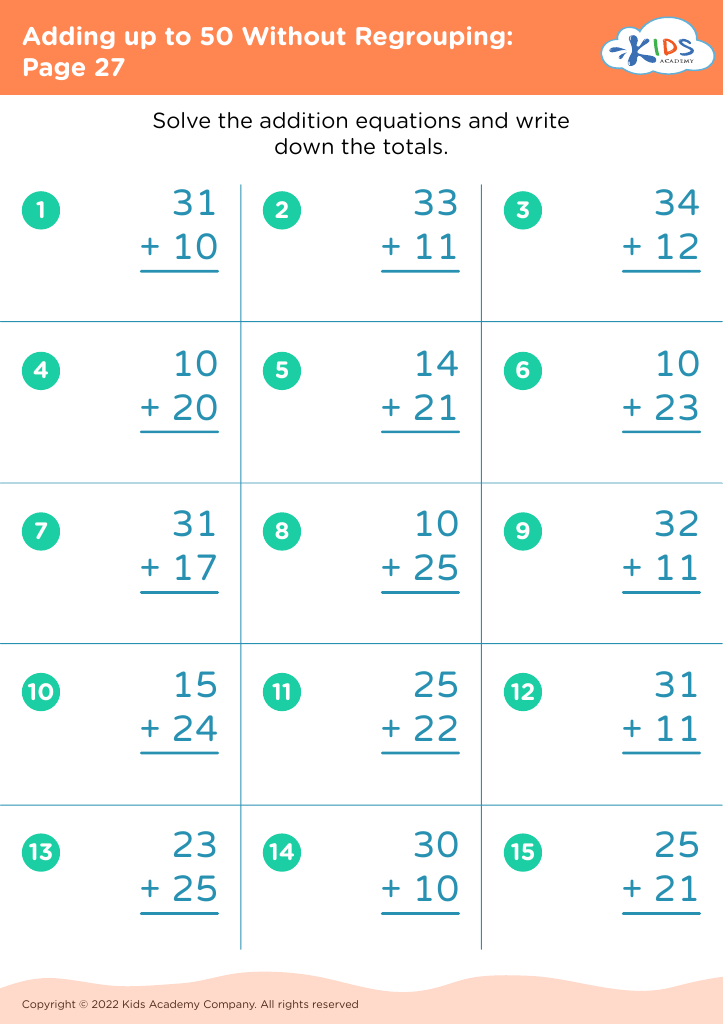
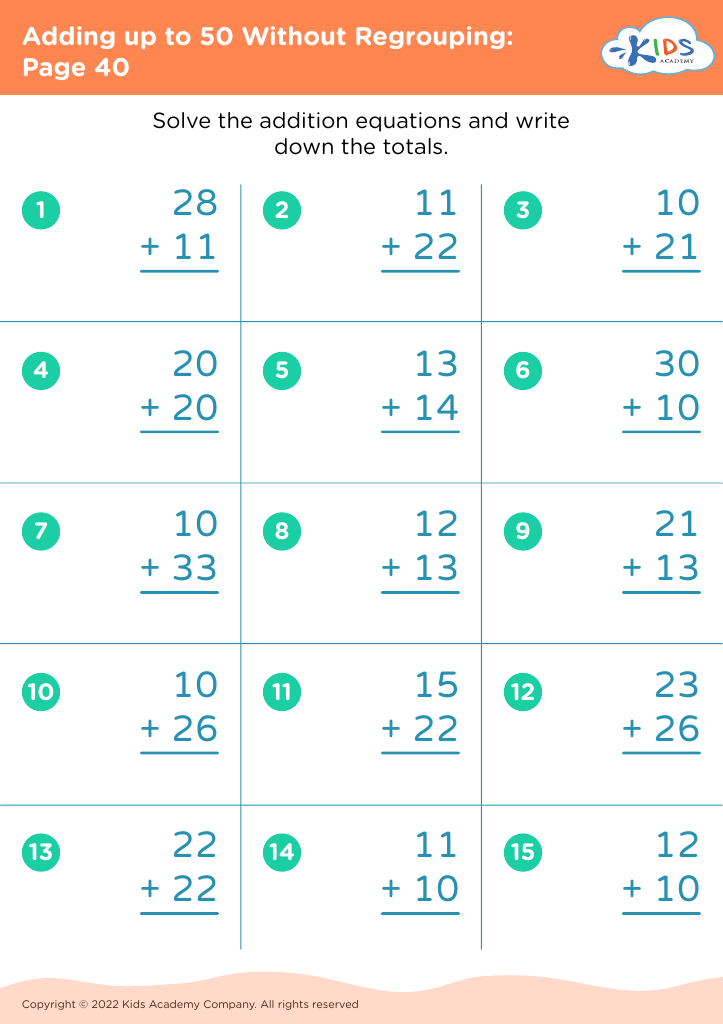
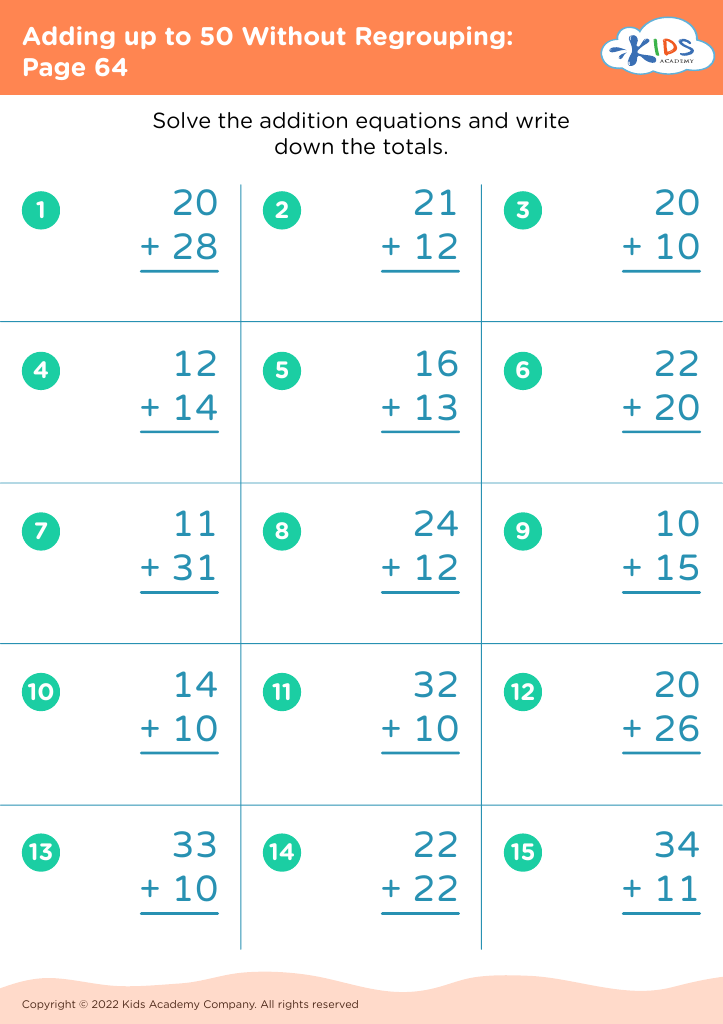
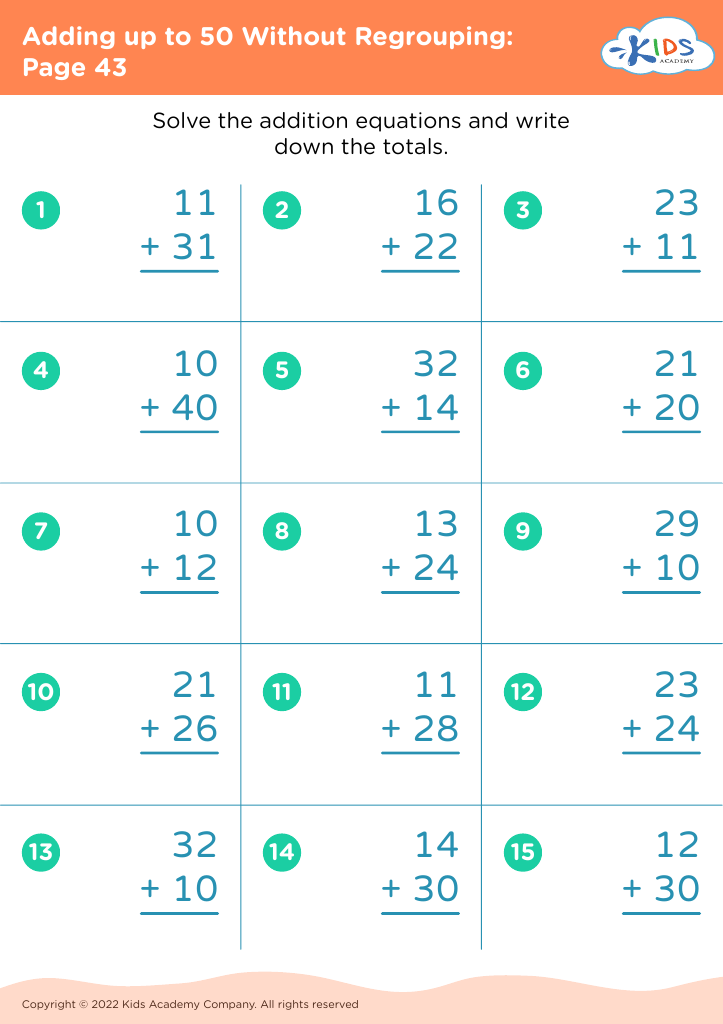
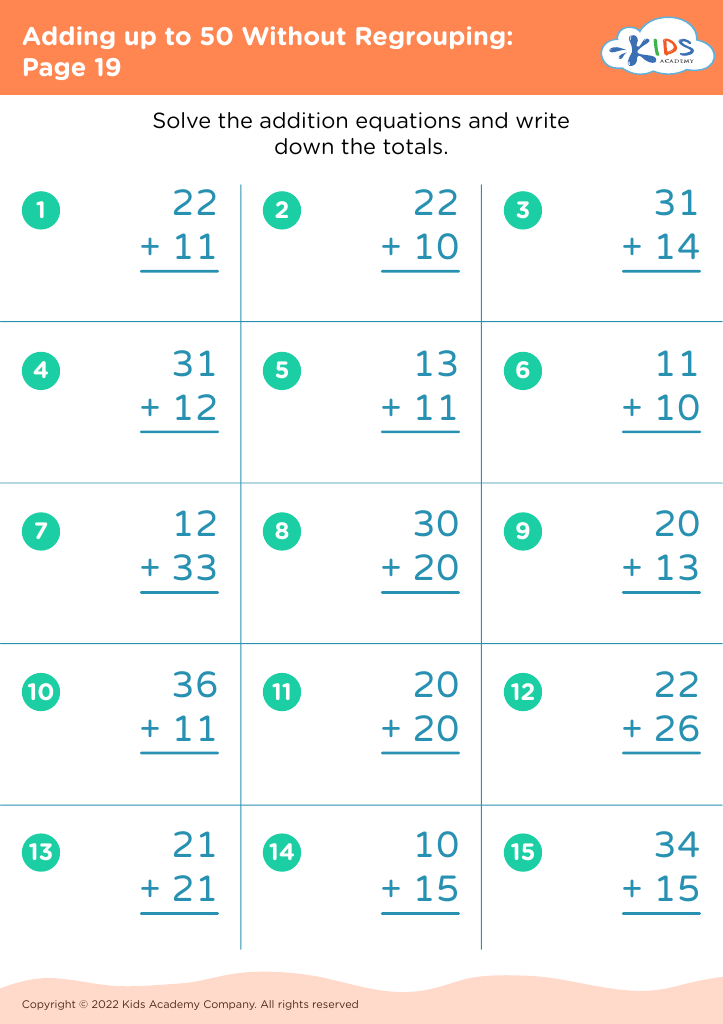
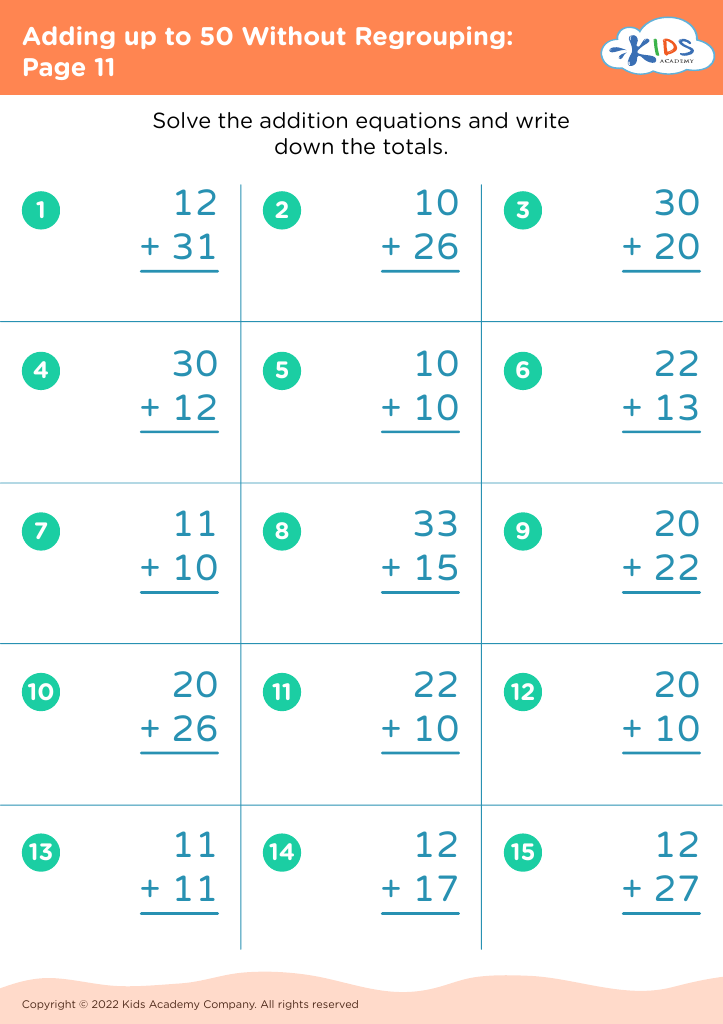
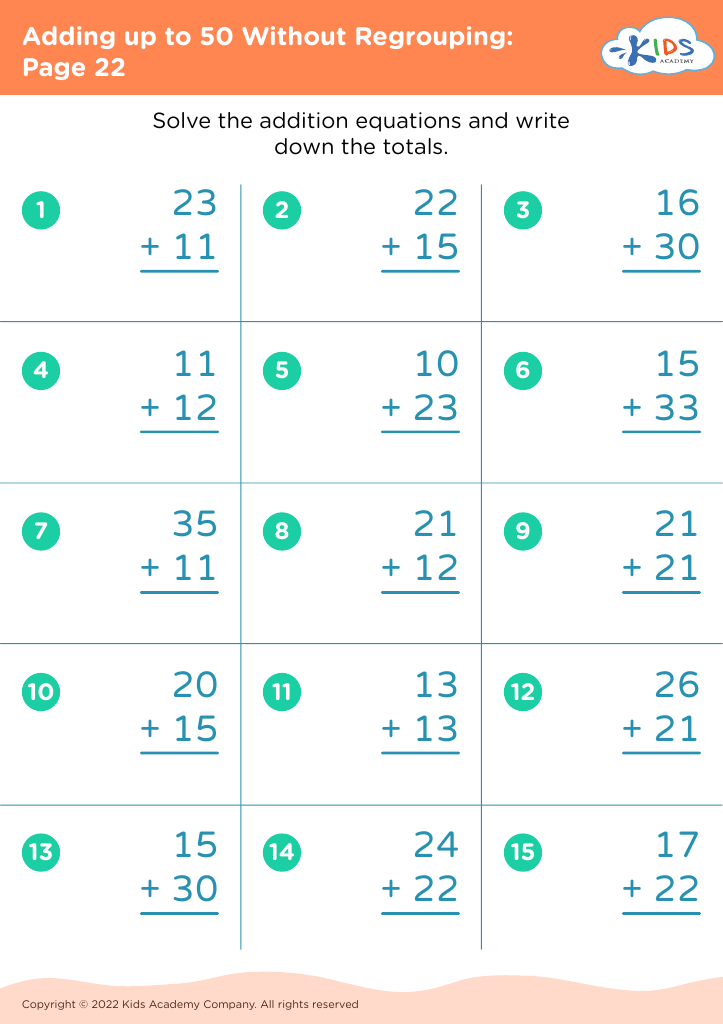
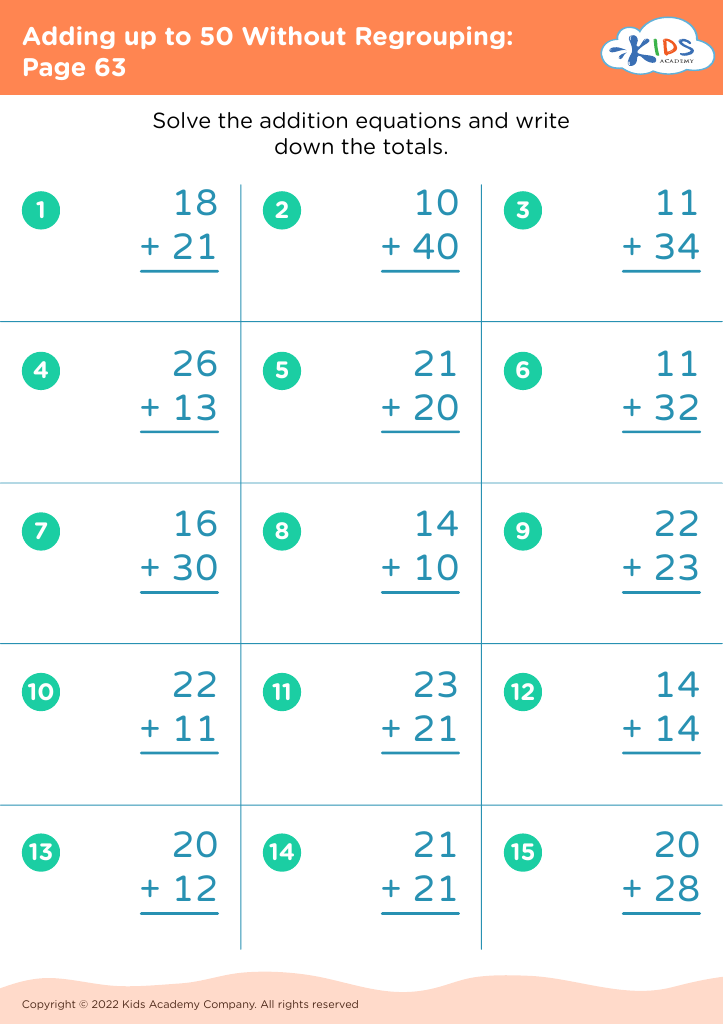
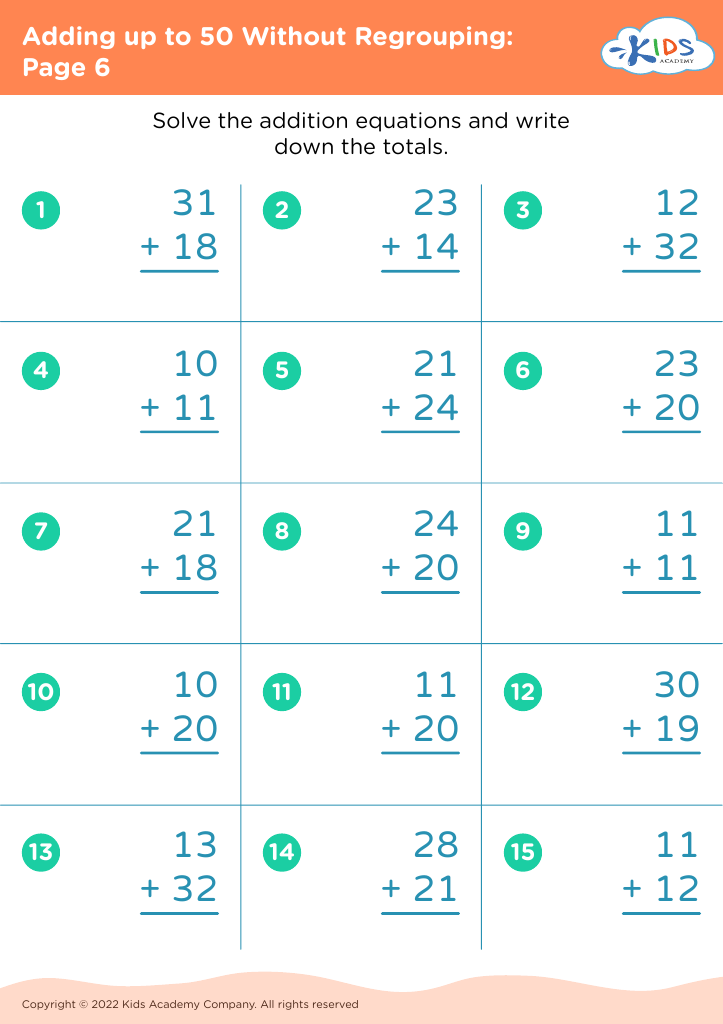
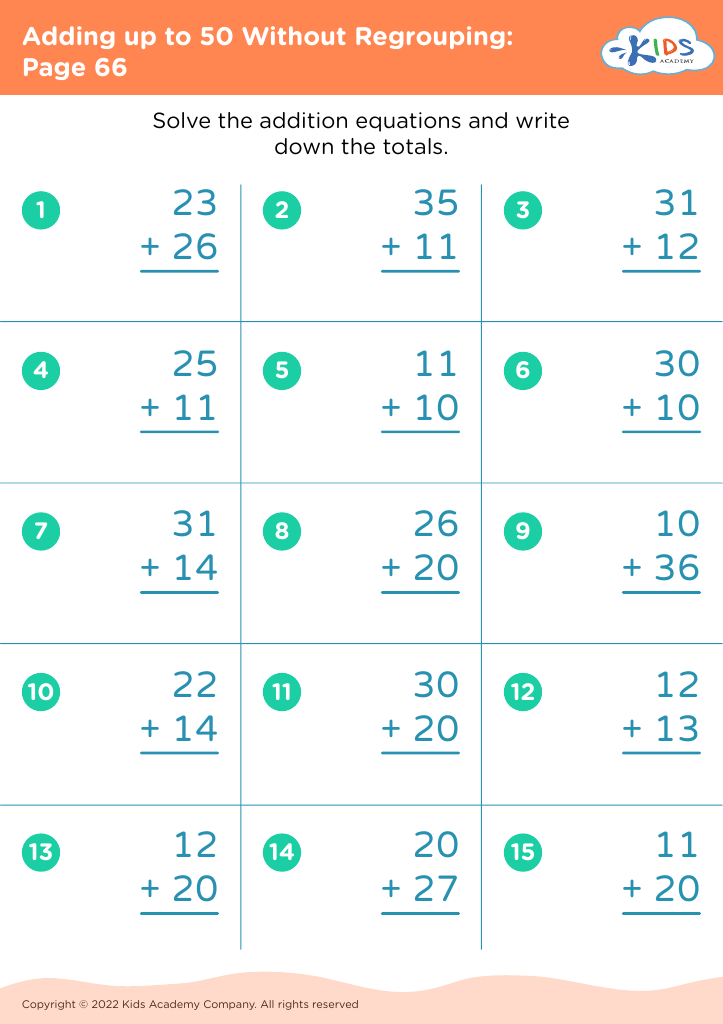
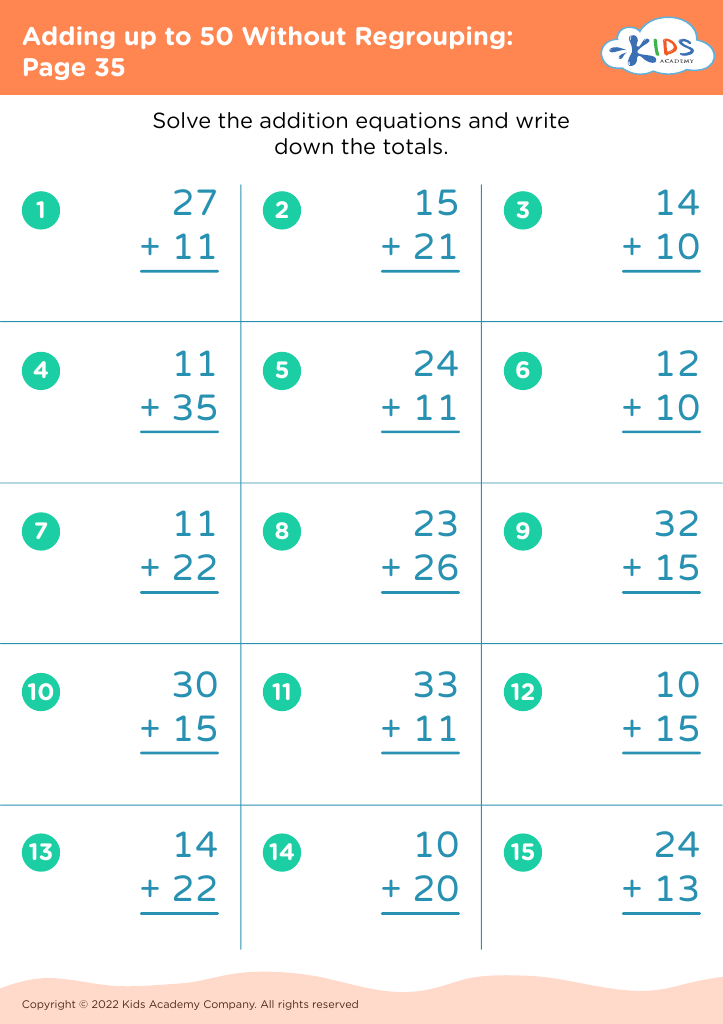
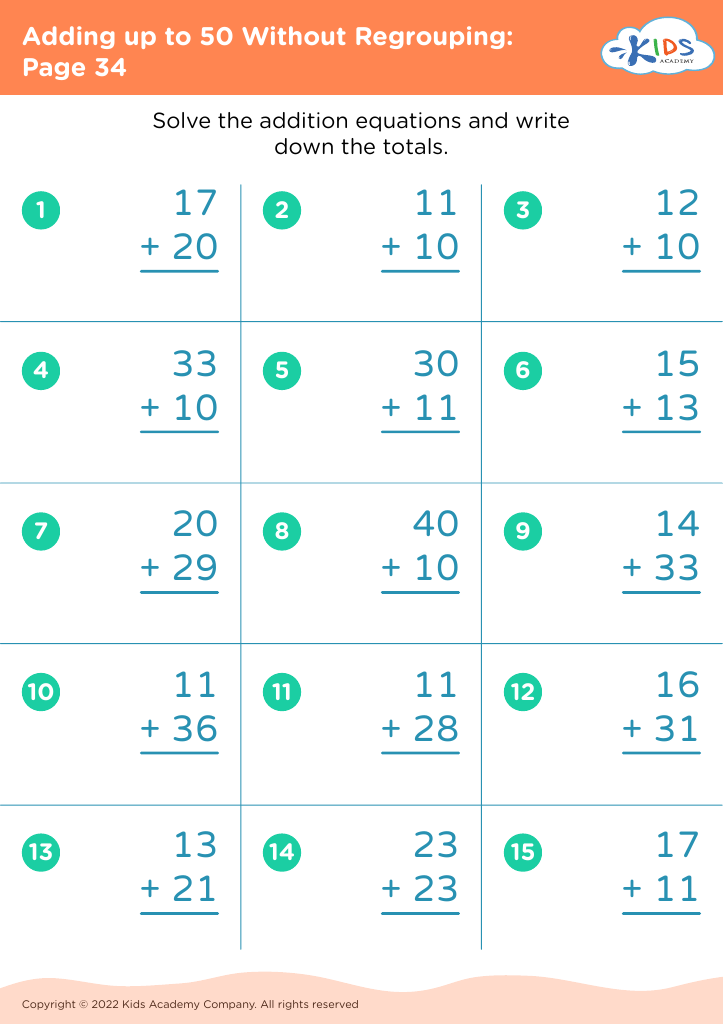
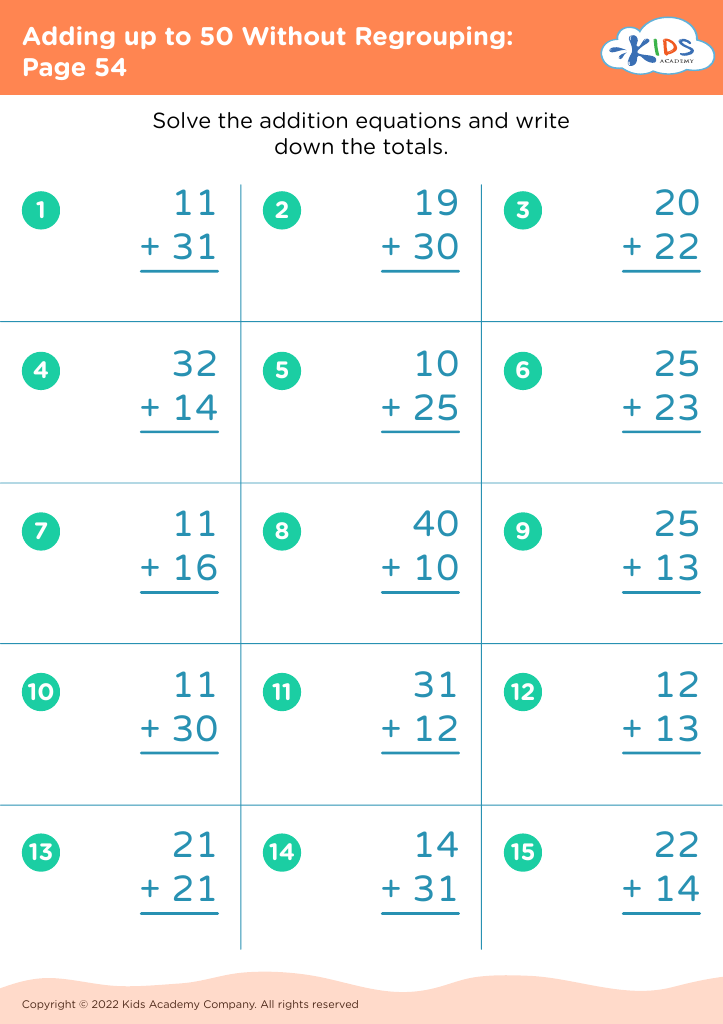
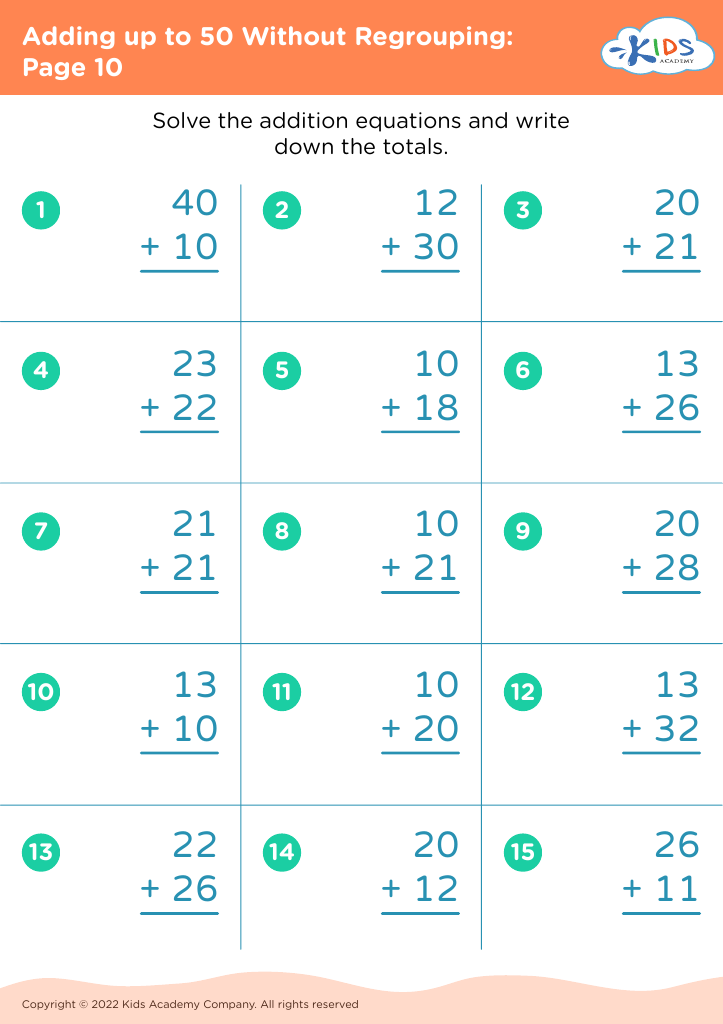
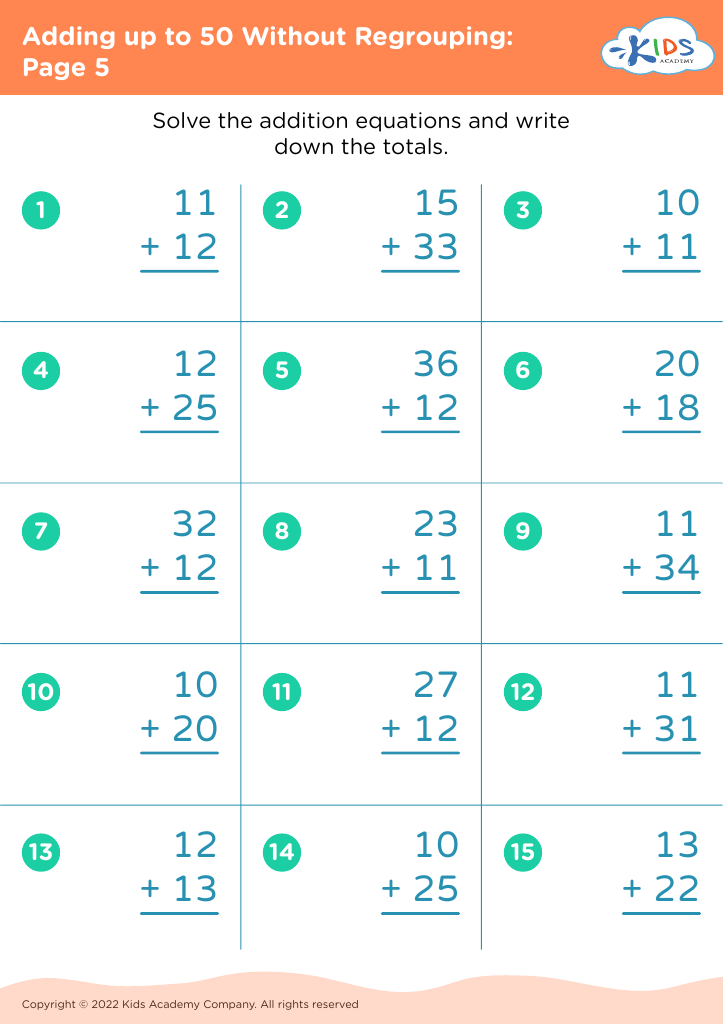
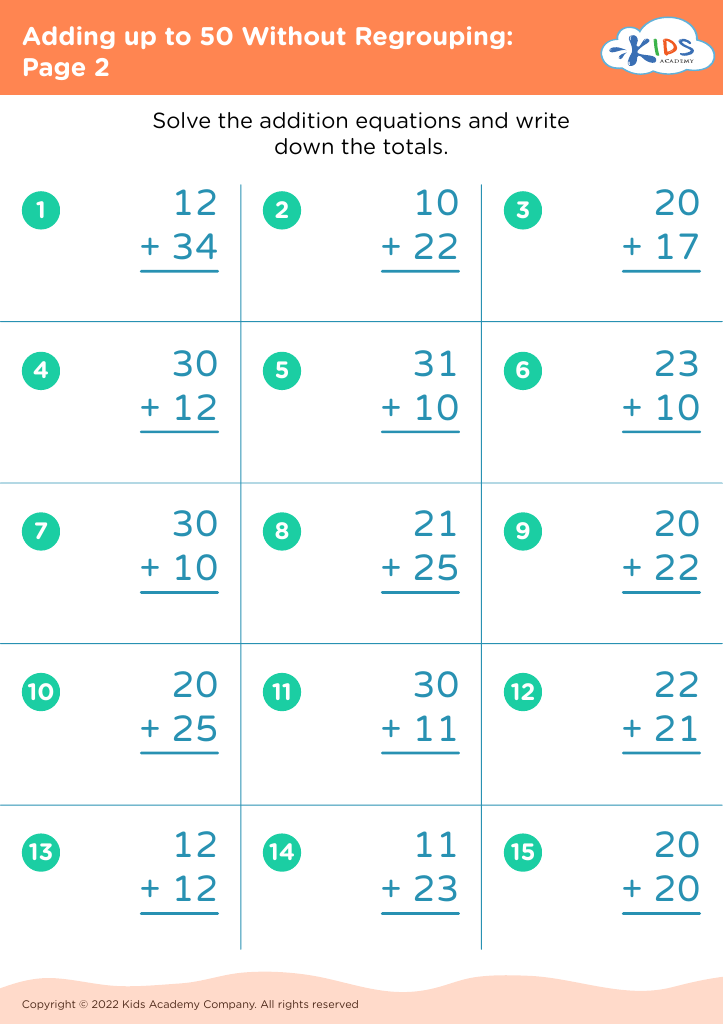
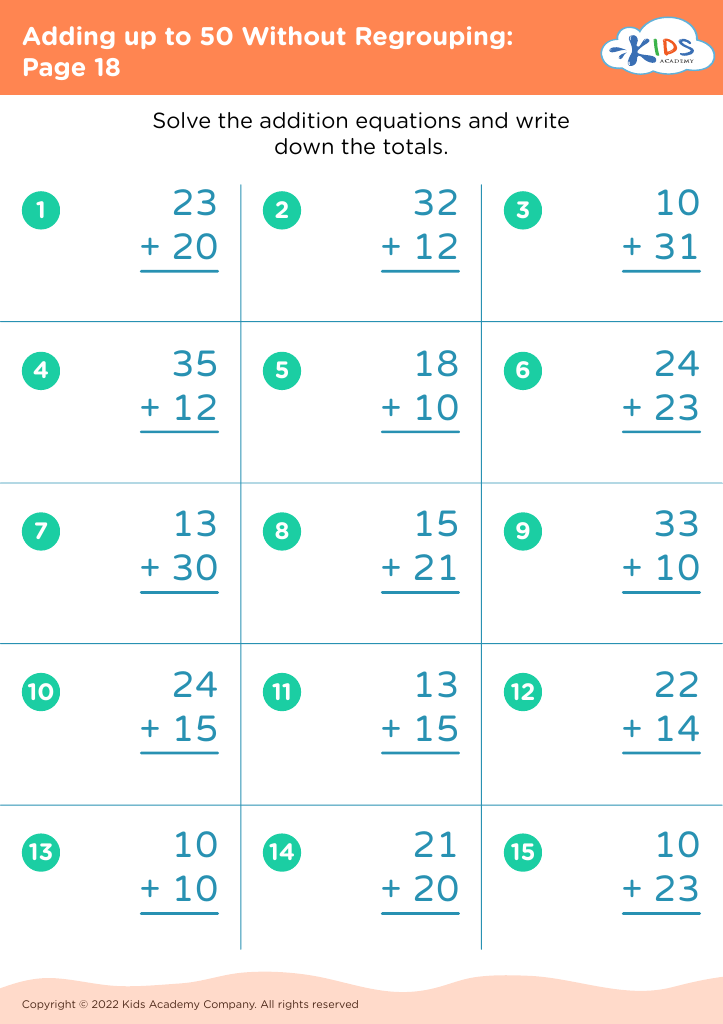


Teaching children ages 3-7 to add up to 50 without regrouping is a fundamental arithmetic skill that lays the groundwork for future mathematical learning. For parents and teachers, it is crucial to focus on this concept as it assists young learners in developing a strong understanding of numbers and basic operations, which are essential skills in daily life.
Understanding addition up to 50 without regrouping provides children with a sense of confidence and proficiency that encourages a positive attitude towards math. This early experience can shape their perception of the subject and significantly reduce math anxiety. Without the complication of regrouping, children can concentrate purely on the addition process, fostering a clearer, distraction-free learning environment where they can easily grasp the idea of combining numbers.
Moreover, mastering addition up to 50 supports children in developing mental math skills, which are invaluable for quick problem-solving and everyday tasks involving numbers, such as counting money or adding up scores in games. It also acts as a stepping stone for more advanced arithmetic, including regrouping and eventually subtraction, multiplication, and division.
By ensuring that children can successfully add up to 50 without regrouping, parents and teachers are providing them with the foundational tools they need to navigate a world where math is omnipresent, thereby setting them up for academic success and everyday competence.