Adding with Busy Bugs Worksheets for Ages 3-7 - Page 4
77 filtered results
-
From - To
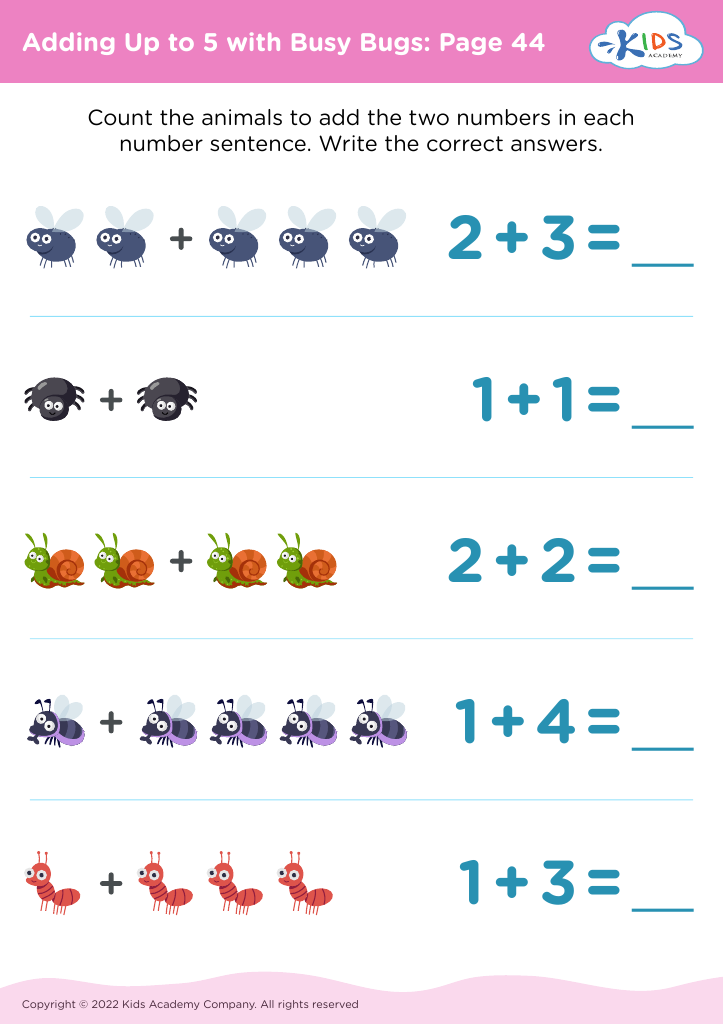
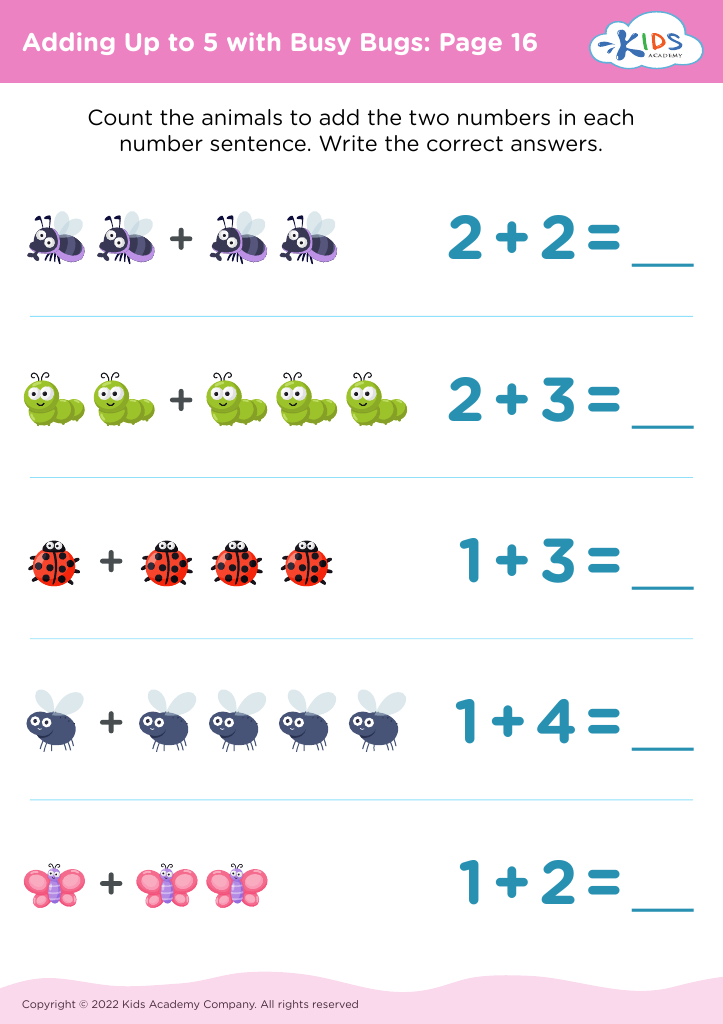
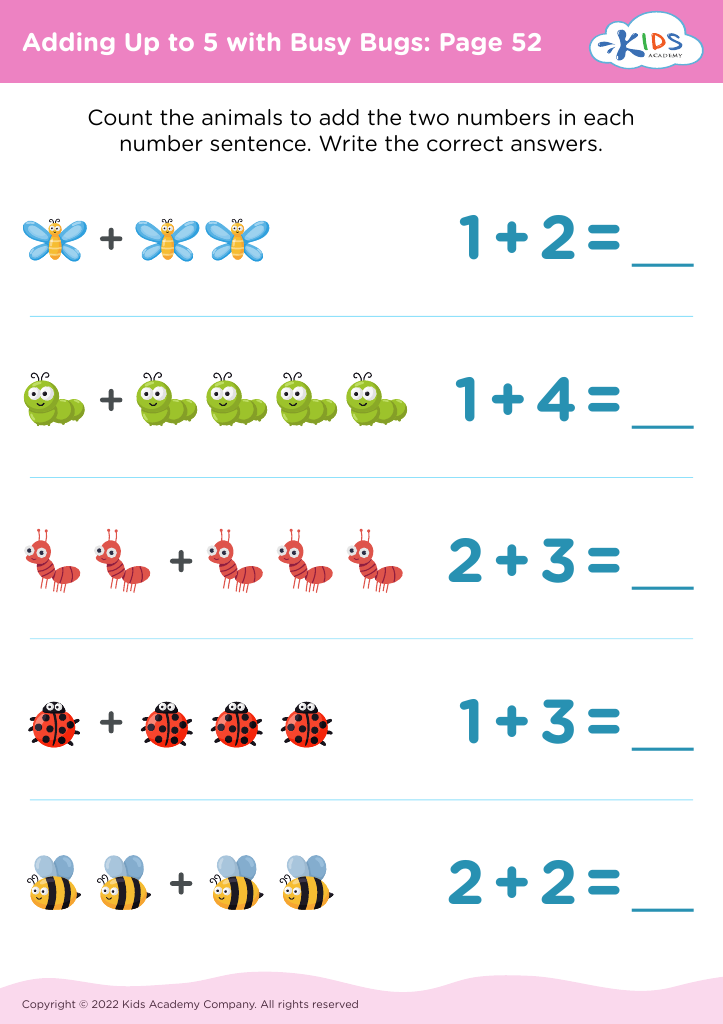
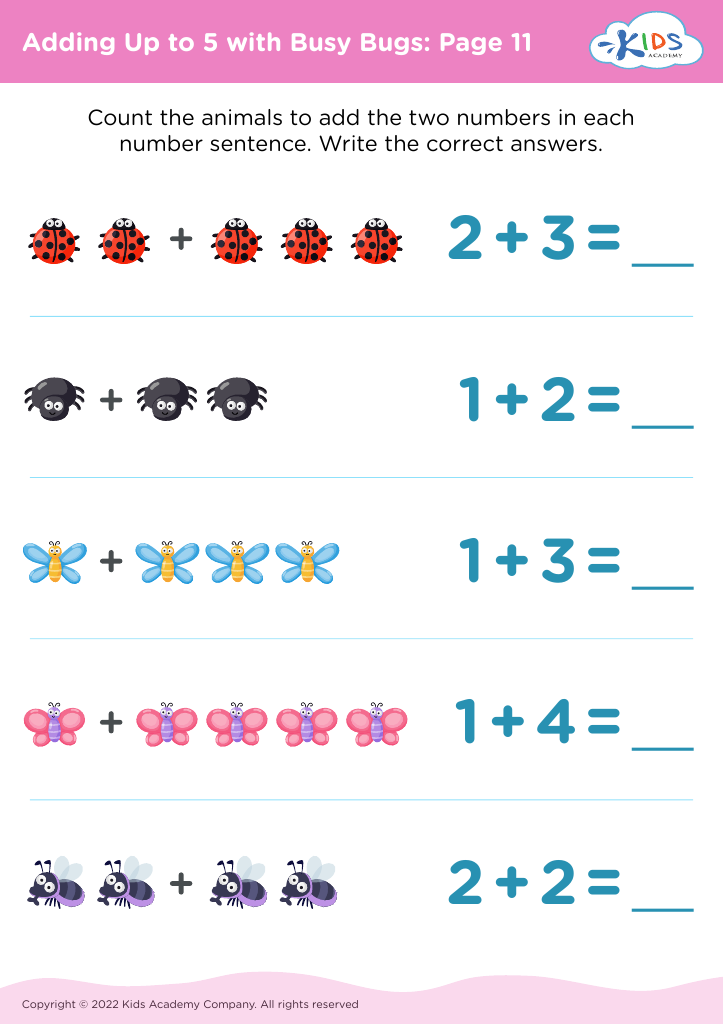
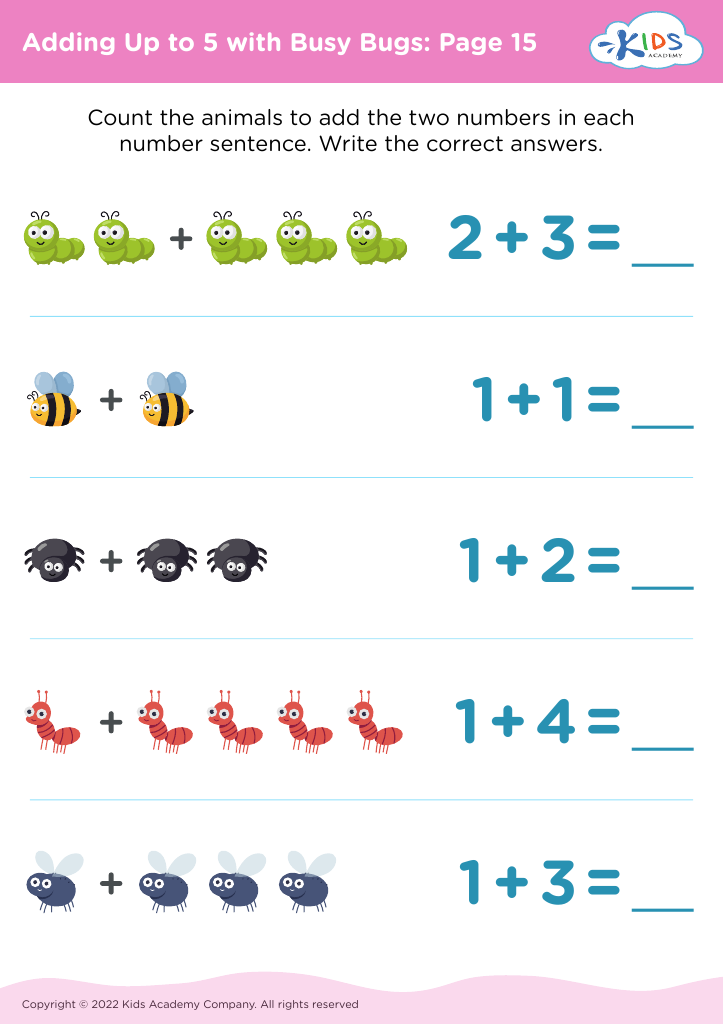



Parents and teachers should prioritize "Adding with Busy Bugs" for children aged 3-7 because it effectively combines learning with engaging play, making math both enjoyable and accessible. This resource introduces early math concepts through vivid illustrations, relatable characters, and hands-on activities that capture children's attention and curtail frustration often associated with learning. The program's interactive approach encourages exploration, allowing children to grasp addition through practical examples that relate to their everyday experiences.
Additionally, "Adding with Busy Bugs" fosters essential skills beyond numeracy. It promotes critical thinking, problem-solving, and fine motor skills as children manipulate materials to find solutions. Social skills are also enhanced through collaborative play, where children work together to solve problems.
Integrating this fun and educational tool into early childhood learning supports a strong foundation in mathematics, which is vital as children progress academically. Engaged and motivated learners are more likely to develop a positive attitude towards math, leading to greater success in the future. In summary, "Adding with Busy Bugs" nurtures not just the cognitive abilities of young learners, but also their emotional and social development, creating a well-rounded and enriching educational experience.