Counting proficiency Addition & Subtraction Worksheets for Ages 3-7
11 filtered results
-
From - To
Boost your child’s math skills with our engaging Counting Proficiency Addition & Subtraction Worksheets for ages 3-7! Designed to make learning fun, these worksheets help young learners develop essential counting abilities while mastering basic addition and subtraction. Our age-appropriate activities promote visual recognition of numbers, enhance problem-solving skills, and build a strong foundation in math. Each worksheet is crafted to be enjoyable and interactive, encouraging kids to practice independently. Suitable for home or classroom settings, these resources are perfect for enhancing your child's confidence and proficiency in math. Explore our collection and watch your child thrive in their mathematical journey!
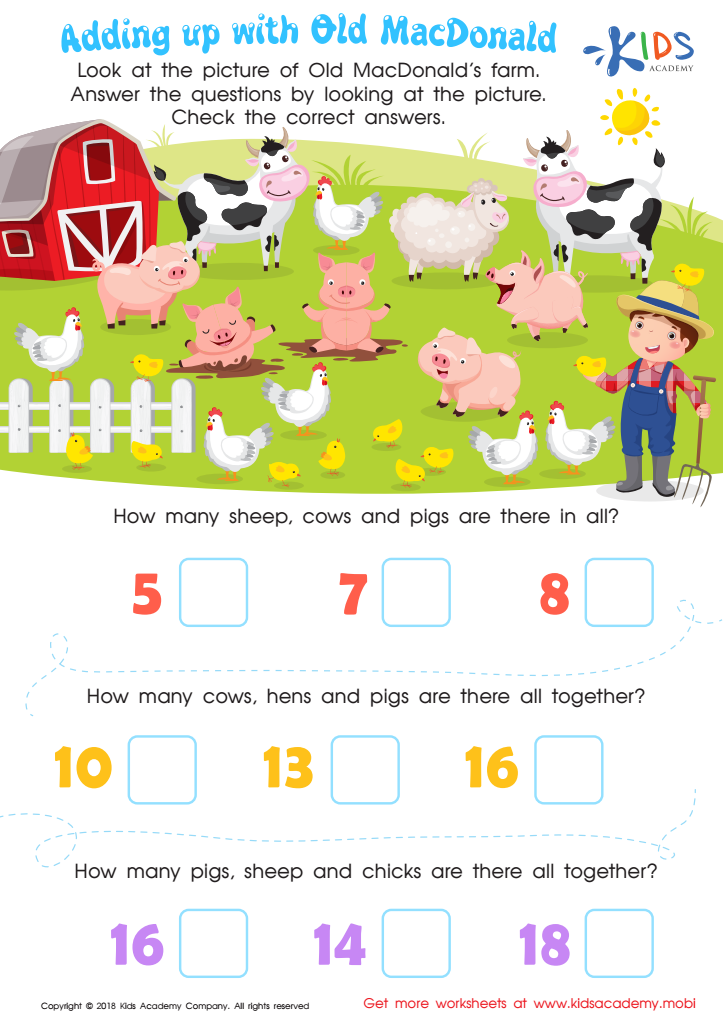
Adding Up with Old MacDonald Worksheet
 Assign to My Students
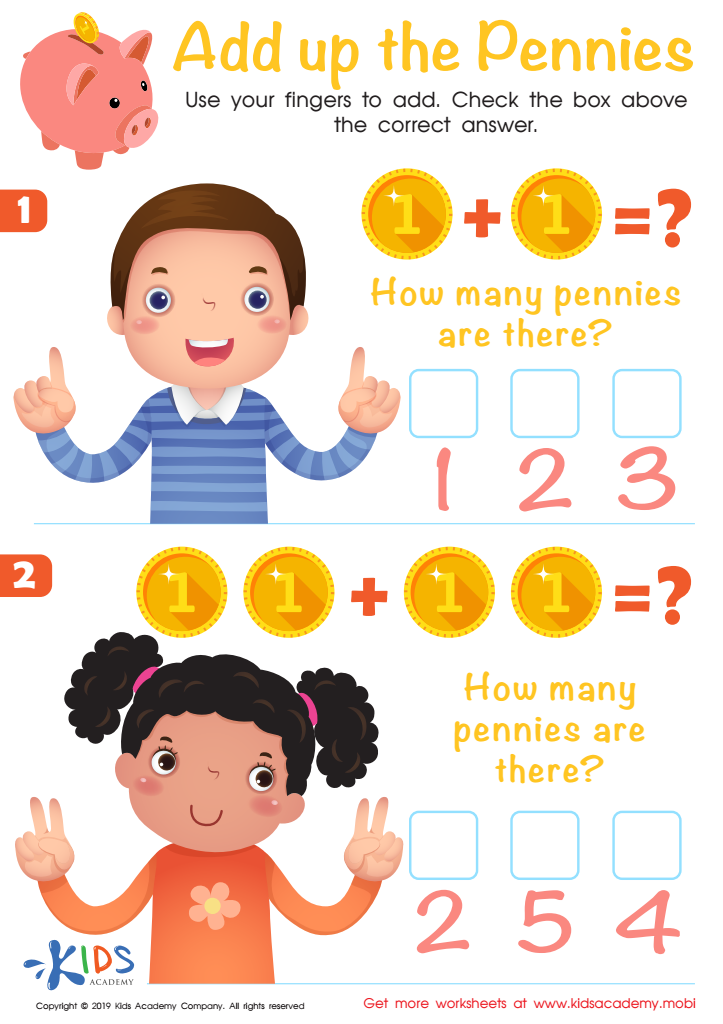
Add up the Pennies Worksheet
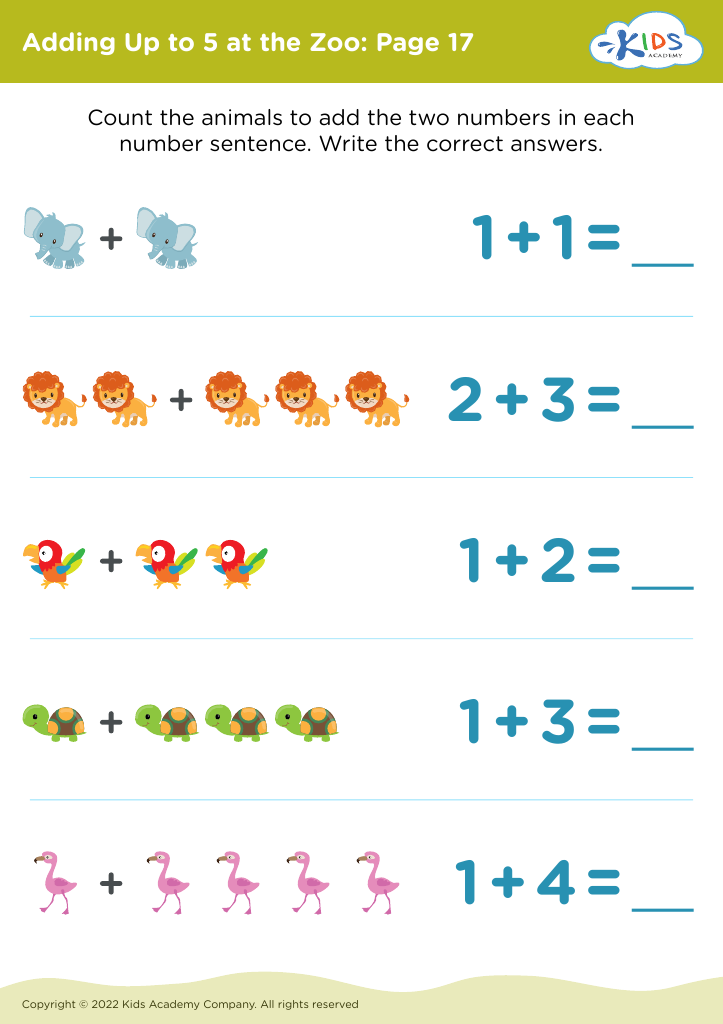
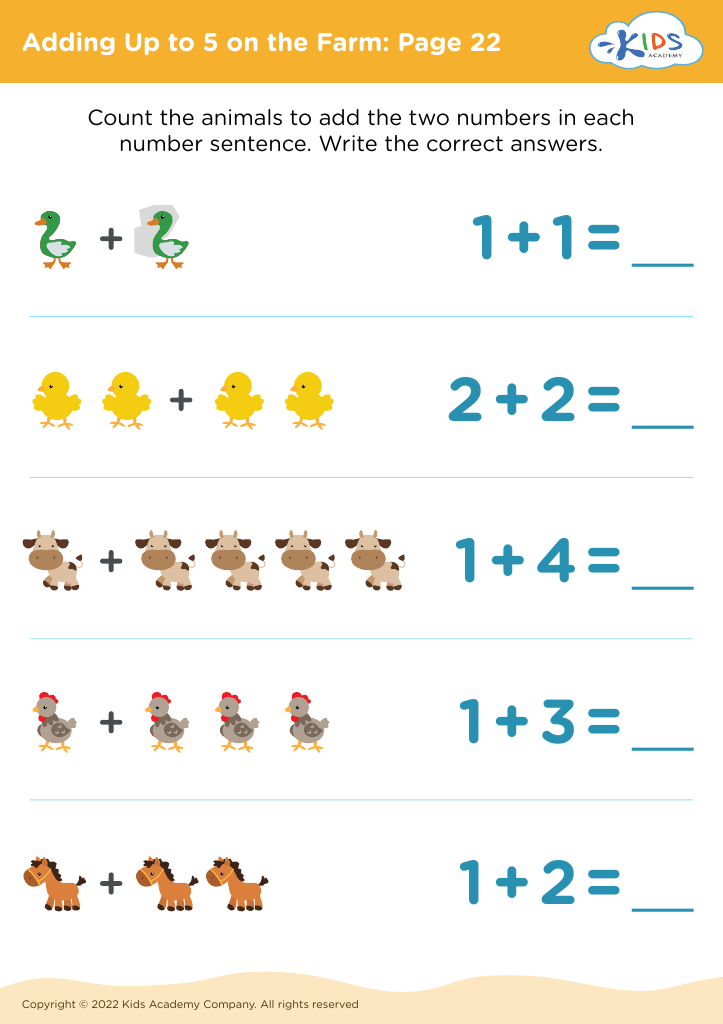
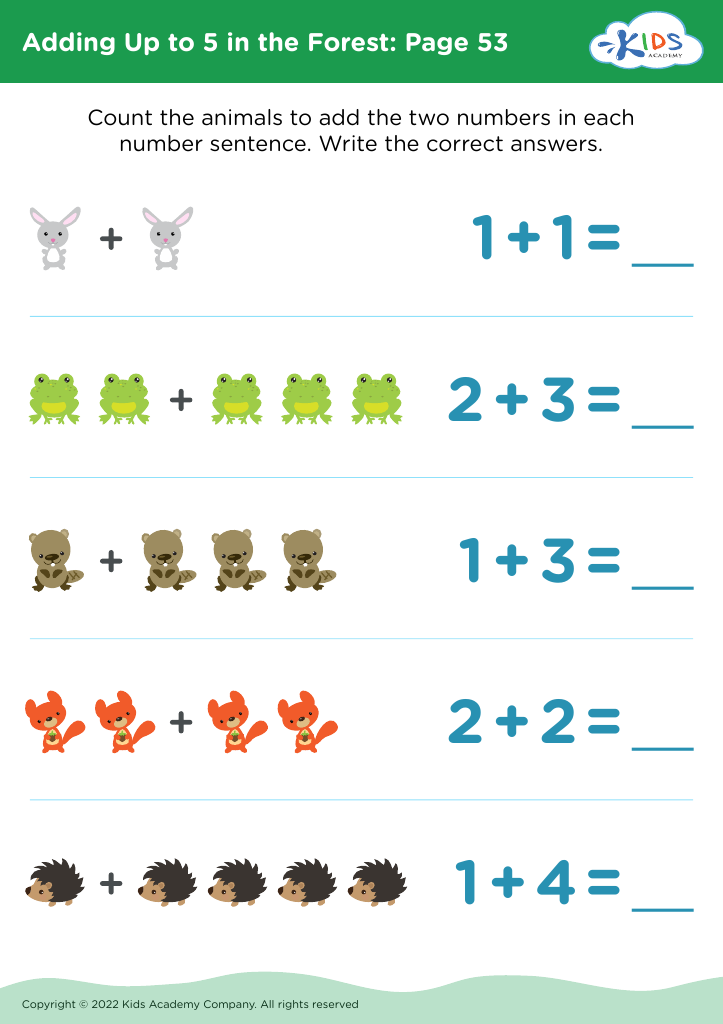
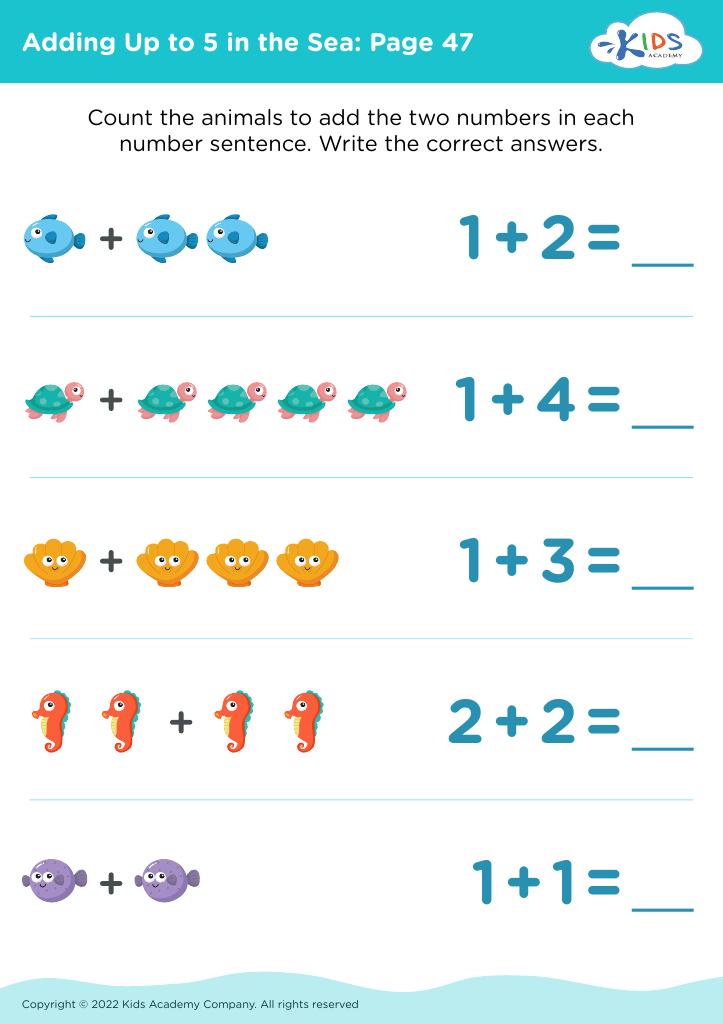
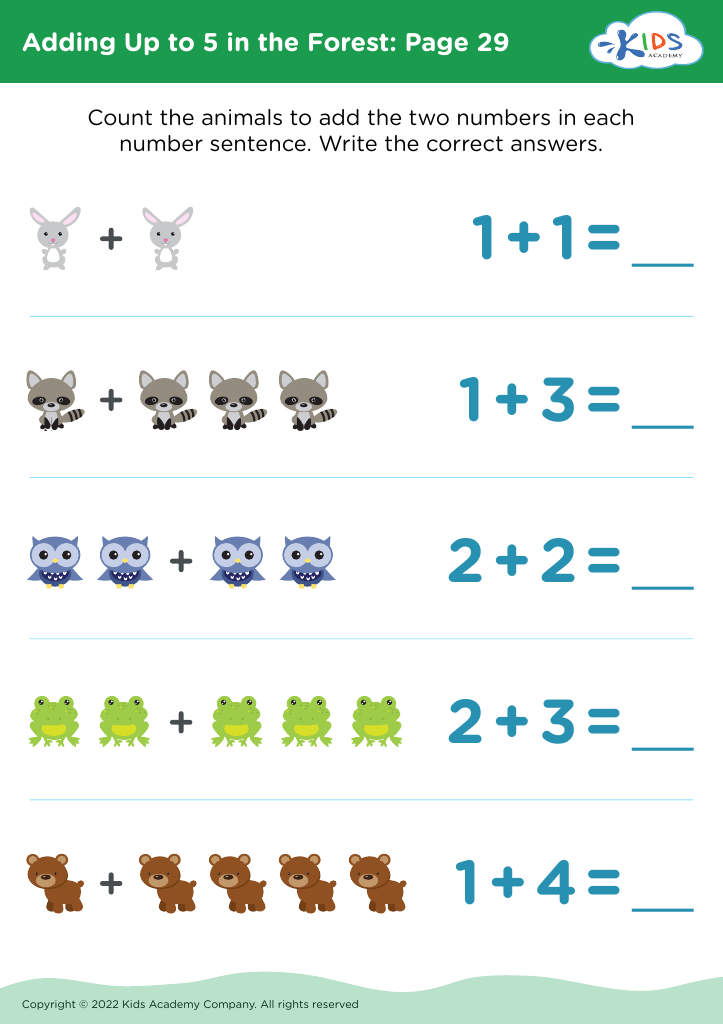








Counting proficiency in addition and subtraction is vital for children aged 3-7 as it lays the foundation for their mathematical understanding and overall cognitive development. During these formative years, children develop essential skills that influence their problem-solving abilities, critical thinking, and confidence in handling numbers.
When children learn to count and perform basic addition and subtraction, they experience early successes that can motivate them towards further learning. These fundamental skills also enhance their understanding of number relationships and operations, making it easier to tackle more complex concepts later on. Mastering counting and simple calculations aids in their ability to engage in everyday tasks, such as distributing items or sharing equally, which are fundamental life skills.
Parents and teachers play a crucial role in fostering this proficiency by creating a stimulating environment that includes playful counting activities, games, and real-world applications. Engaging children with interactive and enjoyable ways to practice these skills can enhance their enthusiasm for learning math.
Moreover, proficiency in counting and basic operations promotes anxiety reduction surrounding mathematics. As students build a solid foundation, these early competencies help ensure future academic success, paving the way for a positive attitude toward mathematics throughout their educational journey.








