Our "Basic Arithmetic Skills Numbers Worksheets for Ages 3-7" are designed to make early math learning fun and engaging. These worksheets help young learners develop fundamental arithmetic skills, including number recognition, counting, addition, and subtraction. With colorful illustrations and interactive tasks, children will enjoy practicing essential concepts while enhancing their problem-solving abilities. Created by educational experts, our worksheets are perfect for at-home practice or classroom activities. Boost your child’s confidence and foundation in math with tasks expertly crafted for their developmental stage. Suitably tailored for different learning paces, they ensure a productive and enjoyable learning experience for your child.

Check out this FREE Trial Lesson on Numbers for age 3-7!

Draw it Out and Write an Equation

Favorites
With answer key
Interactive
  • 3-7
  • Basic arithmetic skills
  • Numbers
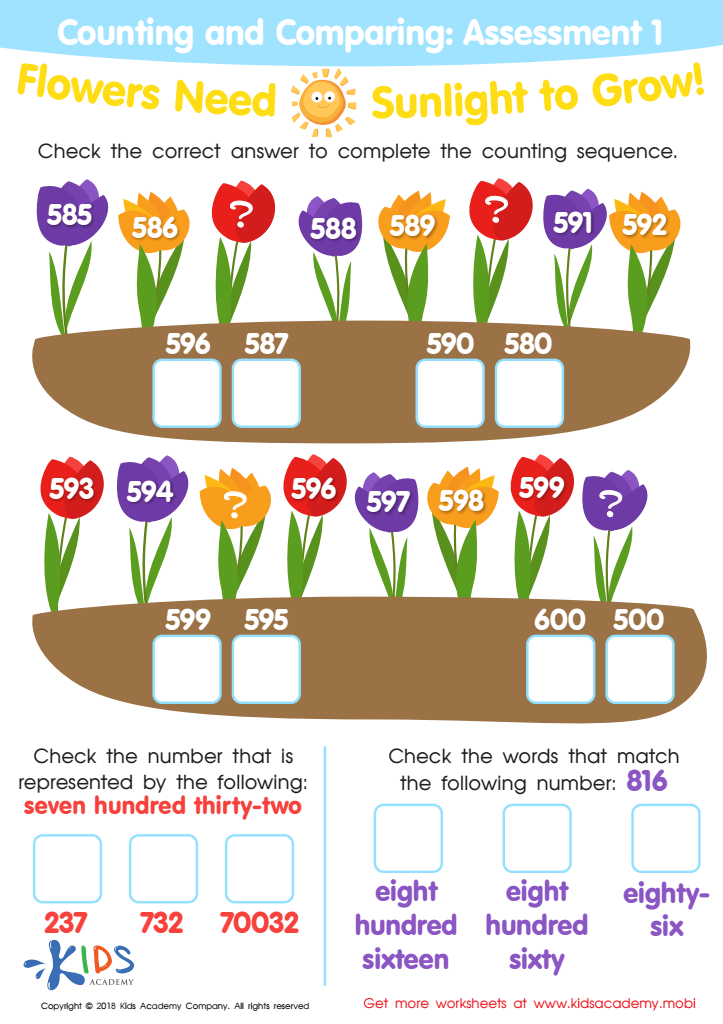
Counting and Comparing: Assessment 1 Worksheet

Counting and Comparing: Assessment 1 Worksheet

Download this worksheet and let your students show their progress in identifying, sequencing, and matching numbers and written forms. They'll practice number line skills and matching numeric expressions with numbers. Quickly see how well they understand computation concepts.
Counting and Comparing: Assessment 1 Worksheet
Worksheet
Even and odd numbers worksheet for 2nd grade

Even and Odd Numbers Worksheet

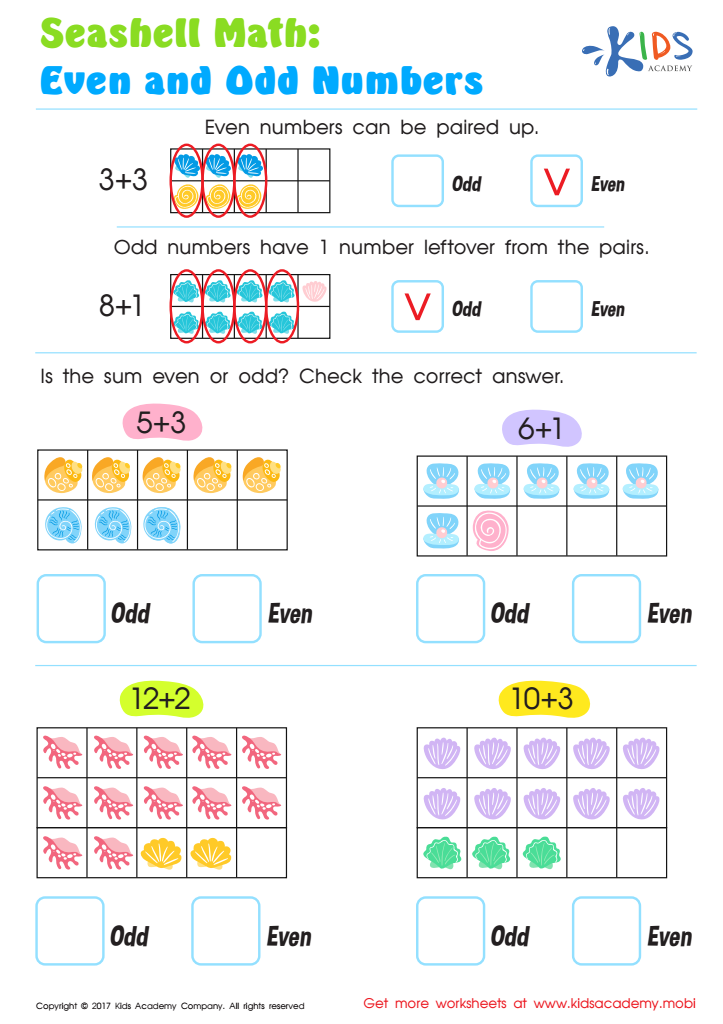
Have them identify the odd and even numbers for a quick review of this tricky concept. The graphic helps them visualize what makes a number even or odd.
Even and Odd Numbers Worksheet
Worksheet
Counting with Drawings: Fruits & Chocolates Worksheet

Counting with Drawings: Fruits & Chocolates Worksheet

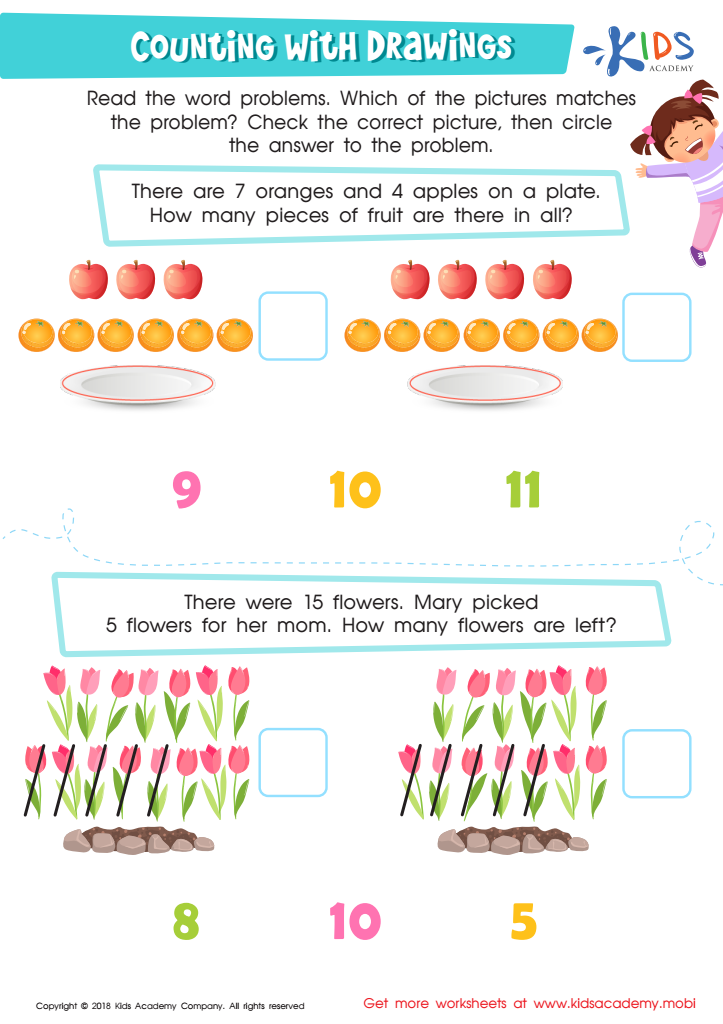
Learning basic addition and subtraction has never been easier with this free worksheet! Young mathematicians can sort & count to get the right sum or difference for each problem. Plus, they'll practice fine motor skills by circling the correct answer. An ideal way to help kids build important visual recognition and discernment skills.
Counting with Drawings: Fruits & Chocolates Worksheet
Worksheet
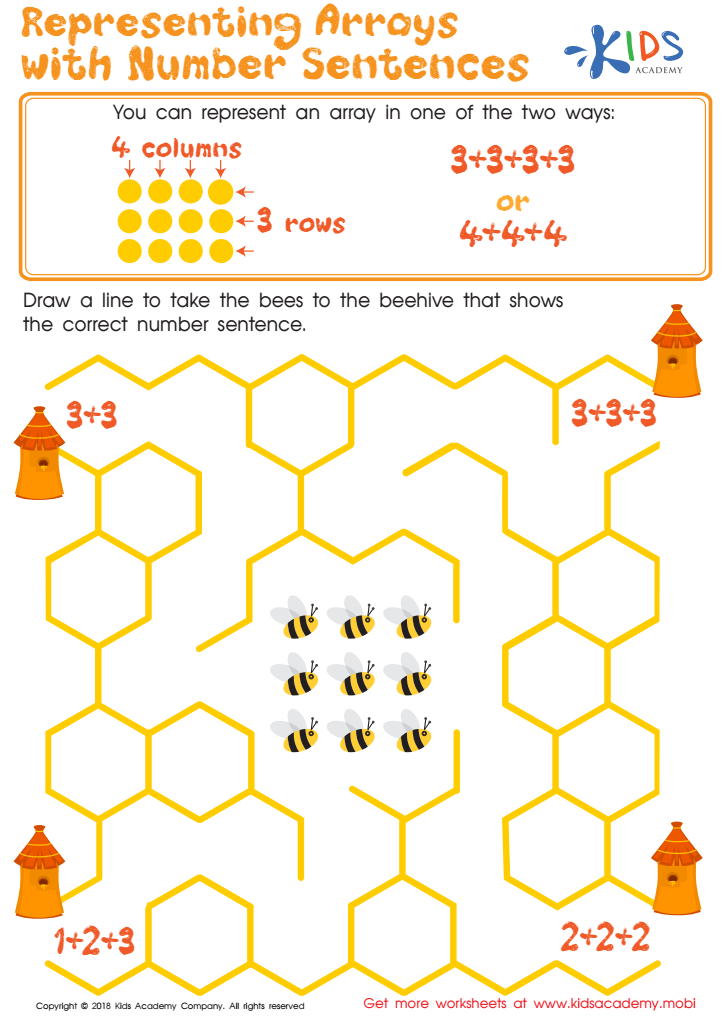
Representing Arrays with Number Sentences Worksheet

Representing Arrays with Number Sentences Worksheet

An array is a collection of objects, pictures or numbers arranged in rows and columns. Teach your kids two ways to interpret an array with this fun worksheet. Represent it in terms of rows or columns then have your student draw a line to the beehive to discover the correct number sentence.
Representing Arrays with Number Sentences Worksheet
Worksheet
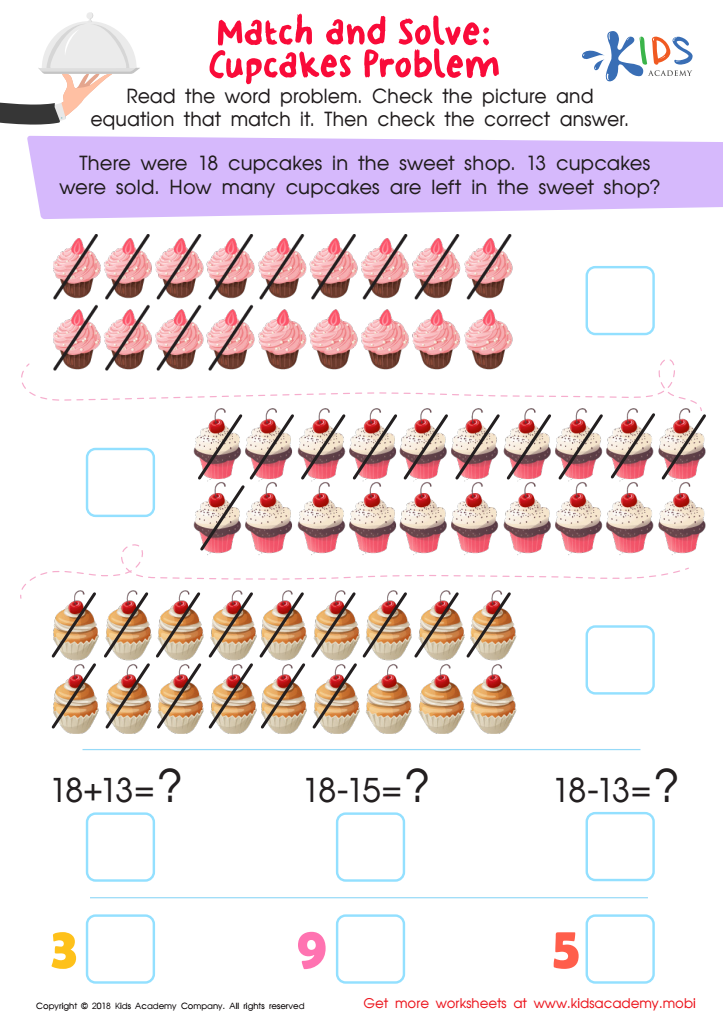
Match and Solve: Cupcakes Problem Worksheet

Match and Solve: Cupcakes Problem Worksheet

This math worksheet will excite your kid! Read the word problem and look at the cupcakes; the slashes mean some are being taken away. Select the picture that matches the text, then complete the equation to find the solution!
Match and Solve: Cupcakes Problem Worksheet
Worksheet
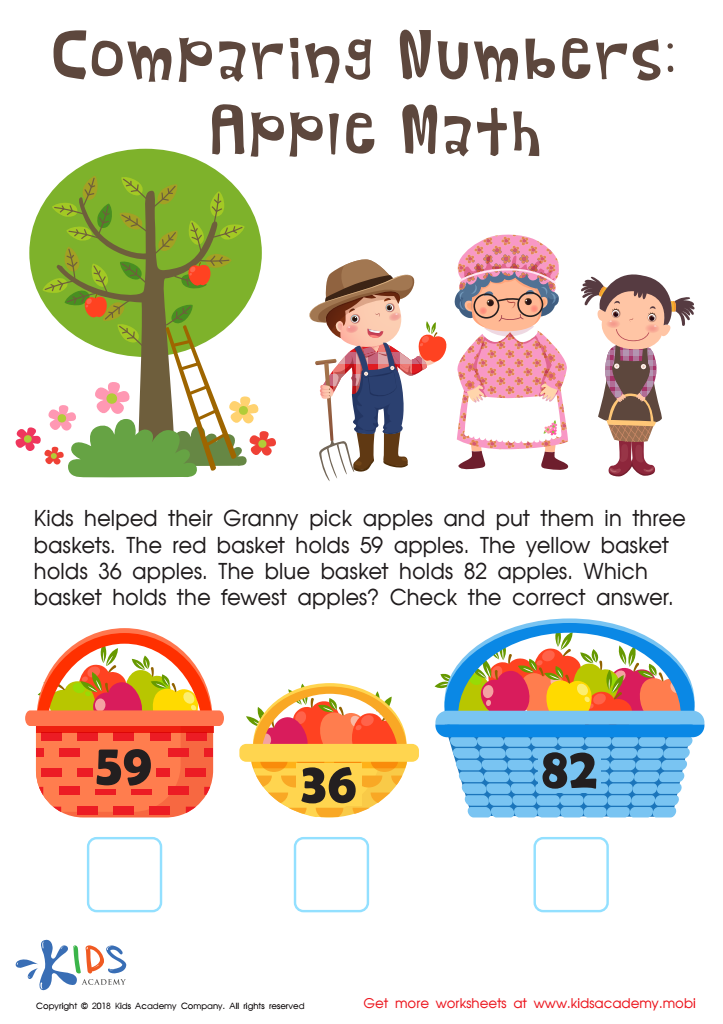
Apple Math Worksheet

Apple Math Worksheet

Math is more than just counting, adding, subtracting, multiplying, and dividing. Your child may be feeling overwhelmed by all the complexities, like comparing numbers and their differences. But with this worksheet, you can make comparing numbers fun again!
Apple Math Worksheet
Worksheet
Practice Addition: Part 2 Worksheet


Practice Addition: Part 2 Worksheet

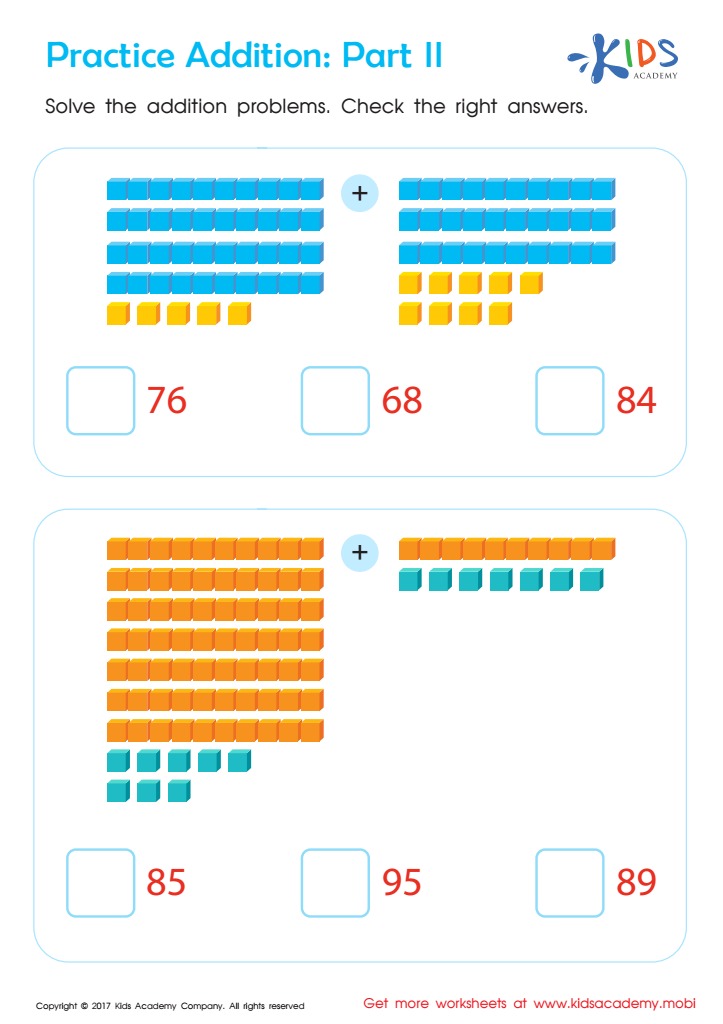
Try this printable worksheet to practice addition! It contains longer, tougher addition equations for 1st graders. Colorful blocks give kids the opportunity to visualize how big numbers are combined. Multiple choice answers help kids gain confidence in problem solving.
Practice Addition: Part 2 Worksheet

Worksheet


Parents and teachers should care about basic arithmetic skills for children ages 3-7 because early numeracy forms the foundation for future academic success and everyday problem-solving. At this impressionable age, children's brains are highly receptive to learning, and early exposure to numbers lays the groundwork for more advanced mathematical concepts. Understanding basic arithmetic enhances cognitive functions like memory, attention, and reasoning, which are crucial for overall intellectual development.

Moreover, numeracy skills impact daily life skills, such as telling time, understanding money, and measuring quantities in cooking. These practical applications make children more independent and confident. Introducing arithmetic in engaging ways also fosters a love for learning and curiosity about the world around them.

From a social perspective, learning arithmetic in group settings helps children develop collaborative skills, including teamwork and communication, as they solve problems together. This builds their social abilities and emotional resilience.

Educationally, research shows that early math proficiency is a strong predictor of later academic achievement in a wide range of subjects. Therefore, nurturing these skills between ages 3-7 can lead to better educational outcomes and more opportunities in the future. For these reasons, giving attention and care to developing basic arithmetic skills in young children is both beneficial and essential.