Understanding tens Numbers Worksheets for Ages 3-7
4 filtered results
-
From - To
Explore our "Understanding Tens Numbers Worksheets for Ages 3-7" designed to make learning engaging and fun! These worksheets introduce children to the concept of tens, helping them grasp the basics of counting and number recognition. Through interactive activities, kids will learn to group numbers into tens, enhancing their mathematical foundation. Our carefully crafted exercises are perfect for preschool and early grade levels, promoting essential skills in an enjoyable way. Whether at home or in the classroom, our worksheets support young learners in developing confidence with numbers, making math an exciting adventure. Download today and watch your child's skills soar!
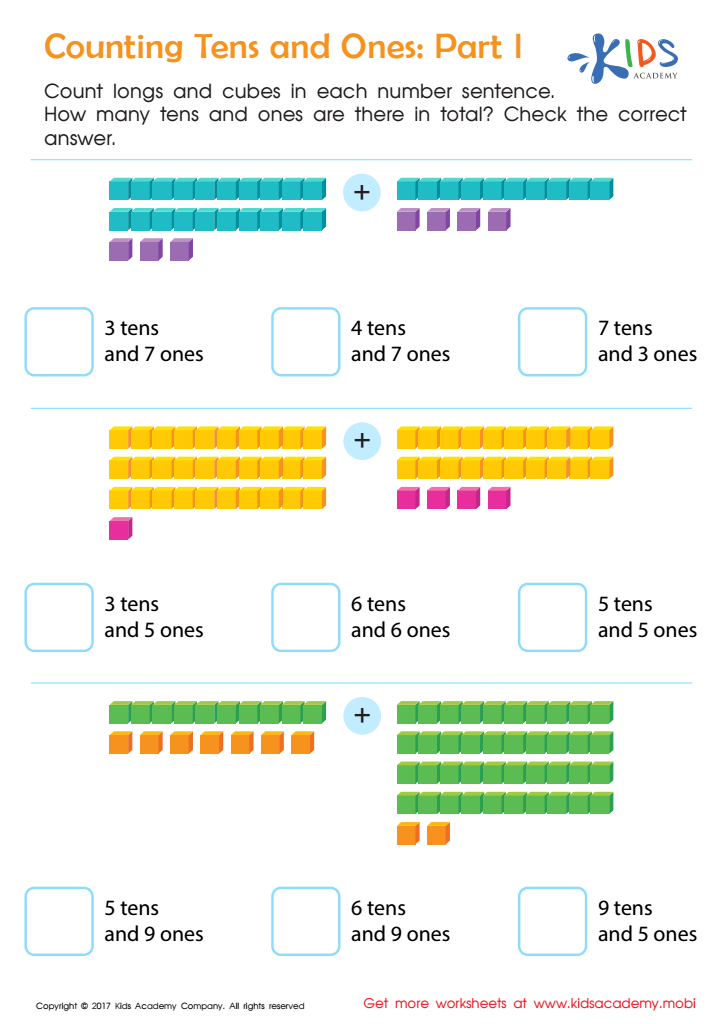
Counting Tens and Ones: Part 1 Worksheet
 Assign to My Students
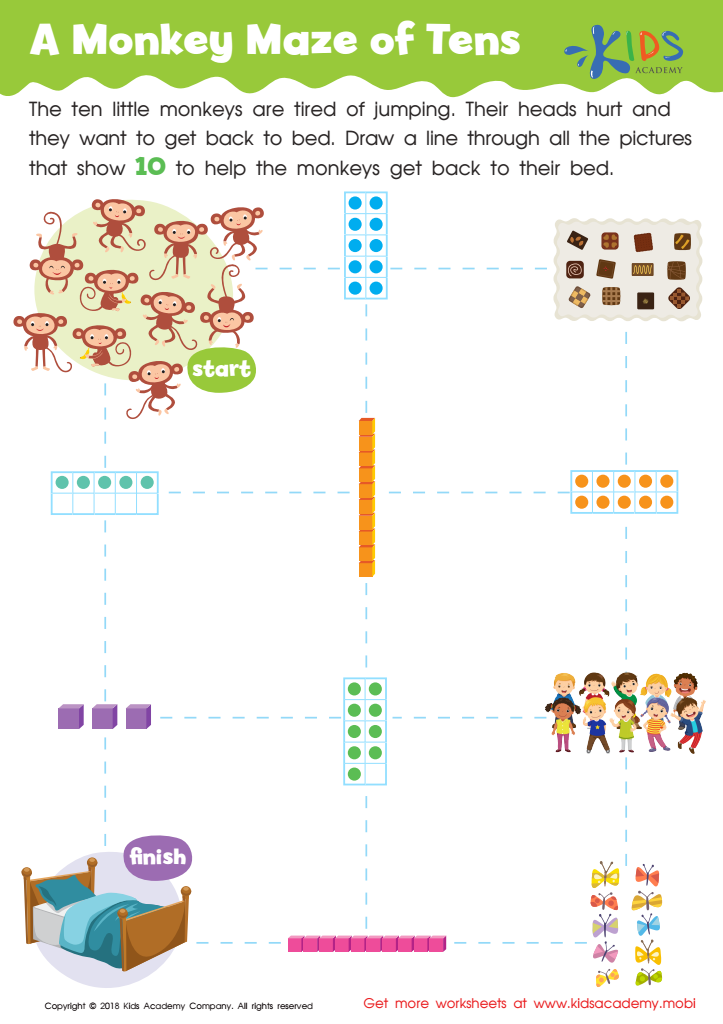
A Monkey Maze of Tens Worksheet
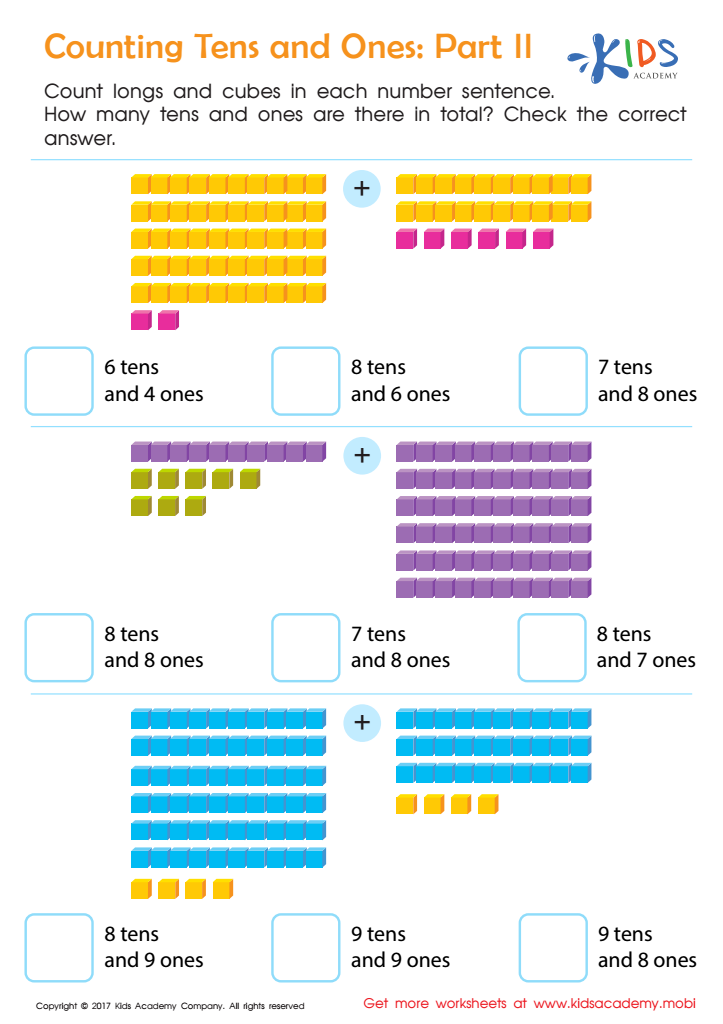
Counting Tens and Ones: Part 2 Worksheet
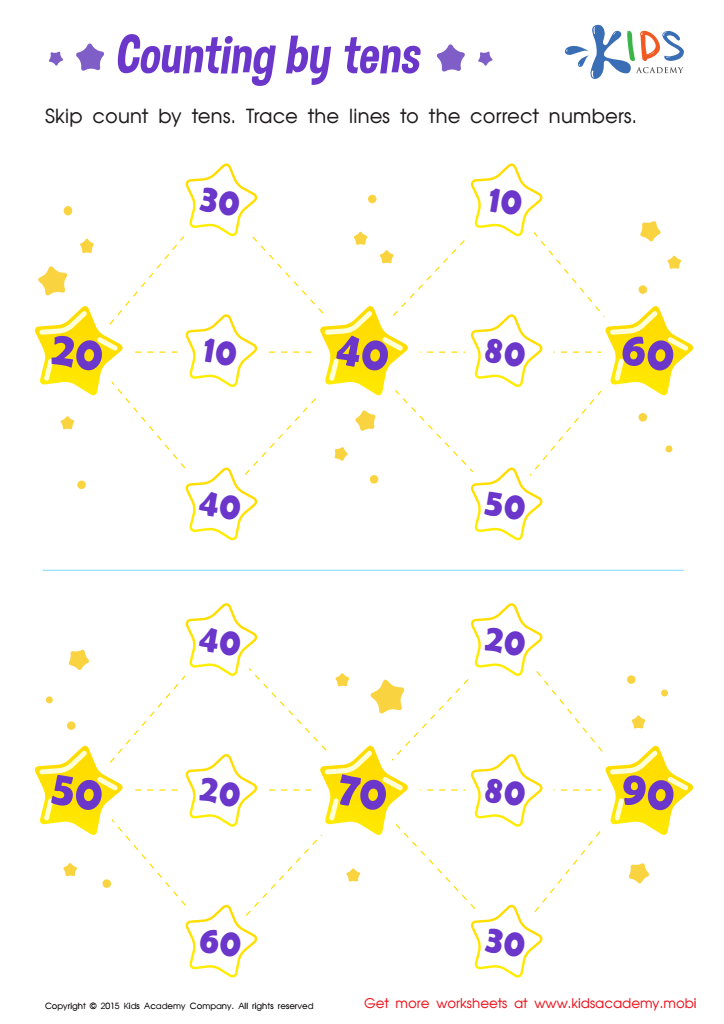
Learn Dozens: Counting by Tens Printable








Understanding tens numbers is crucial for children aged 3-7 because it forms the foundation of their mathematical understanding and problem-solving skills. During these formative years, children are developing key cognitive abilities, and grasping concepts like tens helps them make sense of larger numbers and arithmetic.
Tens numbers teach children about grouping and the concept of place value, which is essential for counting, addition, and subtraction. For instance, recognizing that the number 20 is made up of two groups of ten aids students in understanding larger quantities. This foundational knowledge promotes confidence and fosters a sense of achievement in math, essential for future learning.
Moreover, when parents and teachers emphasize tens numbers, they help children enhance their number sense. This understanding enables children to better grasp other mathematical operations by breaking numbers down into manageable parts, making calculations smoother as they progress.
Additionally, learning about tens supports critical thinking. Children learn to reason and solve problems, vital skills that extend beyond math into everyday life. By caring about and actively teaching this concept, parents and educators prepare children not just for school but for a lifetime of learning and logical reasoning.








