
Improve counting skills Math Worksheets for Ages 3-7
51 filtered results
Difficulty Level
Grade
Age
-
From - To
Subject
Activity
Standards
Discover our engaging counting skills math worksheets designed for children aged 3-7! These carefully crafted resources focus on enhancing numerical understanding through fun activities that promote interactive learning. From colorful visuals to playful exercises, our worksheets captivate young minds, making counting a delightful experience. Each worksheet targets fundamental concepts, allowing children to practice counting objects, recognizing numbers, and developing early math skills. Perfect for both classroom and at-home learning, our materials provide a solid foundation for future mathematical success. Explore our collection today and watch your child thrive in their counting journey while building confidence and excitement for math!
Favorites
With answer key
Interactive
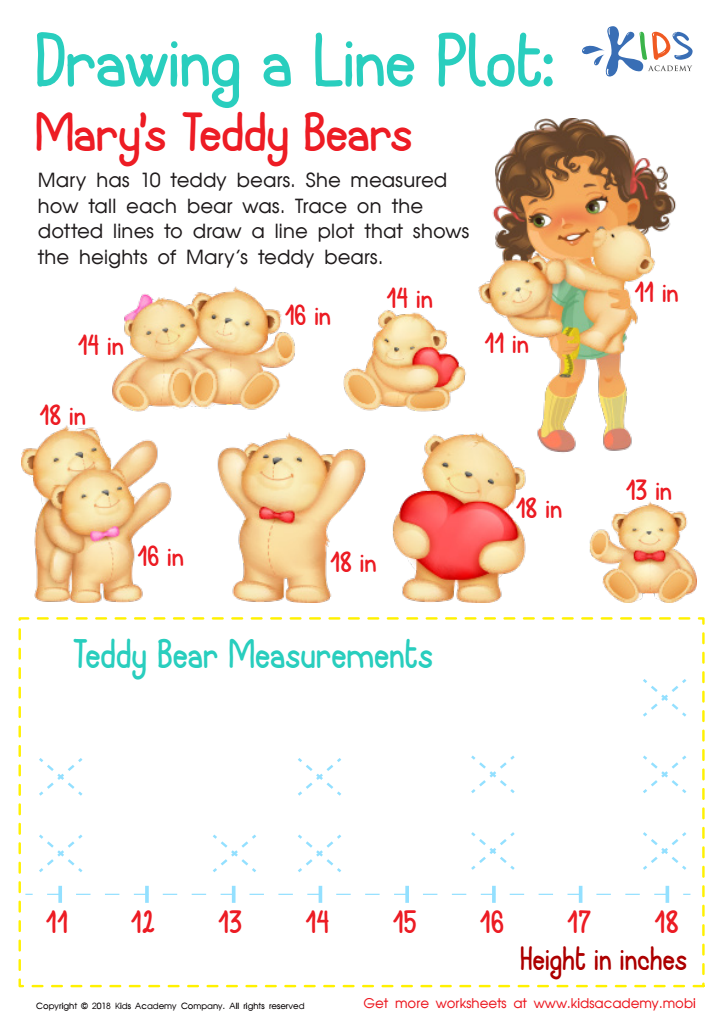
Drawing and Line Plot: Mary's Teddy Bears Worksheet
This worksheet teaches kids to draw and interpret line plots. Mary has 10 teddy bears and has measured their heights. Ask your child to draw a line plot showing the heights of Mary's teddy bears. It's a great way for little ones to learn how to organize information quickly and correctly.
 Assign to My Students
Drawing and Line Plot: Mary's Teddy Bears Worksheet
Worksheet
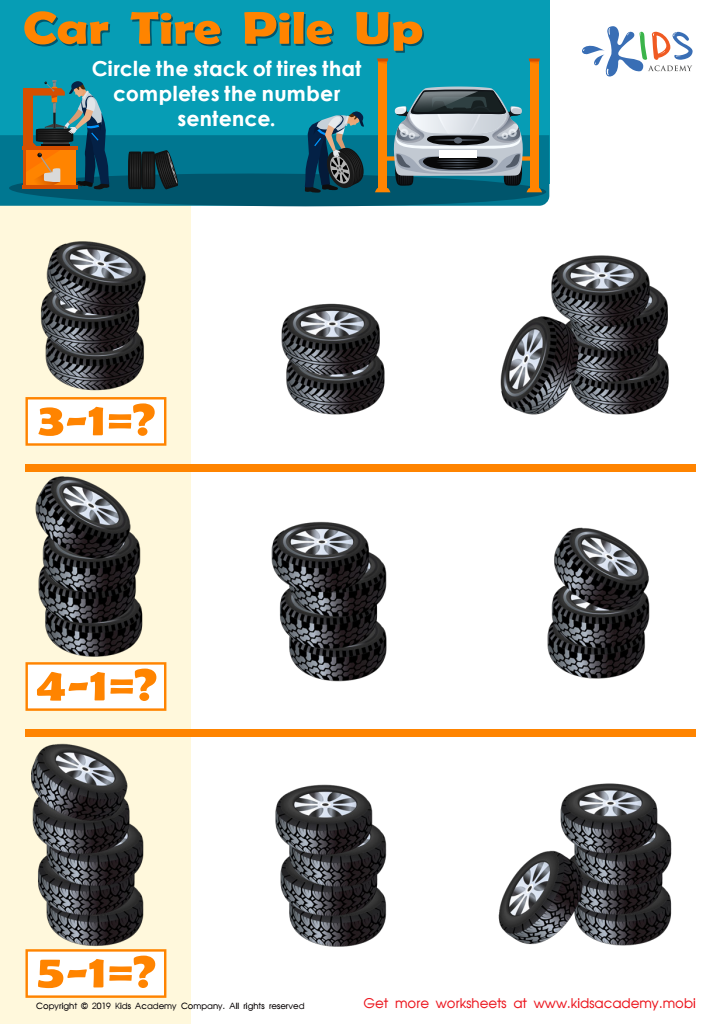
Car Tire Pile Up Worksheet
Examine the pic with your kids. Can they recognize the items piled up? The tires are organized in different quantities. Equations are on the left. Have your children work out the equations, counting the tire stacks to identify the correct answer.
Car Tire Pile Up Worksheet
Worksheet
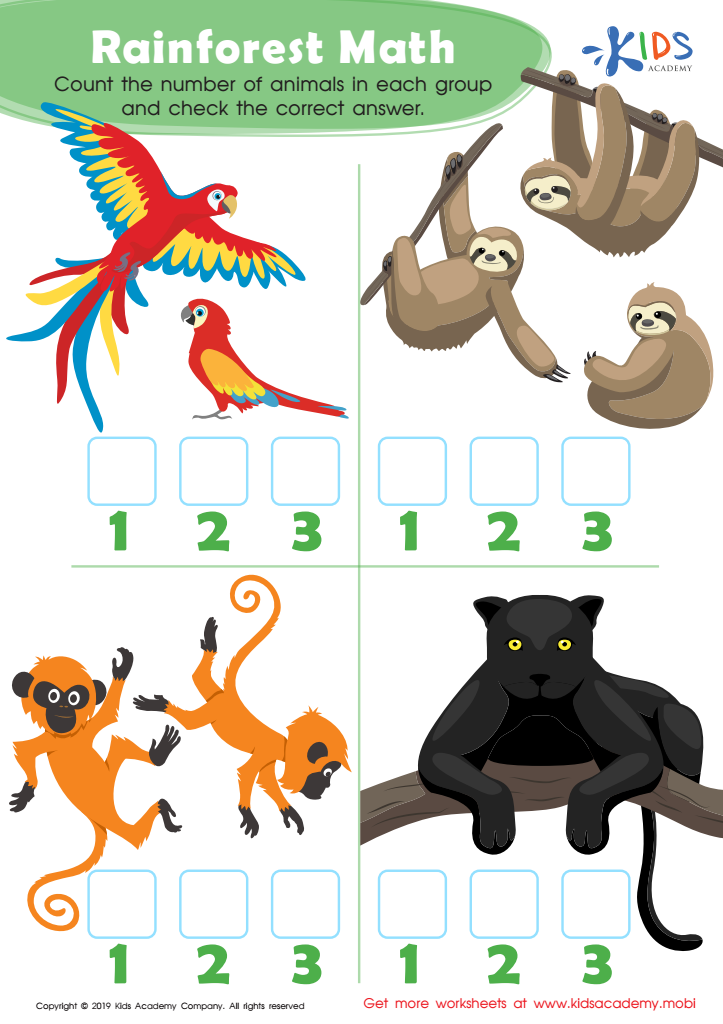
Rainforest Math Worksheet
Kids love learning about rainforest animals! This worksheet helps them with counting and number sense. It features recognizable rainforest animals and asks children to choose the correct number from the answer choices. It's a fun way for children to build their skills - without even knowing it!
Rainforest Math Worksheet
Worksheet
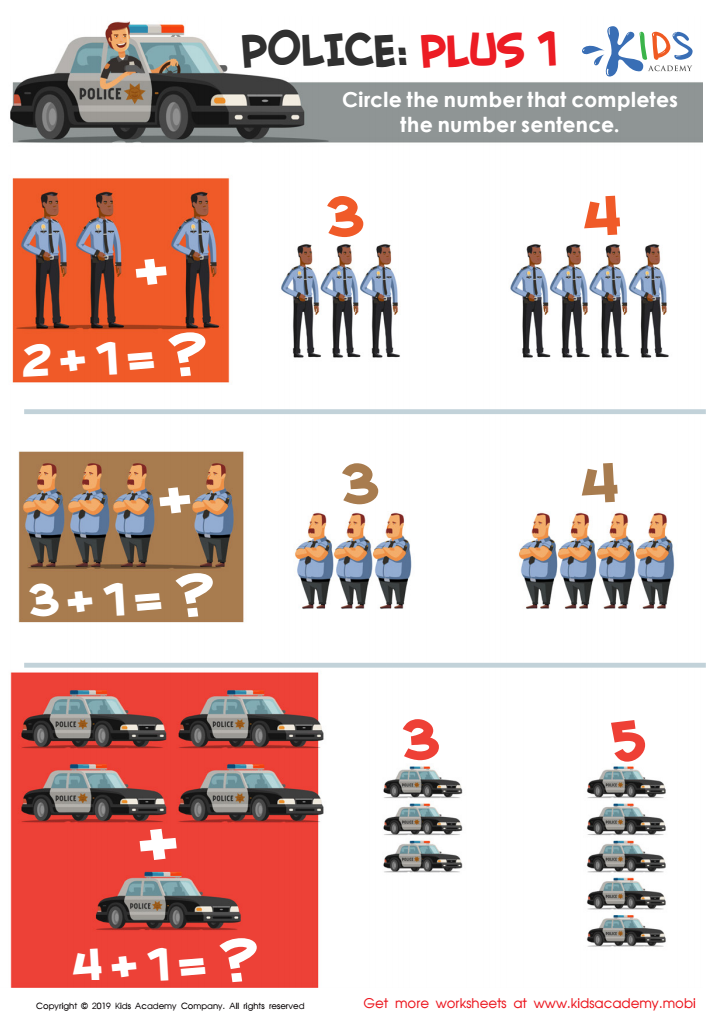
Police: Plus 1 Worksheet
Help your kids count the policemen in the worksheet and circle the number that completes the number sentence. It's a great way to improve their counting and addition skills. Discuss with your kids how policemen contribute to the community too.
Police: Plus 1 Worksheet
Worksheet
Join Kids Academy for Free
Who is primarily going to use this learning content?








Developing counting skills in children aged 3-7 is crucial for several reasons. First, counting forms the foundation for all future mathematical learning. Mastery of counting leads to a stronger comprehension of basic arithmetic operations, which are essential for more advanced math concepts as children progress in their education.
Second, counting skills promote cognitive development. Engaging in counting activities enhances children's memory, attention, and problem-solving abilities. This progression nurtures critical thinking and reasoning skills that are beneficial across all subject areas.
Moreover, counting instills a sense of confidence in children. When they successfully count and grasp numbers, they feel a sense of accomplishment that motivates them to tackle more complex tasks, thus fostering a positive attitude towards learning.
Additionally, math skills are essential for real-world applications. From simple tasks like sharing snacks to understanding time and money, counting is an everyday skill that impacts children's daily lives.
Lastly, parents and teachers play a vital role in fostering an early love for math. By investing in counting activities, they set the stage for a successful educational journey and empower children with the skills they need to thrive academically and socially. Ignoring these foundational skills could hinder a child’s growth, making it imperative for adults to prioritize them.








