Shape identification Math Worksheets for Ages 3-7
33 filtered results
-
From - To
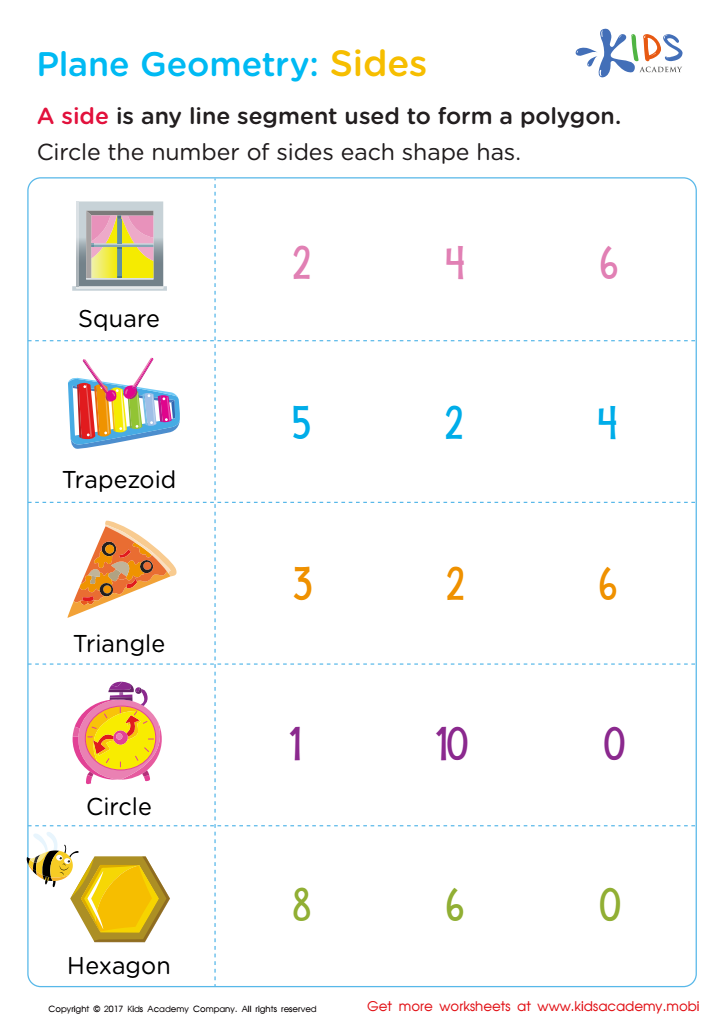
Enhance your child's learning experience with our Shape Identification Math Worksheets, specifically designed for ages 3-7. Our engaging worksheets provide a fun way to explore shapes through colorful illustrations and interactive activities. As children practice identifying, tracing, and coloring various shapes, they develop essential math skills while igniting their creative energy. Ideal for homeschooling or classroom settings, these worksheets support early math education, helping kids recognize circles, squares, triangles, and more. Foster your child's confidence and comprehension in geometry with our expertly crafted resources that promote cognitive growth and foundational skills for future learning. Start your child's math journey today!
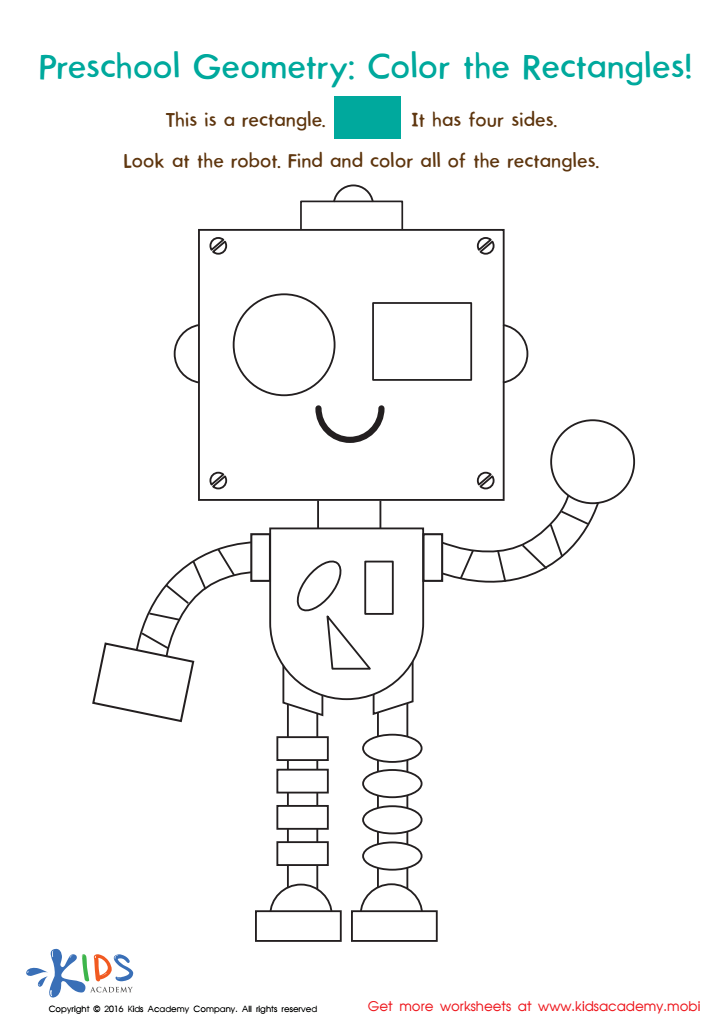
Geometry Worksheet
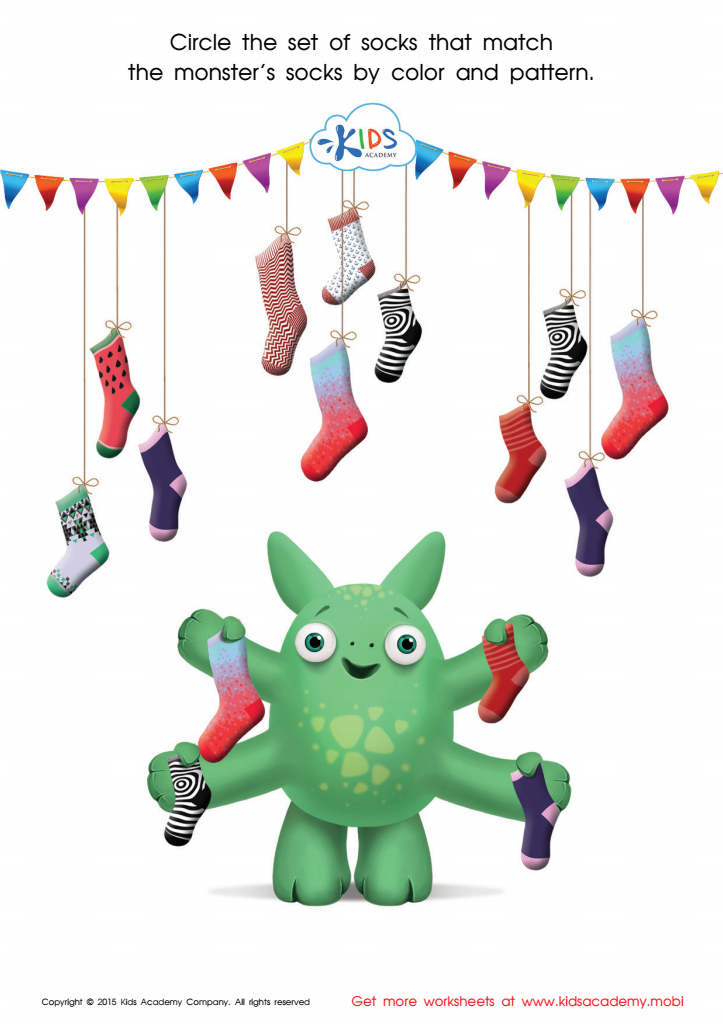
Sort the Monster's Socks Worksheet
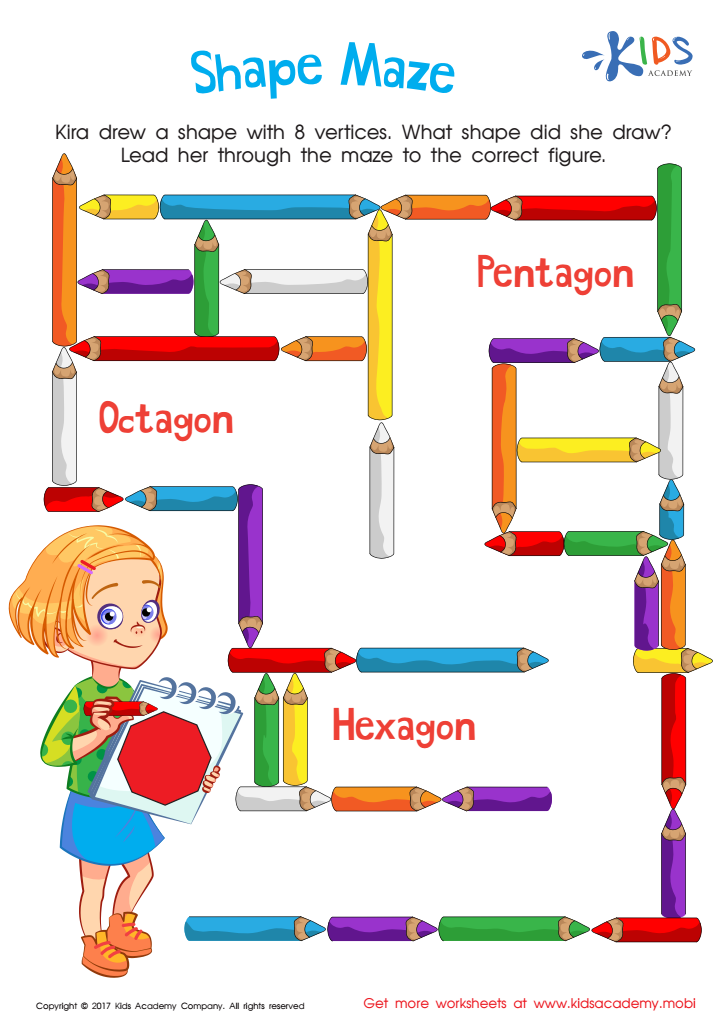
Shape Maze Worksheet
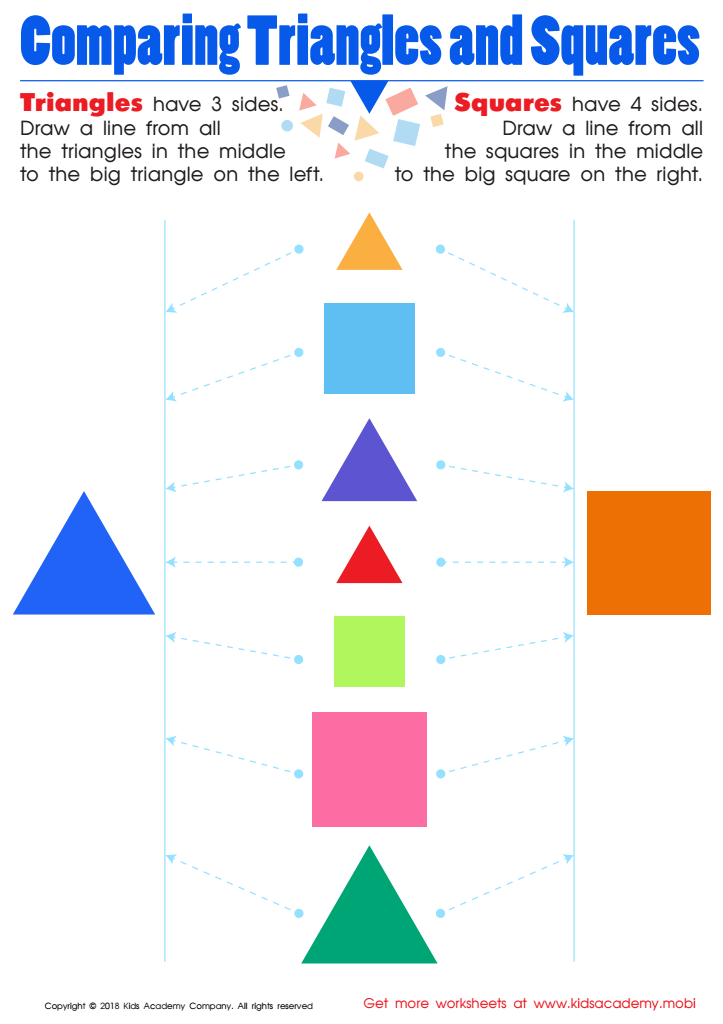
Comparing Triangles Squares Worksheet
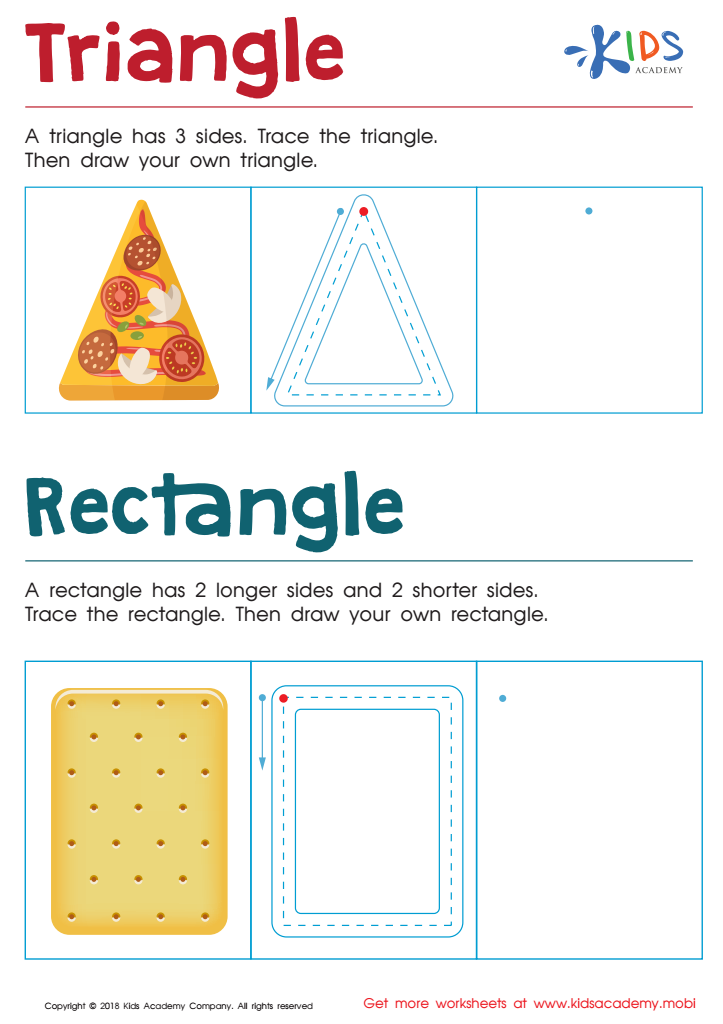
Triangle Rectangle Worksheet
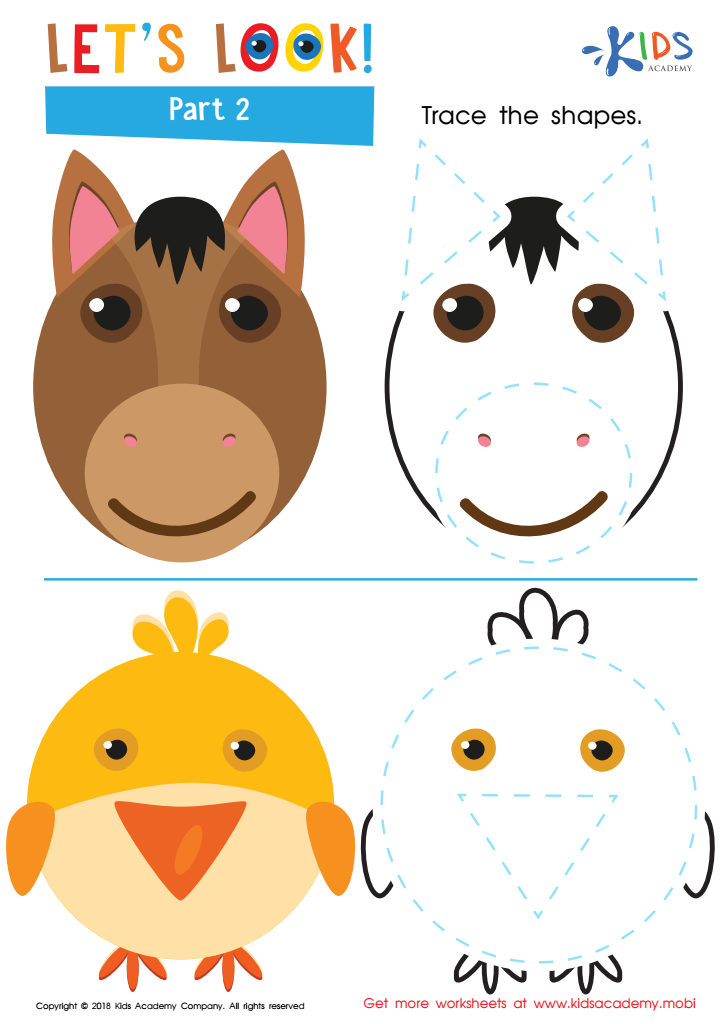
Let's Look! Part 2 Worksheet
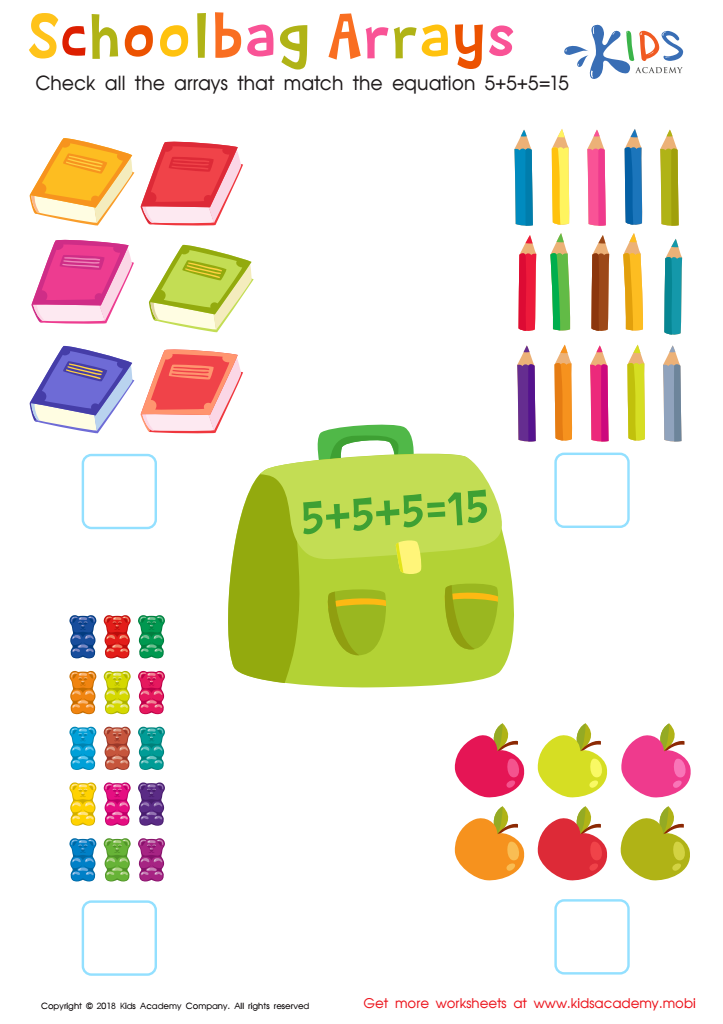
Schoolbag Arrays Worksheet
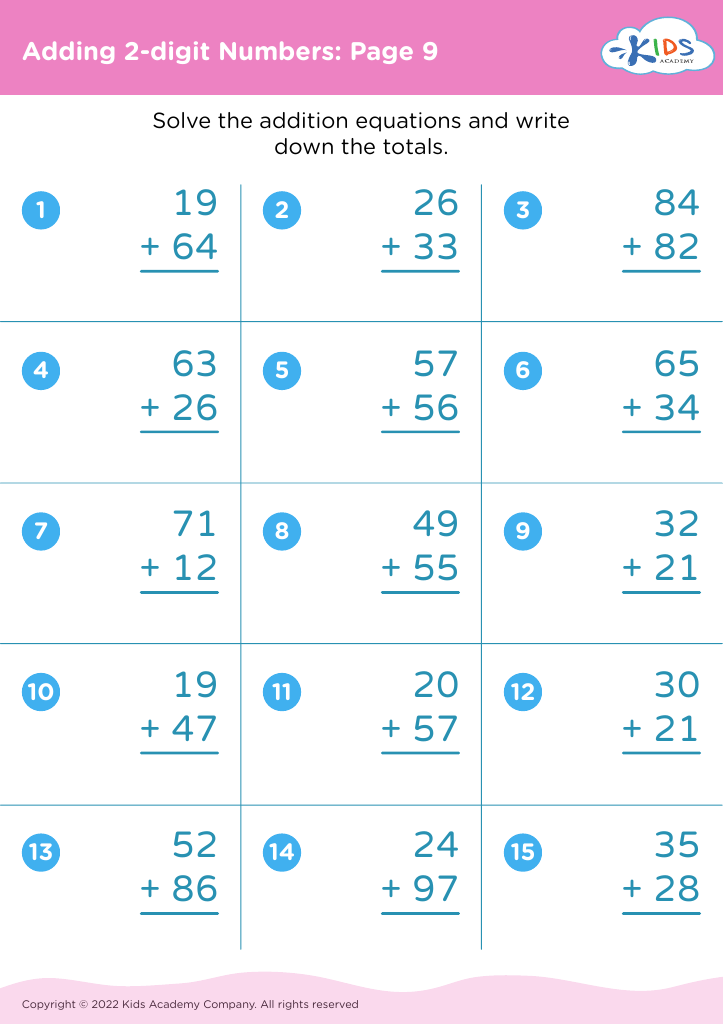
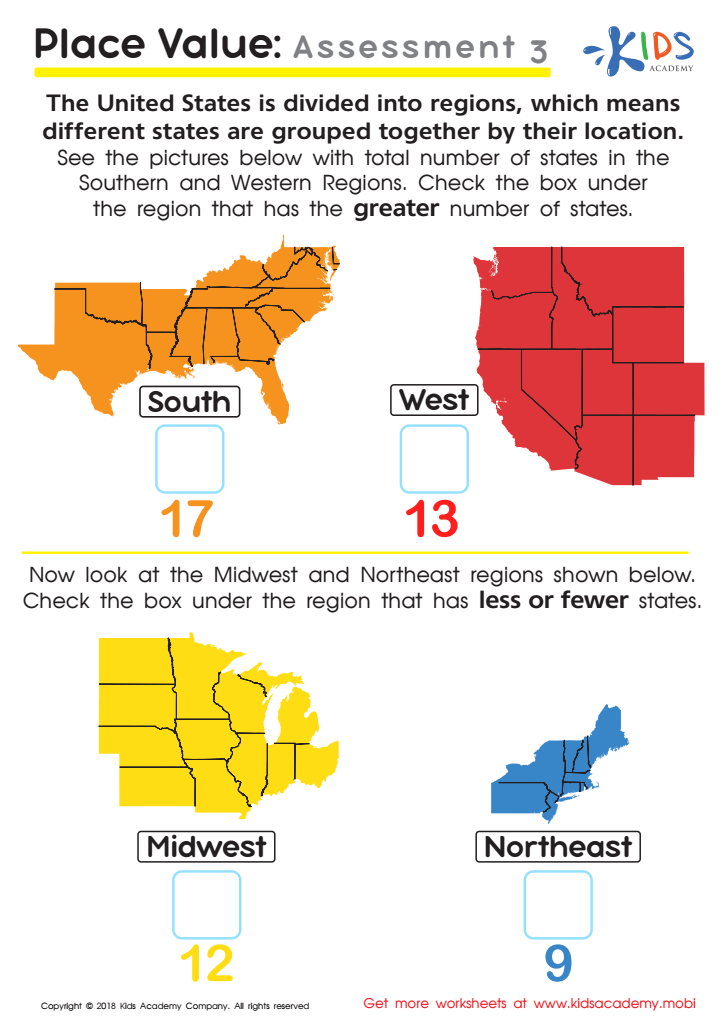
Place Value: Assessment 3 Worksheet
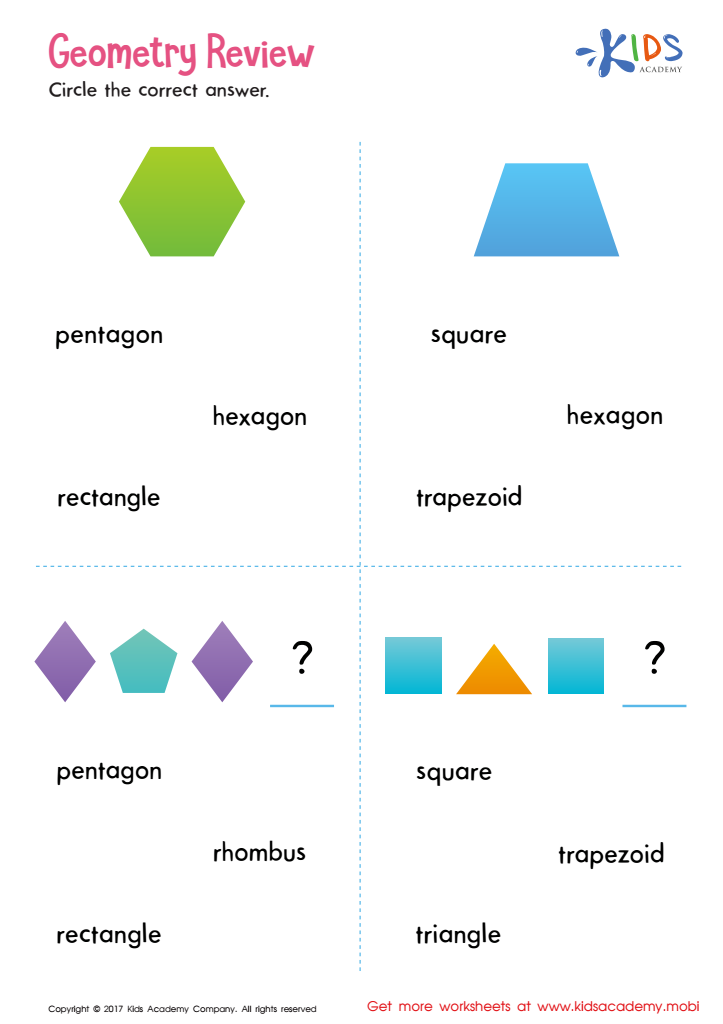
Geometry Review Printable
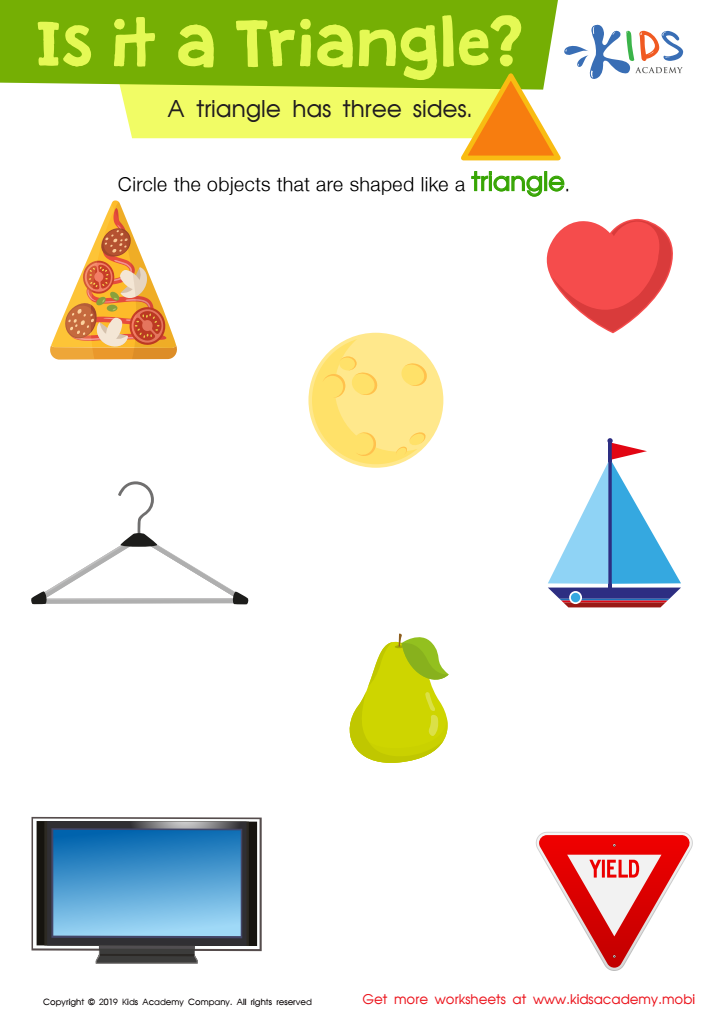
Is It a Triangle? Worksheet
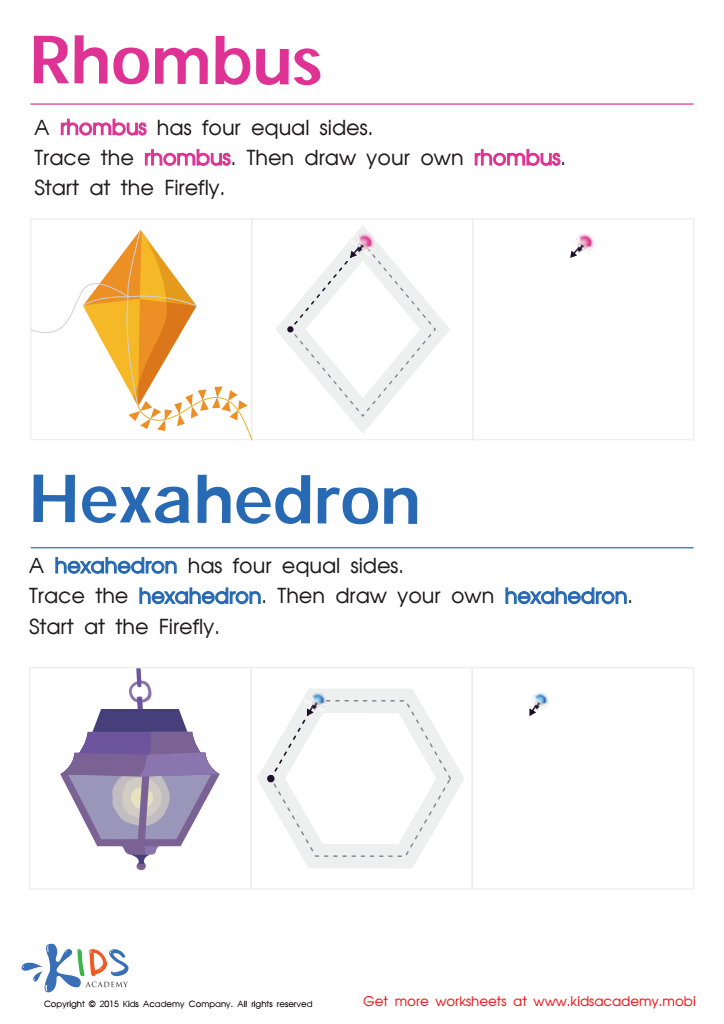
Draw a Rhombus And a Hexahedron Printable
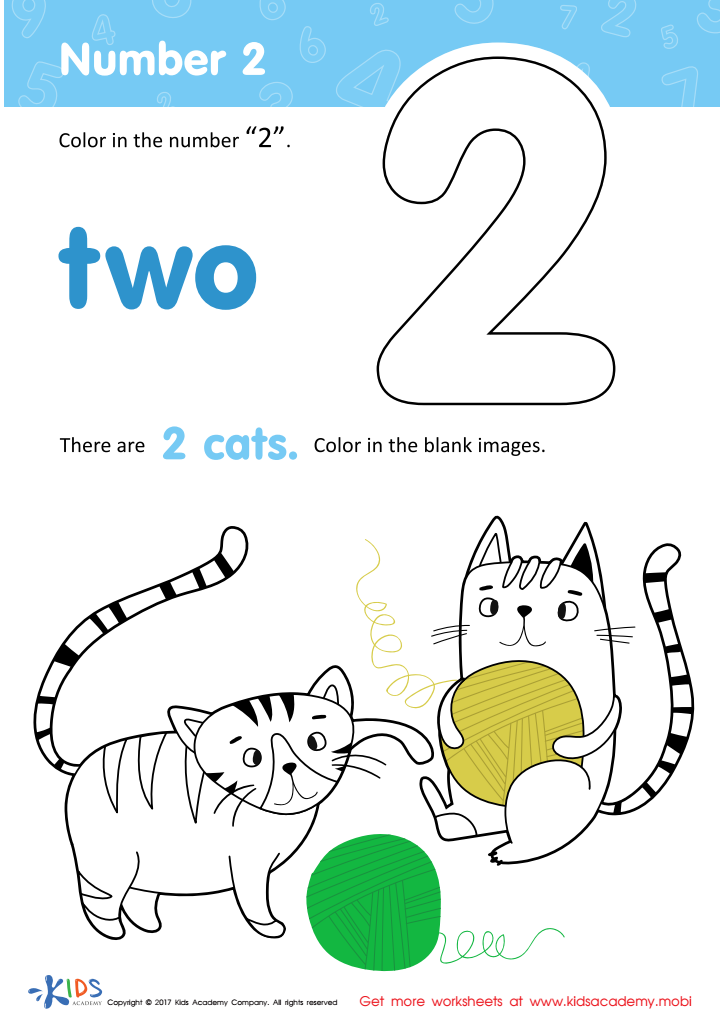
Number 2 Printable
 Assign to My Students
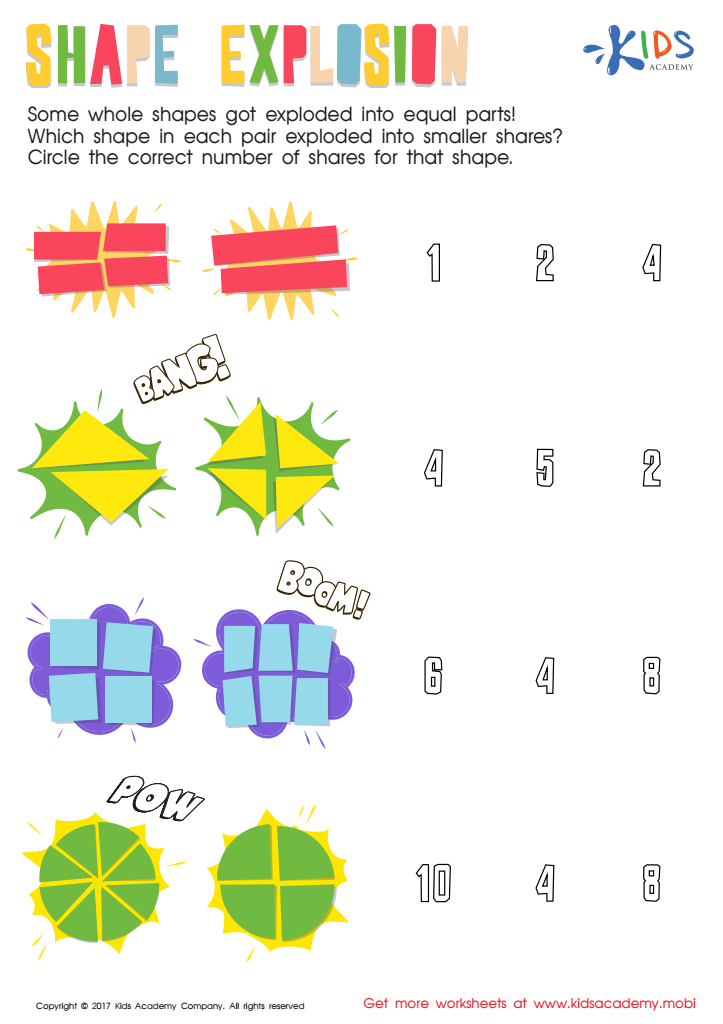
Shape Explosion Worksheet








Shape identification is a fundamental skill for young children, particularly between the ages of 3 to 7, and both parents and teachers should prioritize its importance. First, identifying shapes lays the groundwork for essential mathematical concepts like geometry, spatial reasoning, and measurement. Children who understand shapes develop critical visual skills that aid in organizing and making sense of their environment.
Furthermore, shape recognition enhances cognitive development. As children learn to classify and differentiate shapes, they improve their problem-solving skills and begin to understand patterns, which are foundational to mathematics. Shape identification also enhances language development; when children describe shapes, they expand their vocabulary and communication skills.
In addition to academic advantages, incorporating shape recognition into play fosters creativity. Activities that engage children in identifying and manipulating shapes inspire imaginative play while also supporting motor skills.
Moreover, recognizing shapes is linked to everyday tasks, like reading signage or navigating spaces, equipping them with practical knowledge. Ultimately, parents and teachers who emphasize shape identification not only enrich children's early learning experiences but also set them up for future academic success and everyday competencies. This makes it crucial for stakeholders in early education to invest time and resources into these foundational skills.








