Numbers up to 100 Worksheets for Ages 3-7 - Page 3
51 filtered results
-
From - To
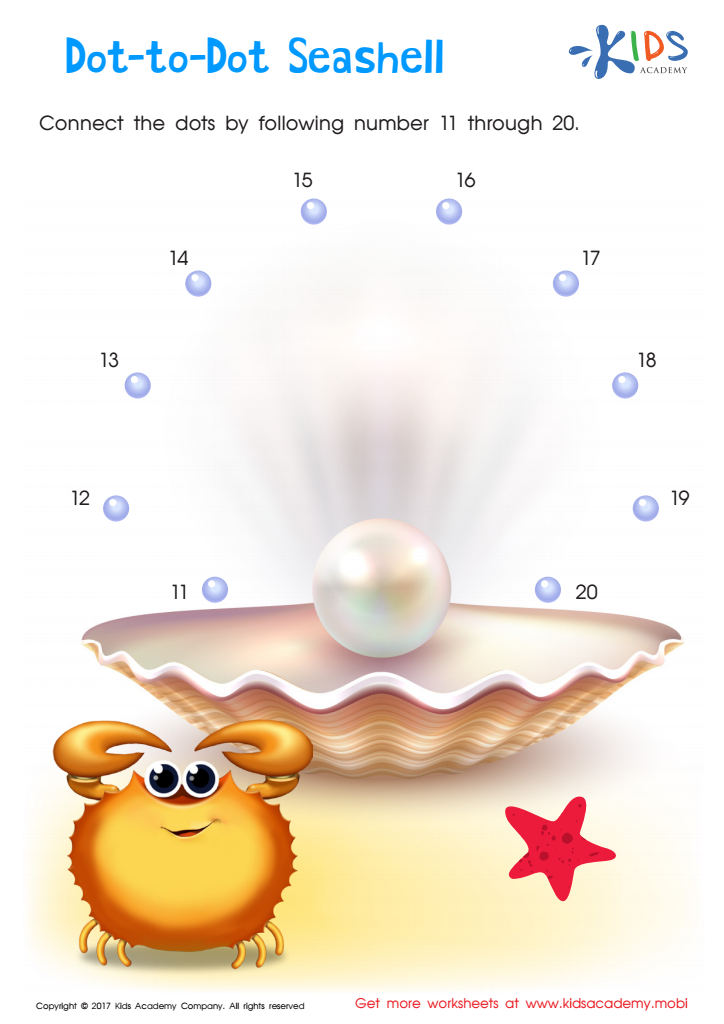
Ordering 11–20: Dot–to–dot Seashell Printable
 Assign to My Students
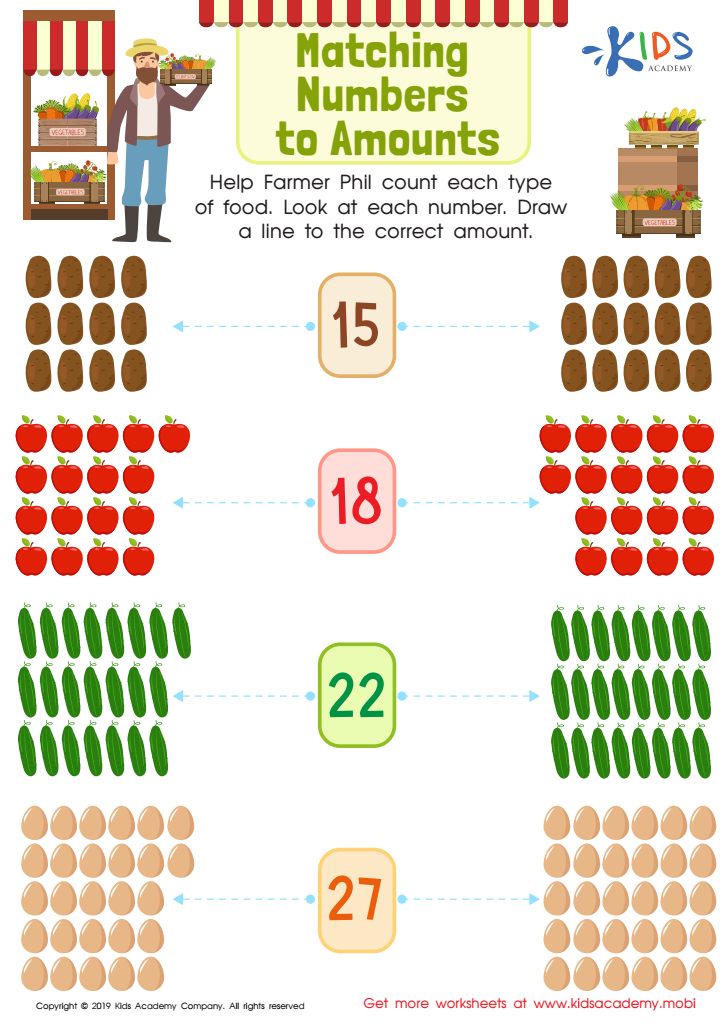
Matching Numbers to Amounts Worksheet

Counting on the City Skyline: Dot-to-Dot Worksheet








Parents and teachers should absolutely care about helping children understand numbers up to 100 during the crucial early years of ages 3-7. During this developmental stage, children's brains are exceptionally adaptable and ripe for absorbing foundational concepts of numeracy. Understanding numbers up to 100 sets the stage for more advanced mathematical skills, such as addition, subtraction, and even multiplication and division later on.
Number sense up to 100 involves recognizing, reading, writing, and ordering these numbers. It also includes understanding basic arithmetic operations and concepts like more or less, which are integral to problem-solving and logical reasoning. When children master these skills early, they are better prepared for the increasingly complex math problems they will encounter in higher grades.
Moreover, confidence in simple number manipulation fosters a positive attitude towards math, which is crucial for keeping children engaged and reducing math anxiety as they grow older. Skills acquired during this formative period also boost overall cognitive development, improving memory, attention span, and processing skills. Parents and teachers who prioritize number sense give their children a significant academic advantage, positioning them for success not just in math, but across various subjects where critical thinking and problem-solving are essential. Investing time and energy in understanding numbers up to 100 is, therefore, a cornerstone of early childhood education.