Vocabulary enhancement Nursery Rhymes Worksheets for Ages 3-7
3 filtered results
-
From - To
Explore our engaging Vocabulary Enhancement Nursery Rhymes Worksheets, specially designed for children aged 3-7. These interactive worksheets utilize beloved nursery rhymes to enrich language skills, boost vocabulary, and promote early literacy. Each worksheet features fun activities that encourage word recognition, pronunciation, and comprehension while catering to diverse learning styles. With playful illustrations and age-appropriate exercises, children will develop a love for words in a playful and nurturing environment. Perfect for both classrooms and home learning, our worksheets create memorable learning experiences that make mastering vocabulary enjoyable. Enhance your child’s educational journey with these delightful resources today!
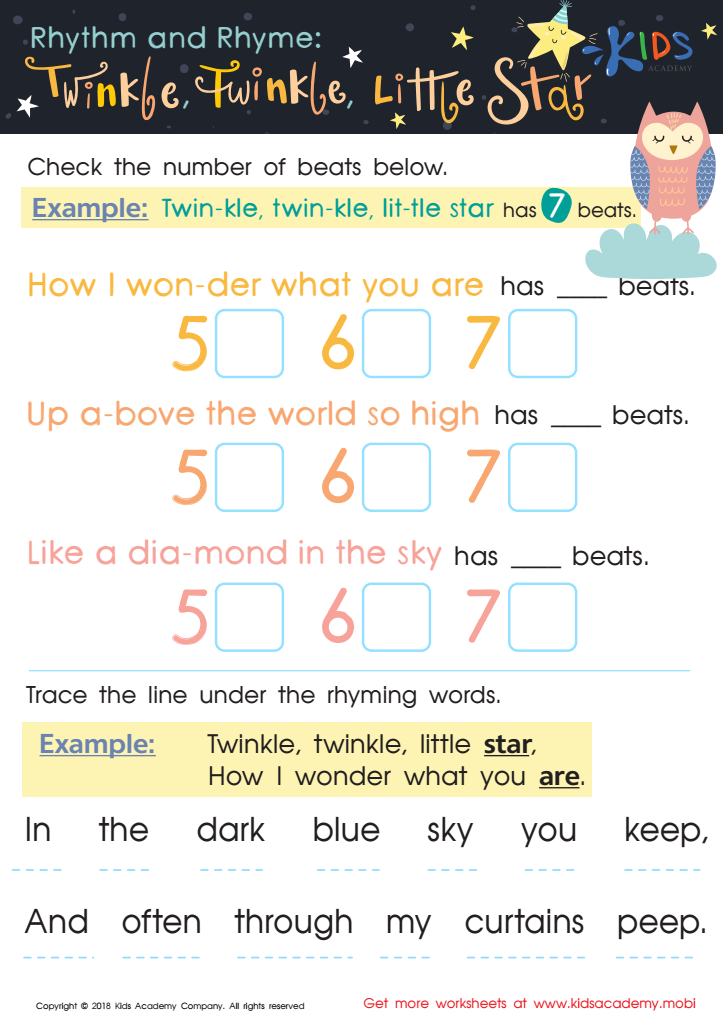
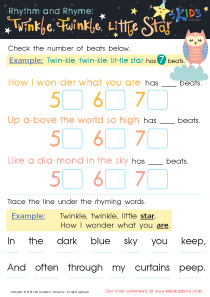
Rhythm and Rhyme: Twinkle, Twinkle, Little Star Worksheet
 Assign to My Students
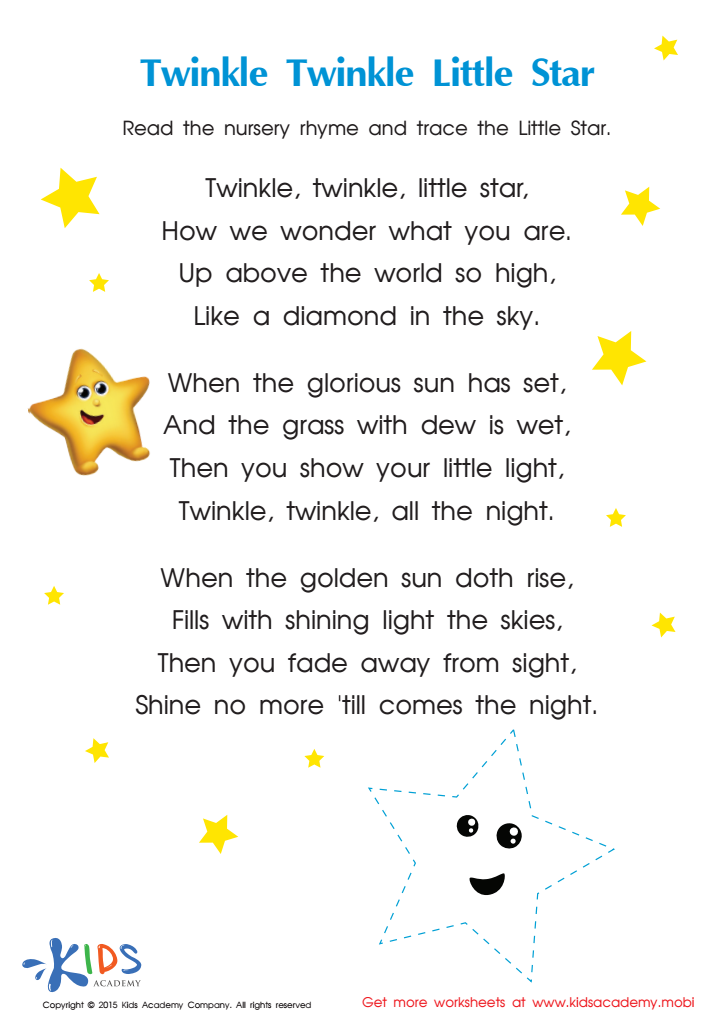
Nursery Rhymes: Twinkle Little Star Worksheet
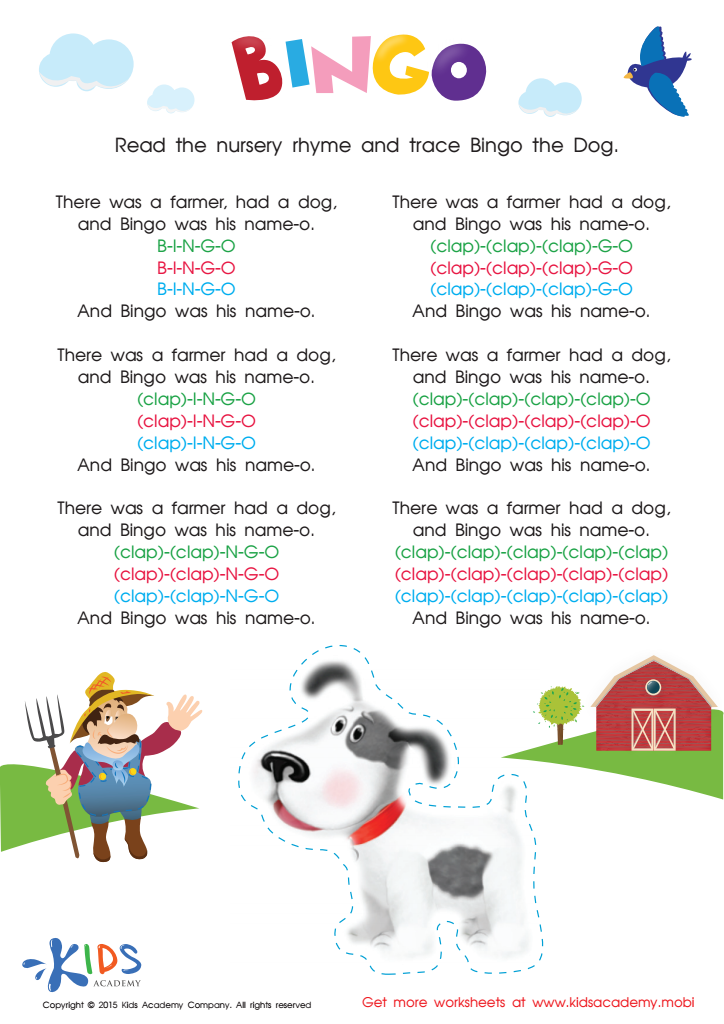
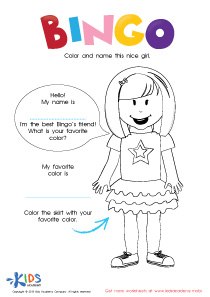
Nursery Rhymes: The Bingo Song Worksheet







Parents and teachers should prioritize vocabulary enhancement through nursery rhymes for children aged 3-7 because these playful and rhythmic stories serve as an essential foundation for language development. Nursery rhymes introduce young learners to new words in a fun, engaging manner, making language acquisition enjoyable. The repetition and melody of rhymes help with phonetic awareness, aiding children in distinguishing sounds and patterns crucial for reading readiness.
Additionally, nursery rhymes often encapsulate rich imagery and storytelling, fostering imagination and comprehension skills. They introduce children to concepts such as rhythm, rhyme, and repetition, which enhance memory retention. Through interactive recitations, children can practice pronunciation and expand their vocabulary in a shared setting, reinforcing social skills and encouraging collaboration.
Furthermore, exposure to a diverse array of vocabulary in nursery rhymes can boost children's verbal abilities and confidence in communication. As they engage with rhyme schemes and wordplay, they are likely to develop a keen interest in language that can lead to lifelong learning habits. Ultimately, incorporating nursery rhymes into early education can not only strengthen vocabulary skills but also lay the groundwork for literacy, cognitive development, and a love for reading that lasts into their later years.