
Text analysis Reading Comprehension Worksheets for Ages 3-7
3 filtered results
Difficulty Level
Grade
Age
-
From - To
Subject
Activity
Standards
Enhance your child's reading skills with our engaging Text Analysis Reading Comprehension Worksheets, designed for ages 3-7. These worksheets focus on developing critical thinking and comprehension through fun, age-appropriate activities that encourage children to analyze and interpret texts. Each worksheet offers interactive challenges, helping young learners identify main ideas, recognize details, and practice inference skills. Our resources not only make reading enjoyable but also boost confidence and literacy foundations that will last a lifetime. Perfect for home or classroom use, these worksheets support early education by making learning a delightful and effective experience—unlock your child's potential in reading today!
Favorites
With answer key
Interactive
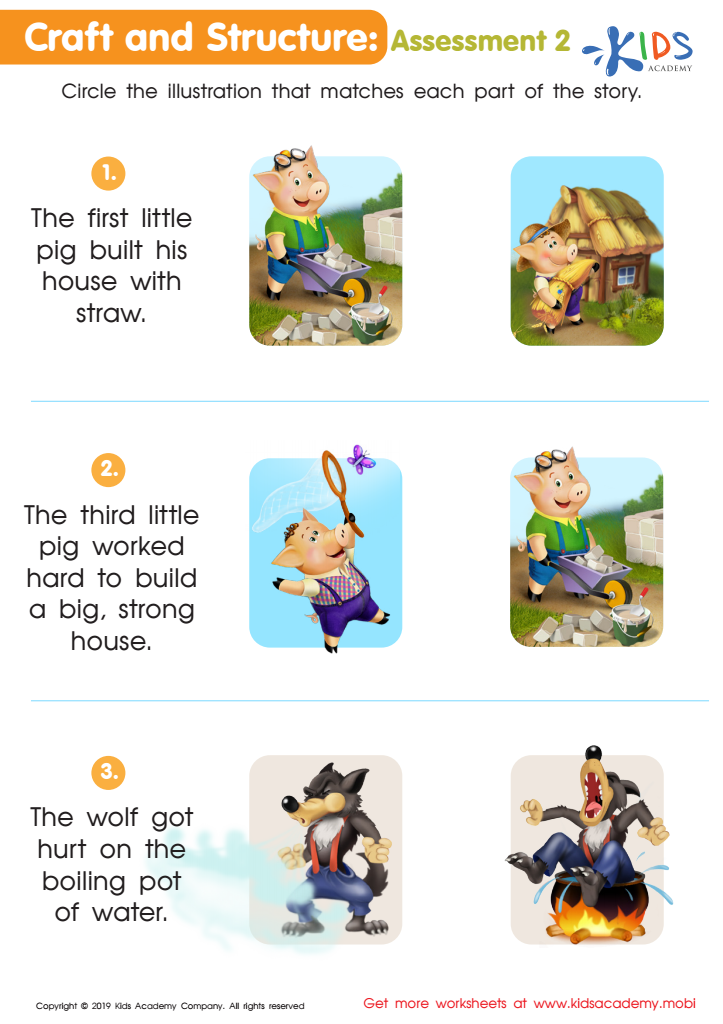
Craft and Structure: Assessment 2 Worksheet 2
This fun printout with colorful illustrations will assess how much your kids pay attention to story time. Go through the pictures and help them circle the ones that match each part of the story. Stimulate their brains and have fun in the process!
 Assign to My Students
Craft and Structure: Assessment 2 Worksheet 2
Worksheet
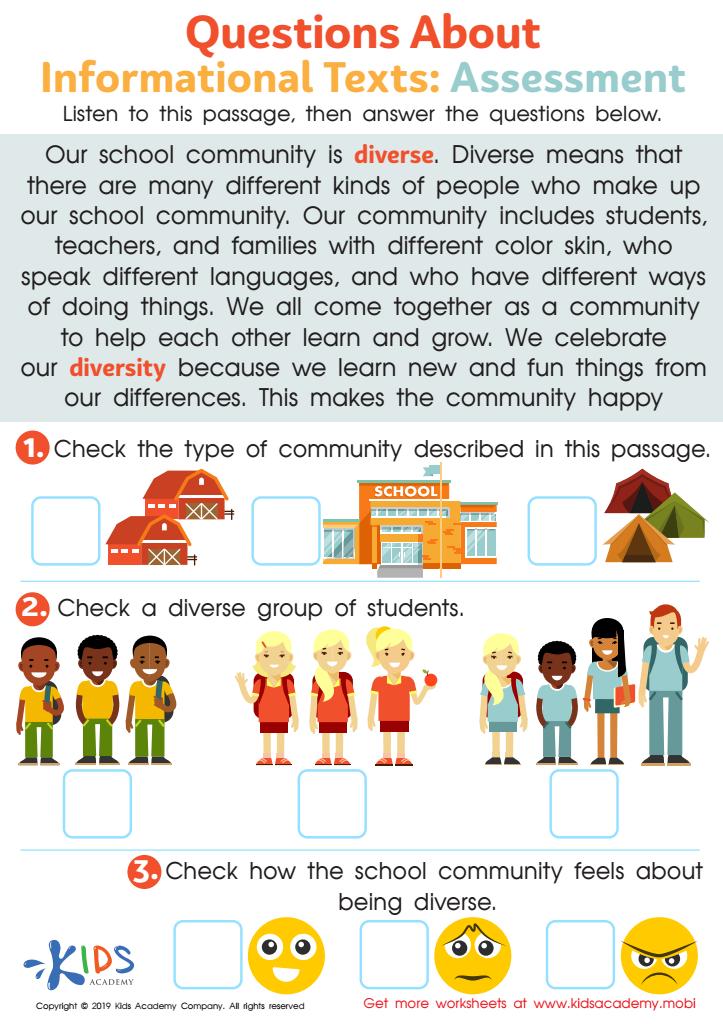
Questions About Informational Texts: Assessment 1 Worksheet
Ask your students: What comes to mind when we talk about a community? What different habits do people practice? What do fellow students do that seems strange? Read this passage aloud to your kindergartners and make sure they understand it. Then, answer the questions at the bottom of the page. (80 words)
Questions About Informational Texts: Assessment 1 Worksheet
Worksheet
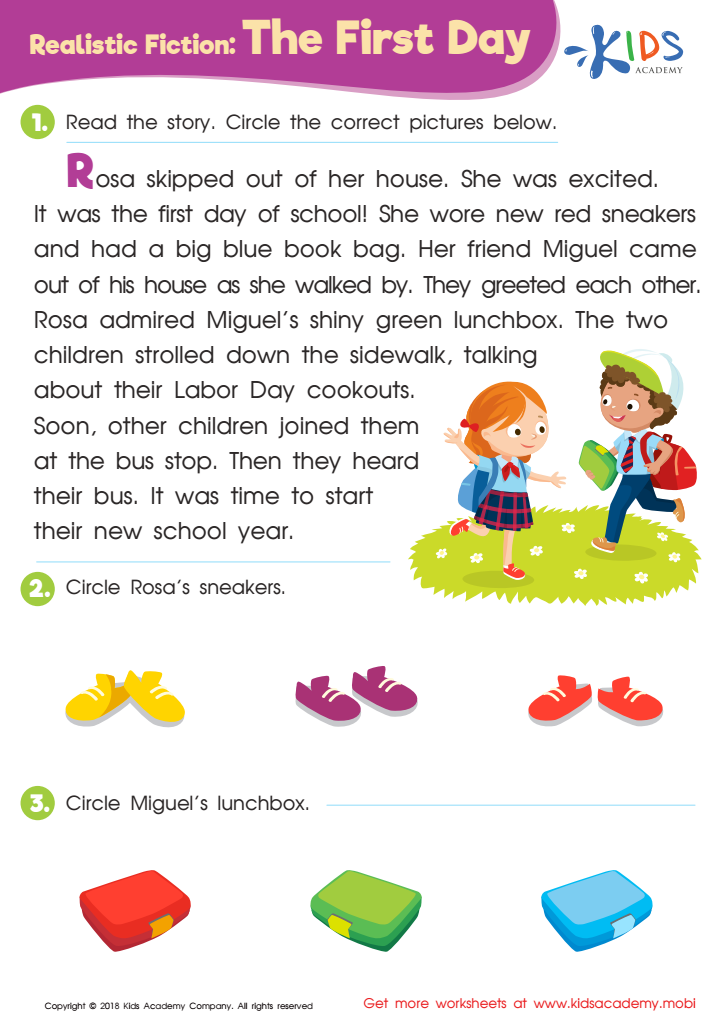
Realistic Fiction: The First Day Worksheet
Fiction is made-up events, so story-writing is fiction writing. In this worksheet, there's a short story about Rosa, her friend Miguel, and their first day back at school. Read the story aloud to your kids and help them circle the right pictures to the questions. Repeat if needed.
Realistic Fiction: The First Day Worksheet
Worksheet
Join Kids Academy for Free
Who is primarily going to use this learning content?








Parents and teachers should prioritize text analysis and reading comprehension for children ages 3-7 because these skills form the foundation for lifelong learning. At this crucial developmental stage, children are naturally curious and eager to understand the world around them. Engaging them in text analysis—such as predicting outcomes, identifying main ideas, and making connections—helps cultivate critical thinking and analytical skills.
Reading comprehension is vital as it not only aids in academic success but also enhances vocabulary and language skills. Children learn to decipher meanings, recognize characters, and grasp plot structures, helping them to better articulate their thoughts and feelings. Moreover, effective reading comprehension promotes imagination and creativity, allowing young learners to dive into different cultures, experiences, and emotional landscapes through stories.
Furthermore, high-quality interactions between parents or teachers and children during reading sessions foster a love for literature and encourage open communication. This builds confidence in expressing ideas and questions. Ultimately, developing text analysis and reading comprehension skills in early childhood prepares students not just for reading proficiency, but also strengthens their overall cognitive abilities, equipping them for future educational challenges and empowering them as engaged learners.








