Explore our engaging Animal Identification Science Worksheets designed specifically for young learners aged 3-7! These printable resources are crafted to help children discover and recognize various animals, enhancing their observational skills and understanding of the natural world. With fun activities, vibrant illustrations, and simple explanations, children will develop their vocabulary and knowledge about habitats, behavior, and species diversity. Ideal for home or classroom use, our worksheets promote interactive learning, making science exciting and accessible. Use our Animal Identification worksheets to spark curiosity and inspire young minds to explore the wonders of wildlife through hands-on activities and creative learning experiences!

Check out this FREE Trial Lesson on Science for age 3-7!

Animal Habitats

Favorites
With answer key
Interactive
  • 3-7
  • Animal identification
  • Science
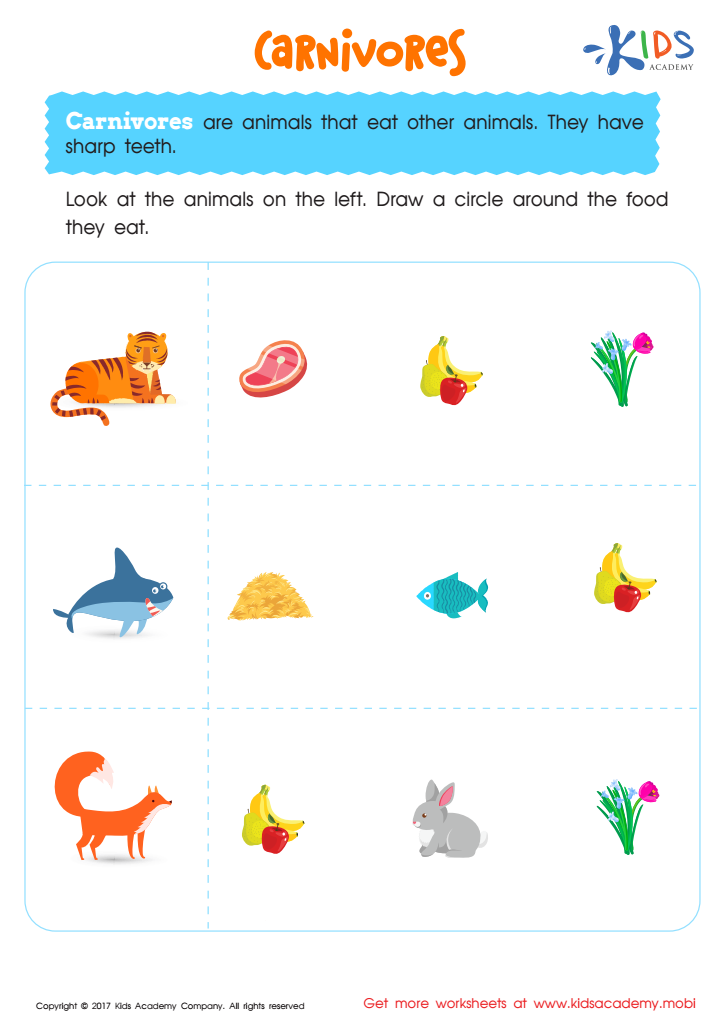
Carnivorous animals worksheet

Carnivores Worksheet

Boost their vocabulary and help them explore the incredible world of carnivores.
Carnivores Worksheet
Worksheet
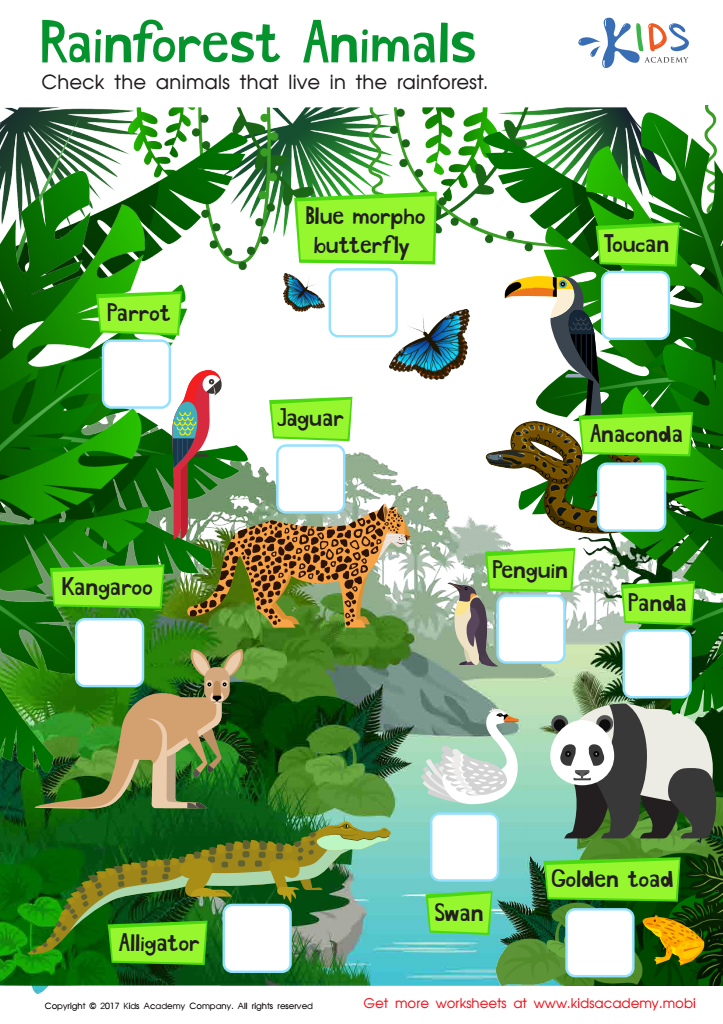
Rainforest animals worksheet

Rainforest Animals Worksheet

Kids love the bright, vivid pics of rainforest animals in this worksheet. It fuels their interest in life science and brings joy to their learning. It encourages them to study these animals in detail.
Rainforest Animals Worksheet
Worksheet
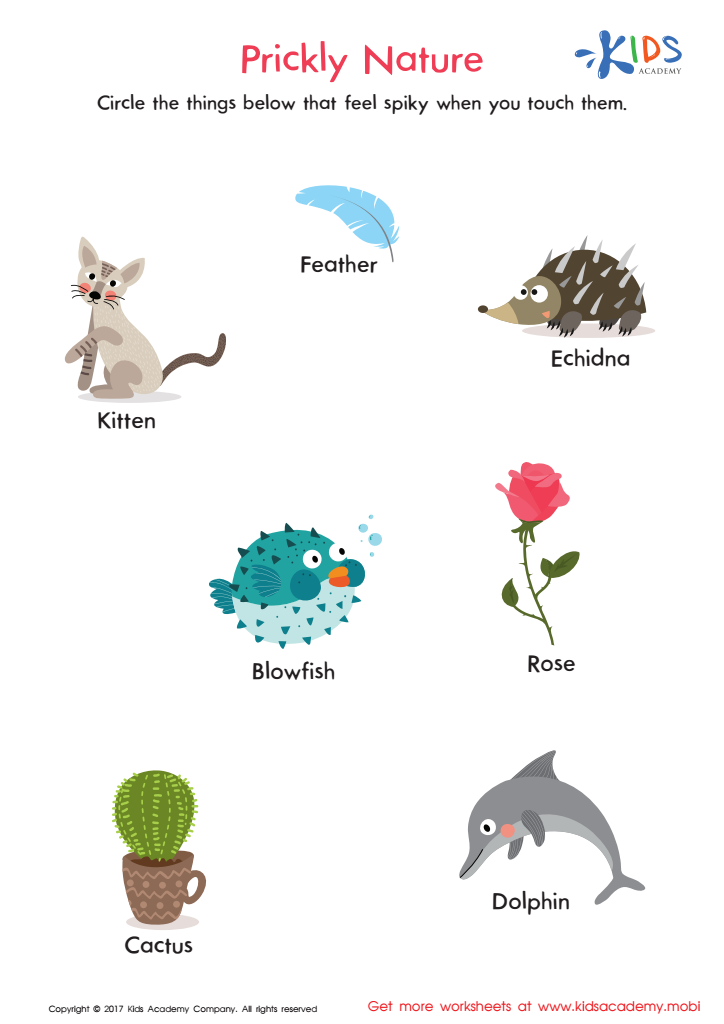
Prickly Nature Printable Worksheet

Prickly Nature Worksheet

Help your child stay safe and enhance critical thinking skills with this prickly nature worksheet. It can help them recognize spiky objects in their environment by teaching them to differentiate between prickly and soft textures. Plus, your kid will learn how to admire and avoid them. Get started today!
Prickly Nature Worksheet
Worksheet
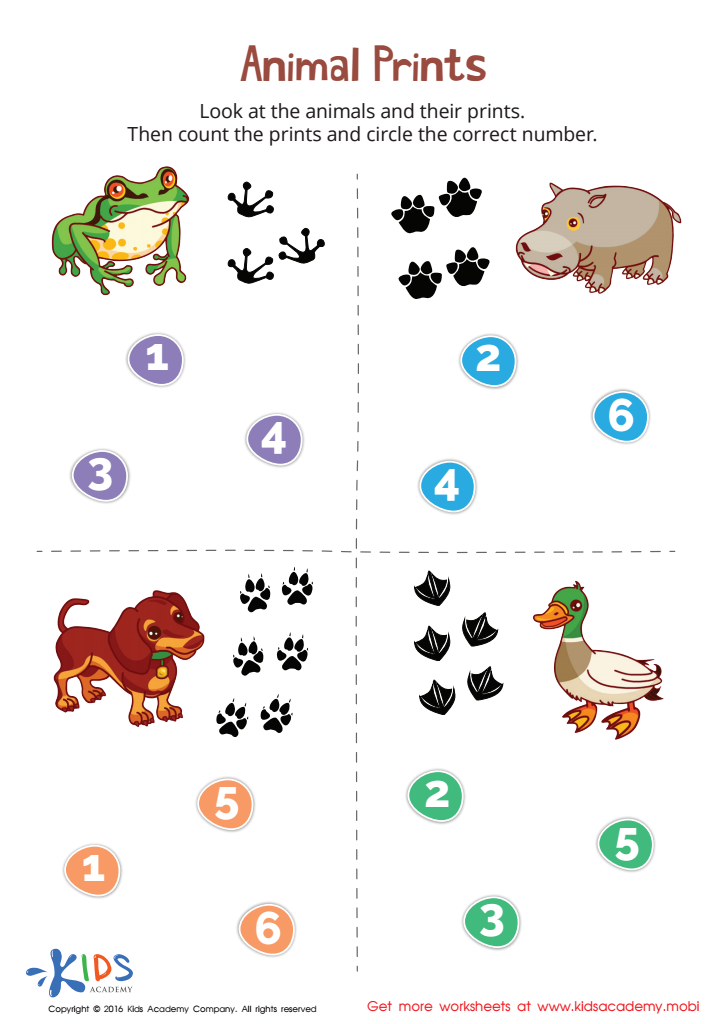
Animal Paw Prints Worksheet

Animal Prints Match-Up Worksheet
Help your little learner build early math skills with this fun animal paw prints worksheet. With it, they'll count, recognize numbers, and learn about the animals that make the paw prints. Talk to them about the prints and ask them to count. They'll love exploring and learning about the different animals, all while sharpening essential math skills!
Animal Prints Match-Up Worksheet
Worksheet
Arctic Animals Worksheet

Arctic Animals Worksheet

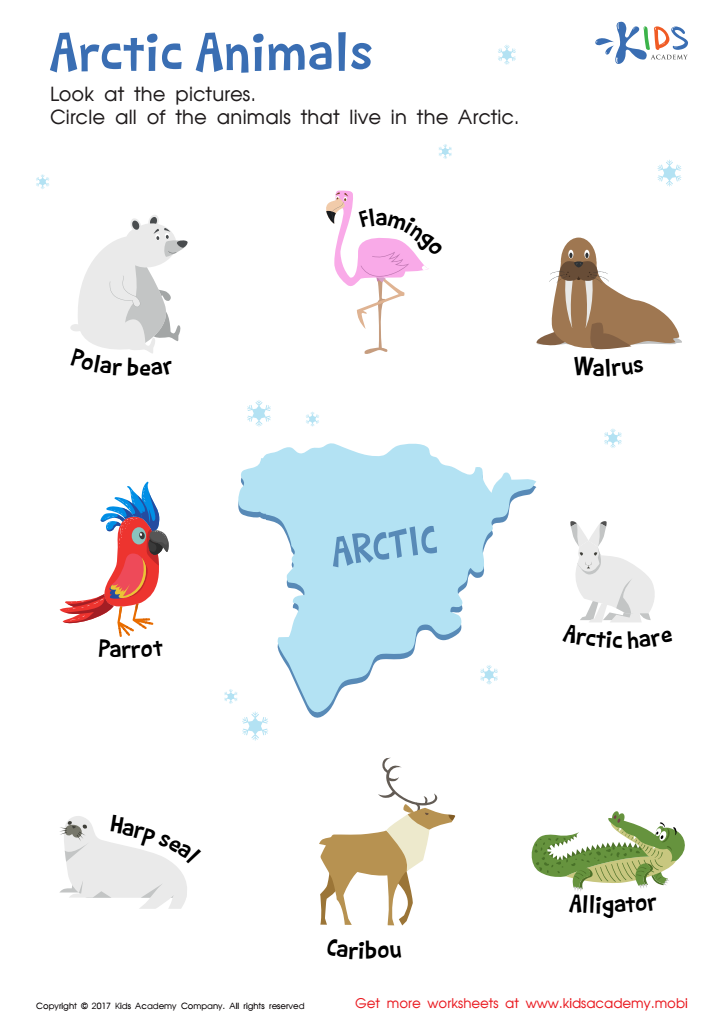
Kids love animals and this worksheet is a great way to teach them where they live. It reinforces classification skills and introduces new animals, like the Arctic hare. Use it to discuss the Arctic climate and how these animals live, then ask your child where other animals live to keep the conversation going.
Arctic Animals Worksheet
Worksheet
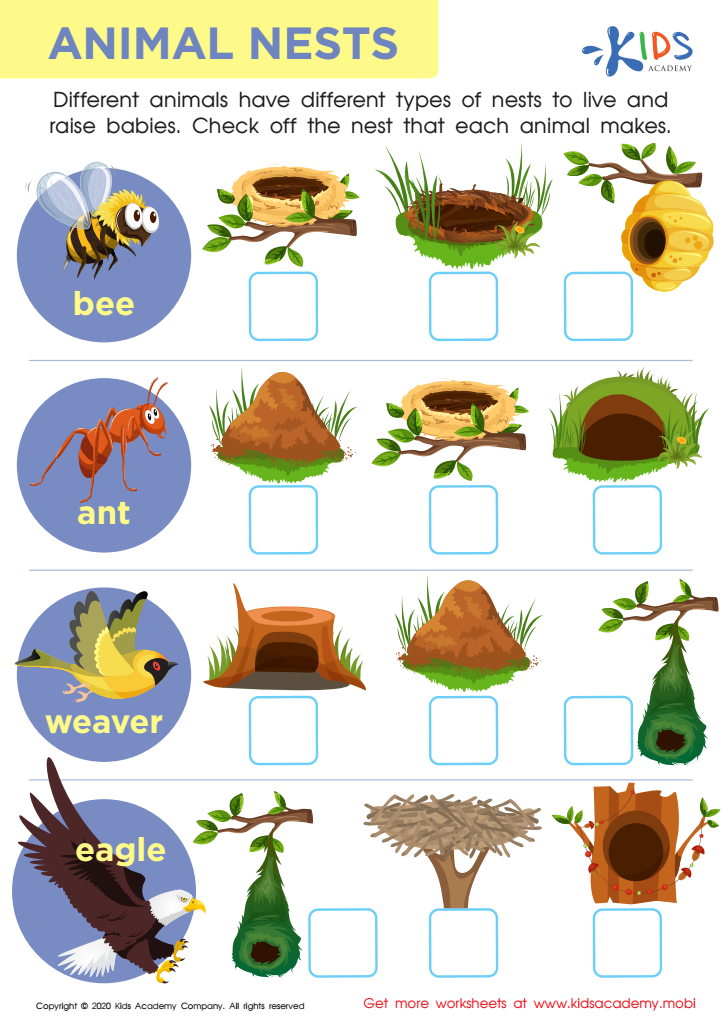
Animal Nests Worksheet

Animal Nests Worksheet

Animals need homes to sleep and stay safe. Look at the animal on the left and examine the nests and hives to the right. Check off the correct one for each animal to complete the worksheet! From birds to bees, it's a great way to show different types of homes animals make!
Animal Nests Worksheet
Worksheet
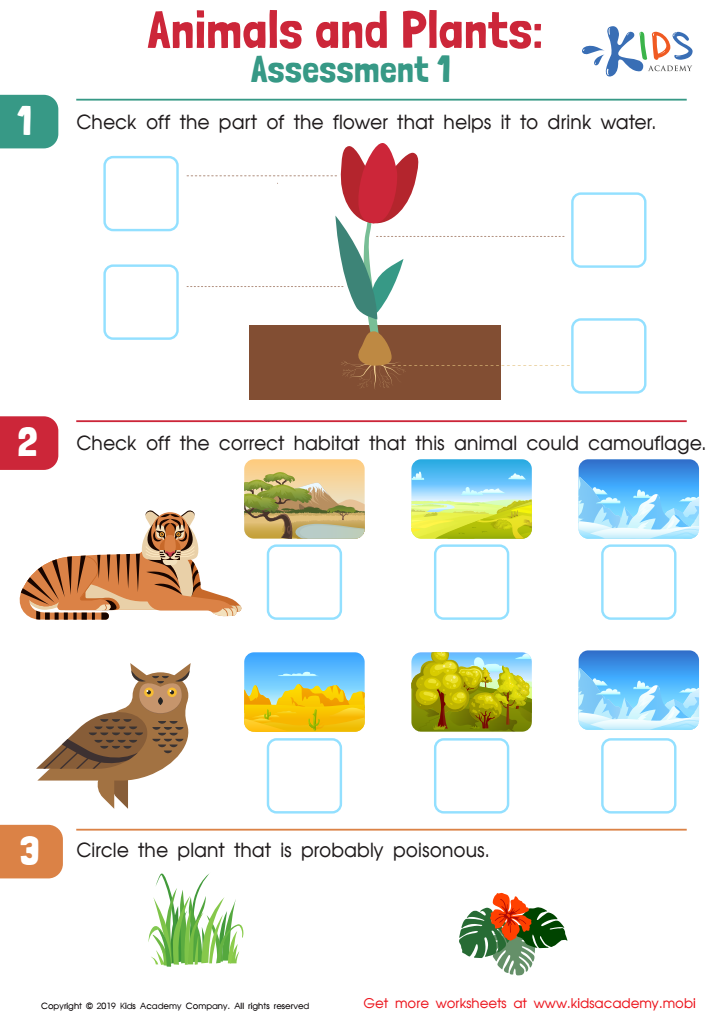
Animals and Plants: Assesment 1 Worksheet

Animals and Plants: Assessment 1 Worksheet

Do you want to easily assess your child's understanding of basic science concepts? This colorful PDF offers a free opportunity for them to test their knowledge about parts of a flower, poisonous plants, animal habitats and more! Bright pictures make it fun and easy for you to see what they know.
Animals and Plants: Assessment 1 Worksheet

Worksheet


Animal identification science is vital for parents and teachers of children aged 3-7, as it lays a foundation for curiosity and critical thinking. At this young age, children are naturally inquisitive, and exploring the world of animals helps satisfy that curiosity. Learning to identify animals fosters observational skills, as children learn to distinguish between different species based on their characteristics such as size, color, and behavior.

Moreover, animal identification supports literacy and language development. Children engage with diverse vocabulary related to animals and their habitats, which enhances their communication skills. Activities centered around animals, such as storytelling or crafts, can also promote creativity and imagination.

Furthermore, understanding animals encourages empathy and awareness of the environment. Through lessons on animal identification, children can learn about the importance of wildlife conservation and the roles of different species in our ecosystem. This early exposure helps cultivate responsible attitudes towards nature, fostering a sense of stewardship.

Ultimately, animal identification science offers a fun and educational opportunity for young students, inspiring lifelong interests in science and the natural world. For parents and teachers, supporting this project encourages holistic development while nurturing future generations of informed, caring citizens.