Categorizing objects Science Worksheets for Ages 3-7
4 filtered results
-
From - To
Enhance your child's learning with our engaging Categorizing Objects Science Worksheets, designed specifically for ages 3 to 7. These fun and interactive worksheets help young learners develop essential skills in observation and critical thinking by introducing them to the concept of categorizing different objects. From animals and plants to everyday items, children will enjoy sorting, matching, and classifying as they explore the world around them. Our worksheets are easy to use and align with educational standards, making them perfect for both classroom settings and homeschooling. Promote creativity and analytical skills in your little ones while having fun with science!
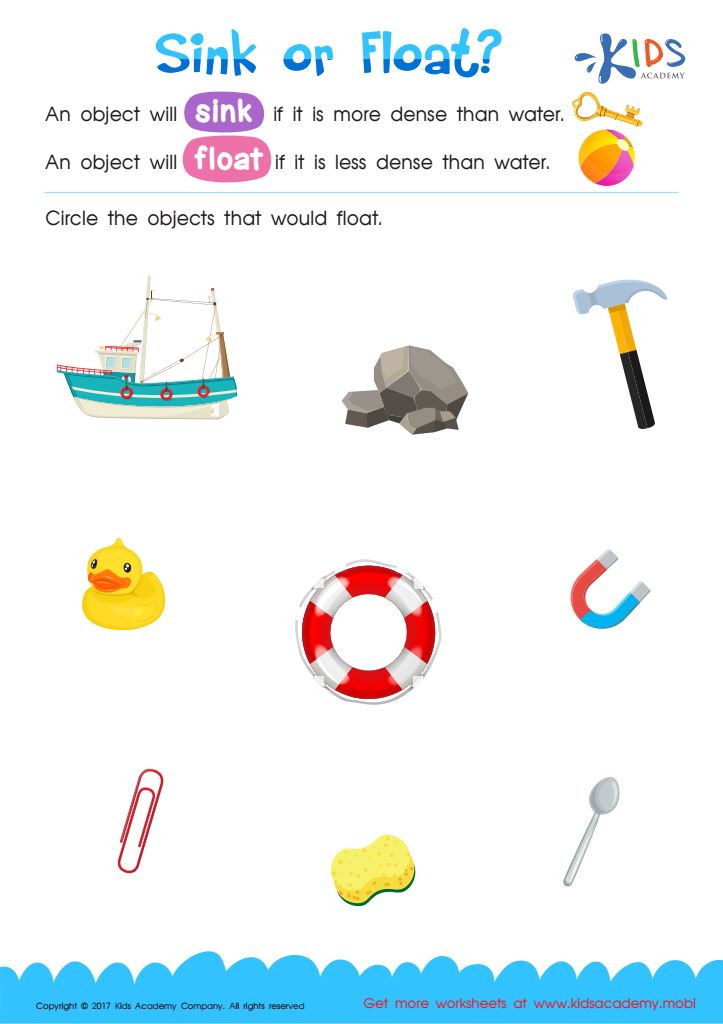
Sink or Float Printable
 Assign to My Students
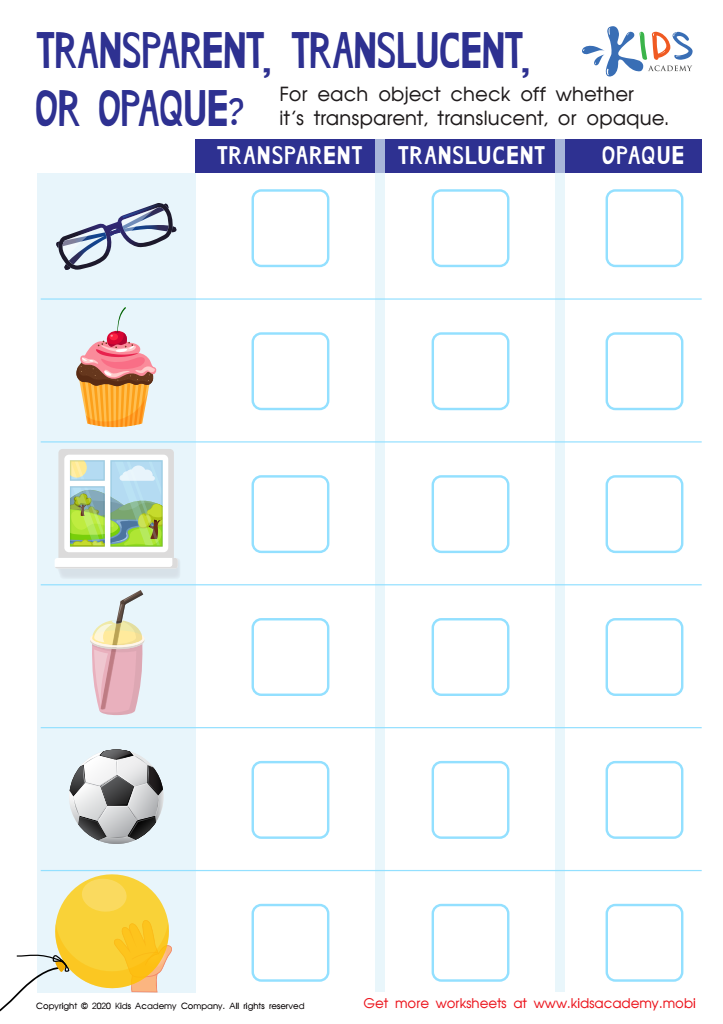
Transparent, Translucent, or Opaque Worksheet
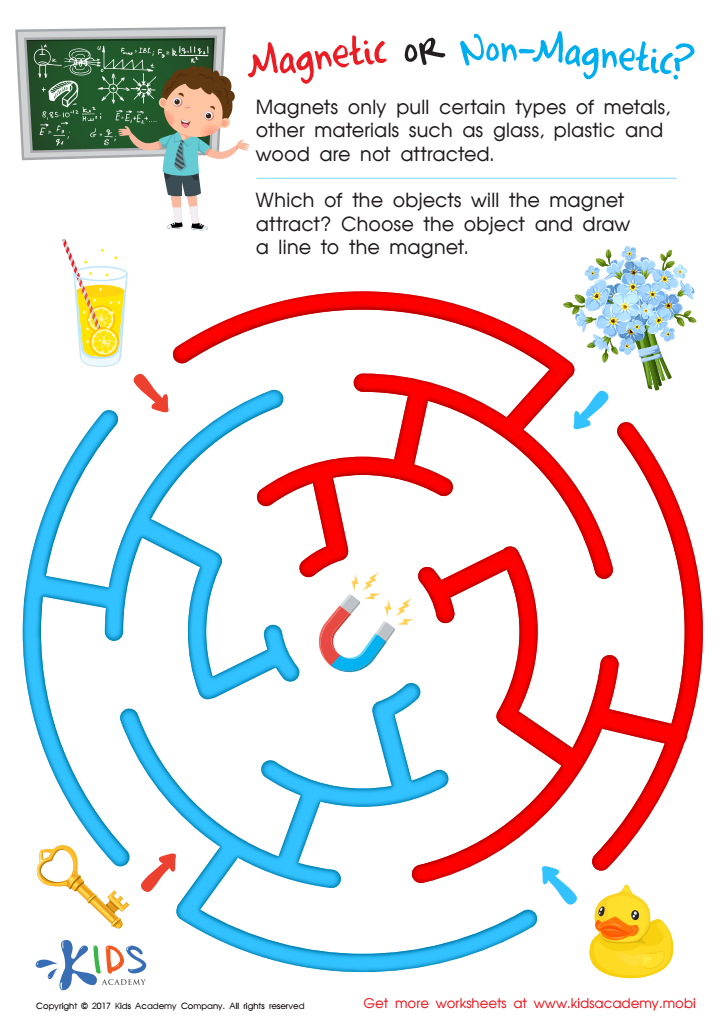
Magnetic or Non–Magnetic Worksheet
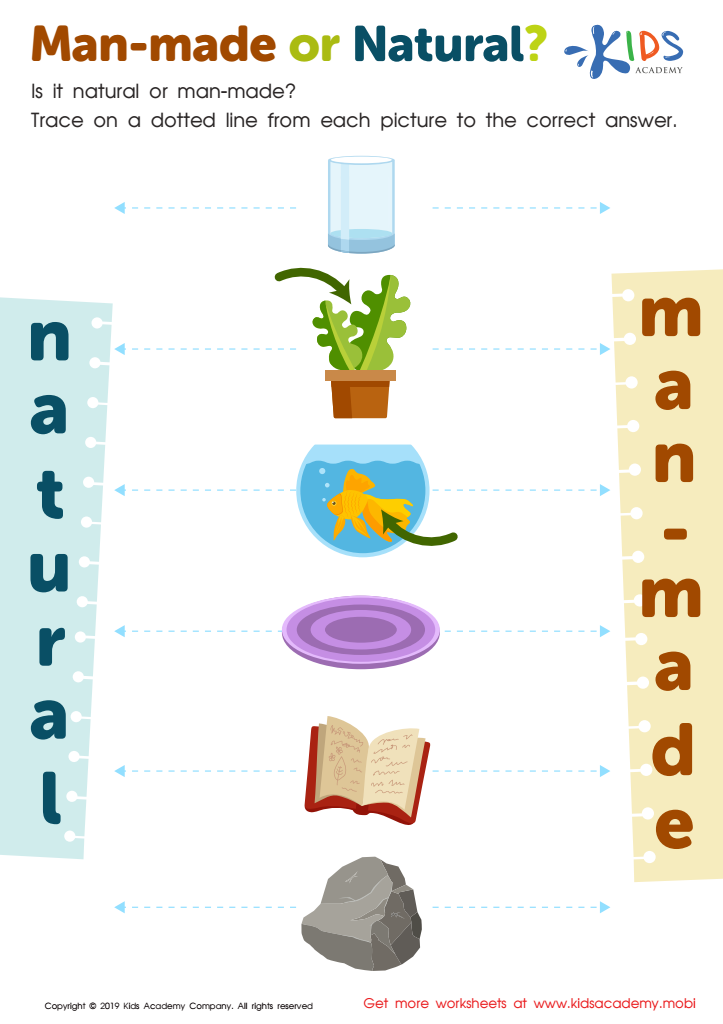
Man-Made or Natural? Worksheet







Categorizing objects is a fundamental aspect of early childhood education, especially for children ages 3 to 7. By engaging in categorization, children develop essential cognitive skills such as critical thinking, problem-solving, and classification. These skills are crucial for cognitive development and help children make sense of the world around them.
When parents and teachers encourage categorizing objects—whether it's sorting toys by color, shape, or size—they stimulate a child’s ability to recognize patterns and similarities, fostering conceptual understanding. This early exposure to classification not only enhances language development as children learn vocabulary associated with different categories, but it also lays the groundwork for more complex scientific thinking.
Furthermore, categorization aids in building social skills. Children often work collaboratively while sorting, learning important lessons about teamwork and communication. Understanding categories also prepares children for subjects like math and science in later years, where sorting and classifying play vital roles.
By emphasizing categorization during these formative years, parents and teachers contribute significantly to a child’s overall growth, nurturing curiosity, and a love for learning. Investing time in this activity ensures children are better equipped for academic success and fosters lifelong skills that extend beyond the classroom.







