
Science knowledge Science Worksheets for Ages 3-7
3 filtered results
Difficulty Level
Grade
Age
-
From - To
Subject
Activity
Standards
Discover engaging and informative Science Knowledge Worksheets tailored for children aged 3-7! Our carefully crafted worksheets encourage young minds to explore the wonders of science through fun activities that promote critical thinking and curiosity. Designed to align with early learning standards, these worksheets cover essential topics such as the human body, plants, animals, and the environment. Each activity aims to foster a love for science while enhancing vocabulary, observation skills, and creativity. Perfect for both classroom and home use, these resources provide a playful yet educational approach to seeing the world around them. Start your child's scientific journey today!
Favorites
With answer key
Interactive
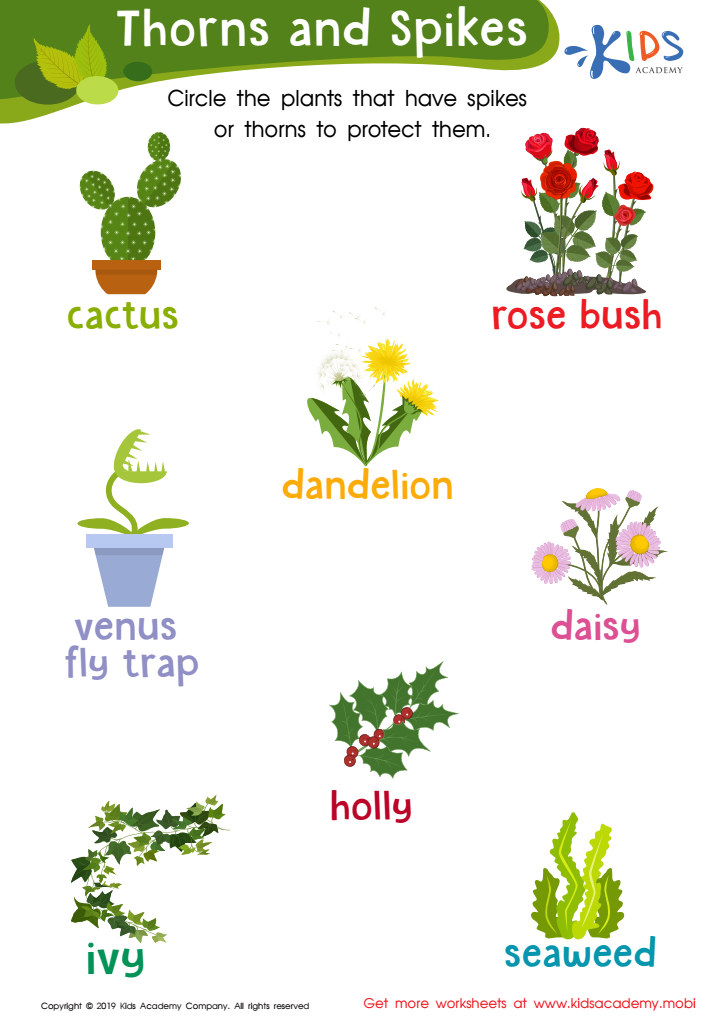
Thorns and Spikes Worksheet
Can your students name and identify the plants and flowers in this worksheet? Ask them to read out the names and circle the ones with spikes or thorns. Help them appreciate nature's beauty and understand how plants protect themselves.
 Assign to My Students
Thorns and Spikes Worksheet
Worksheet
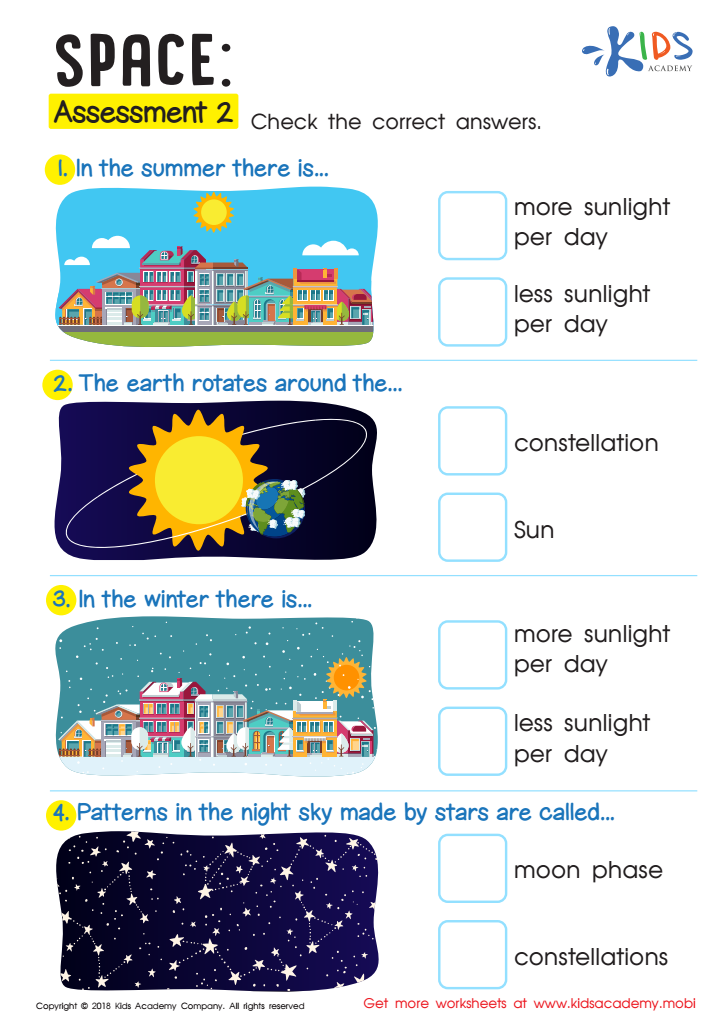
Space: Assessment 2 Worksheet
Test your kids' knowledge of the weather, constellations and Earth with this worksheet. Show them the 4 images and ask what's happening; then read the questions and options and help them pick the right answers. This printout is a helpful and fun way to learn!
Space: Assessment 2 Worksheet
Worksheet
Join Kids Academy for Free
Who is primarily going to use this learning content?







Science knowledge for children aged 3-7 is essential for several reasons. First and foremost, early exposure to scientific concepts ignites curiosity and promotes a love for learning. At this age, children are naturally inquisitive, and science allows them to explore the world around them, developing critical thinking and problem-solving skills.
Introducing science at a young age helps children understand basic principles such as nature, weather, and physical properties, laying a foundational understanding for more complex ideas later on. Engaging in scientific activities fosters observational skills, encouraging children to ask questions and seek answers, which boosts their cognitive development.
Additionally, learning science can enhance language and communication skills, as children learn to articulate their observations and ideas. It also supports social-emotional growth; working collaboratively in experiments fosters teamwork and communication.
Moreover, in a rapidly evolving world, understanding science is crucial for making informed decisions about health, technology, and the environment. By nurturing scientific knowledge from a young age, parents and teachers help cultivate future innovators and responsible citizens, ensuring that children are well-equipped to navigate the challenges of tomorrow. Emphasizing science early on lays the groundwork for a lifelong passion for inquiry and discovery.







