
Critical Thinking Life Science Worksheets for Ages 3-7
3 filtered results
Difficulty Level
Grade
Age
-
From - To
Subject
Activity
Standards
Unlock your child's curiosity with our Critical Thinking Life Science Worksheets, designed specifically for ages 3-7! These engaging worksheets encourage young learners to explore important concepts in life science while developing essential critical thinking skills. Each activity promotes observation, comparison, and reasoning, fostering a love for discovery. Ideal for home or classroom use, our resources ignite imaginative thinking while enhancing understanding of the living world, from plants and animals to ecosystems. Parents and educators can easily incorporate these worksheets into their lessons, making science fun and accessible. Join us in inspiring the next generation of scientists today!
Favorites
With answer key
Interactive
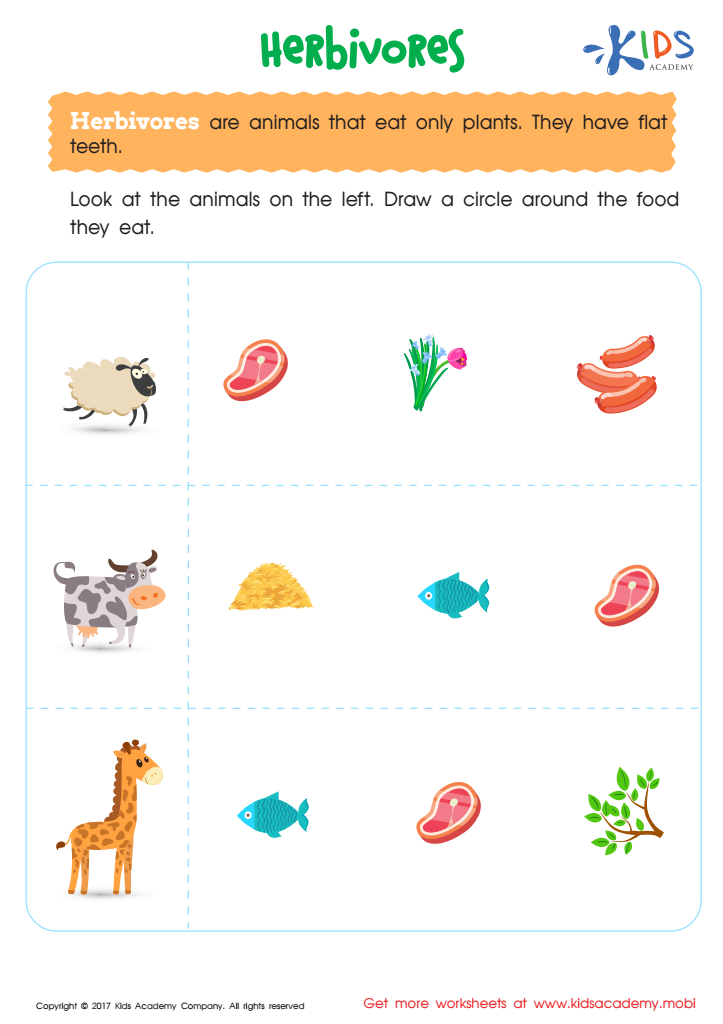
Herbivores Printable
Strengthen their vocab with these fascinating creatures, as they explore an intriguing aspect of beloved animals.
 Assign to My Students
Herbivores Printable
Worksheet
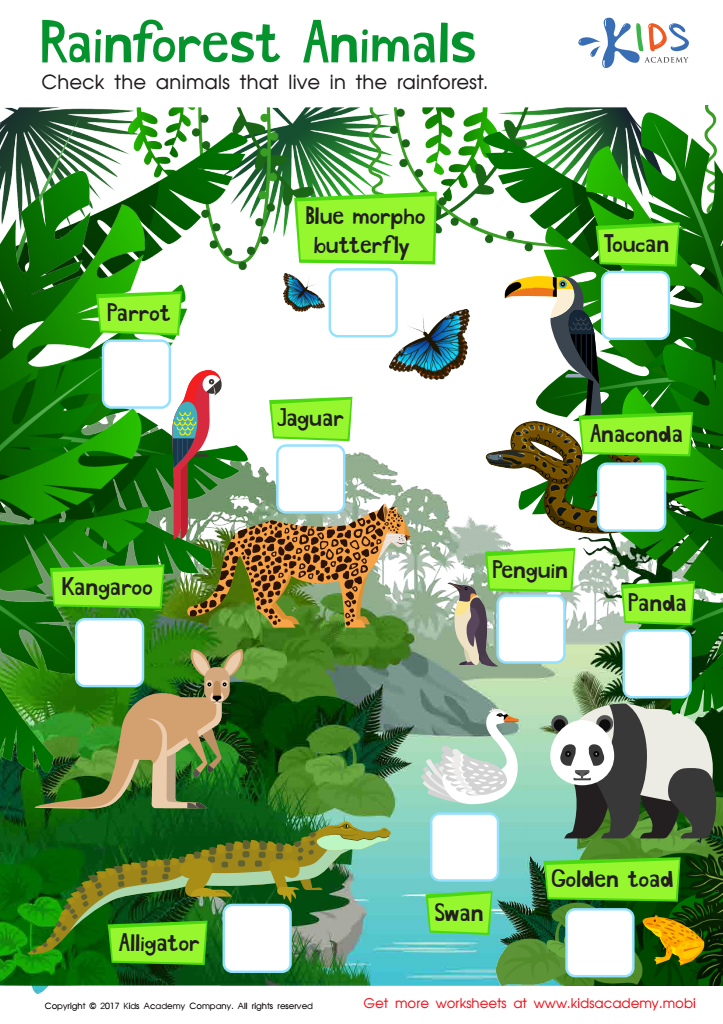
Rainforest Animals Worksheet
Kids love the bright, vivid pics of rainforest animals in this worksheet. It fuels their interest in life science and brings joy to their learning. It encourages them to study these animals in detail.
Rainforest Animals Worksheet
Worksheet
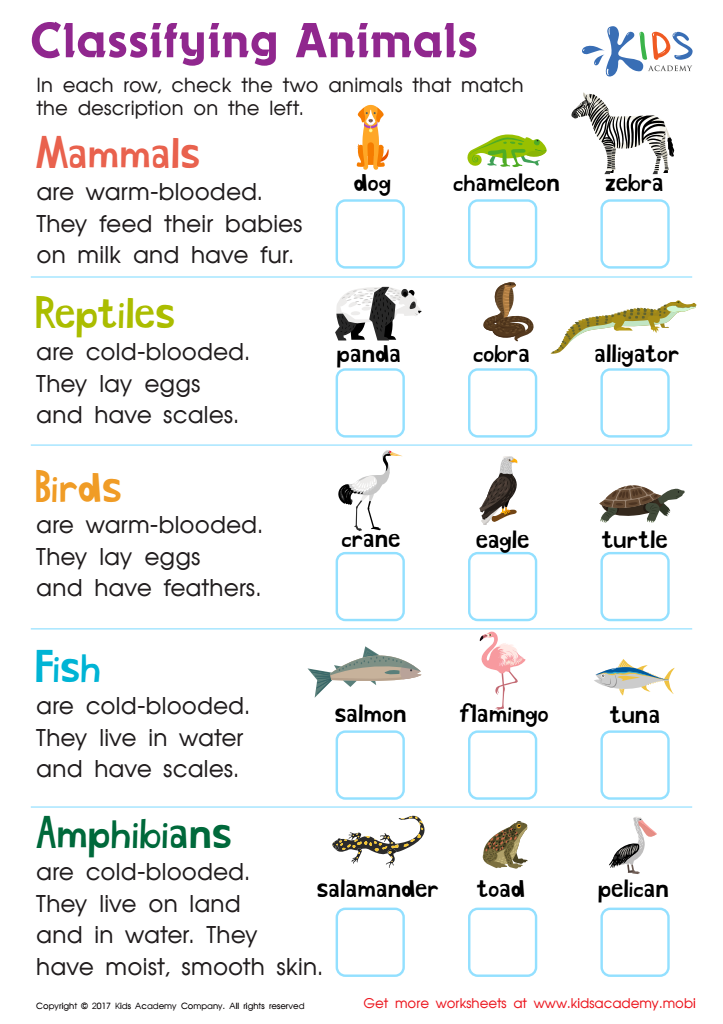
Classifying Animals Worksheet
Print the 2nd grade animal classification worksheet and help kids study the differences between mammals, reptiles, birds, fish and amphibians. Let them pick two examples from the options given.
Classifying Animals Worksheet
Worksheet
Join Kids Academy for Free
Who is primarily going to use this learning content?








Critical thinking in life sciences is essential for children aged 3-7 as it lays the foundation for their understanding of the world around them. At this early stage, children are naturally curious, and fostering this curiosity through critical thinking helps them develop important cognitive skills such as observation, analysis, and problem-solving. Engaging with life sciences enables kids to explore concepts like living organisms, ecosystems, and biological processes, encouraging them to ask questions and seek answers.
Teachers and parents should care about incorporating critical thinking in life science education because it not only stimulates intellectual development but also nurtures a sense of responsibility towards the environment and other living beings. Children learn to make connections between different concepts, fostering a holistic understanding of how life functions. Furthermore, honing critical thinking skills early helps children become independent learners, empowering them to approach challenges with confidence.
By instilling these skills at a young age, educators and caregivers contribute to the development of informed, environmentally-conscious citizens who will be better equipped to tackle the complex scientific issues of the future. Ultimately, investing in critical thinking life science education paves the way for lifelong learning and an appreciation for the intricacies of life.








