Understanding pollination Plants and Animals Worksheets for Ages 3-7
3 filtered results
-
From - To
Explore the fascinating world of pollination with our "Understanding Pollination: Plants and Animals Worksheets" designed for ages 3-7! Perfect for early learners, these engaging worksheets introduce the essential role of pollinators like bees, butterflies, and birds in the plant lifecycle. Each colorful, interactive activity fosters curiosity and promotes critical thinking, helping young children grasp important scientific concepts in a fun and accessible way. Through creative exercises and illustrations, children will learn about the connections between plants and animals, enhancing their understanding of nature's delicate balance. Start your child's journey in science today with our enriching resources!
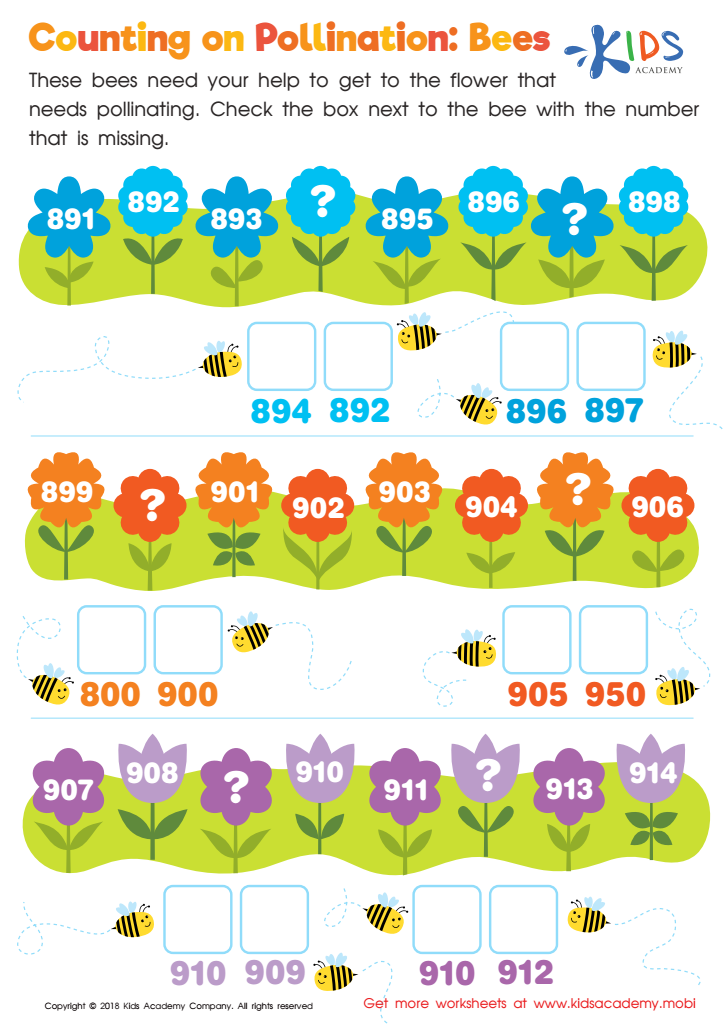
Counting on Pollination: Bees Worksheet
 Assign to My Students
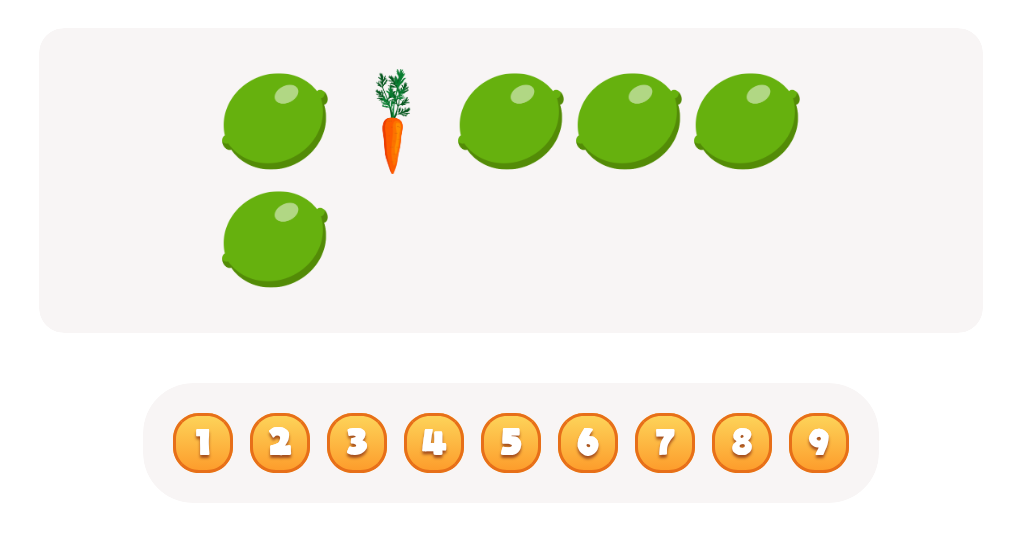

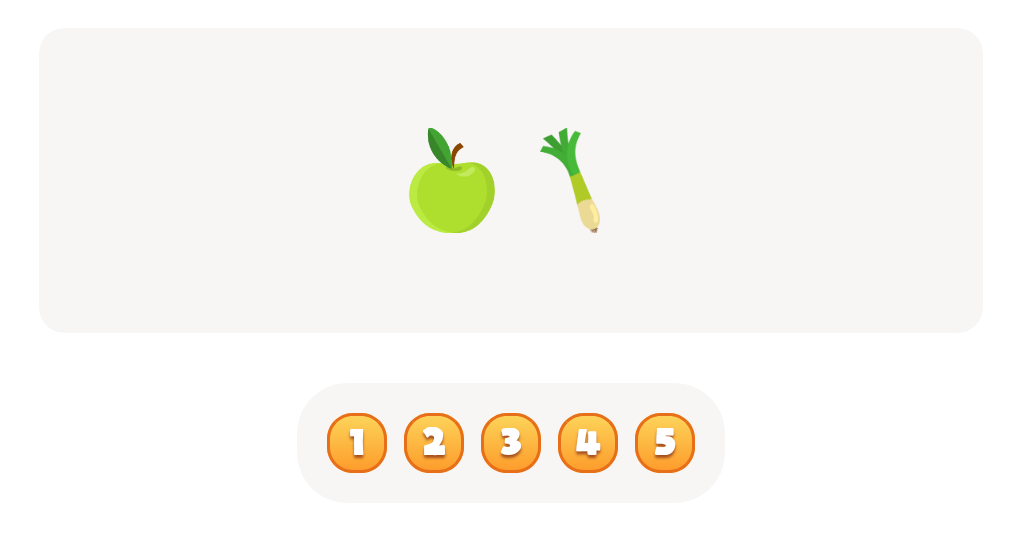
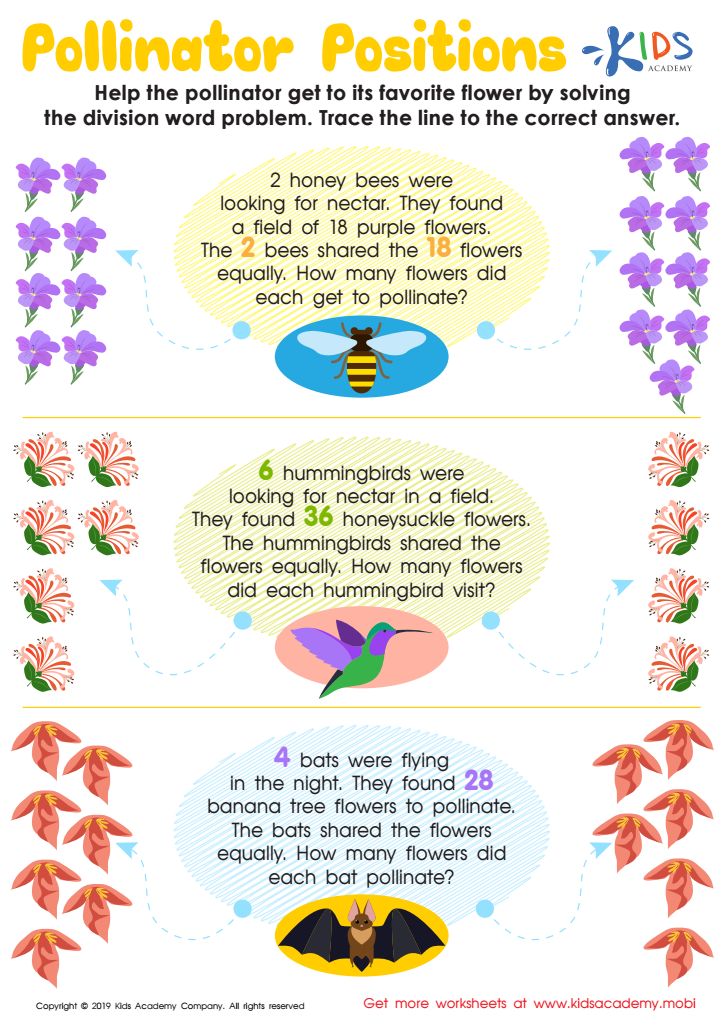
Pollinator Positions Worksheet
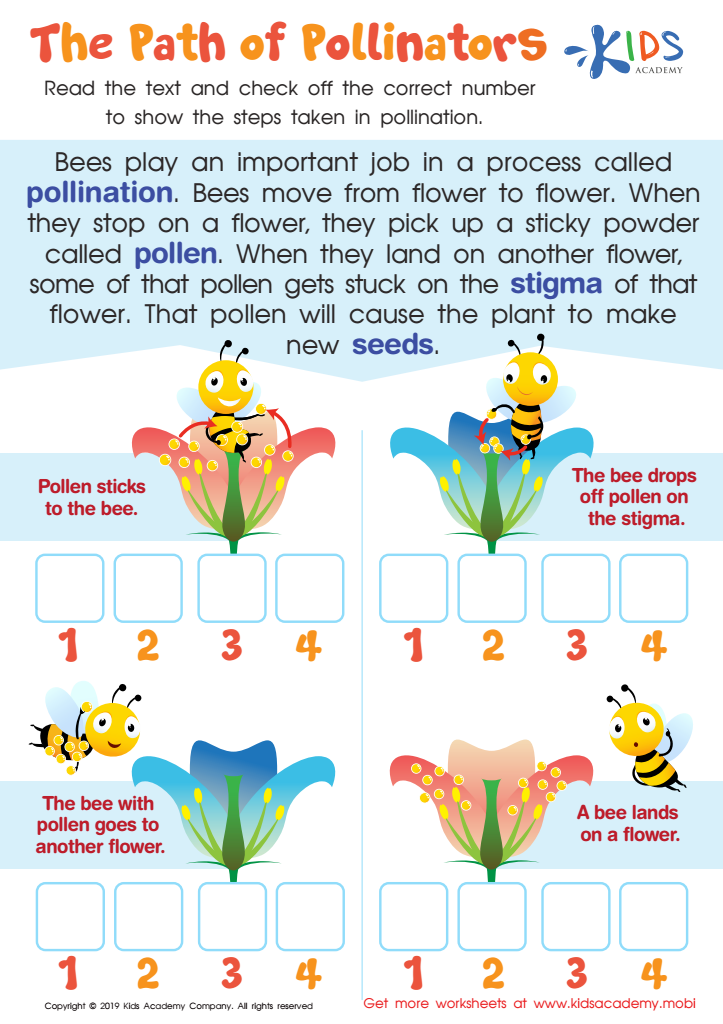
The Path of Pollinators Worksheet






Understanding pollination is essential for children ages 3-7 as it lays the foundation for their appreciation of nature and the interconnectedness of life. At this developmental stage, children are naturally curious about the world around them, making it the perfect opportunity to introduce concepts like pollination, which involves plants, animals, and the environment.
Firstly, recognizing the role of pollinators such as bees, butterflies, and birds helps children understand their importance in food production and biodiversity. This awareness not only fosters a sense of responsibility towards the environment but also encourages eco-friendly behaviors as they grow older.
Secondly, teaching about pollination can enhance cognitive and language skills. It involves introducing new vocabulary, engaging them in discussions, and facilitating hands-on activities like planting seeds or observing insects, which enriches their learning experience.
Finally, understanding pollination can promote community involvement through gardening projects or nature walks, allowing children to connect with their surroundings in meaningful ways. By immersing young learners in the fascinating world of plants and animals, parents and teachers can inspire a love of science, cultivate curiosity, and spark a lifelong journey of discovery and stewardship of the environment.