
Vocabulary Building Weather Worksheets for Ages 3-7
3 filtered results
Difficulty Level
Grade
Age
-
From - To
Subject
Activity
Standards
Unlock the world of weather for young learners with our Vocabulary Building Weather Worksheets designed for ages 3-7. These engaging and educational worksheets blend fun activities and colorful illustrations to introduce essential weather-related terms. Children expand their vocabulary while developing reading, comprehension, and critical thinking skills. Perfect for preschool to early elementary students, our worksheets cover various weather phenomena such as rain, sunshine, clouds, and more. Ideal for parents and teachers alike, these resources make learning about weather an exciting adventure, fostering a love for science and nature in your little explorers.
Favorites
With answer key
Interactive
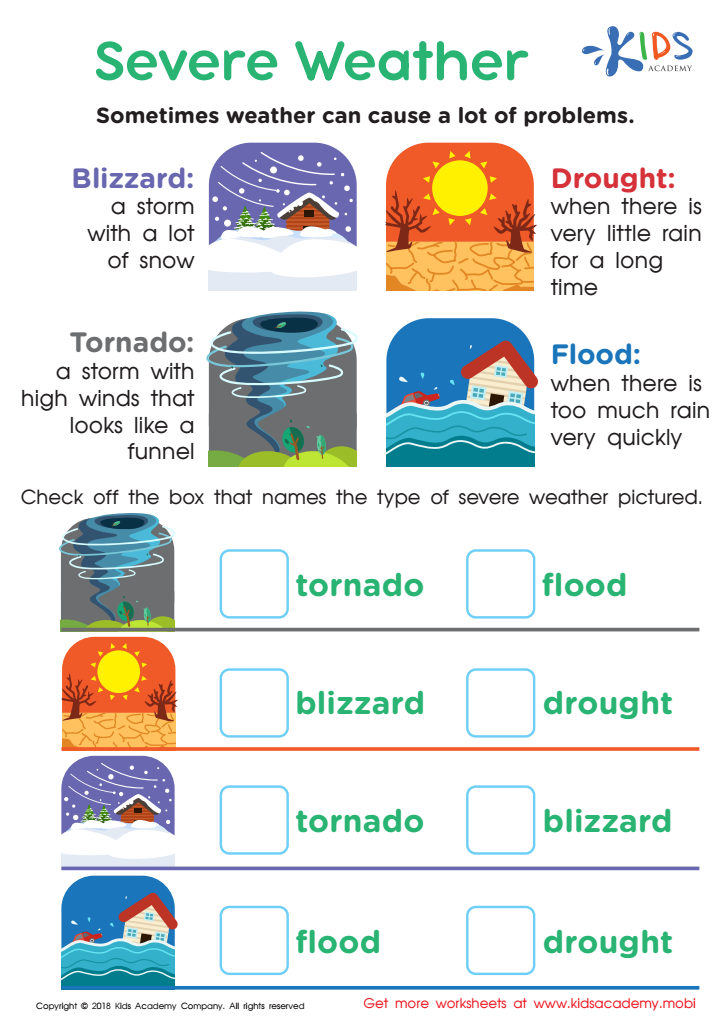
Severe Weather Worksheet
Weather can be dangerous, so teach your kids to stay safe with this interactive weather worksheet. Review the descriptions of tornadoes, blizzards, floods, and drought and match them with the colorful pictures. Tick the boxes to correctly identify each image and complete the sheet.
 Assign to My Students
Severe Weather Worksheet
Worksheet
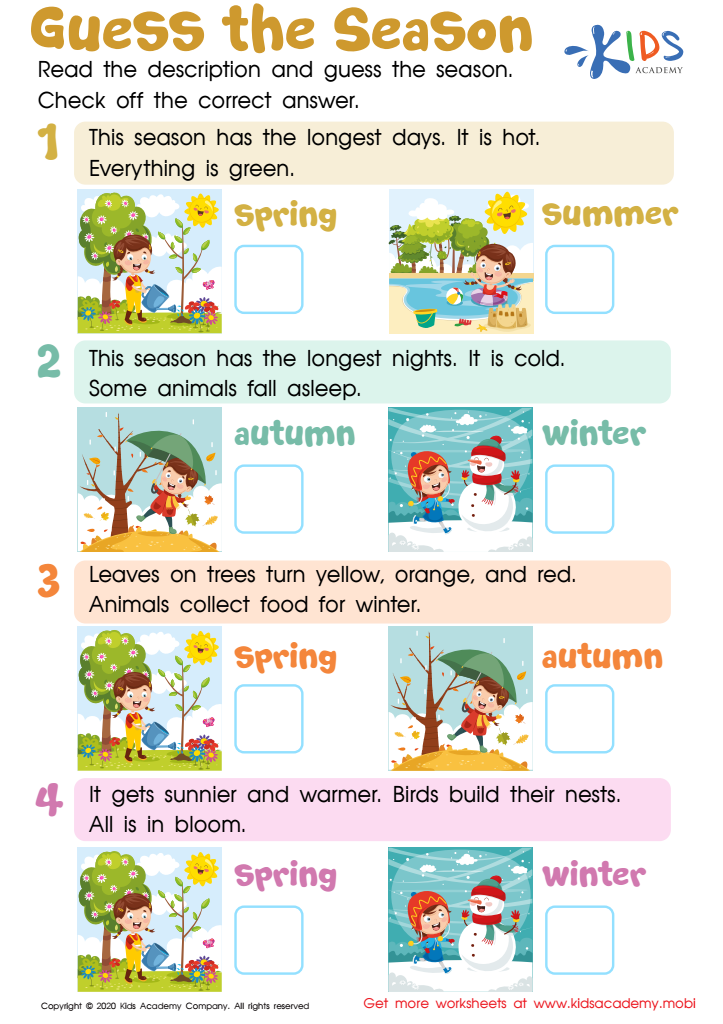
Guess the Season Worksheet
Winter and summer bring different weather! Help kids recognize the changes with this free Kids Academy PDF worksheet. Students read each description, look at the pictures, and check the box next to the season depicted. Make learning fun and easy with interactive activities.
Guess the Season Worksheet
Worksheet
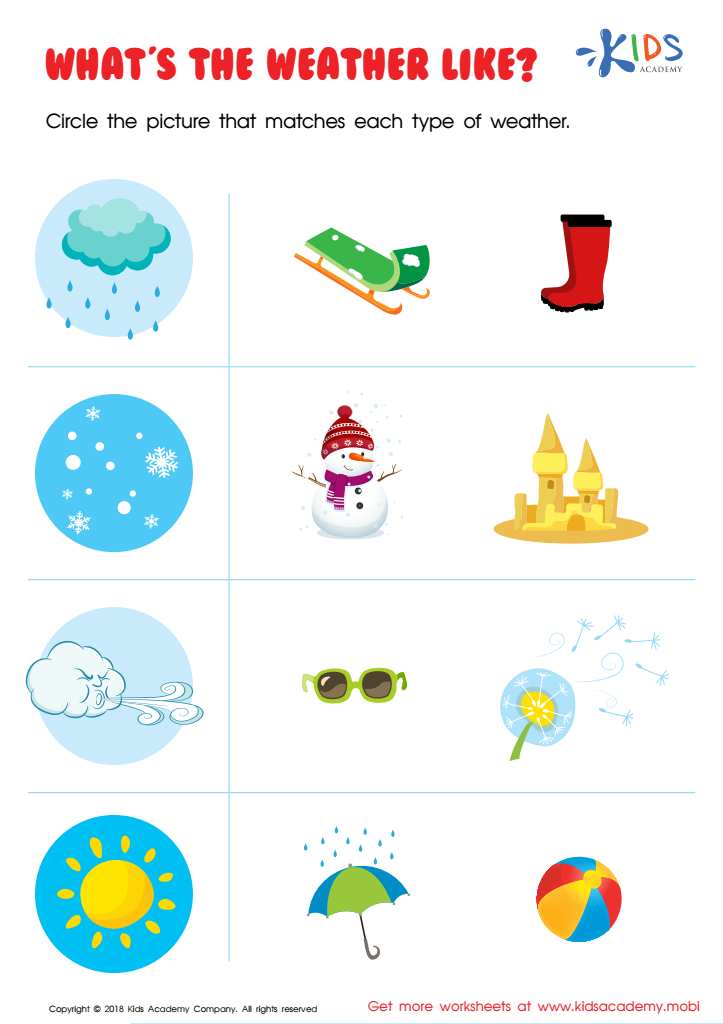
What's the Weather Like? Worksheet
Help budding meteorologists practice matching weather to seasons with this PDF worksheet. Picture clues help identify seasons and fine motor skills are practiced circling the correct weather patterns. Bright and engaging characters make learning fun and reinforce weather knowledge.
What's the Weather Like? Worksheet
Worksheet
Join Kids Academy for Free
Who is primarily going to use this learning content?






%20(1).jpg)

Vocabulary building in the context of weather for children aged 3-7 is a crucial educational endeavor that warrants the attention of both parents and teachers. During these formative years, children's brains are exceptionally receptive to new words and concepts, making it an ideal time to introduce them to the rich vocabulary of weather. Understanding weather-related terms such as "sunny," "cloudy," "rainy," "stormy," "warm," and "cold" not only expands their lexicon but also enhances their cognitive and observational skills.
Weather is a daily, observable phenomenon, which means that children have abundant opportunities to use and reinforce this vocabulary in real-world contexts. This relevance encourages active learning and retention. Additionally, discussing everyday weather links directly to science and nature, nurturing curiosity and foundational scientific thinking, which are aligned with early STEM education goals.
Moreover, vocabulary building related to weather helps in developing essential communication skills. It allows children to articulate their experiences and feelings more clearly, fostering better emotional expression and social interaction. When children can describe what they see around them, they feel more understood and confident, which contributes to their overall language proficiency and academic readiness. By integrating weather-related words into daily routines and activities, parents and teachers can create a rich, supportive learning environment that stimulates young minds and lays a strong foundation for their future educational journey.







