Grammar practice Writing Worksheets for Ages 3-7
14 filtered results
-
From - To
Welcome to our engaging Grammar Practice Writing Worksheets for Ages 3-7! Designed to cultivate a strong foundation in grammar, these fun and interactive worksheets are perfect for young learners. Each activity encourages kids to explore sentence structure, proper punctuation, and essential grammar rules, fostering their writing skills through play. Ideal for home and classroom use, our resources align with educational standards, making learning enjoyable and effective. Whether your child is practicing words, crafting sentences, or understanding parts of speech, our printable worksheets support their journey to becoming confident writers. Dive into the joy of learning grammar through creative writing exercises today!
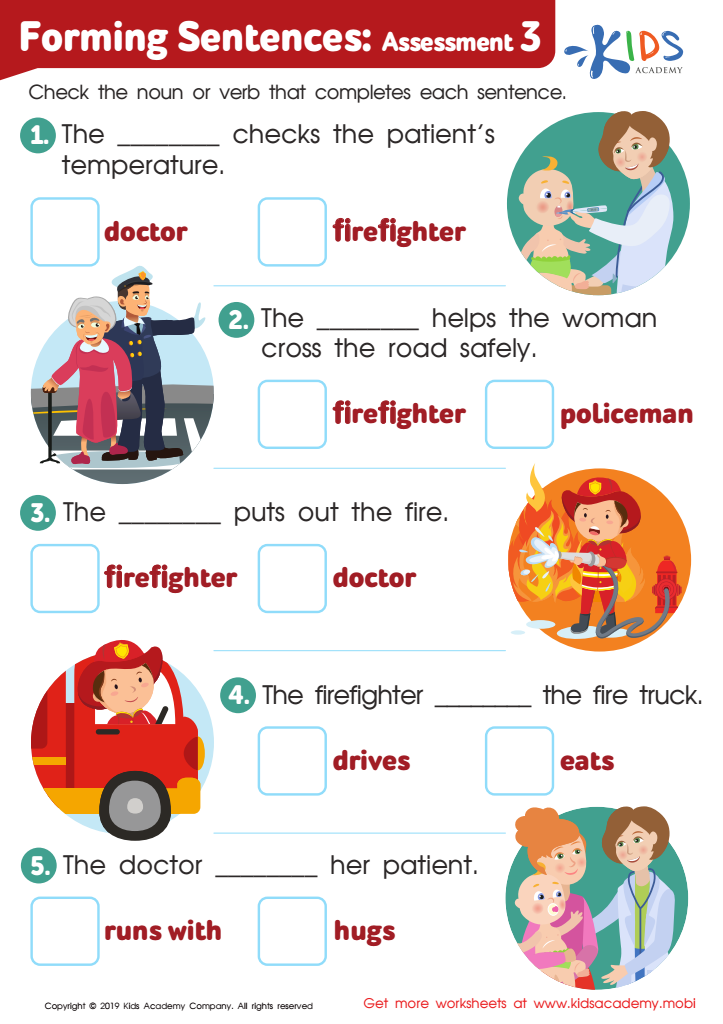
Forming Sentences: Assessment 3 Worksheet
 Assign to My Students
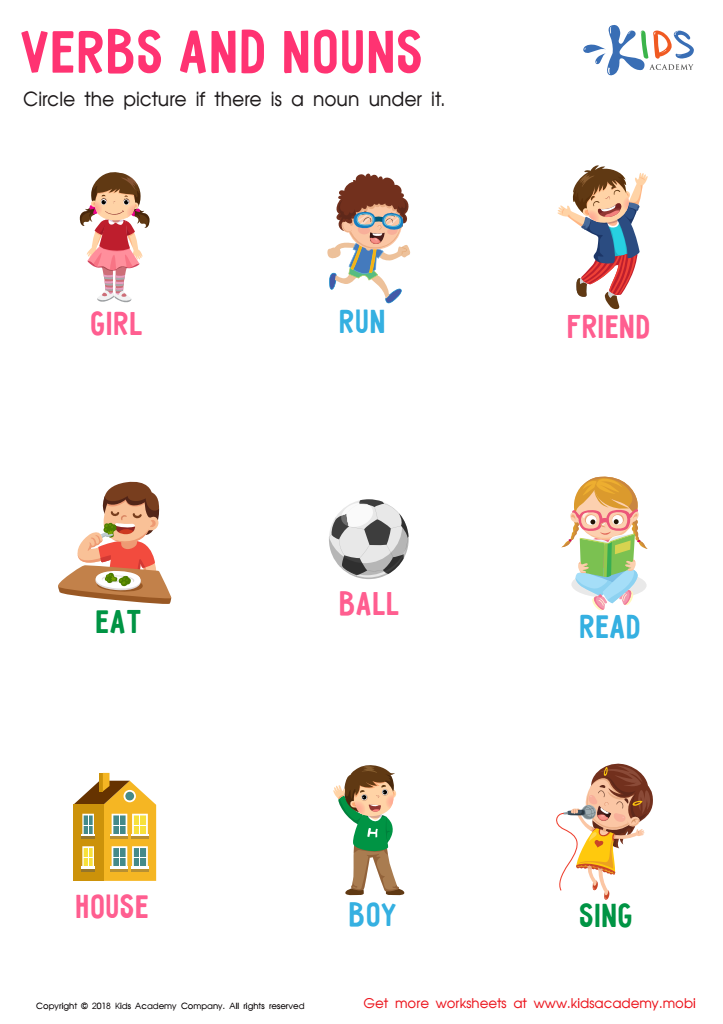
Verbs and Nouns Worksheet
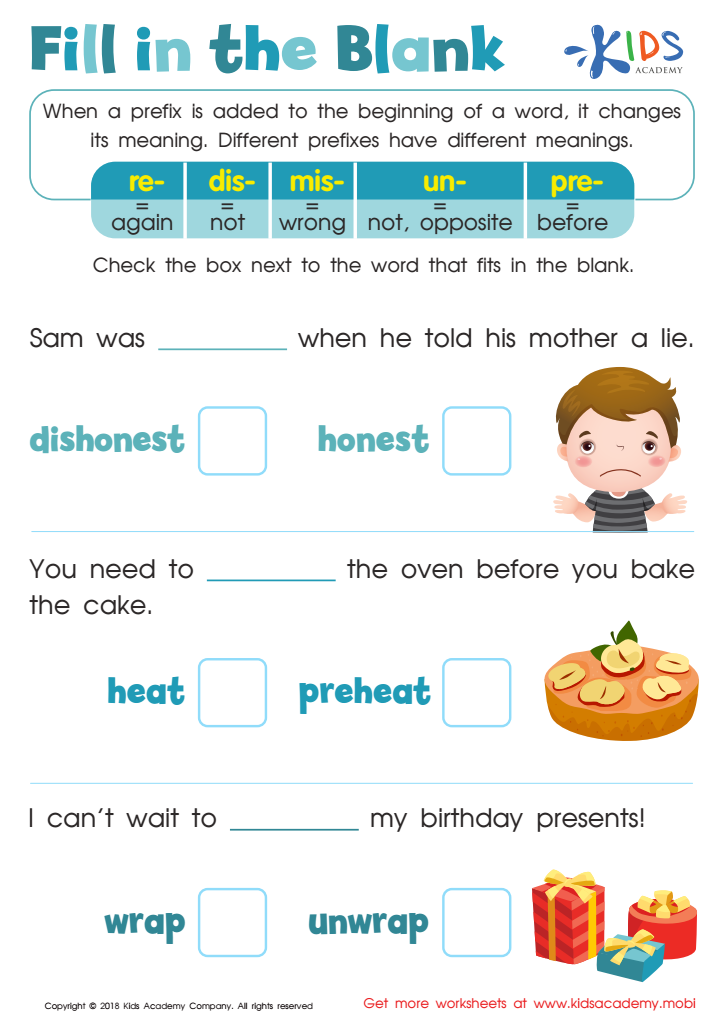
Reading: Fill in the Blank Worksheet
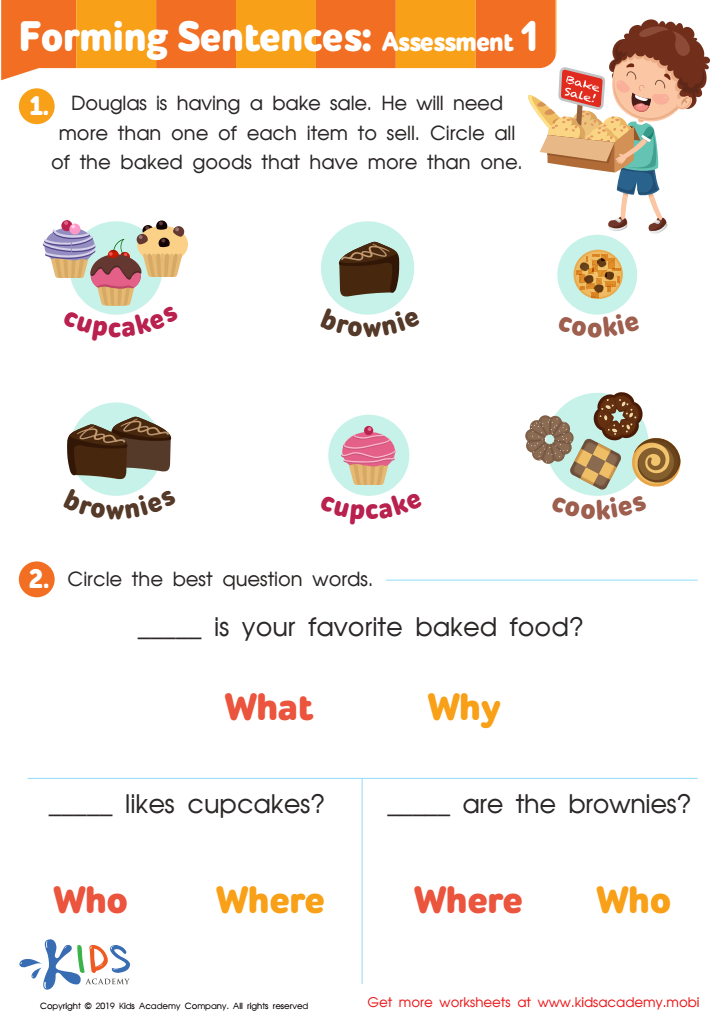
Forming Sentences: Assessment 1 Worksheet
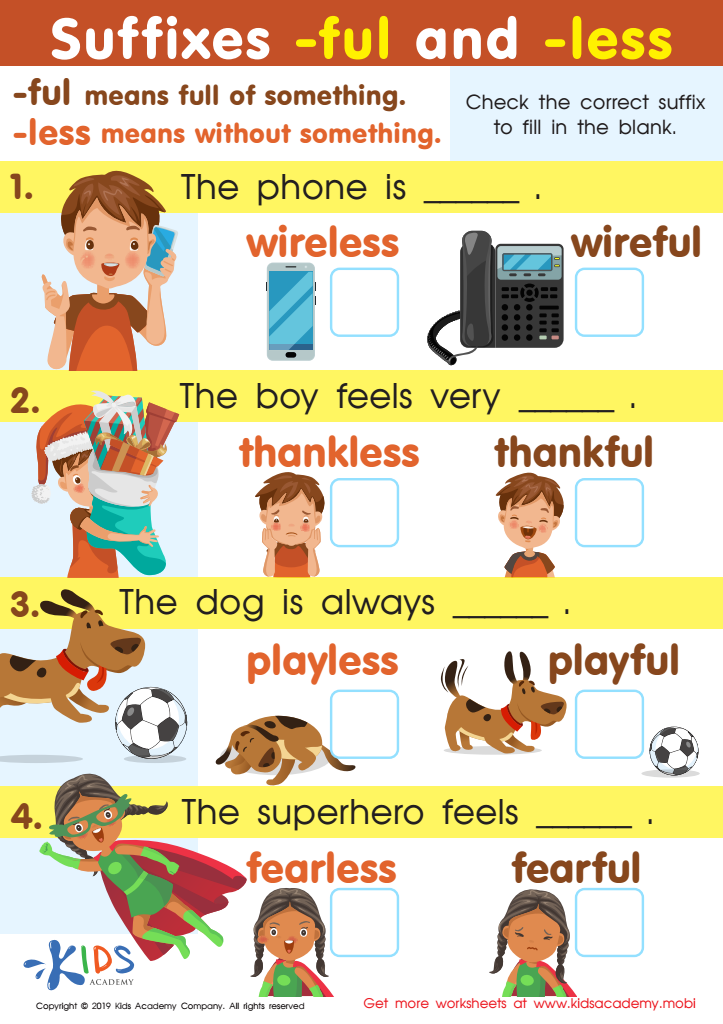
Suffixes –ful and –less Worksheet
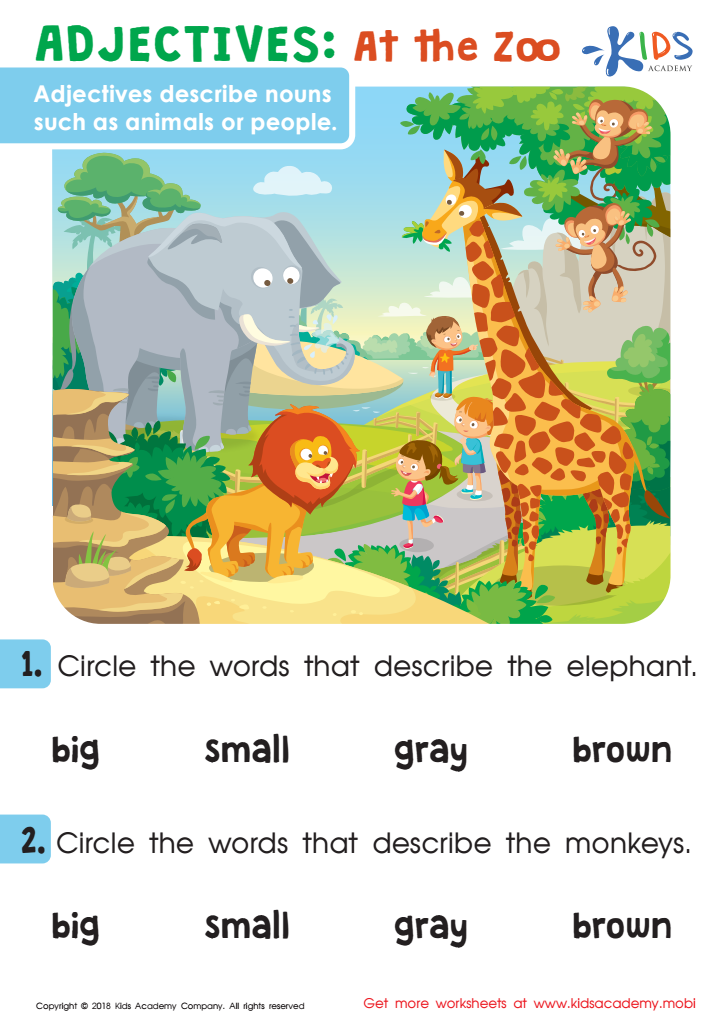
Adjectives: At The Zoo Worksheet
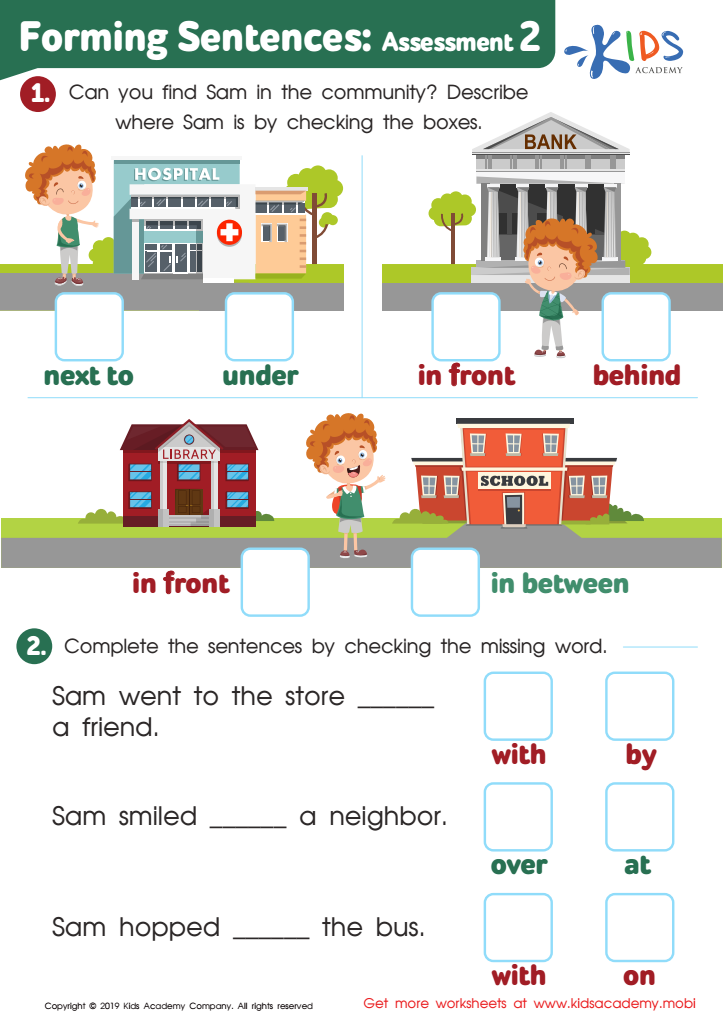
Forming Sentences: Assessment 2 Worksheet
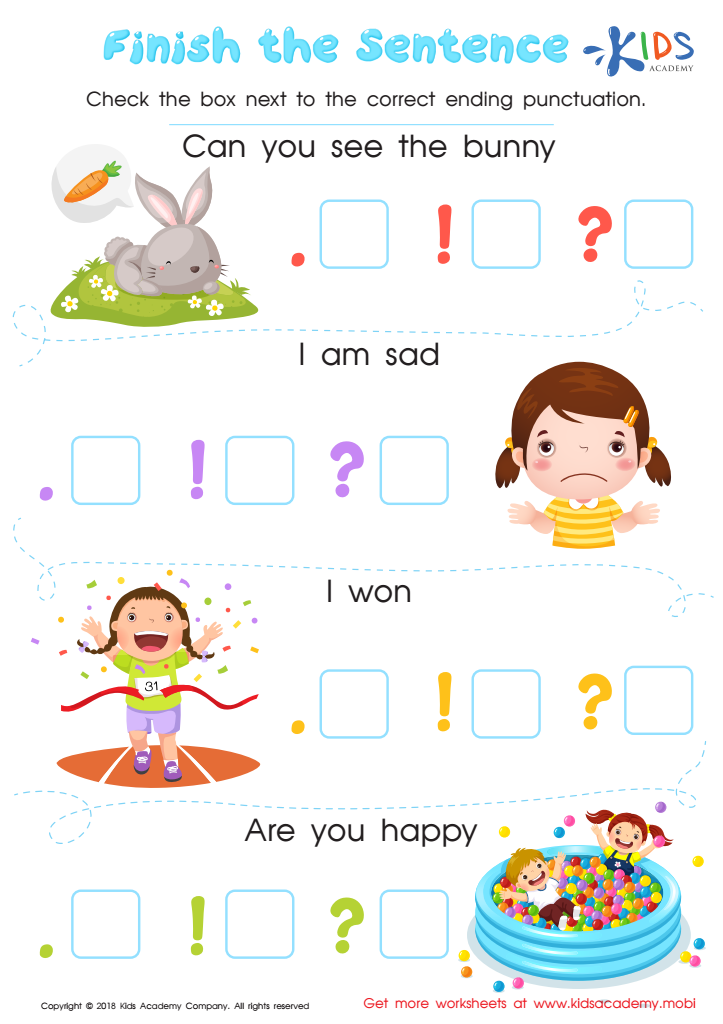
Finish the Sentence Worksheet
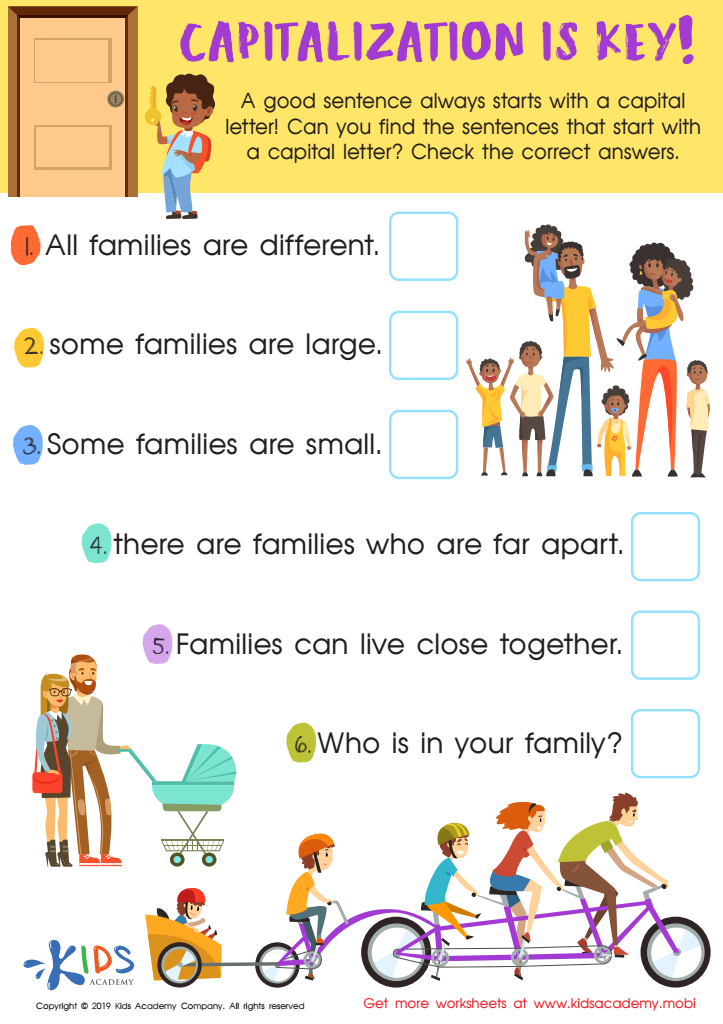
Capitalization Key Worksheet
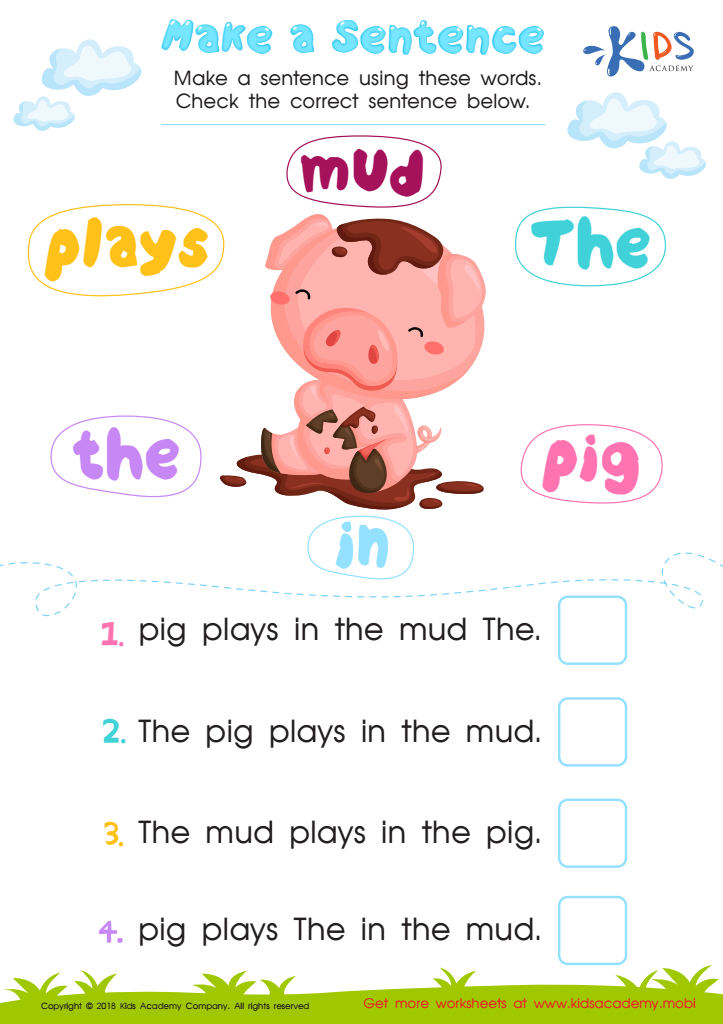
Assessment: Make a Sentence Worksheet
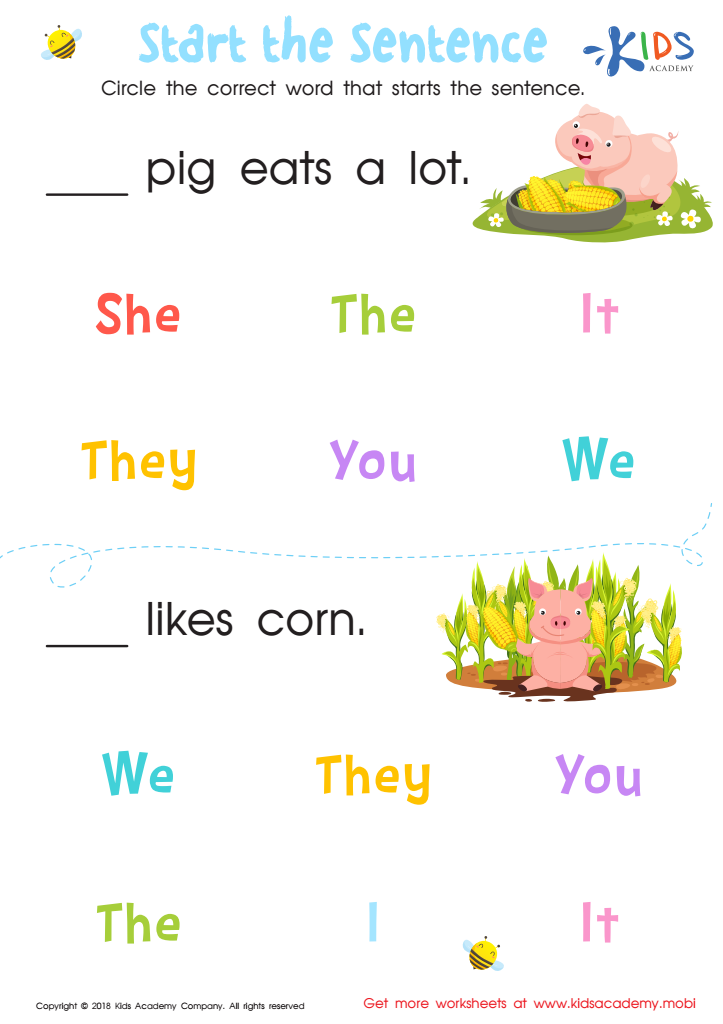
Start the Sentence Worksheet
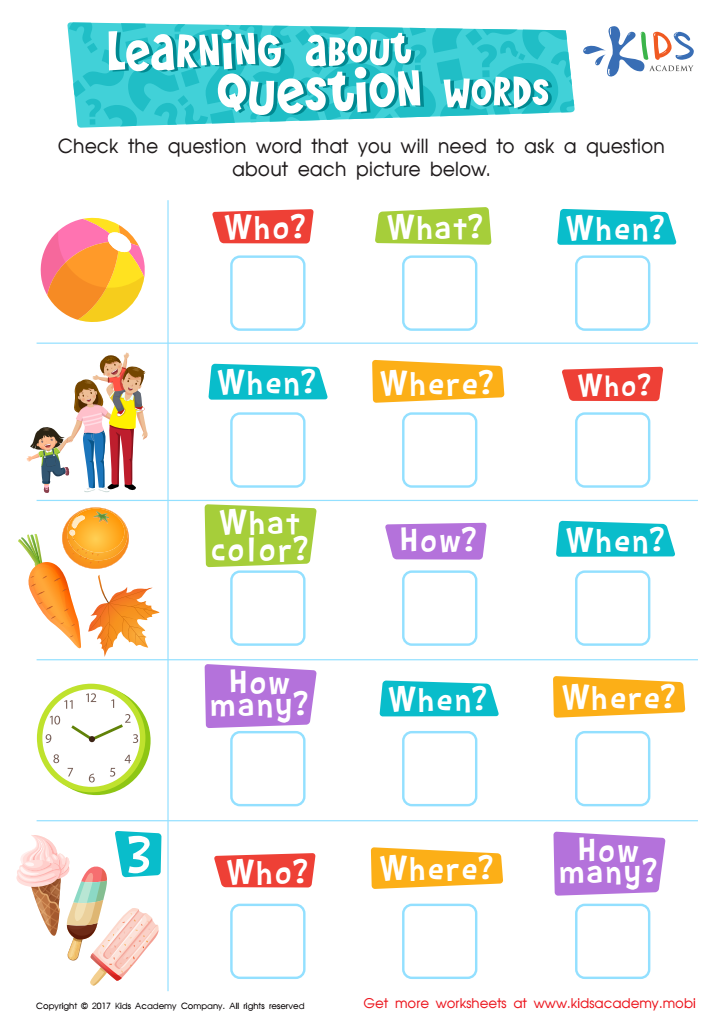
Learning about Question Words Worksheet
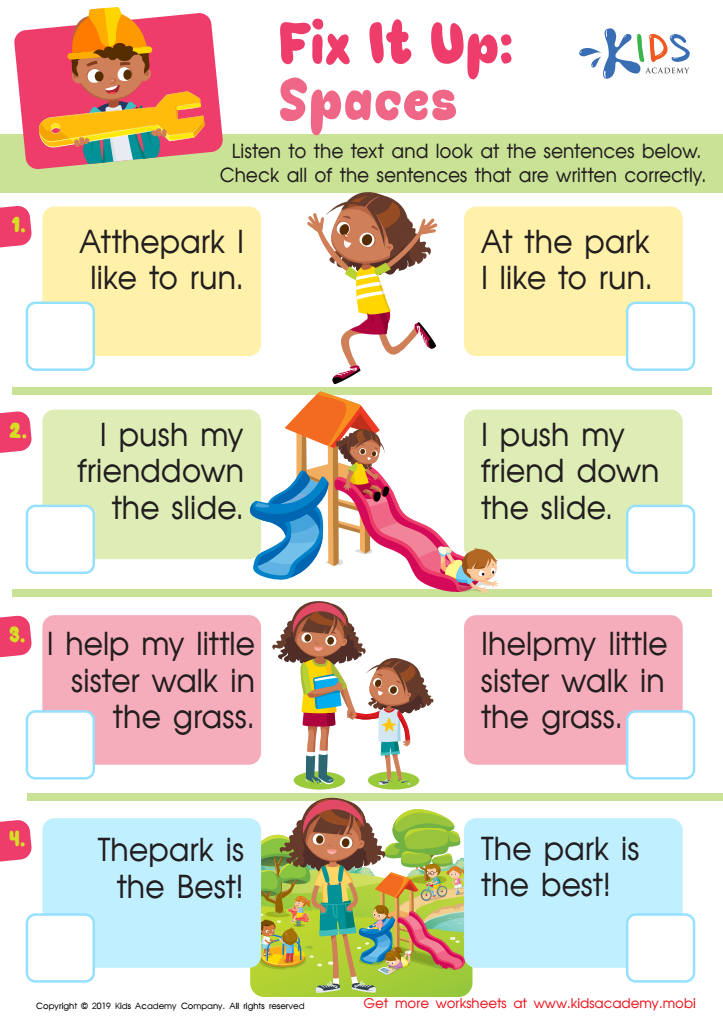
Fix Spaces Worksheet
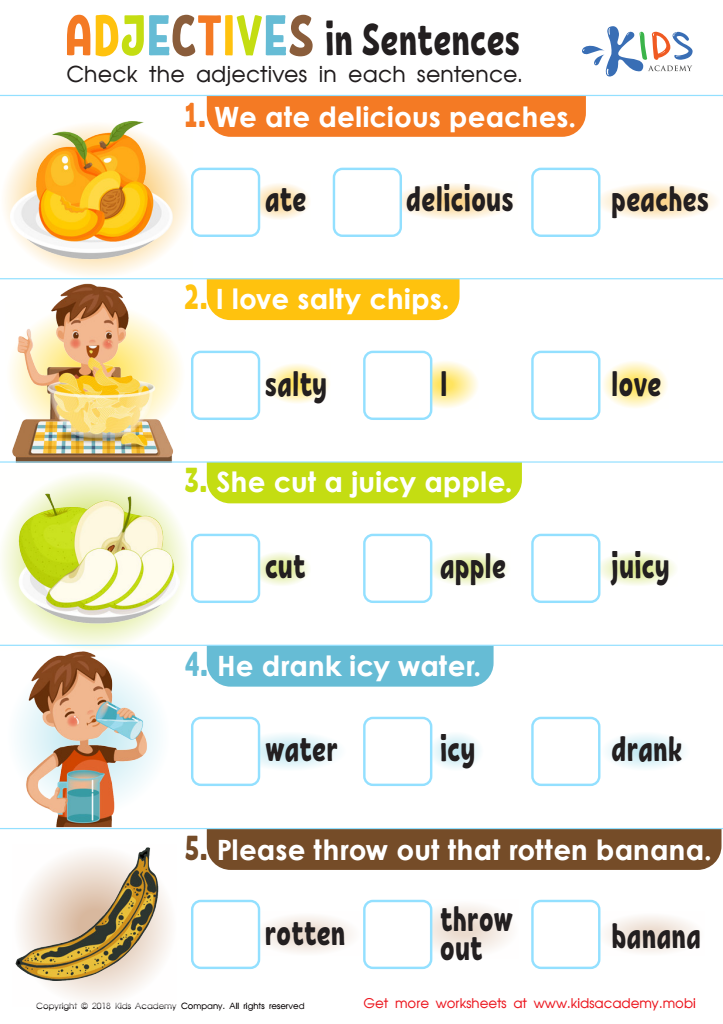
Adjectives in Sentences Worksheet





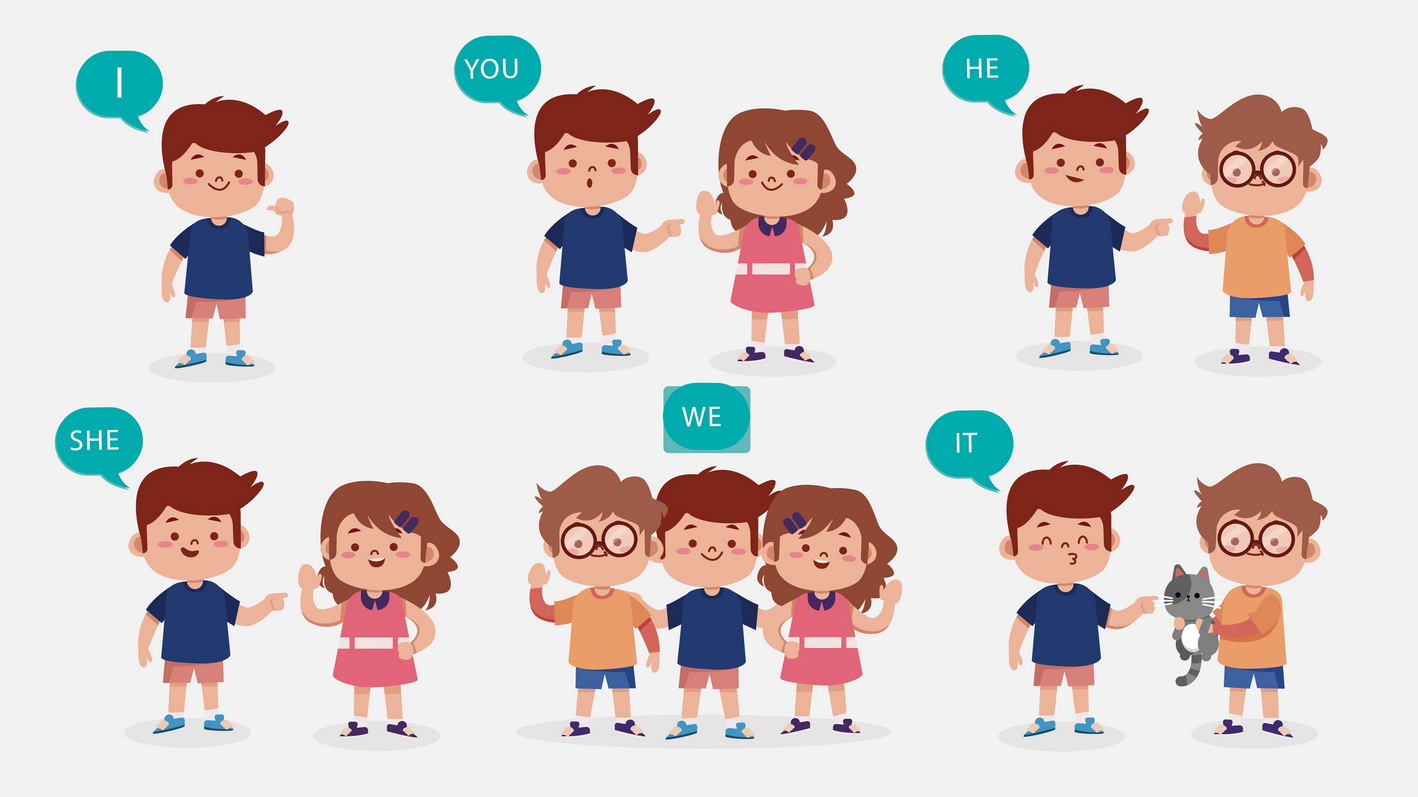

.jpg)
Parents and teachers should prioritize grammar practice in writing for children ages 3-7 because it lays the foundation for effective communication and literacy skills. At this early stage, young learners are highly impressionable and their neurological development is crucial for acquiring language skills. Introducing grammar concepts through engaging writing activities helps children understand sentence structure, punctuation, and word usage, which are essential components of written language.
Practicing grammar in writing aids in vocabulary development, allowing children to express their thoughts more clearly and creatively. As they learn to construct sentences, they also develop critical thinking skills, as they must consider how to organize their ideas coherently.
Moreover, strong grammar skills boost children's confidence in their writing abilities, encouraging them to participate more actively in class discussions and written assignments. This foundational skill set will also help them succeed academically as they progress through school.
Ultimately, grammar practice cultivates a love for writing, transforming it from a daunting task into an exciting form of self-expression. By embedding grammar instruction in enjoyable writing exercises, parents and teachers can help children become not just proficient writers, but also articulate communicators. This early investment in language skills sets the stage for lifelong literacy growth.








