Filters

172 filtered results

Clear all filters
Favorites
With answer key
Interactive

172 filtered results

Difficulty Level

Grade


Subject

    Check out this FREE Trial Lesson on Reading Fiction for age 3-8!

    Where and When Does a Story Happen?

    Favorites
    With answer key
    Interactive
    • 3-8
    • Reading Fiction
    Fairy Tale Worksheets
    Fairy Tale Worksheets

    Fairy Tale Worksheet: Story Mix Up

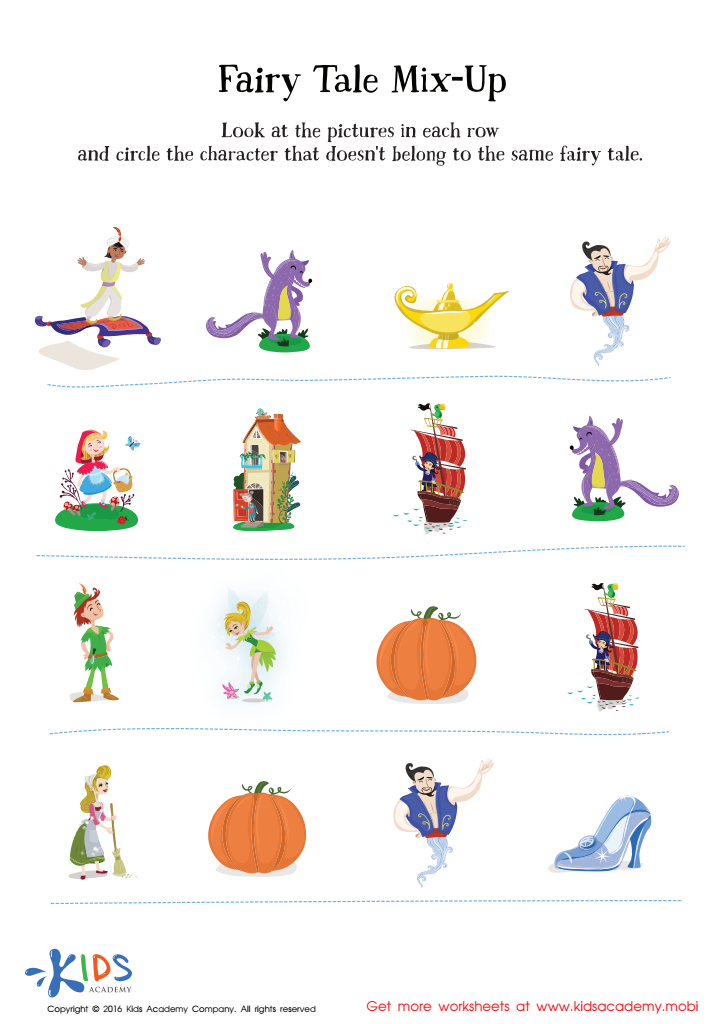
    Kids love fairy tales! Encourage your child to engage with their favorite stories using our vibrant worksheet. It'll help sharpen cognitive and comprehension skills, build problem-solving skills, and strengthen classification skills. Beforehand, read or watch the fairy tales and talk about each one's characters and elements. Your child will love the story and time spent together! Print the worksheet and get ready for a magical experience.
    Fairy Tale Worksheet: Story Mix Up
    Worksheet
    The Boy Who Cried Wolf: Cause and Effect
    The Boy Who Cried Wolf: Cause and Effect

    The Boy Who Cried Wolf: Cause and Effect Worksheet
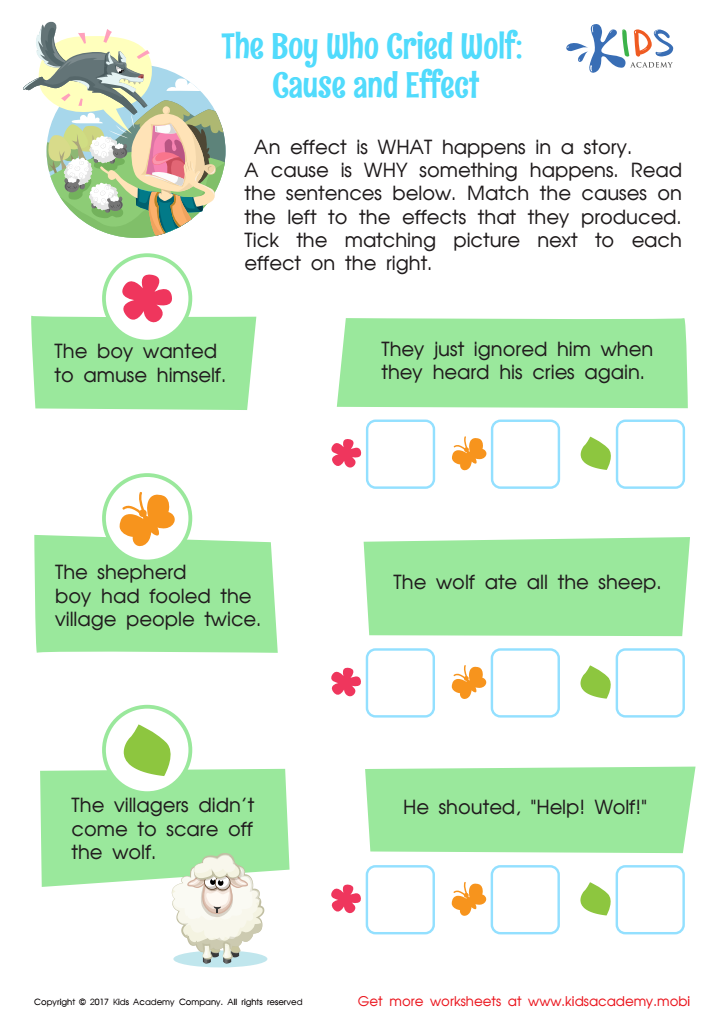
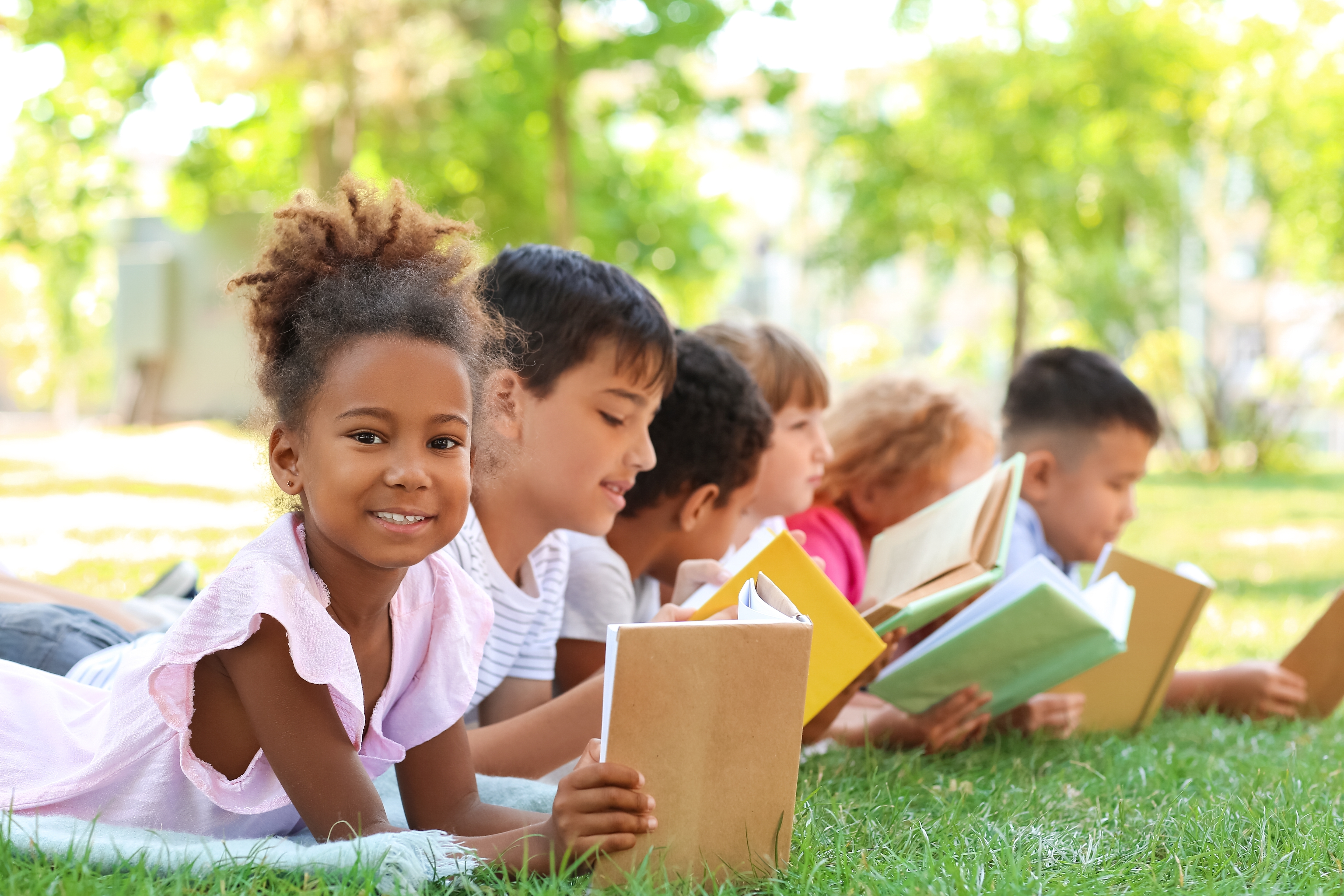
    With classic stories and fables, learning reading comprehension is easy - and fun!
    The Boy Who Cried Wolf: Cause and Effect Worksheet
    Worksheet
    Parts of a Story Worksheet
    Parts of a Story Worksheet

    Parts of a Story Worksheet

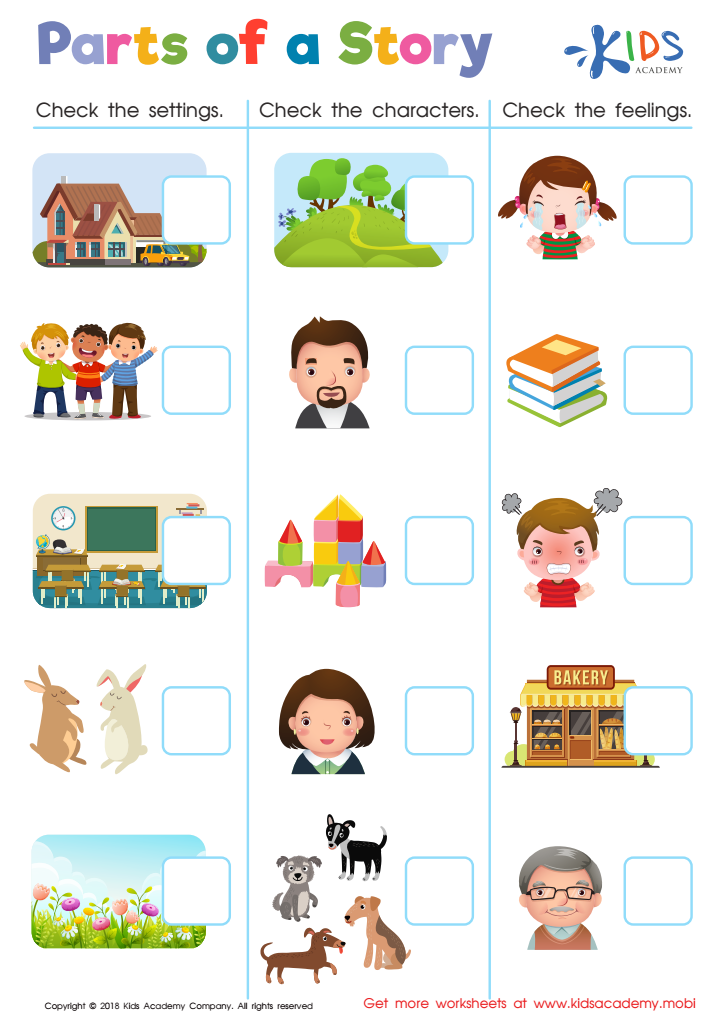
    This worksheet is great for emerging readers to identify story elements without needing to read. It features pictures and students decide the right answers. Perfect for aiding understanding of characters, setting, and feelings in a story. Incorporate it into your lessons today!
    Parts of a Story Worksheet
    Worksheet
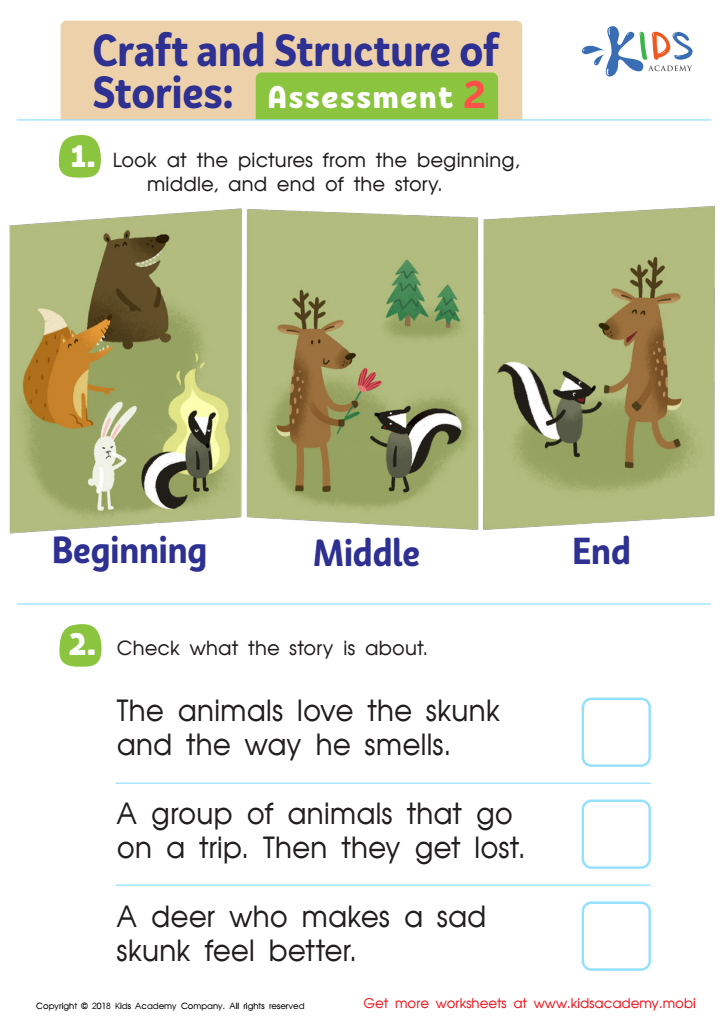
    Craft and Structure of Stories: Assessment 2 Worksheet
    Craft and Structure of Stories: Assessment 2 Worksheet

    Craft and Structure of Stories: Assessment 2 Worksheet

    Help your child assess their story sequencing and reading comprehension skills using this cute worksheet! It encourages them to look at the three pictures on the page, each representing a scene from the beginning, middle and end. Ask them what the story is about, then let them check the box next to the correct answer. This is a great way to ensure they understand the main events of a story.
    Craft and Structure of Stories: Assessment 2 Worksheet
    Worksheet
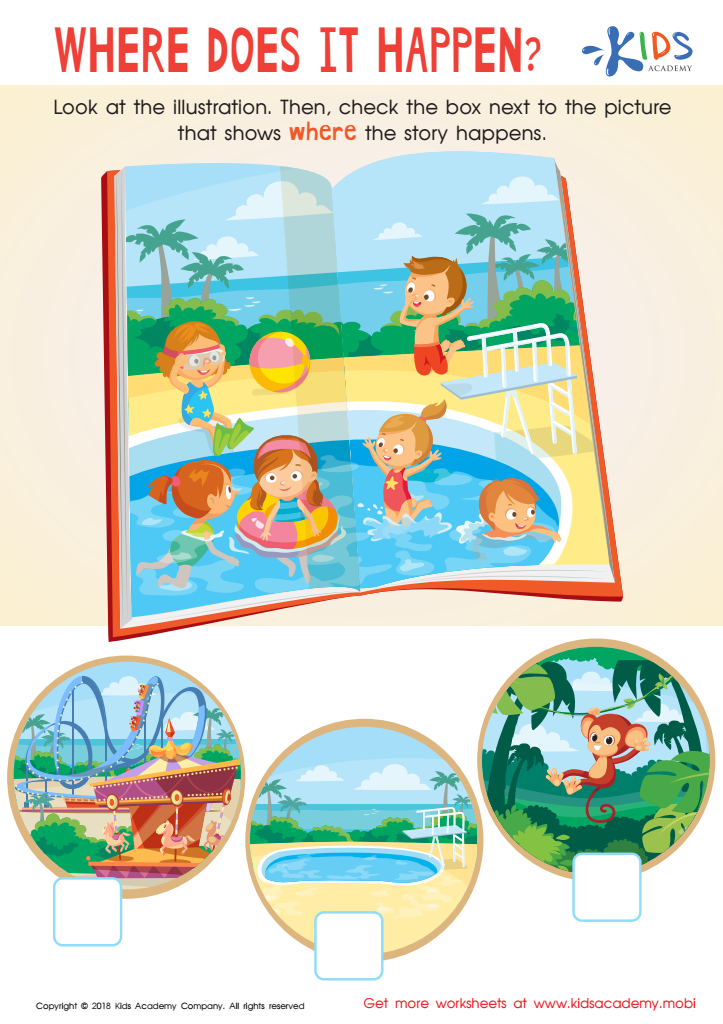
    Where Does It Happen? Worksheet
    Where Does It Happen? Worksheet

    Where Does It Happen? Worksheet

    This worksheet helps kids give better descriptions of events and their locations. Look at the illustration with them, then help them check the box next to the relevant picture. This will help them explain where stories are happening or have happened.
    Where Does It Happen? Worksheet
    Worksheet
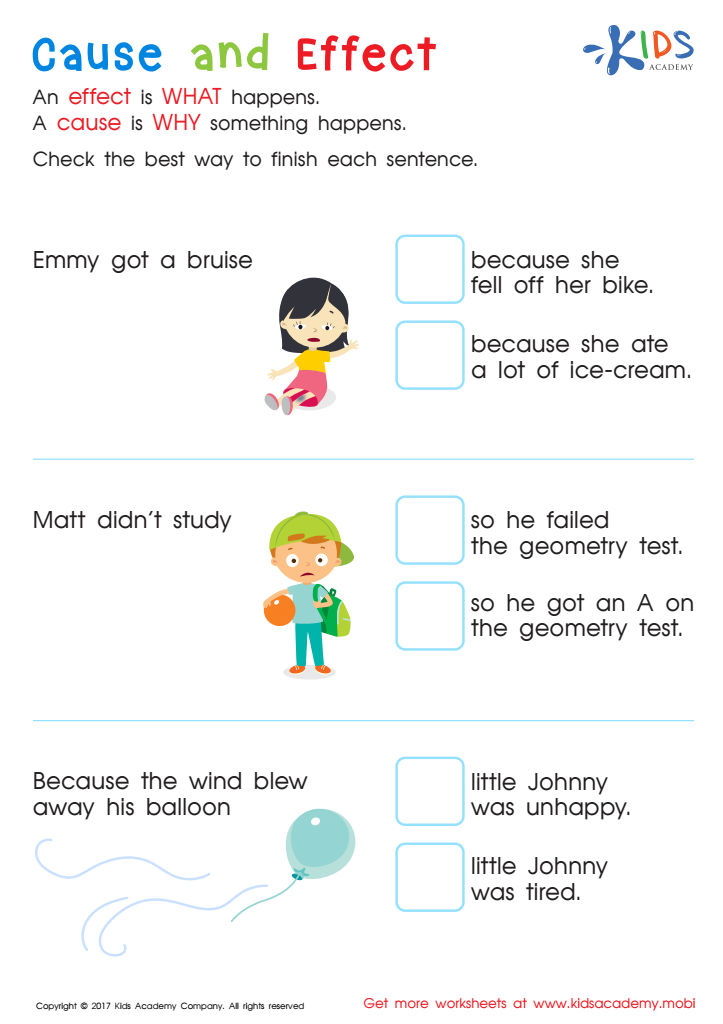
    Cause and effect worksheet PDF
    Cause and effect worksheet PDF

    Cause and Effect Worksheet

    Improve your child's reading comprehension and critical analysis skills with this cause and effect worksheet PDF! Have your child use the examples to create their own story, strengthening their understanding of the concept.
    Cause and Effect Worksheet
    Worksheet
    Word Sense Worksheet
    Word Sense Worksheet

    Word Sense Worksheet

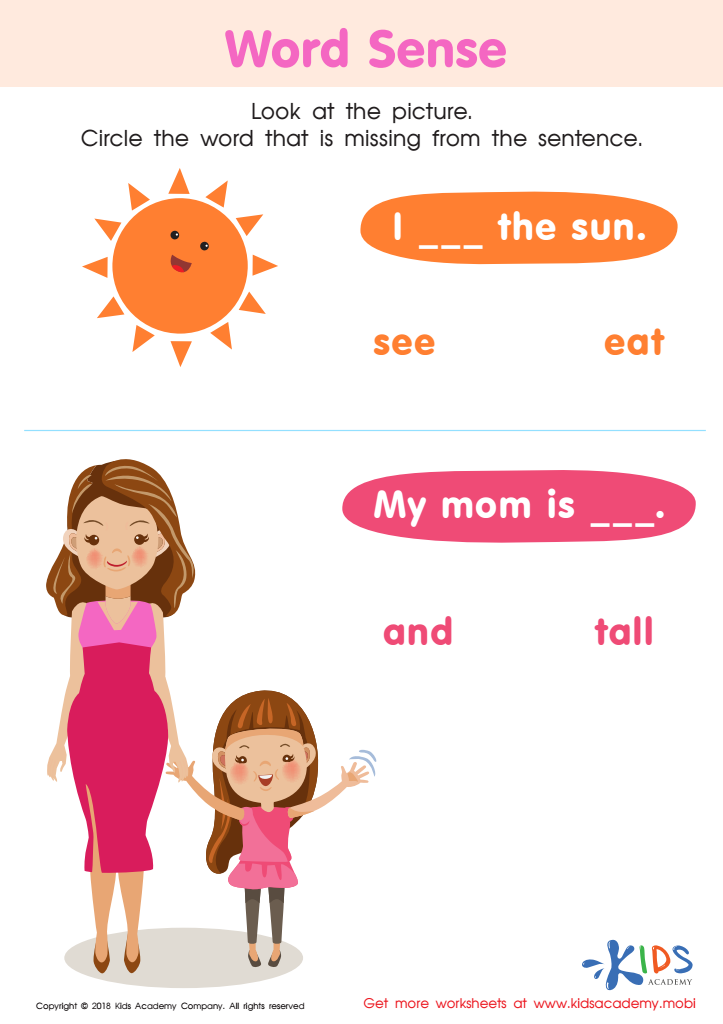
    Expose your child to common high-frequency words with this free and colorful worksheet. It will help them use picture clues to choose the correct word for each phrase. The more they're exposed, the stronger their fluency will become when reading. This process is an important part of the emerging reader's learning-to-read journey.
    Word Sense Worksheet
    Worksheet
    Comprehension Worksheet: Little Red Riding Hood
    Comprehension Worksheet: Little Red Riding Hood

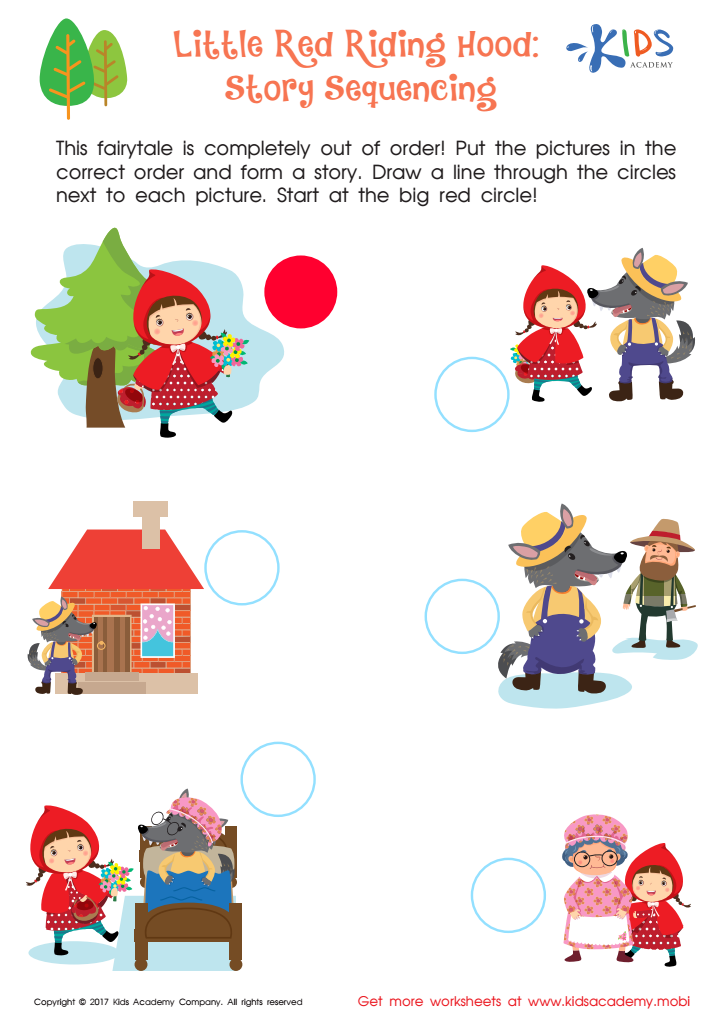
    Story Sequencing Printable

    Children must identify story events in sequential order to build a better understanding of plot. Help your child learn how to understand plot with this fun comprehension worksheet: Little Red Riding Hood! Guide them to identify story events and order them correctly to boost their reading skills.
    Story Sequencing Printable
    Worksheet
    Sequence: A Day at the Park Worksheet
    Sequence: A Day at the Park Worksheet

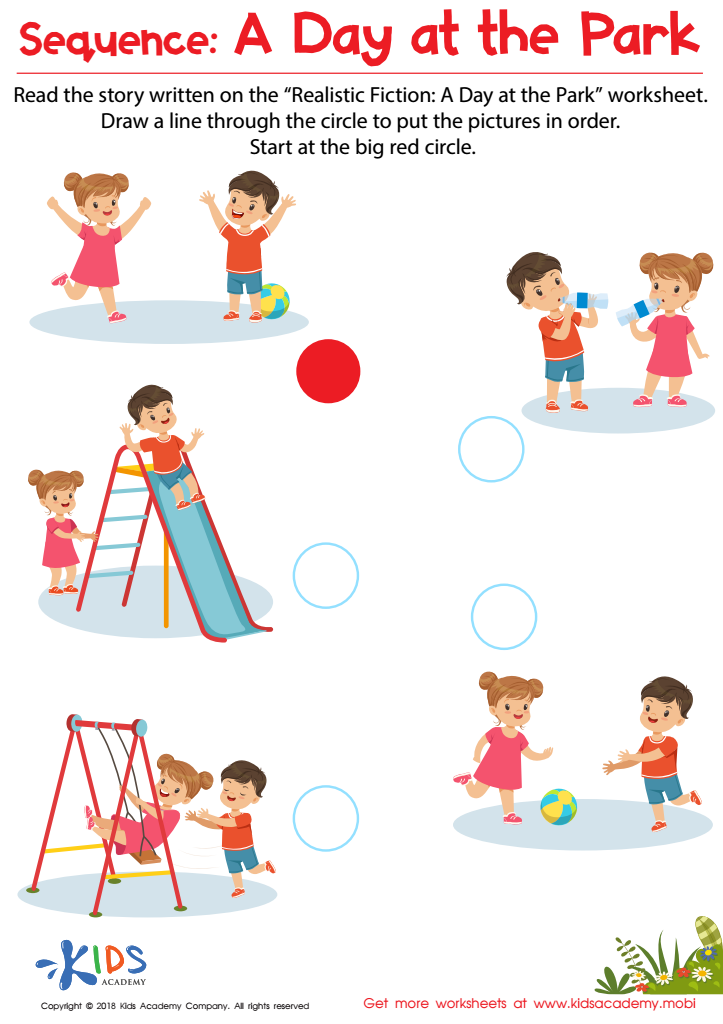
    Sequence: A Day at the Park Worksheet

    Help your child sequence the events of the story they just read with this activity! Start with the big red circle and draw lines to the other circles next to the images in the correct order. It's a great way to practice their reading skills! Try this downloadable worksheet today!
    Sequence: A Day at the Park Worksheet
    Worksheet
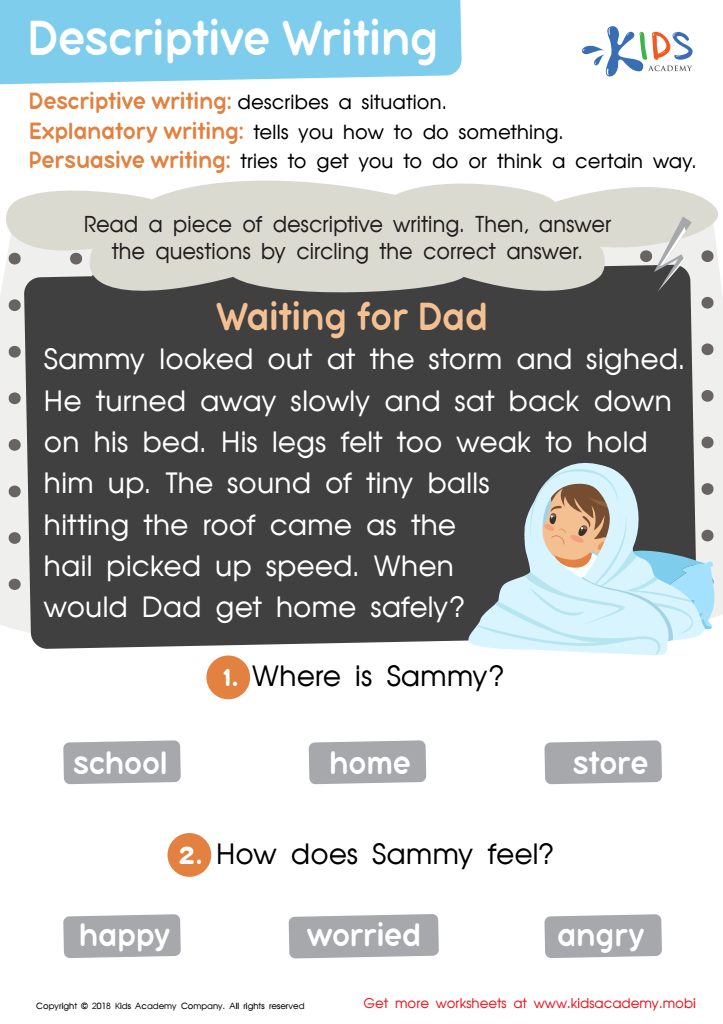
    Descriptive Writing Worksheet: Part 2
    Descriptive Writing Worksheet: Part 2

    Descriptive Writing Worksheet: Part 2

    In this worksheet, your kids will explore writing styles like descriptive, explanatory and persuasive. Read them the descriptive text, then have them answer the questions. Writing is an art – it's a way to express emotions, tell stories and share information.
    Descriptive Writing Worksheet: Part 2
    Worksheet
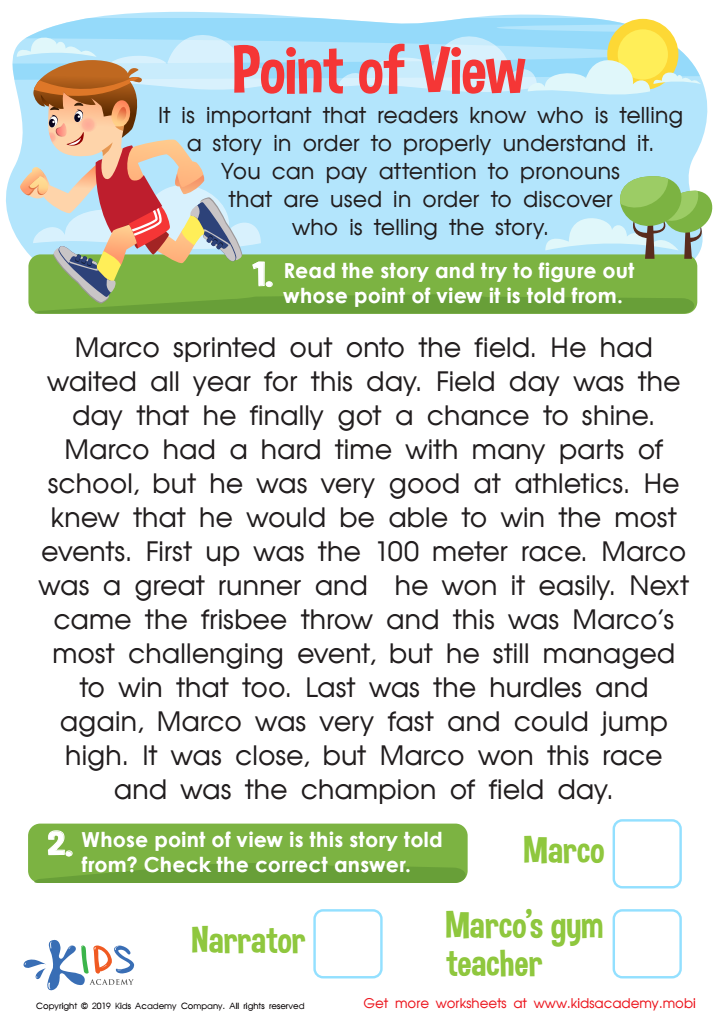
    Point of View Worksheet
    Point of View Worksheet

    Point of View Worksheet

    Readers need to identify the storyteller to properly understand and relate to the story. Help your kids identify the point of view by noticing the pronouns used. Read the story in this worksheet with them and guide them to determine the story's point of view.
    Point of View Worksheet
    Worksheet
    Finding the Details and Connections: Assessment 1 Worksheet
    Finding the Details and Connections: Assessment 1 Worksheet

    Finding the Details and Connections: Assessment 1 Worksheet

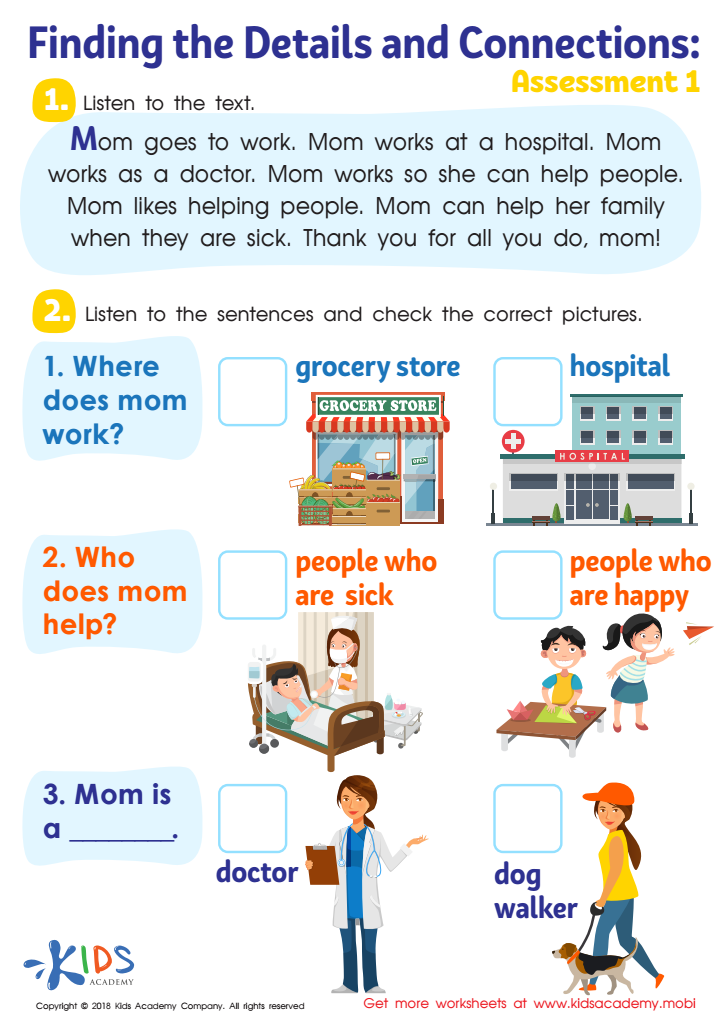
    Ask your students what their parents do for a job. Do they know what profession their mom is in and where she works? Professionals have places they go to do their job. In this task, Mom goes to a hospital and is a doctor. Read the text and help them check the right pictures.
    Finding the Details and Connections: Assessment 1 Worksheet
    Worksheet
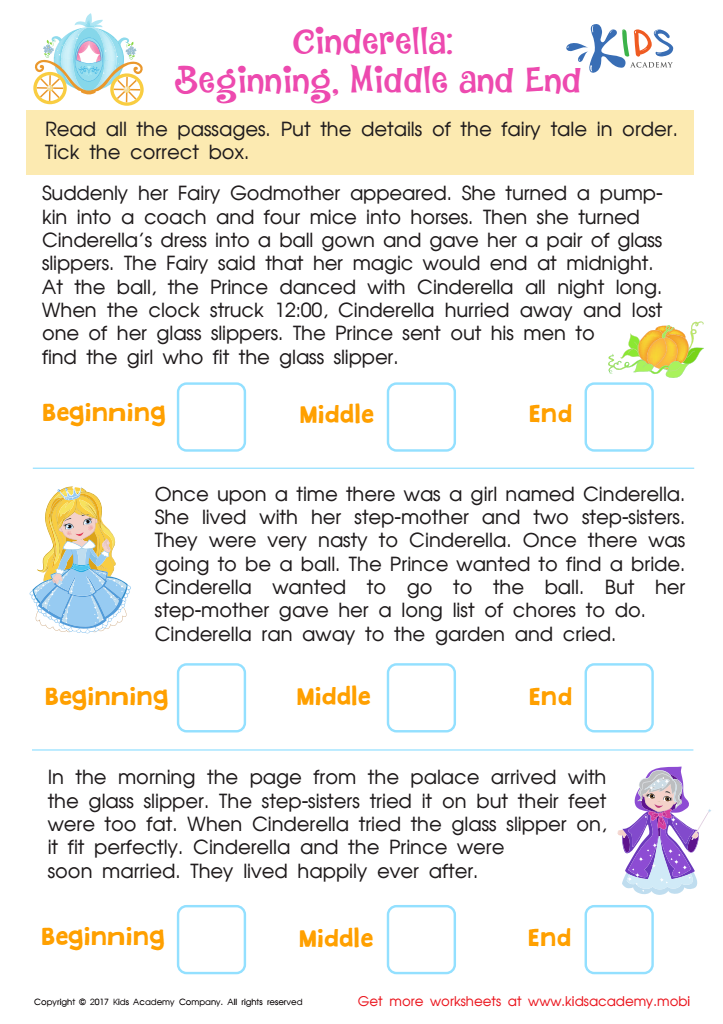
    Reading Comprehension Worksheet: Cinderella
    Reading Comprehension Worksheet: Cinderella

    Cinderella: Beginning, Middle and End Worksheet
    This Cinderella-themed worksheet provides an excellent opportunity for your child to practice reading comprehension and understanding the basics of story structure. Help your child learn a key story concept with this Cinderella-themed reading comprehension worksheet. It's an excellent way for them to practice understanding the different parts of a story, from the beginning to the end. Kids will love getting to know the beloved fairy tale of Cinderella!
    Cinderella: Beginning, Middle and End Worksheet
    Worksheet
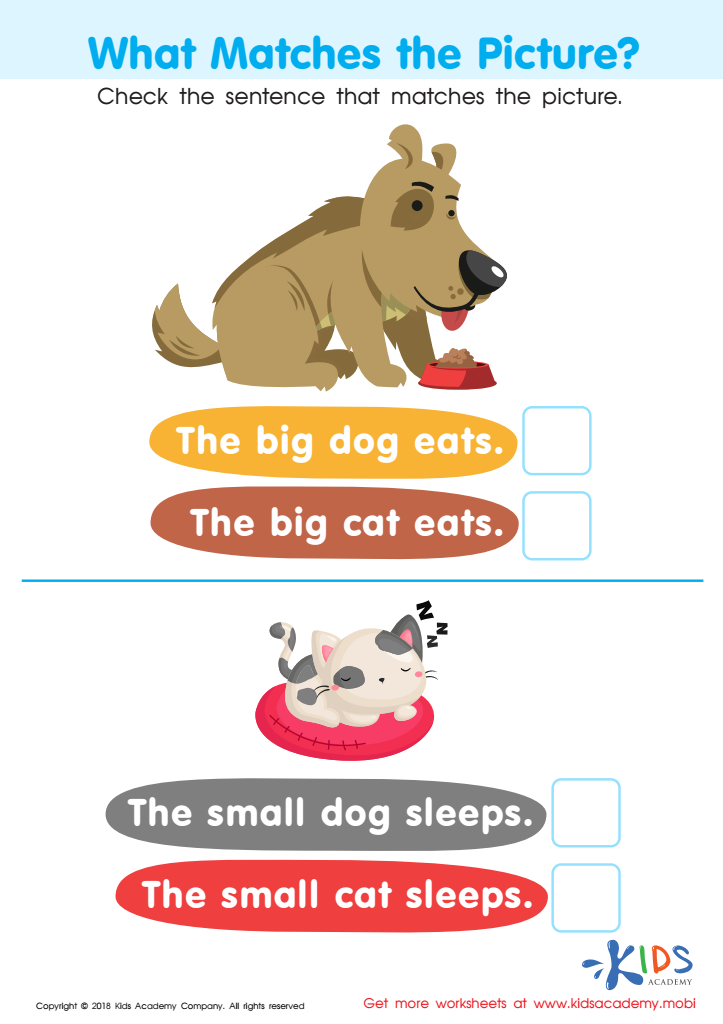
    What Matches the Picture? Worksheet
    What Matches the Picture? Worksheet

    What Matches the Picture? Worksheet

    Emerging readers can use pictures of cute pets and phrase repetition to match sentences to pics, building skills while having fun! It's a great way to bolster vocab and confidence, motivating them to keep reading.
    What Matches the Picture? Worksheet
    Worksheet
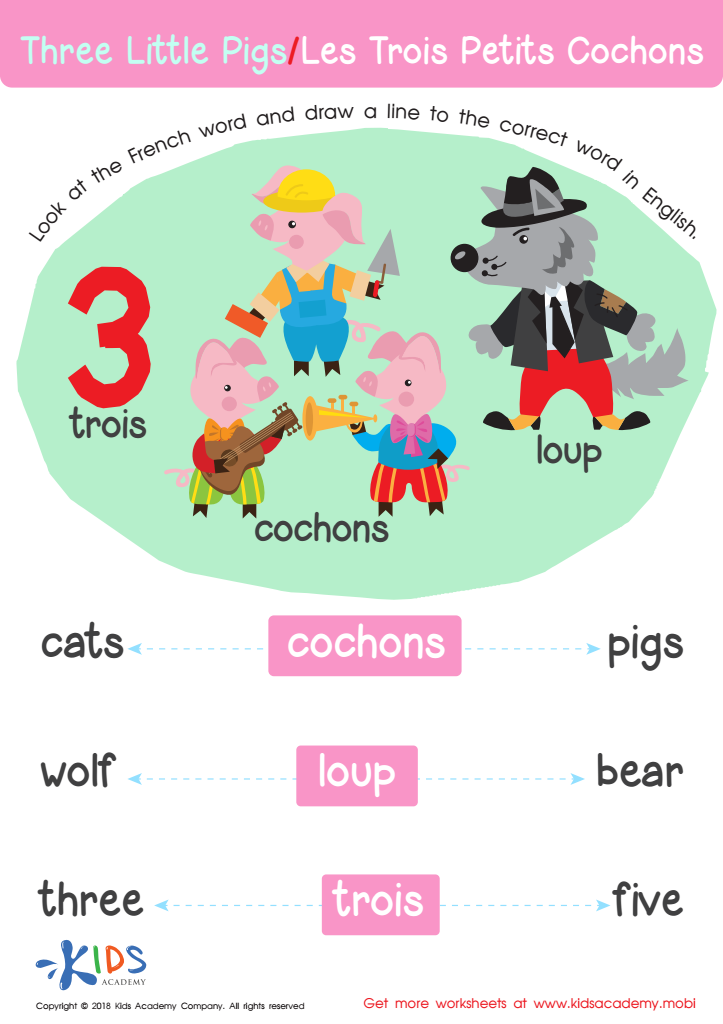
    Three Little Pigs / Les Trois Petits Cochons Worksheet
    Three Little Pigs / Les Trois Petits Cochons Worksheet

    Three Little Pigs / Les Trois Petits Cochons Worksheet

    Teaching kids words in foreign tongues? Use picture clues to help them build connections for deeper learning! This PDF worksheet uses the three little pigs story to teach French words for three, pigs and wolf. Kids can make picture-word associations and follow traceable lines to match the French and English words.
    Three Little Pigs / Les Trois Petits Cochons Worksheet
    Worksheet
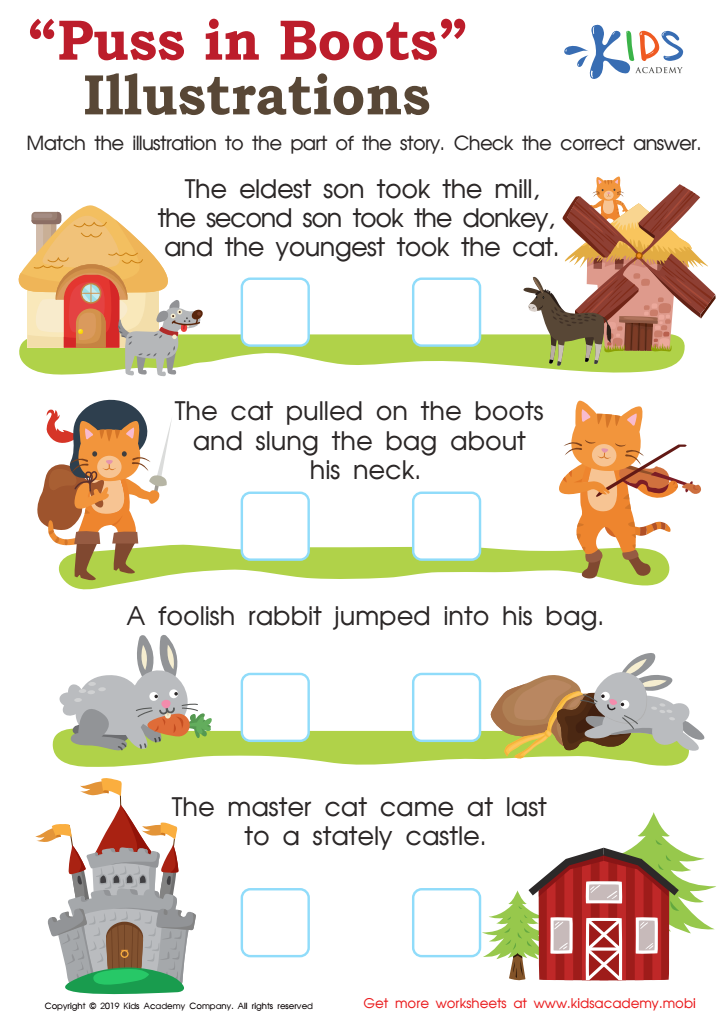
    Puss in Boots Illustrations Worksheet
    Puss in Boots Illustrations Worksheet

    Puss in Boots Illustrations Worksheet

    This Puss In Boots Illustrations worksheet is a great way to help kids learn about retelling stories. They'll match images to different parts of the story and check off the correct answer. As they recall events and put them in sequence they'll enjoy this fun and creative activity.
    Puss in Boots Illustrations Worksheet
    Worksheet
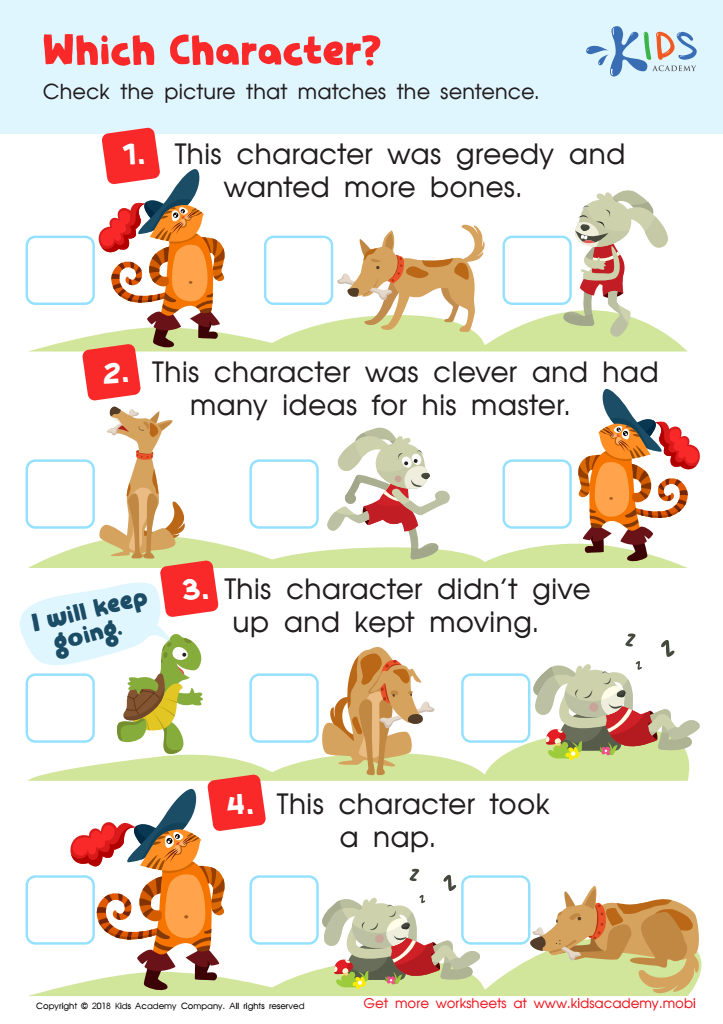
    Which Character Worksheet
    Which Character Worksheet

    Which Character Worksheet

    Kids learn best with stories, and this fun worksheet shows characters from popular tales. Like the tortoise who forgot hard work pays off, the cat defending its honor with wit, and the dog teaching a lesson about sharing. It's a great way to assess their understanding, and they'll be successful.
    Which Character Worksheet
    Worksheet
    Authors and Illustrators Race Worksheet
    Authors and Illustrators Race Worksheet

    Authors and Illustrators Race Worksheet

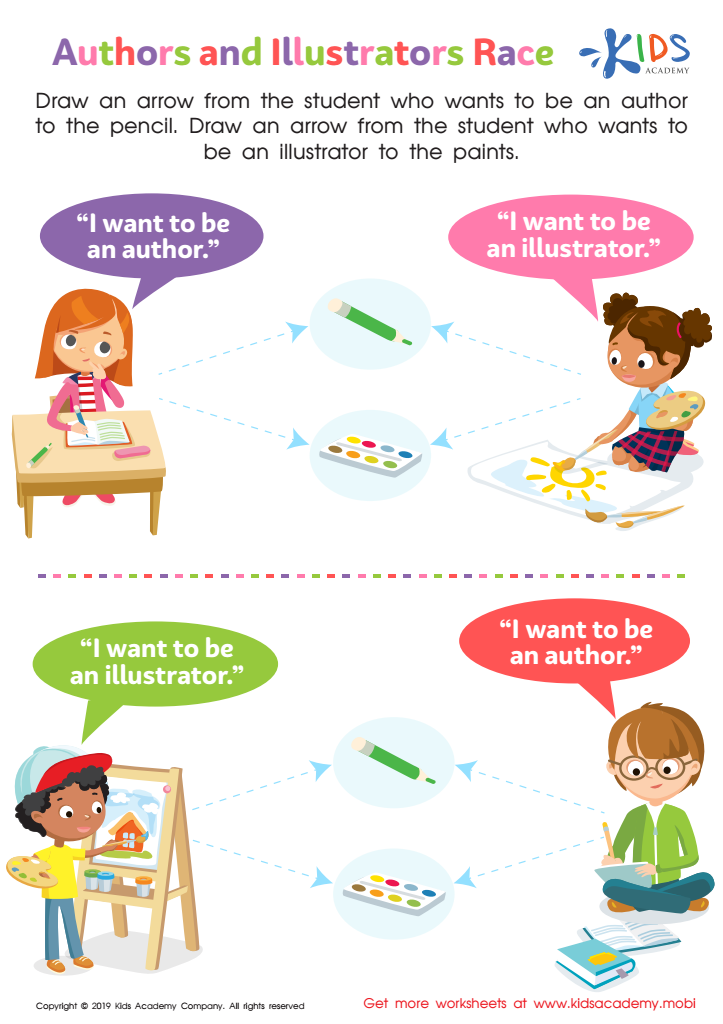
    Help your child learn about the author and illustrator of a book with this free and colorful worksheet. They'll trace lines to pick the tools used by each and understand the difference between them. It's a great way to introduce fundamental concepts of reading.
    Authors and Illustrators Race Worksheet
    Worksheet
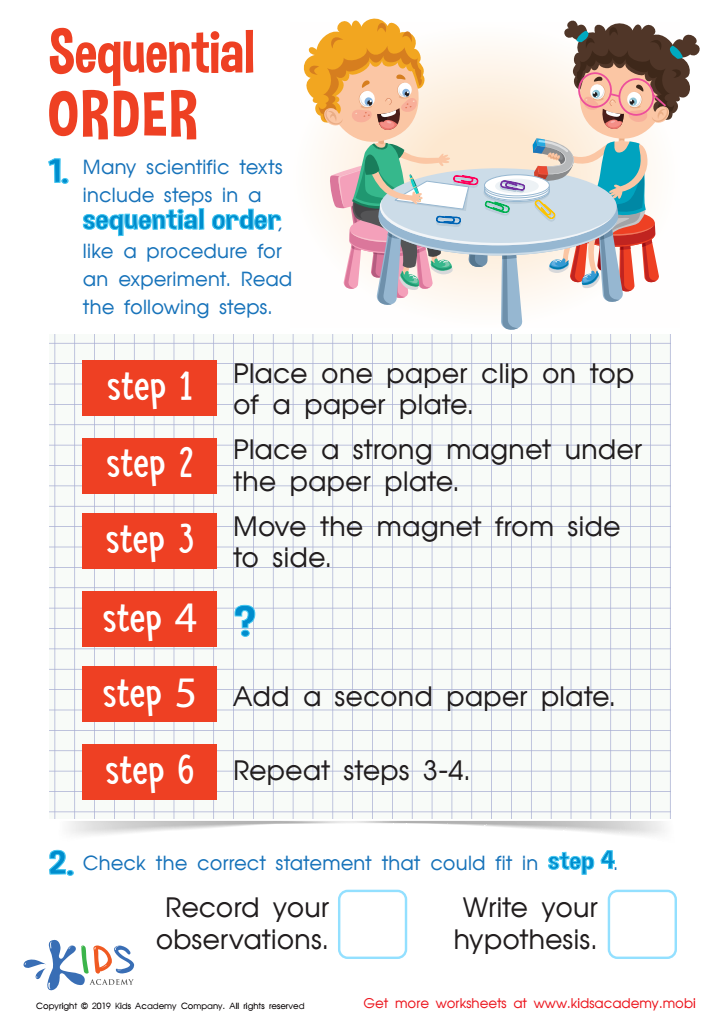
    Sequencential Order Worksheet
    Sequencential Order Worksheet

    Sequencential Order Worksheet

    This worksheet is perfect for science-lovers: it'll test how good your child is at following instructions by asking them to complete the steps in the right order. Have them read the steps and then choose the statements that correctly fill in the blanks. It's more than just fun experiments and results - science also requires careful procedure.
    Sequencential Order Worksheet
    Worksheet
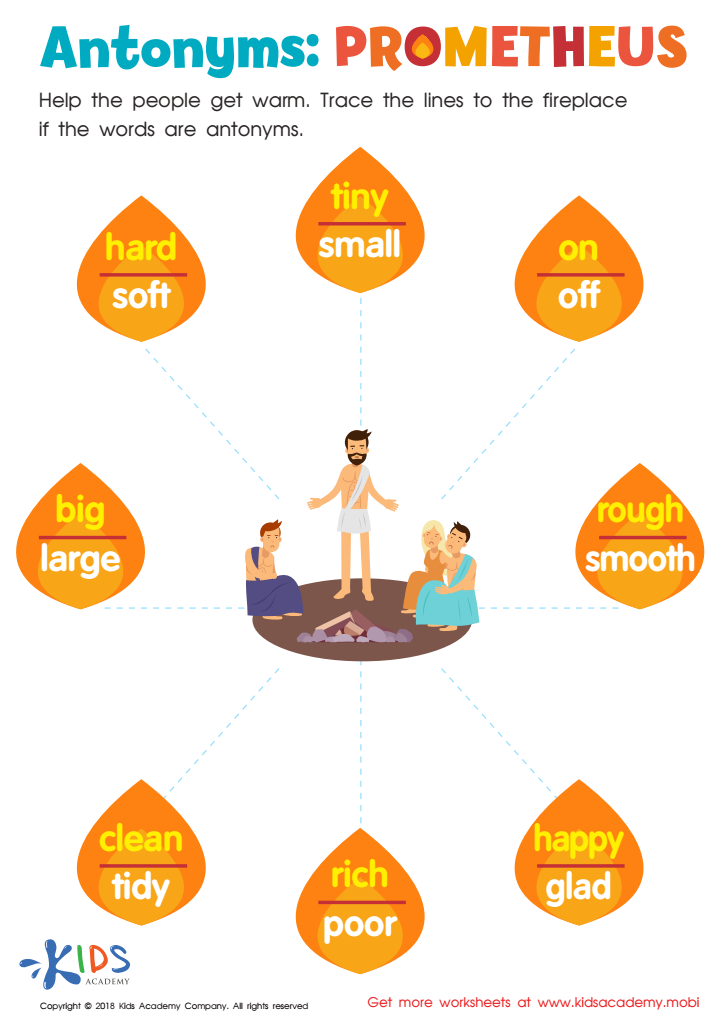
    Antonyms: Prometheus Worksheet
    Antonyms: Prometheus Worksheet

    Antonyms: Prometheus Worksheet

    Antonyms are words with opposite meanings to another. For example, the antonyms of 'good' are 'bad', 'poor' and 'wicked'. Ask your child to give you antonyms for 'Prometheus', which relates to fire. Invite your kids to trace the lines to the fireplace if the words are antonyms, helping the people in the tracing sheet get warm.
    Antonyms: Prometheus Worksheet
    Worksheet
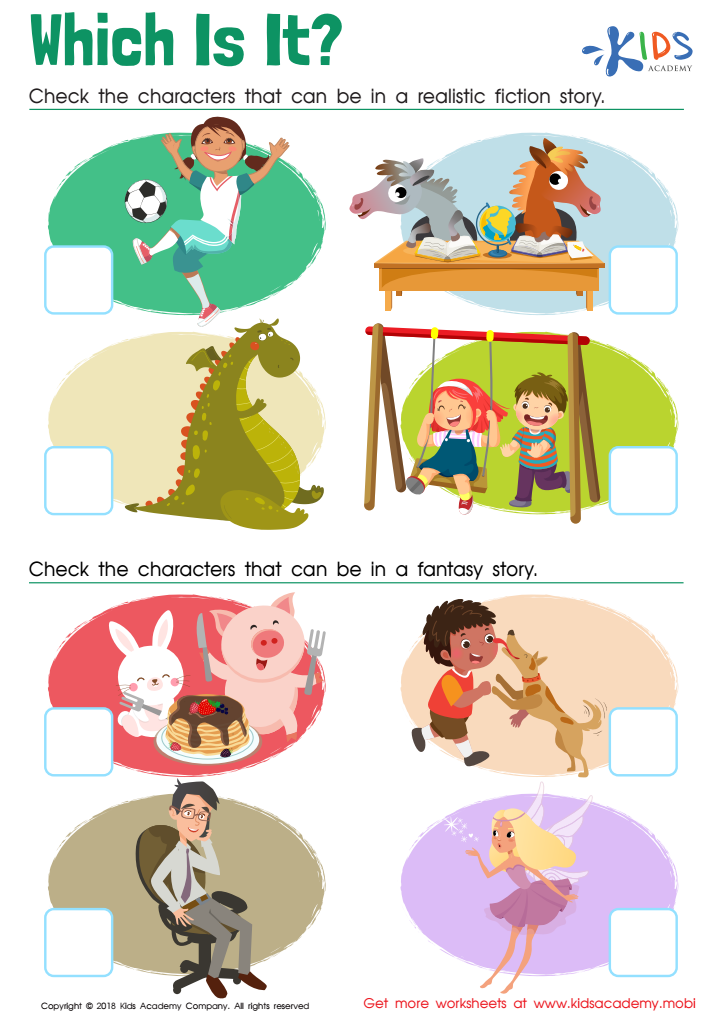
    Which Is It? Worksheet
    Which Is It? Worksheet

    Which Is It? Worksheet

    This colorful worksheet helps young readers identify elements of fact and fiction using fun picture clues. They can check off characters who exist in realistic fiction stories, which makes learning the difference between the two genres fun and engaging.
    Which Is It? Worksheet
    Worksheet
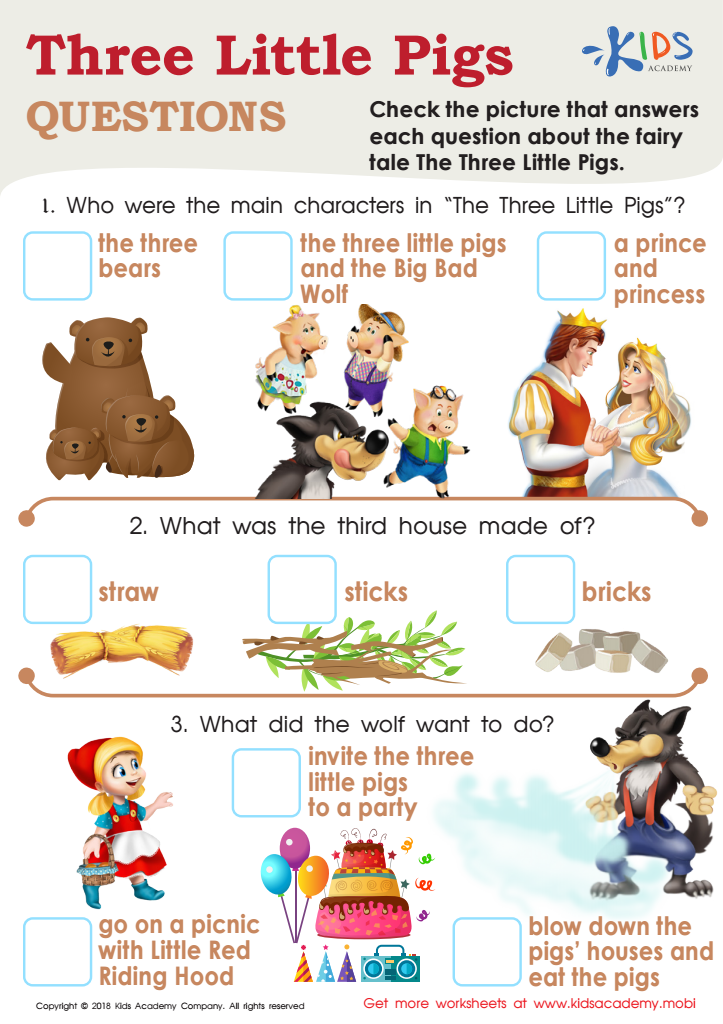
    Three Little Pigs Questions Worksheet
    Three Little Pigs Questions Worksheet

    Three Little Pigs Questions Worksheet

    Does your kid love bedtime stories? Test their classic fairytale knowledge with this worksheet! If they mention The Three Little Pigs, they're in luck - this pdf has them answering questions based off the classic fairytale. They'll check the picture that answers each question about the story. Is their fairytale knowledge up to scratch?
    Three Little Pigs Questions Worksheet
    Worksheet
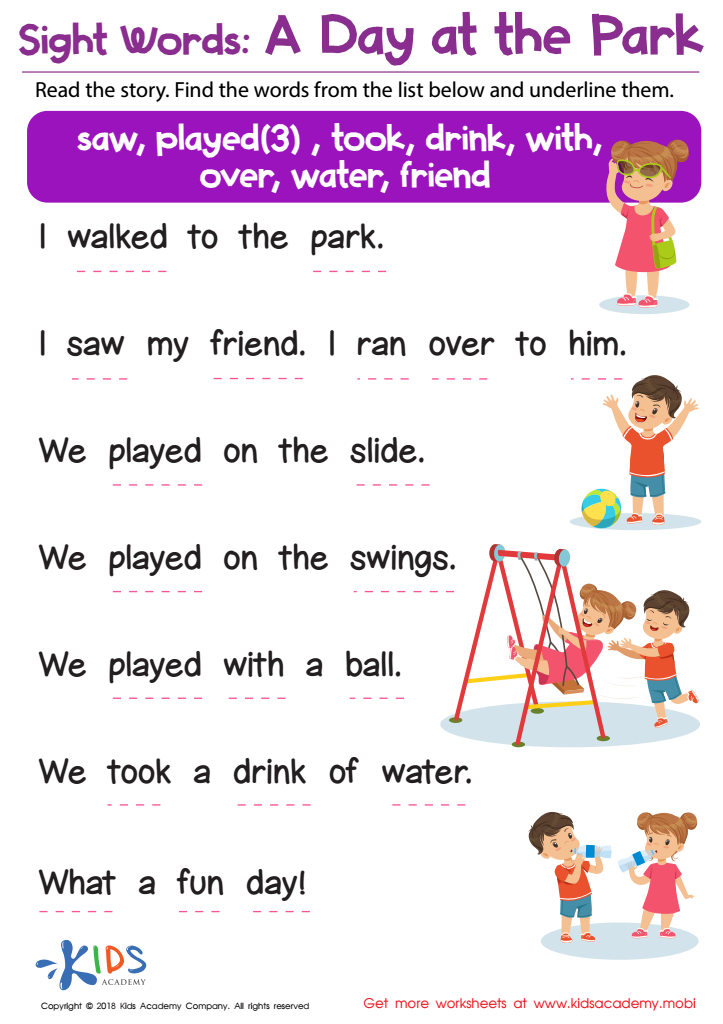
    Sight Words: A Day at the Park Worksheet
    Sight Words: A Day at the Park Worksheet

    Sight Words: A Day at the Park Worksheet

    This worksheet offers kids practice reading sight words in a story. With picture clues and repetitive wording, they'll work with words that can't be sounded out to reinforce their learning. This is an important step in the reading process that helps kids become more confident readers.
    Sight Words: A Day at the Park Worksheet
    Worksheet
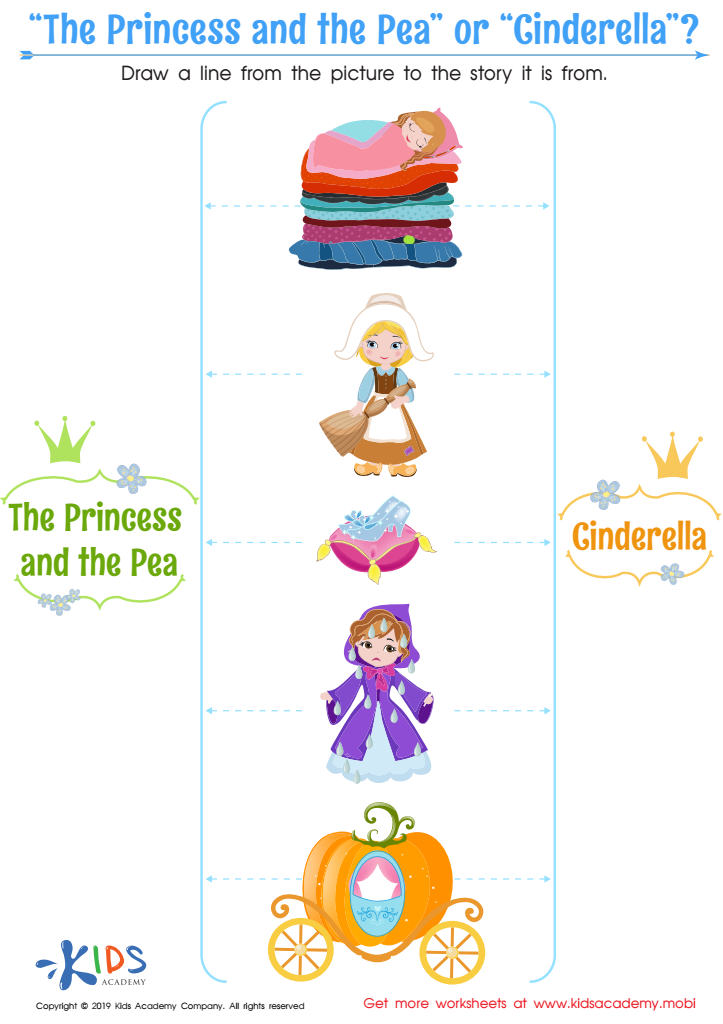
    “The Princess and the Pea” or “Cinderella” Worksheet

    “The Princess and the Pea” or “Cinderella” Worksheet

    “The Princess and the Pea” or “Cinderella” Worksheet

    Help your child identify the characters and objects from both the Princess and the Pea and Cinderella. Ask them to draw a line from the pictures to the story it's from on the tracing sheet. Encourage them to tell you the similarities between the two stories. Enjoy the tale with your daughter and watch her be fascinated by these two classic children's stories.
    “The Princess and the Pea” or “Cinderella” Worksheet

    Worksheet


    Reading fiction to children aged 3-8 is immensely beneficial for their development. At this critical age, young minds are rapidly growing and absorbing information, and fiction plays a pivotal role in nurturing their imagination and creativity. Through engaging narratives and vibrant illustrations, children are introduced to a multitude of worlds and perspectives, helping them develop empathy and an understanding of different emotions and experiences.

    Additionally, reading fiction supports literacy skills. It enhances vocabulary, comprehension, and listening skills, promoting a love for reading that can last a lifetime. By encountering new words in context, children learn language patterns, sentence structure, and storytelling techniques, all of which contribute to their cognitive and language development.

    Moreover, reading fiction creates opportunities for bonding between parents or teachers and children. This shared activity encourages discussions, questions, and exploration of themes relevant to children’s lives, such as friendship, kindness, and problem-solving. These discussions can deepen relationships and provide comfort and security to children.

    Finally, fiction provides a gentle way to introduce complex subjects and life lessons. Fairy tales, fables, and stories with moral lessons can teach values and ethics in an accessible and memorable way.

    In summary, reading fiction to children ages 3-8 fosters their cognitive and emotional growth, supports literacy, strengthens bonds, and offers valuable life lessons. Thus, it is a crucial, fulfilling activity for both parents and teachers to embrace.