Understanding natural resources Science Worksheets for Ages 3-8
4 filtered results
-
From - To
Discover our "Understanding Natural Resources" science worksheets, designed specifically for children aged 3-8! These engaging activities introduce young learners to the concept of natural resources and their importance in our daily lives. With fun illustrations and interactive exercises, kids will explore various types of natural resources, such as water, soil, and animals. Our worksheets promote critical thinking, creativity, and environmental awareness, helping younger students build a solid foundation in science. Perfect for both home and classroom use, these resources aim to inspire a love for learning about nature while developing essential skills. Start your educational journey today!
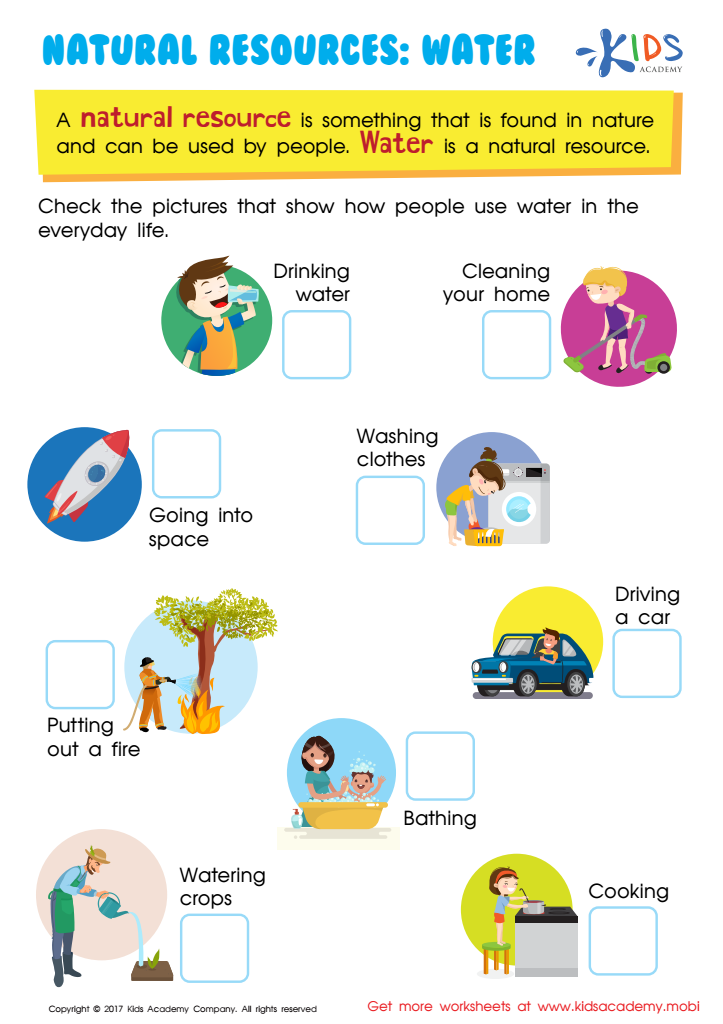
Natural Resources: Water Worksheet
 Assign to My Students
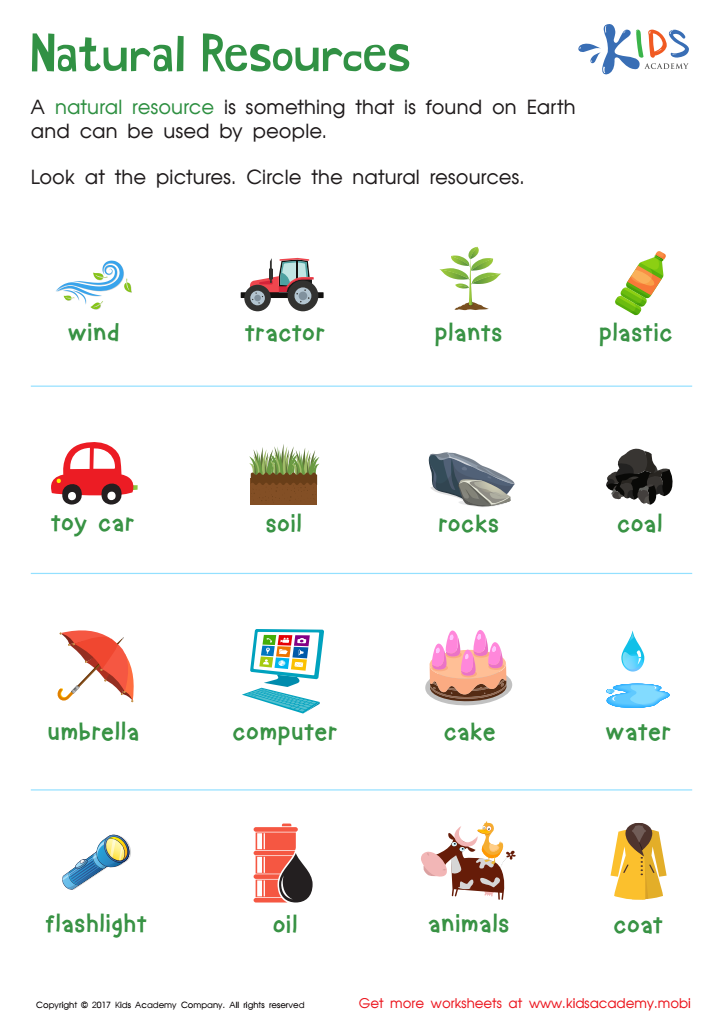
Natural Resources Worksheet
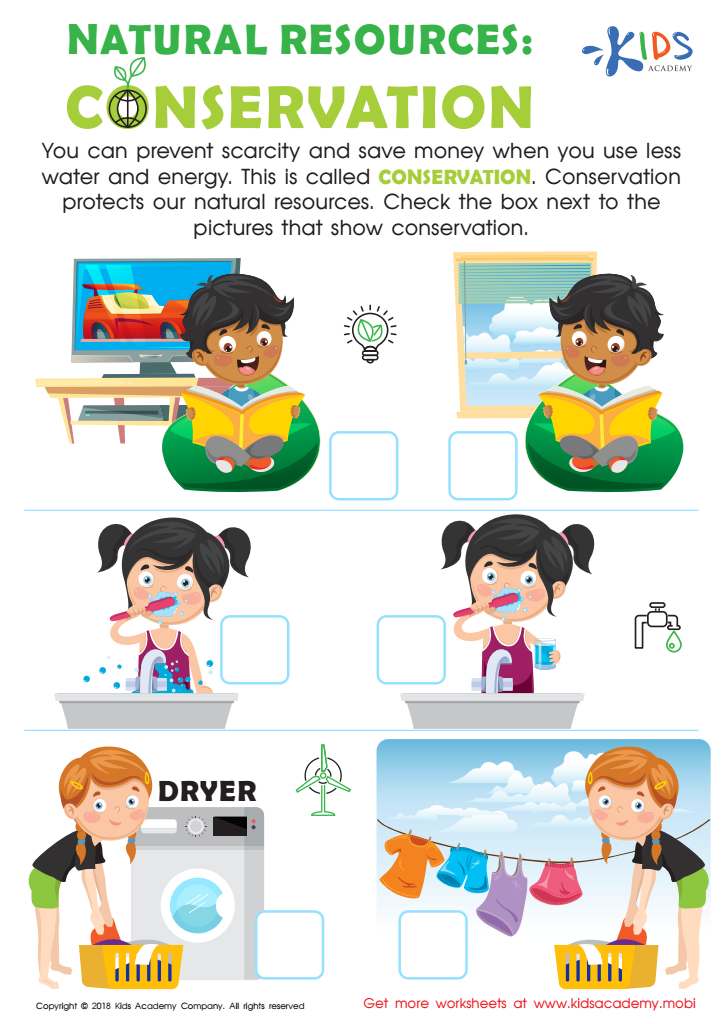
Natural Resources: Conservation Worksheet
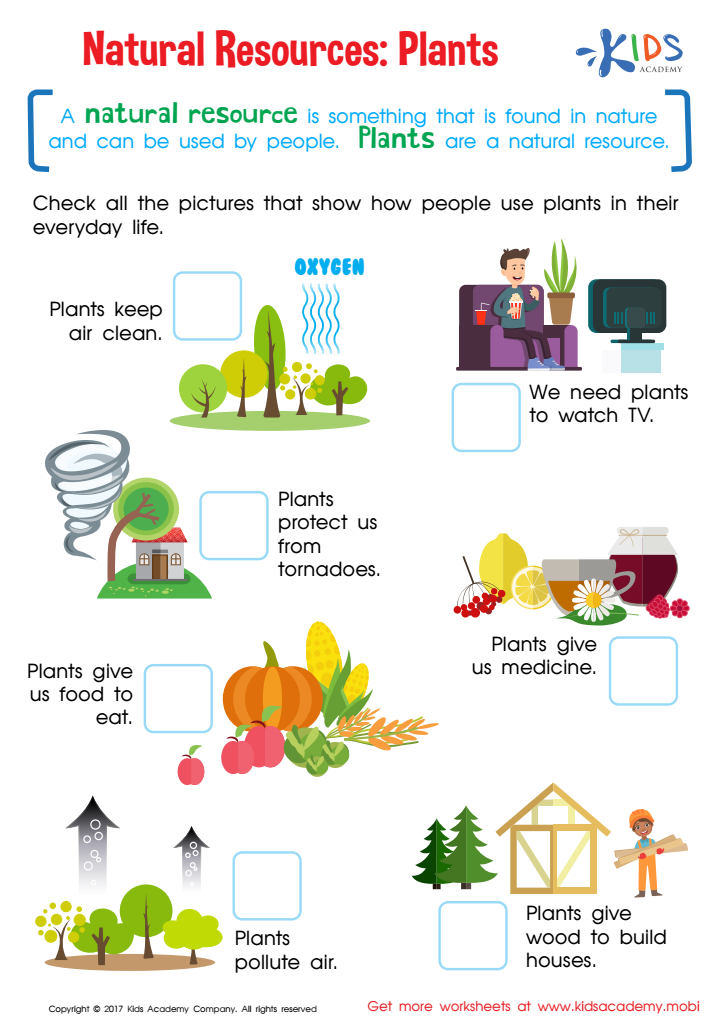
Natural Resources: Plants Worksheet







Understanding natural resources science is crucial for children aged 3-8 as it lays the foundation for environmental awareness and sustainable practices. At this age, children are naturally curious and keen to explore their surroundings. By introducing them to topics like water, air, soil, and wildlife, parents and teachers can foster a sense of wonder and respect for the planet.
Engaging children in discussions about natural resources helps them grasp the interconnection between human life and the environment. It encourages responsible behaviors, such as recycling, conserving water, and appreciating biodiversity. These early lessons can shape their attitudes and habits, nurturing lifelong advocates for the environment.
Furthermore, comprehension of natural resources science aligns with key developmental goals in early education, including observational skills, critical thinking, and cooperation as they work in groups. Hands-on activities, such as nature walks or simple experiments, make learning enjoyable and memorable, promoting cognitive development.
By emphasizing natural resources education, caregivers also empower children to recognize and address environmental challenges in their communities, fostering a generation that prioritizes sustainability. Investing in their understanding of natural resources not only benefits future environmental stewardship but also enriches their overall learning experience.







