Understanding pollination Science Worksheets for Ages 3-8
3 filtered results
-
From - To
Unlock the wonders of nature with our "Understanding Pollination Science Worksheets for Ages 3-8." Designed to captivate young minds, these engaging activities teach children about the vital role of pollination. Filled with vibrant imagery and interactive exercises, our worksheets help kids grasp concepts such as flower anatomy, the journey of pollen, and the importance of pollinators like bees and butterflies. Perfect for parents and educators, these resources foster curiosity and a love for the environment, setting the foundation for lifelong learning in biology and environmental science. Start discovering the magic of pollination with our thoughtfully crafted worksheets today!
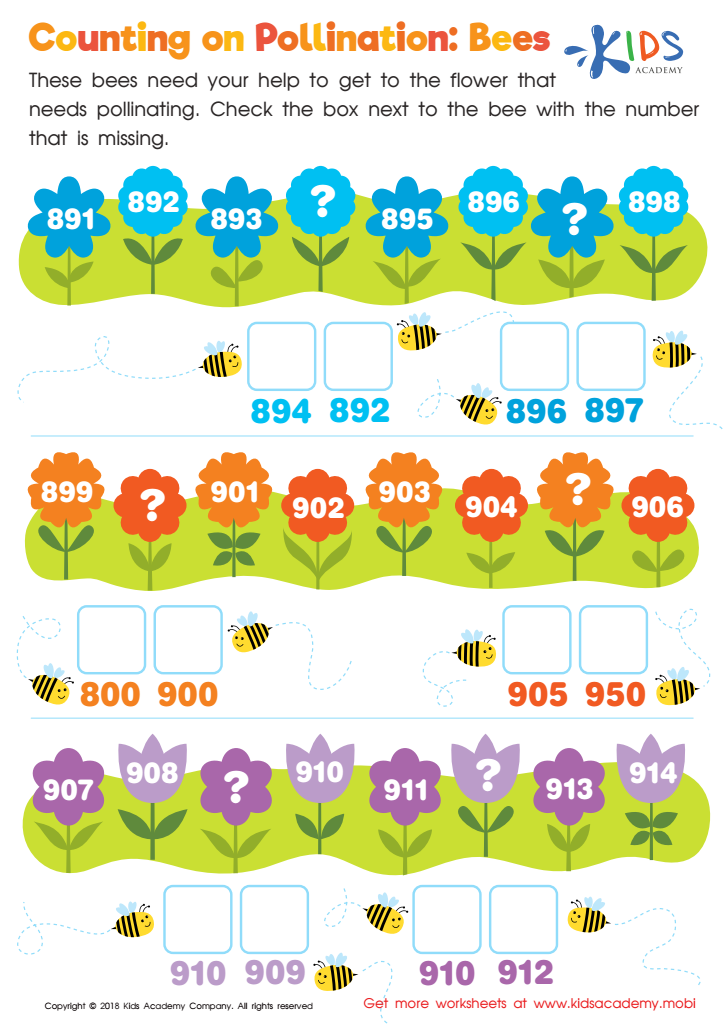
Counting on Pollination: Bees Worksheet
 Assign to My Students
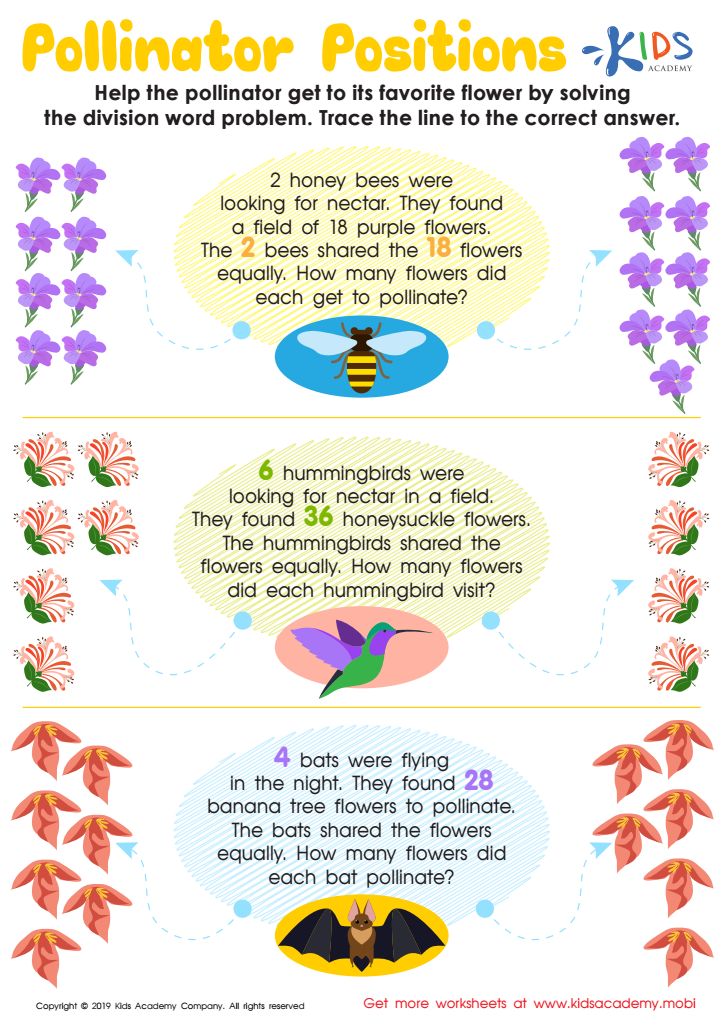
Pollinator Positions Worksheet
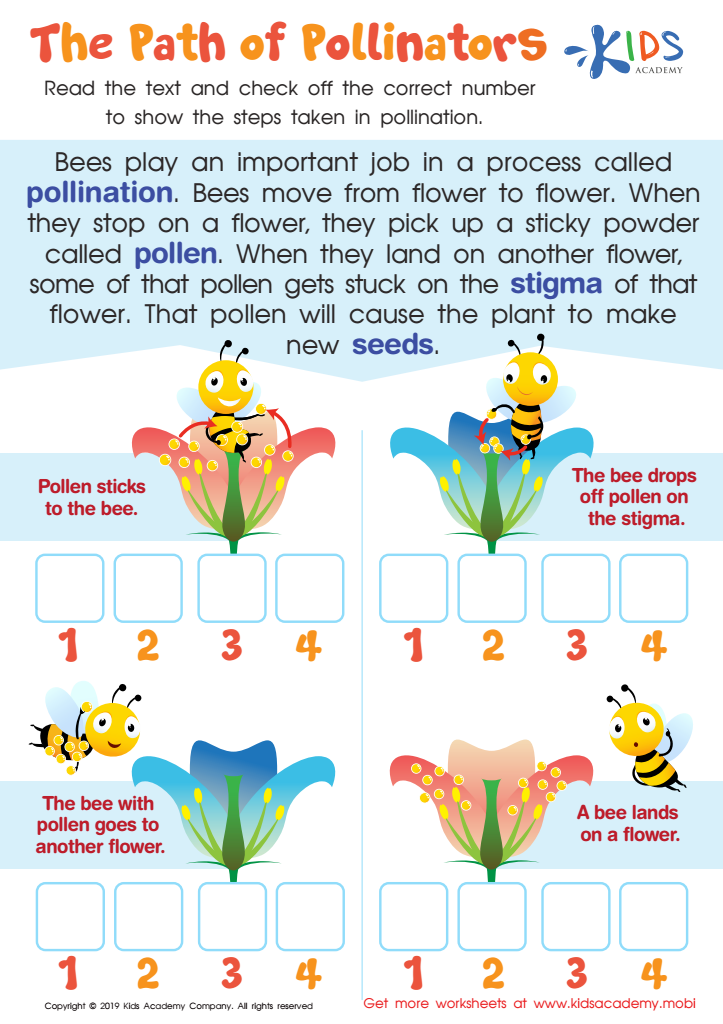
The Path of Pollinators Worksheet






Understanding pollination science for children ages 3-8 is crucial for both parents and teachers because it lays the foundation for a lifelong appreciation of nature and environmental stewardship. At this developmental stage, children are naturally curious and eager to explore the world around them. Introducing them to pollination helps nurture this curiosity by demonstrating how plants grow and reproduce, impacting the food we eat and the ecosystems we depend on.
Pollination science provides a practical context for basic biology concepts, fostering critical thinking and observational skills. Children learn about the roles of various insects, birds, and even mammals that assist in pollination, appreciating biodiversity and the interconnectedness of life. This understanding can inspire a love for science and encourage careers in fields like botany, ecology, and environmental science.
Furthermore, early education in pollination teaches respect for natural processes and the importance of conservational practices. As pollinators face threats from habitat loss and pesticides, educating children creates a newer, environmentally-conscious generation more likely to advocate for sustainable practices.
Incorporating interactive activities such as planting flowers, observing bees, and crafting can make these concepts concrete and engaging, ensuring that the children not only learn but also retain these vital lessons. Parents and teachers, therefore, play a pivotal role in shaping an environmentally literate generation.







