Initial and Final Consonant Blends Worksheets for Ages 3-9
5 filtered results
-
From - To
Discover engaging Initial and Final Consonant Blends Worksheets tailored for children ages 3-9! Perfect for early learners, these worksheets reinforce essential phonetic skills through fun and interactive activities. Helping kids identify and practice consonant blends enhances their reading and writing abilities, laying a strong foundation for literacy. Our thoughtfully designed materials are ideal for both classroom and home learning environments. With various exercises, including coloring, tracing, and matching, children will enjoy mastering sounds while boosting their confidence. Explore our collection and watch your young learners thrive in their phonics journey! Empower their success in reading today with exciting printable resources!
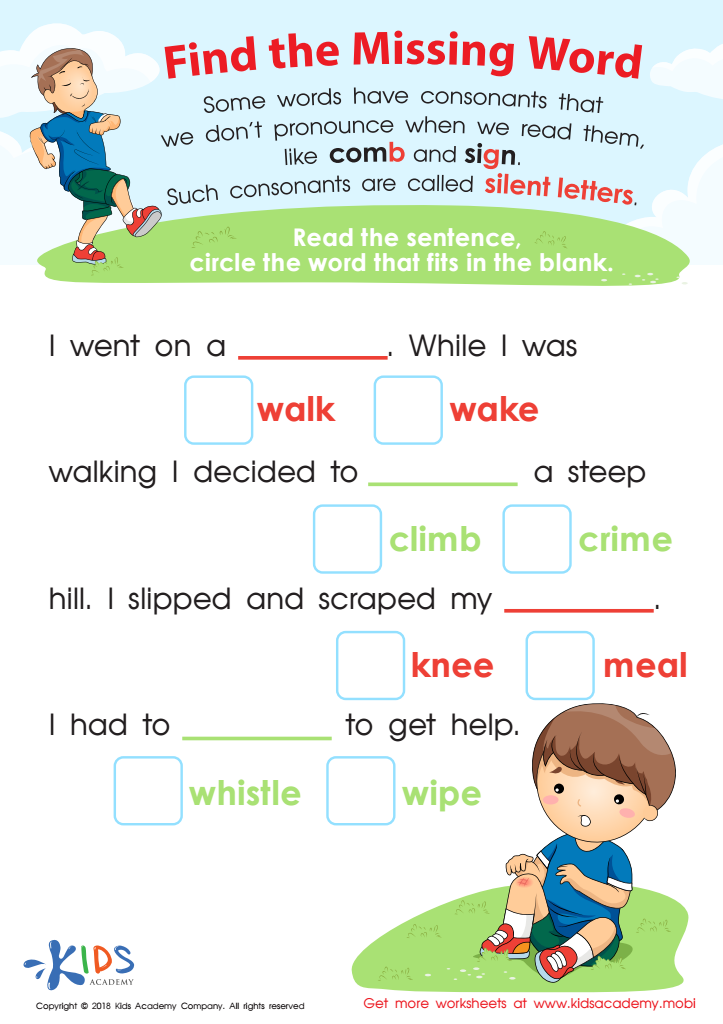
Find The Missing Word Worksheet
 Assign to My Students
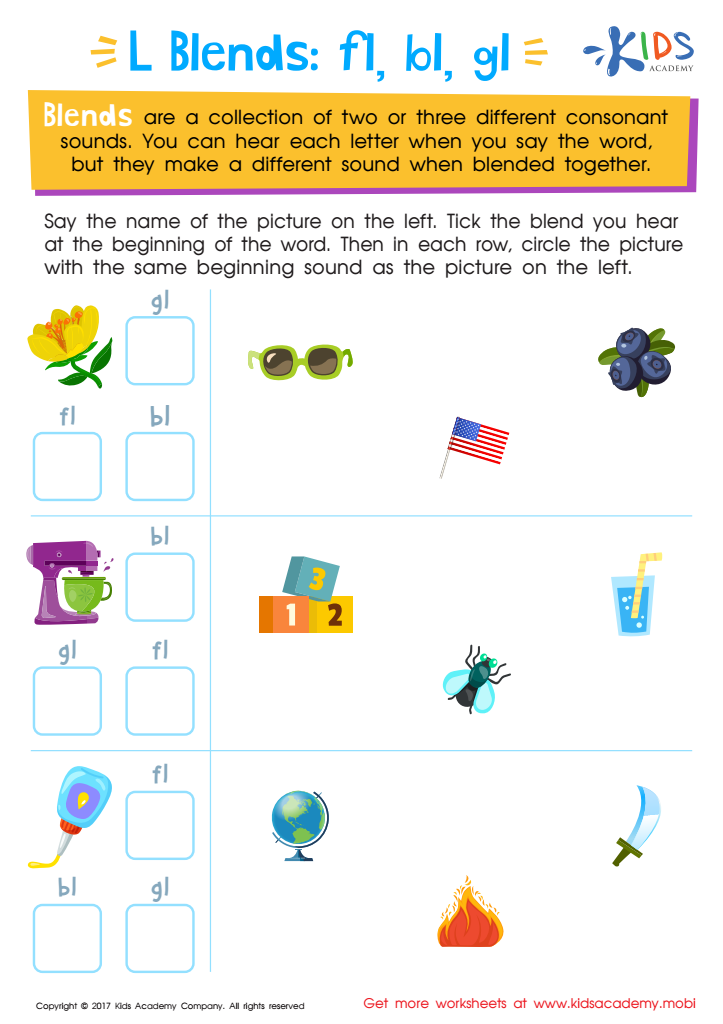
Blending Consonants: "Fl", "Bl" and "Gl" Printable
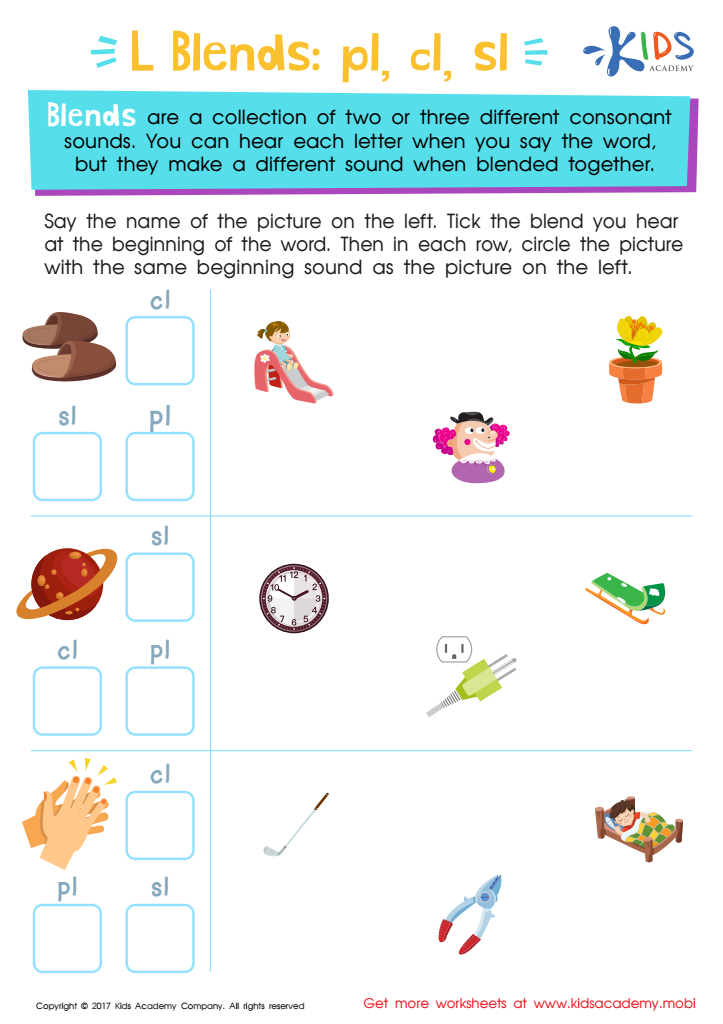
L Blends: "Pl", "Cl" and "Sl" Printable
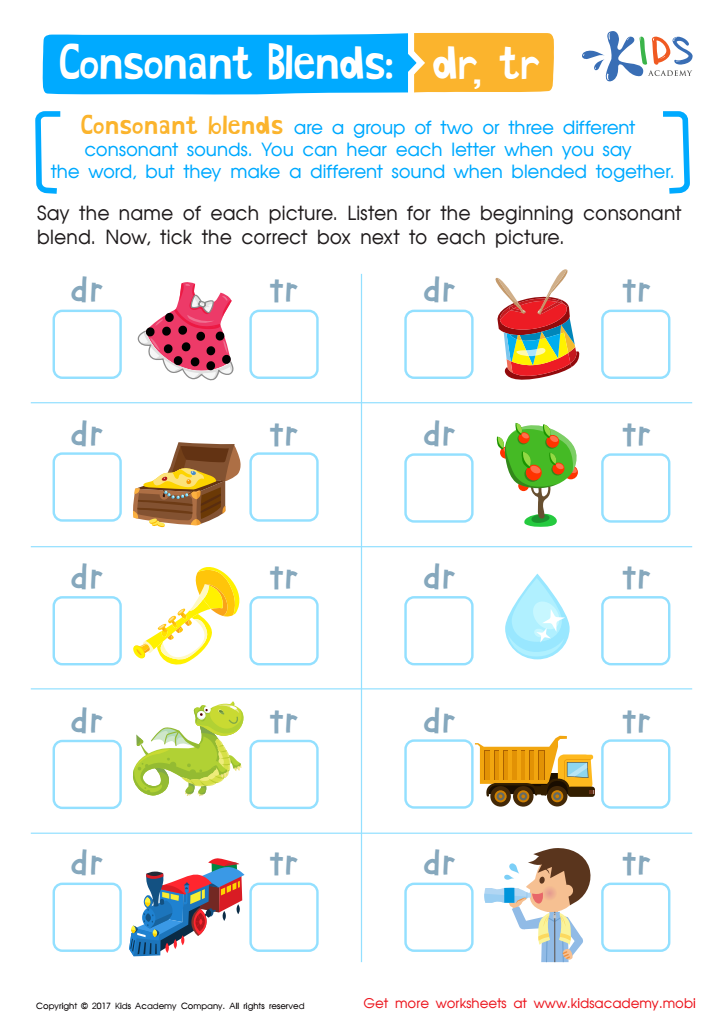
Consonant Blends: "Dr" and "Tr" Printable
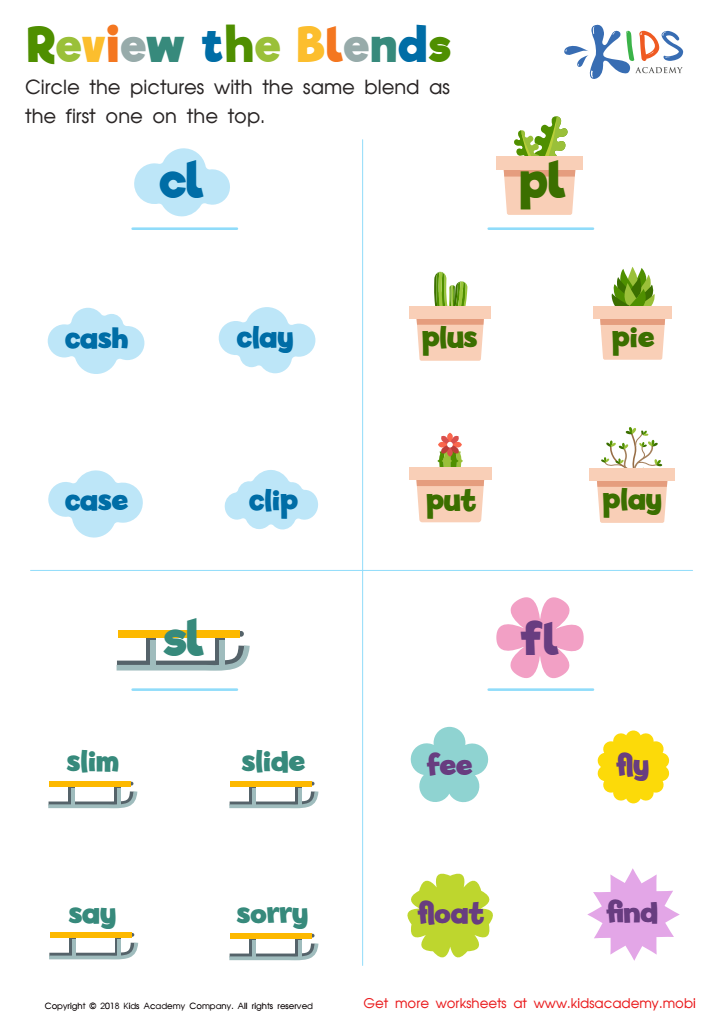
Review the Blends Worksheet


Initial and final consonant blends play a crucial role in early literacy development for children aged 3-9. Understanding these blends enhances phonemic awareness, which is foundational for reading and writing skills. Initial consonant blends, like 'bl' in "black" or 'st' in "stop", occur when two or more consonants appear at the beginning of a word, helping children distinguish sounds. Final consonant blends, such as 'nd' in "sand" or 'mp' in "camp", present similar challenges at the word's end.
By focusing on these blends, teachers and parents can facilitate the following outcomes:
-
Improved Phonological Skills: Children learn to break down words into individual sounds, crucial for decoding unfamiliar words during reading.
-
Expanded Vocabulary: Exposure to a variety of words containing blends helps improve vocabulary, enriching language comprehension.
-
Writing Proficiency: As children become comfortable with similar sounds in spelling, their writing fluency increases.
-
Confidence in Learning: Mastery of consonant blends boosts a child’s confidence in reading, leading to more engagement and a lifelong love for literacy.
Overall, prioritizing initial and final blends lays the groundwork for successful and motivated readers and writers.








