Upper & Lowercase Letters Worksheets for Ages 3-9 - Page 3
50 filtered results
-
From - To
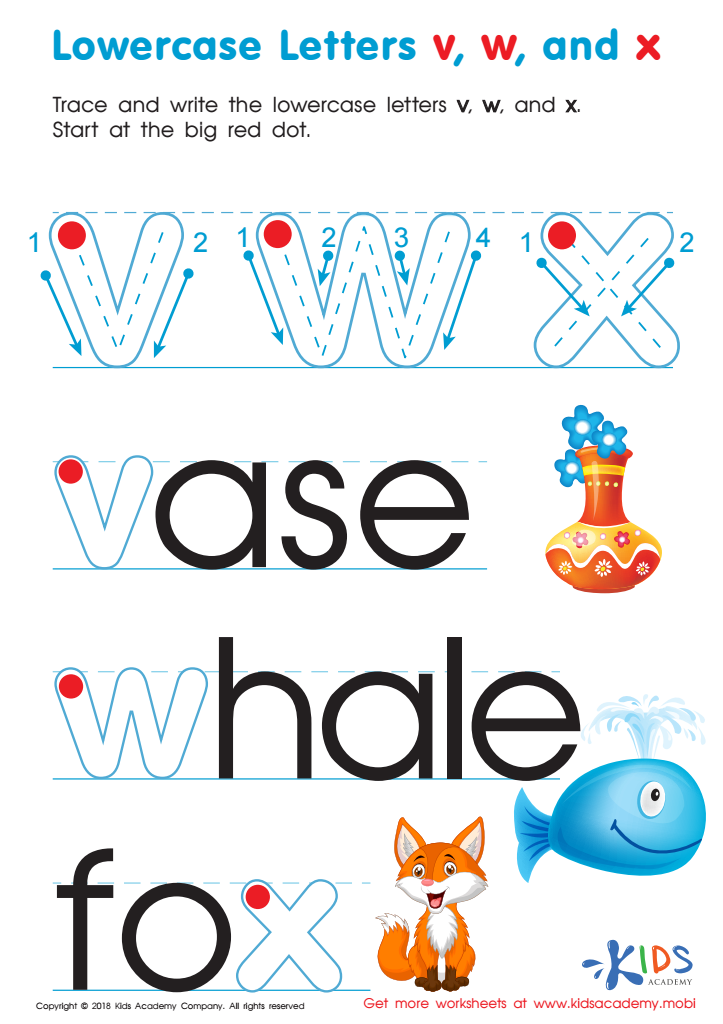
Lowercase Letters v w x Worksheet
 Assign to My Students


Uppercase Letters V, W, and X Worksheet






Parents and teachers should emphasize the importance of uppercase and lowercase letters for children aged 3-9 as they form the foundation of literacy and writing skills. Understanding these two forms of letters not only helps children recognize words in different contexts, but also supports their ability to differentiate between proper nouns (which begin with uppercase letters) and common nouns. This distinction is crucial for developing language comprehension and effective communication skills.
Moreover, mastering uppercase and lowercase letters enhances children’s writing abilities. It equips them to construct sentences, convey their thoughts clearly, and express their creativity through written language. Additionally, such foundational literacy skills are essential for academic success, as they promote reading fluency and comprehension—key components in all subjects.
Besides literacy goals, recognizing and using letters correctly also builds children's self-confidence. As they progress in their understanding, they see tangible improvements in both their writing and reading capabilities. By fostering interest in uppercase and lowercase letters early on, parents and teachers can instill a lifelong love of reading and writing, setting children up for success in their future educational endeavors. Ultimately, engaging children with letters curates a stimulating and enriching learning environment crucial for their overall development.







