Feelings and Emotions Worksheets for Ages 3-9
4 filtered results
-
From - To
Discover our engaging "Feelings and Emotions Worksheets for Ages 3-9" designed to help children understand and express their emotions effectively. Our printable worksheets combine fun, interactive activities with effective learning strategies, featuring coloring pages, matching games, and more. Tailored for young learners, these resources foster emotional vocabulary, empathy, and social skills, making emotional development enjoyable and accessible. Useful for both home and classroom settings, our worksheets support parents and teachers in teaching emotional intelligence, ensuring kids develop the skills they need to navigate their feelings confidently. Start exploring our invaluable resources today and watch your child’s emotional growth flourish!
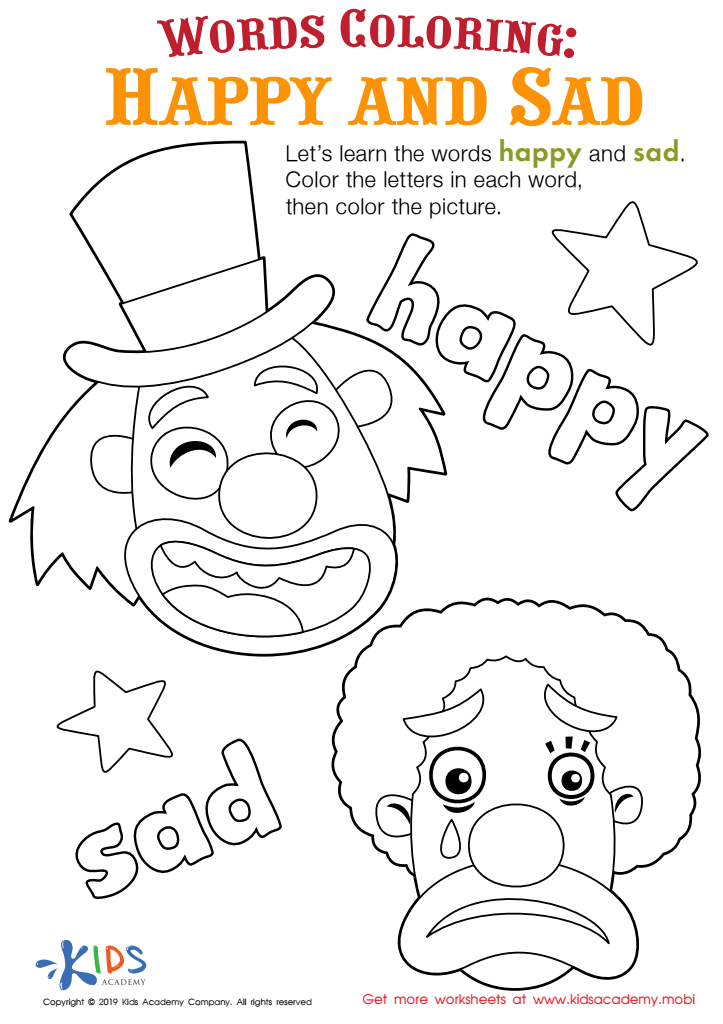
Happy and Sad Words Coloring Worksheet
 Assign to My Students
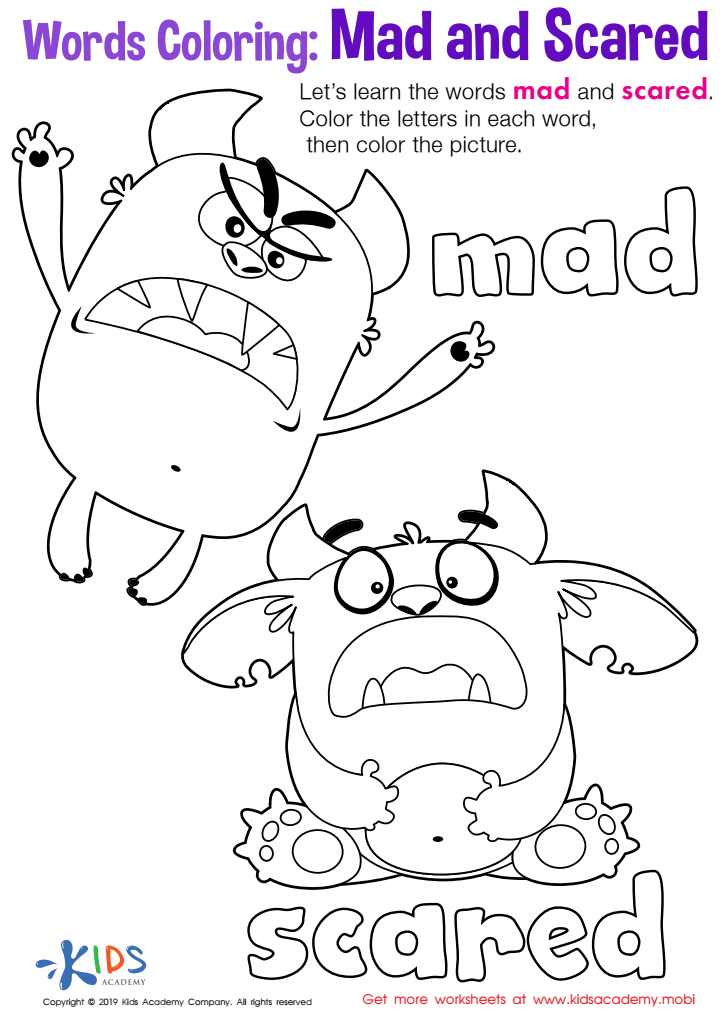
Mad and Scared Words Coloring Worksheet
Assign to My Students
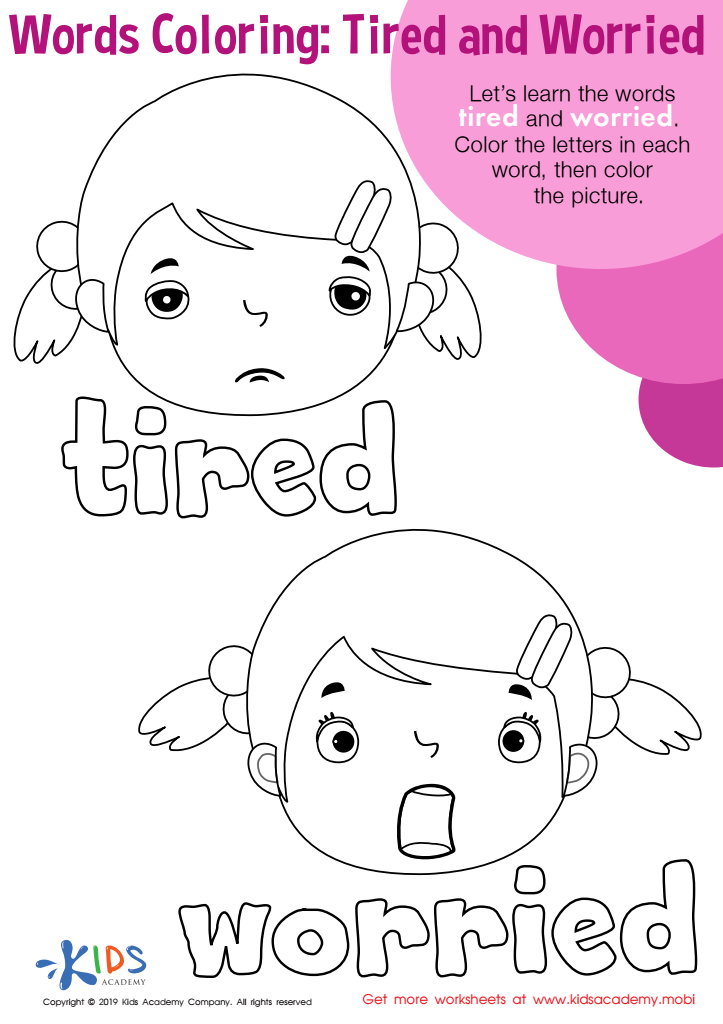
Tired and Worried Words Coloring Worksheet
Assign to My Students
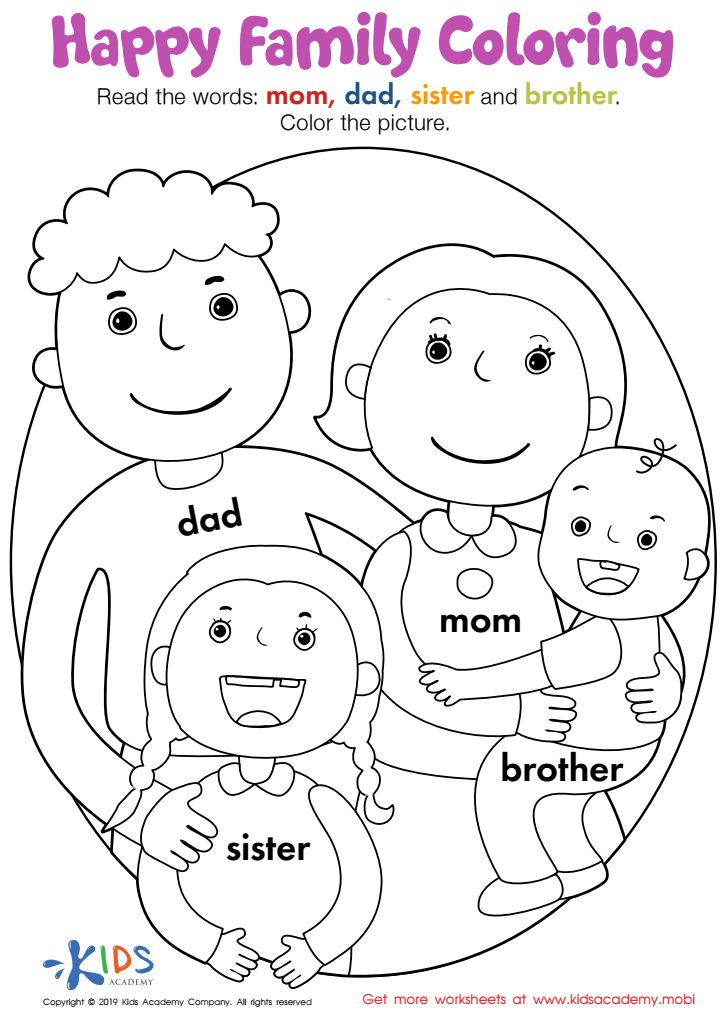
Happy Family Coloring Worksheet
Assign to My Students




It's essential for parents and teachers to focus on feelings and emotions in children aged 3-9 because this stage is crucial for their emotional development. At this age, children are forming the foundation of their emotional intelligence—an ability that will profoundly affect their lifelong social, academic, and personal success.
Understanding and expressing emotions helps children develop important social skills like empathy, cooperation, and conflict resolution. By recognizing and naming their feelings, children can communicate more effectively, which reduces frustration and behavioral issues. This can make classrooms and homes more harmonious environments.
Moreover, emotional awareness fosters resilience. When children understand that it’s normal to experience a range of emotions, they learn that feelings are temporary and manageable. This sense of control can reduce anxiety and build confidence.
From an educational perspective, emotional well-being significantly impacts cognitive development. Children who can regulate their emotions tend to focus better, be more motivated, and have enhanced memory and problem-solving skills. When teachers and parents invest in helping kids navigate their feelings, they are equipping them with tools that extend beyond academics to real-life situations.
Ultimately, caring about children’s emotional lives ensures they grow into well-rounded, empathetic, and emotionally skilled adults. By nurturing this in the early stages, parents and teachers set children up for healthier, happier futures.