Comparing shapes Geometry Worksheets for Ages 3-9
4 filtered results
-
From - To
Explore our engaging "Comparing Shapes Geometry Worksheets" tailored for children ages 3-9. Designed to enhance young learners' spatial awareness and shape recognition, these worksheets offer a variety of fun activities that encourage kids to identify, compare, and differentiate between various geometric shapes. From exciting pictorial comparisons to hands-on matching tasks, each worksheet aims to foster critical thinking and foundational math skills. Perfect for use at home or in the classroom, our resources are crafted to make learning enjoyable and effective. Dive into the world of geometry with your child and watch their confidence and understanding of shapes grow!
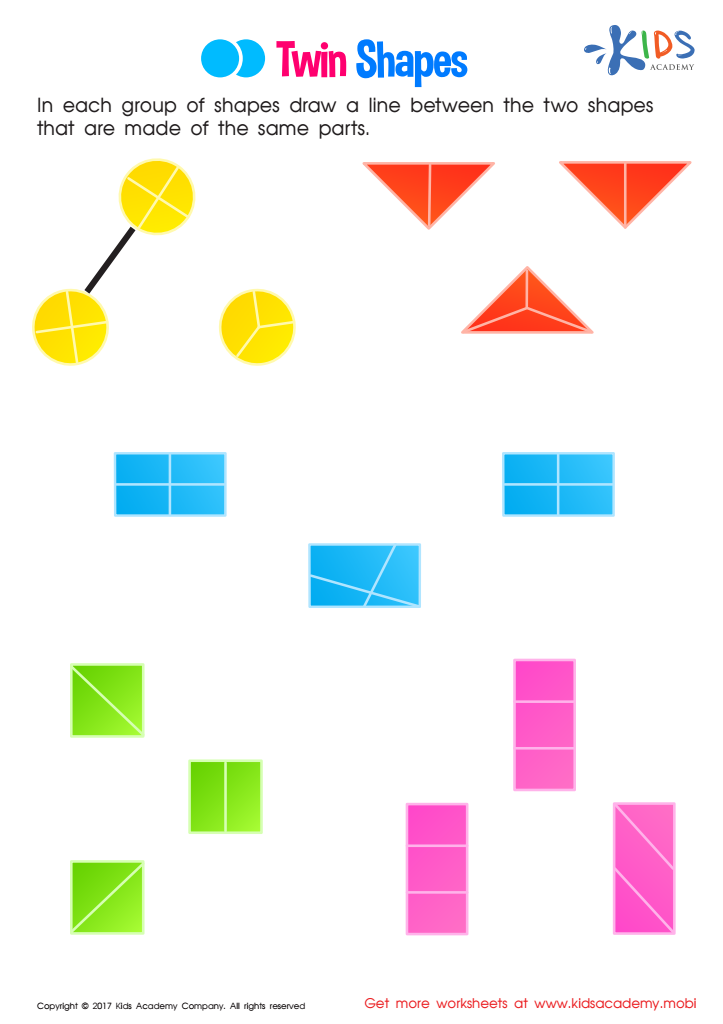
Twin Shapes Worksheet
 Assign to My Students











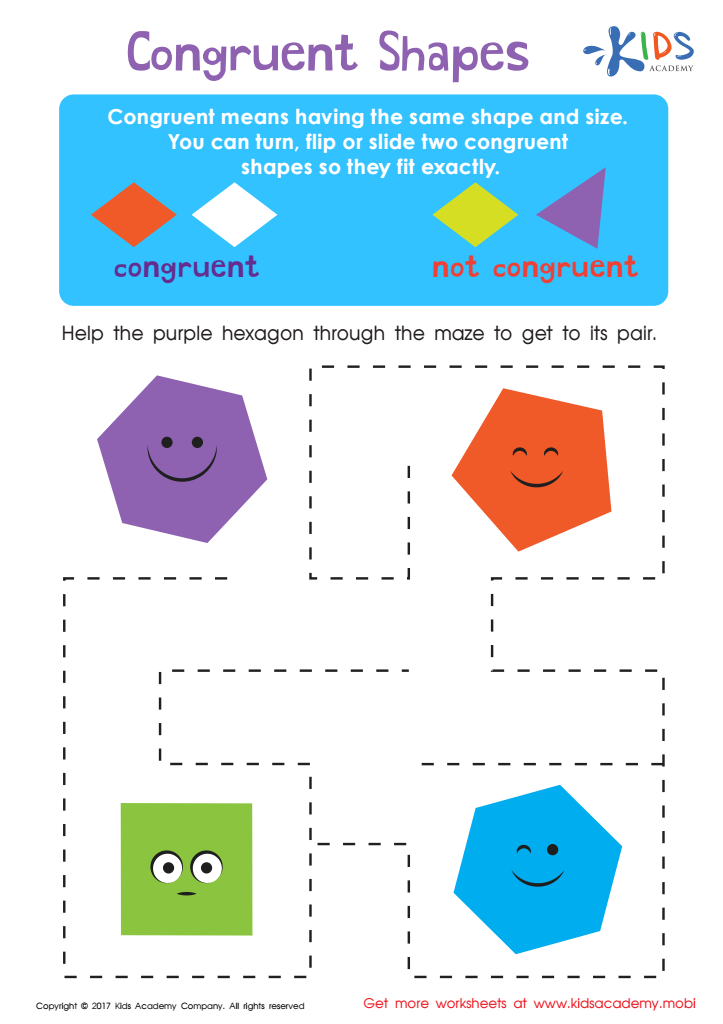
Congruent Shapes Worksheet
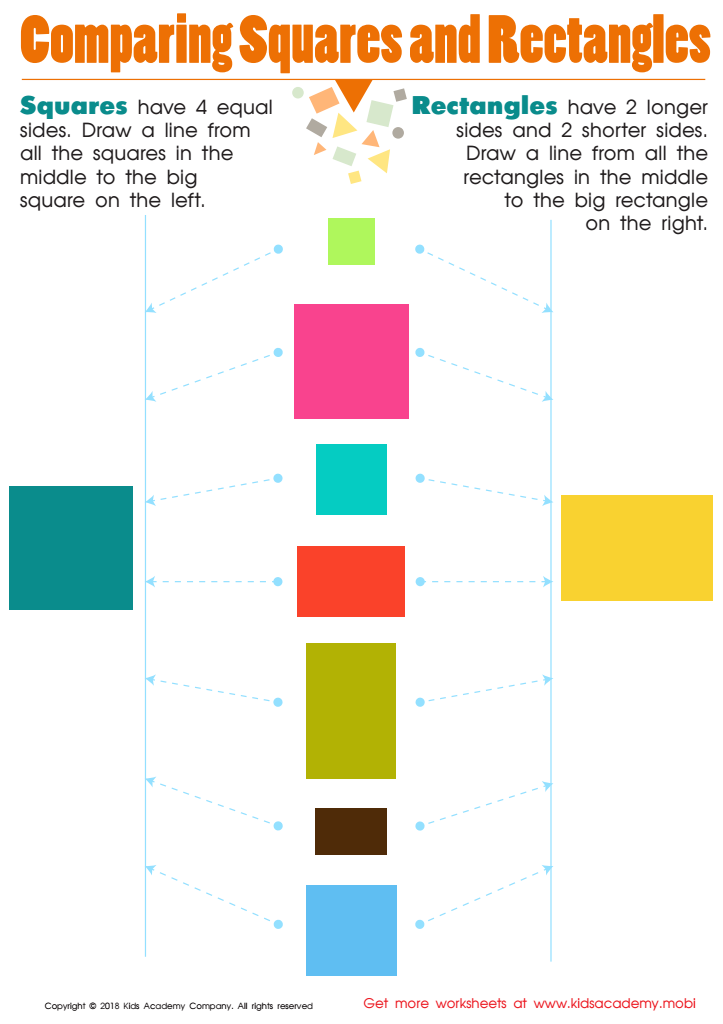
Comparing Squares Rectangles Worksheet
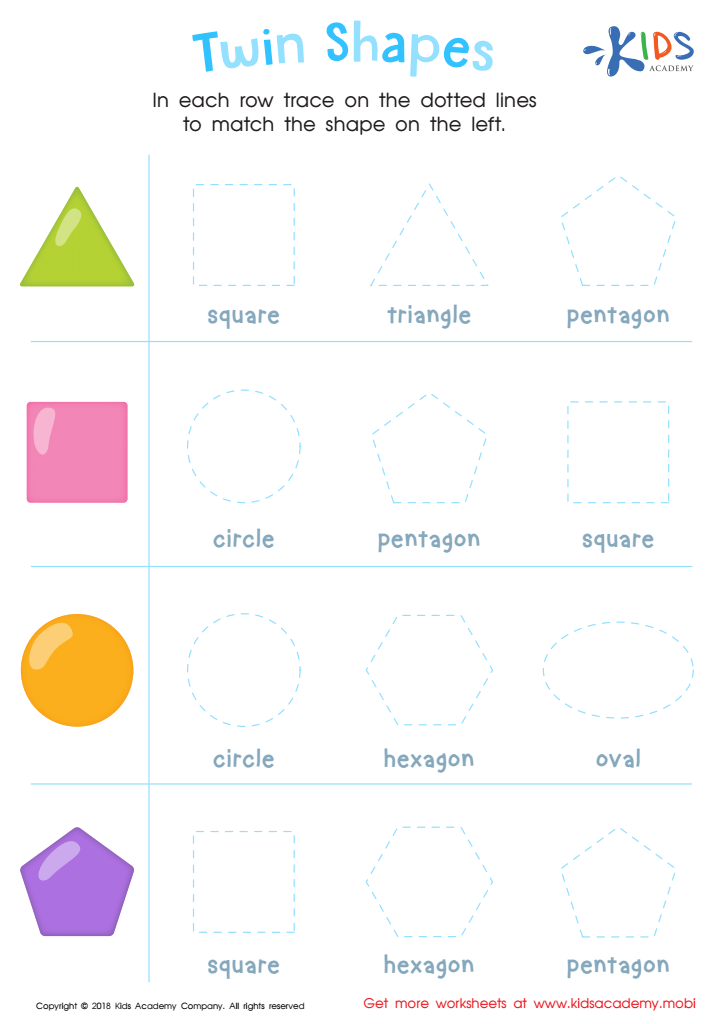
Twin Shapes Dot-to-Dot Worksheet








Adults should care about teaching young children to compare shapes in geometry because it lays a fundamental foundation for critical thinking and problem-solving skills. From ages 3 to 9, children are naturally curious and eager to explore their environment, making it the perfect time to introduce geometric concepts. By engaging in activities that require them to compare shapes—like sorting, naming, and discussing their properties—children develop essential cognitive skills such as classification and reasoning.
Understanding shapes also enhances spatial awareness, which is crucial for later mathematical learning. Recognizing the similarities and differences between shapes enables children to make connections and form patterns, fostering early math literacy. These activities encourage language development as well, as children learn to articulate their thoughts using precise terminology.
Furthermore, geometry is not only about mathematics but also ties in with art and design, enriching creativity and imagination. By prioritizing shape comparison, parents and teachers help children build self-confidence when tackling more complex mathematical concepts down the road.
In sum, shape recognition and comparison are essential elements of early education that support cognitive development, enhance social interaction, and create happier, more engaged learners. Investing time in these concepts helps prepare children for future academic success.








