Times Tables Worksheets for Ages 3-9 - Page 2
34 filtered results
-
From - To
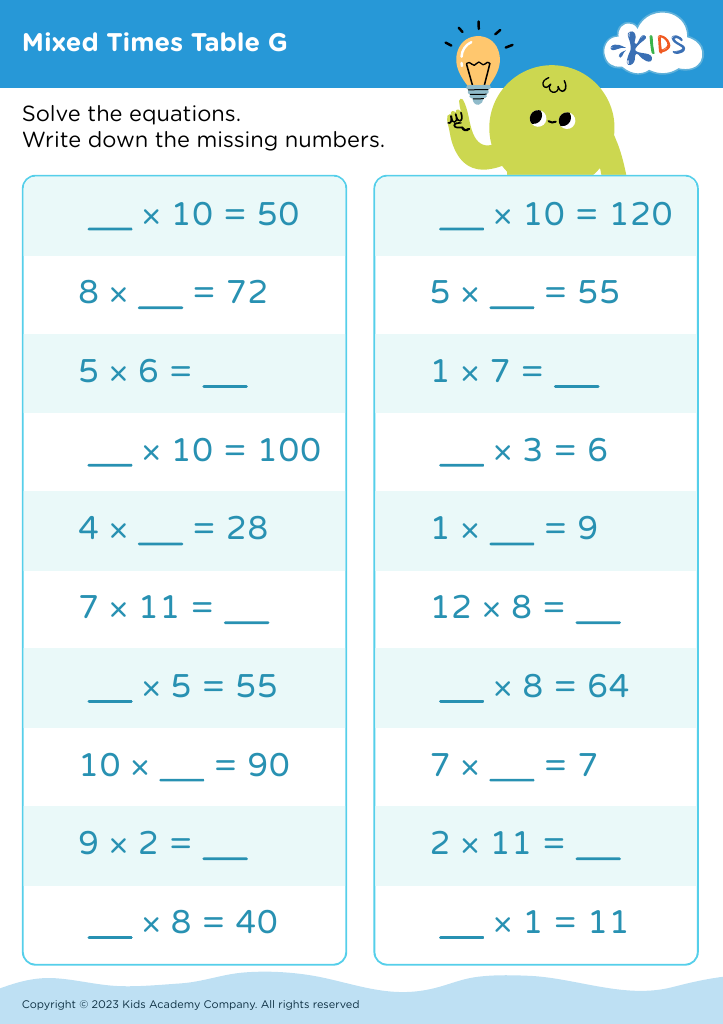
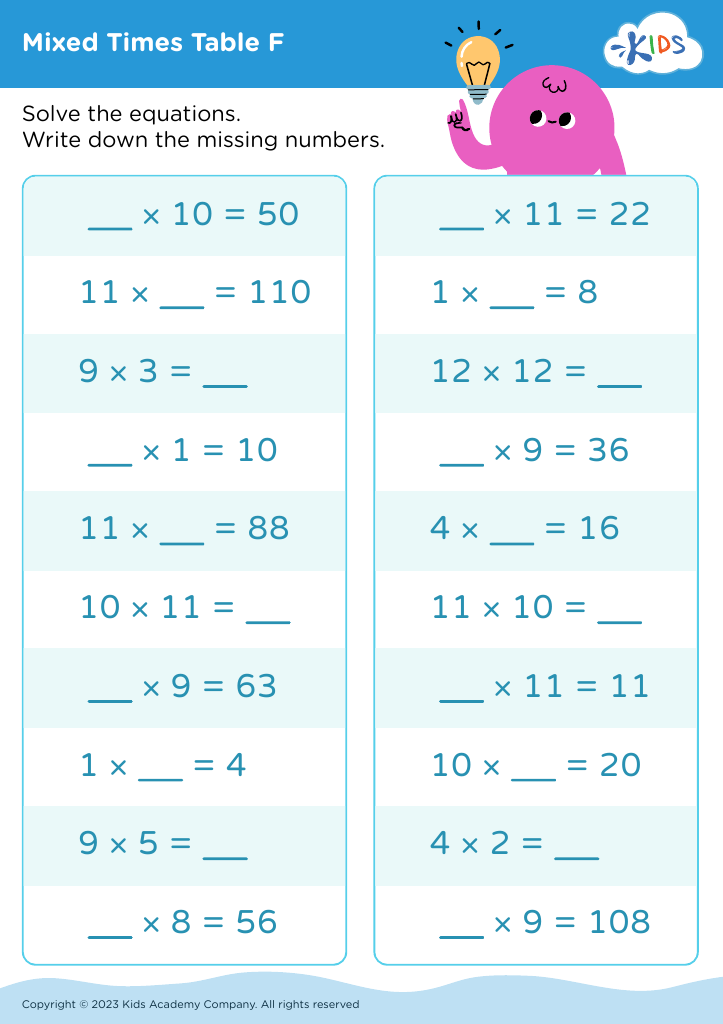
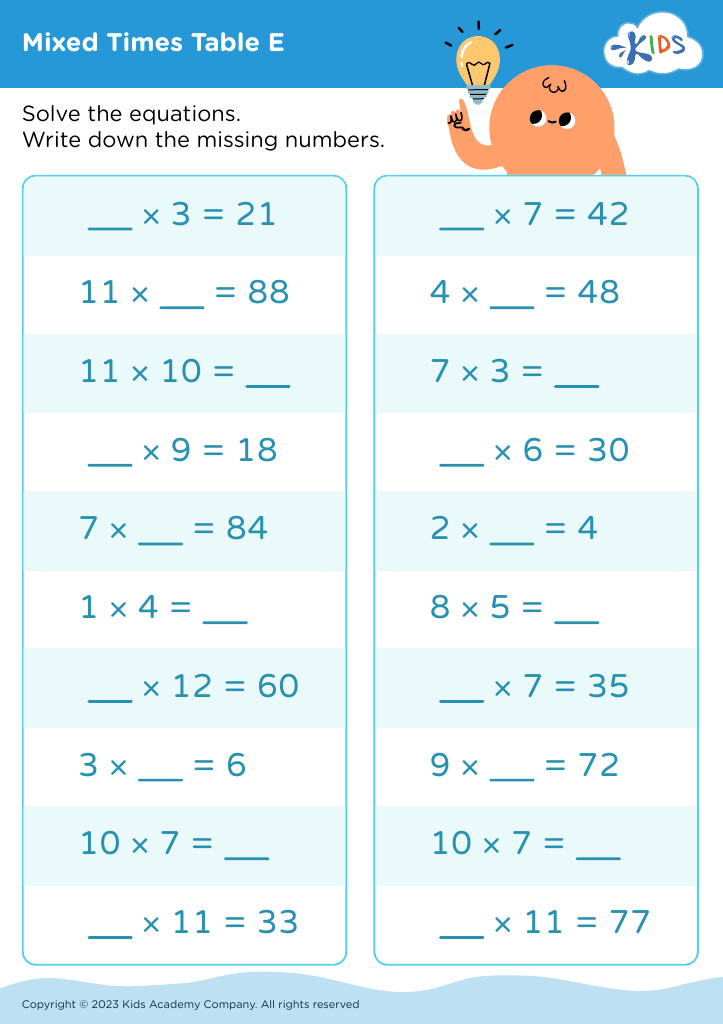
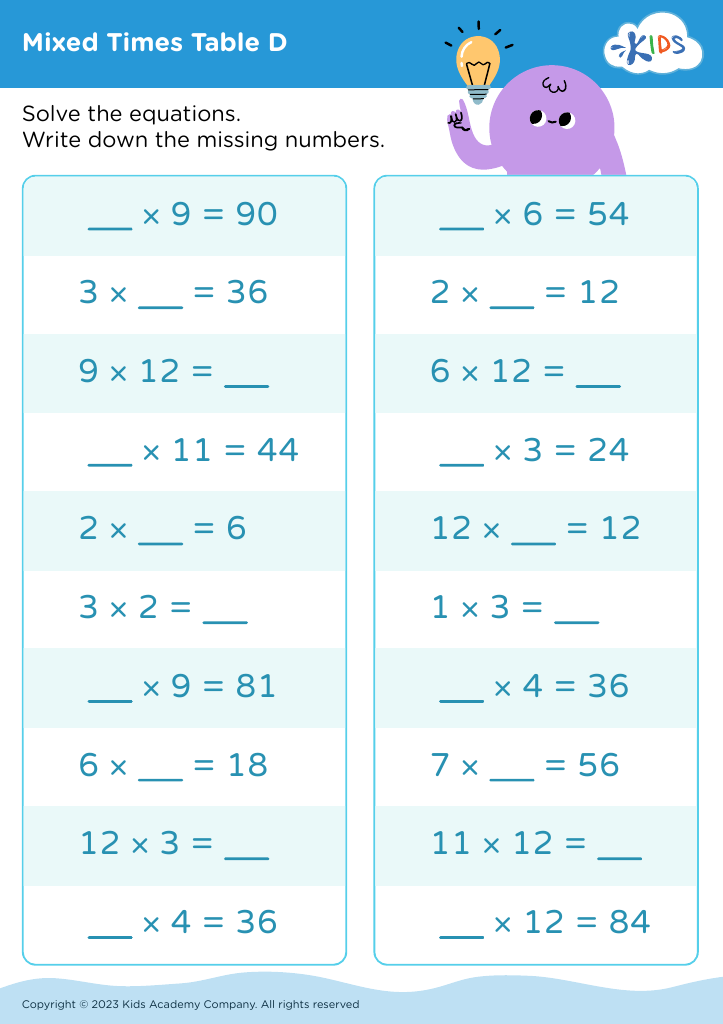
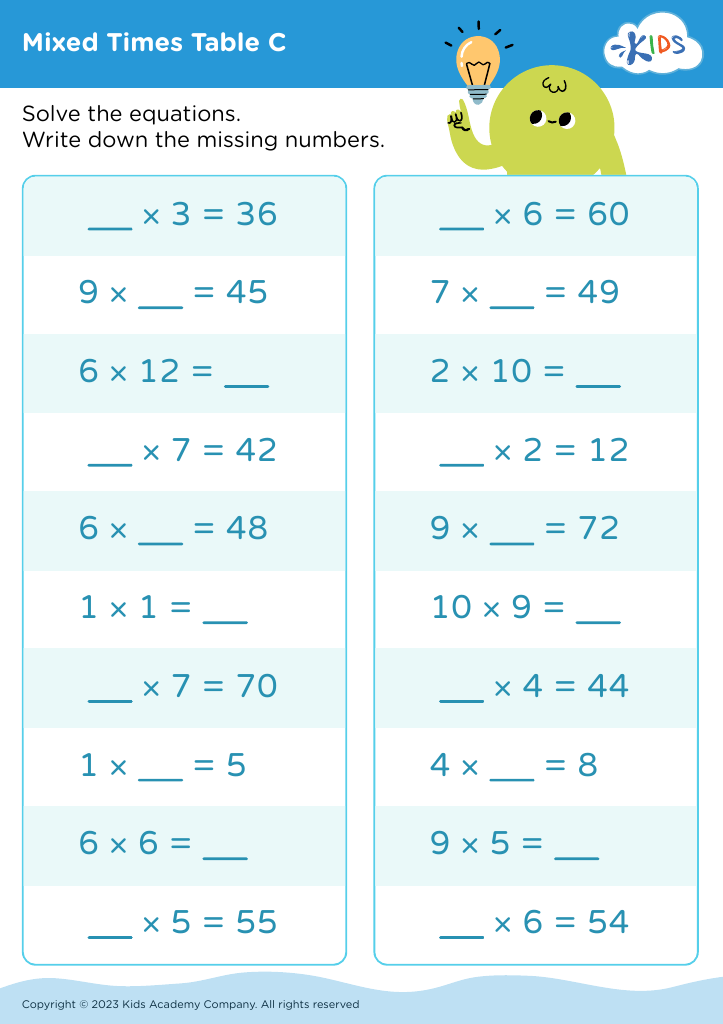
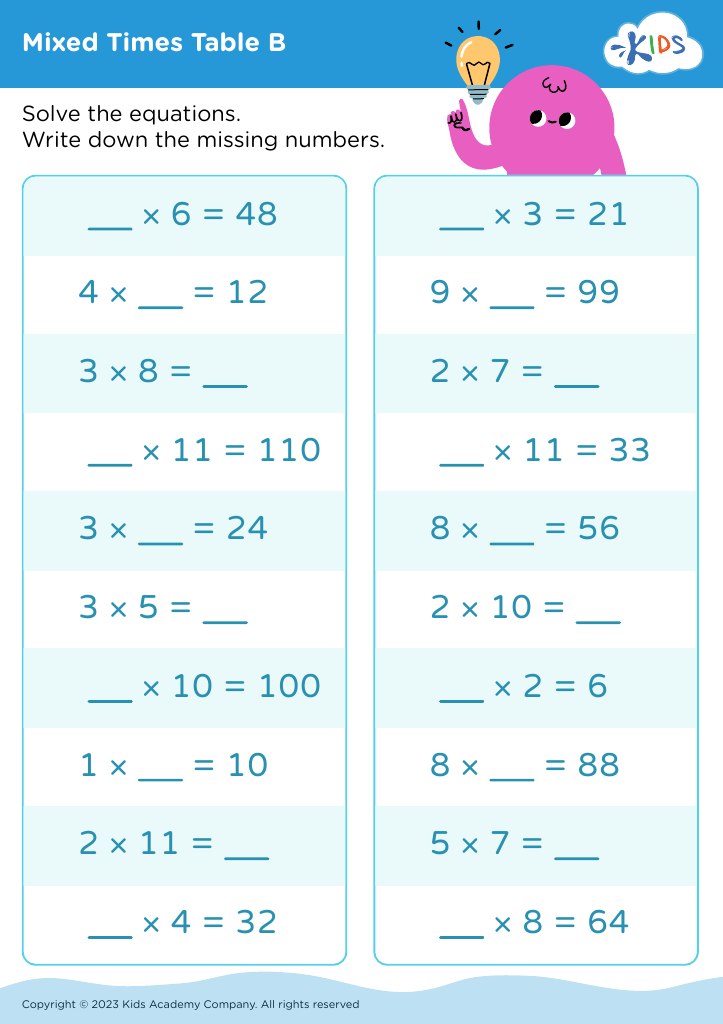
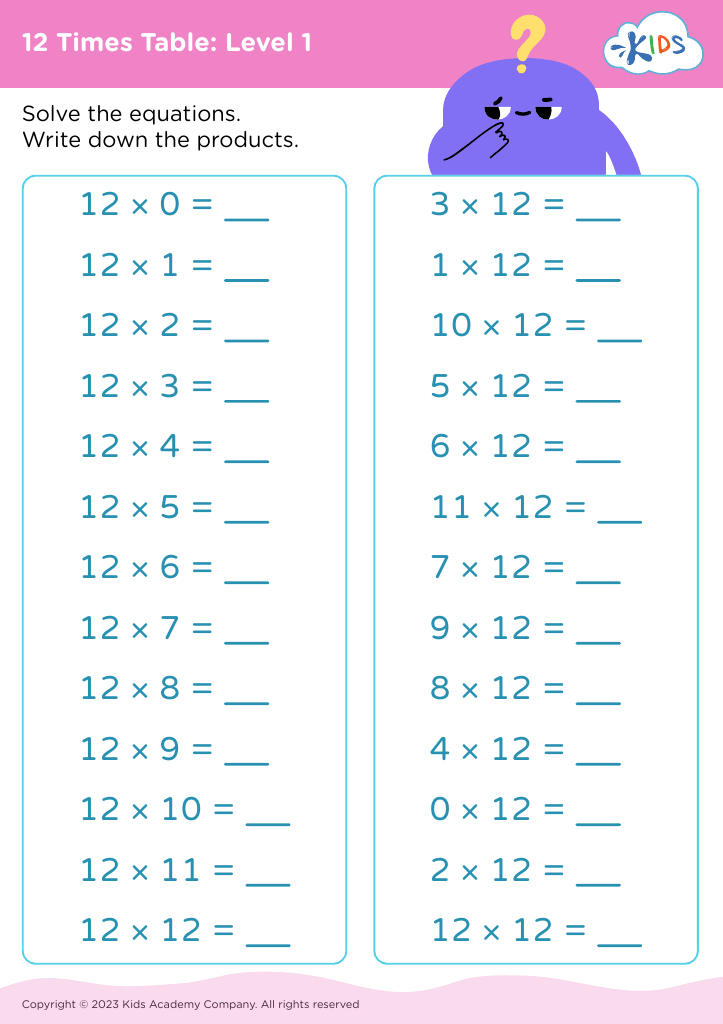
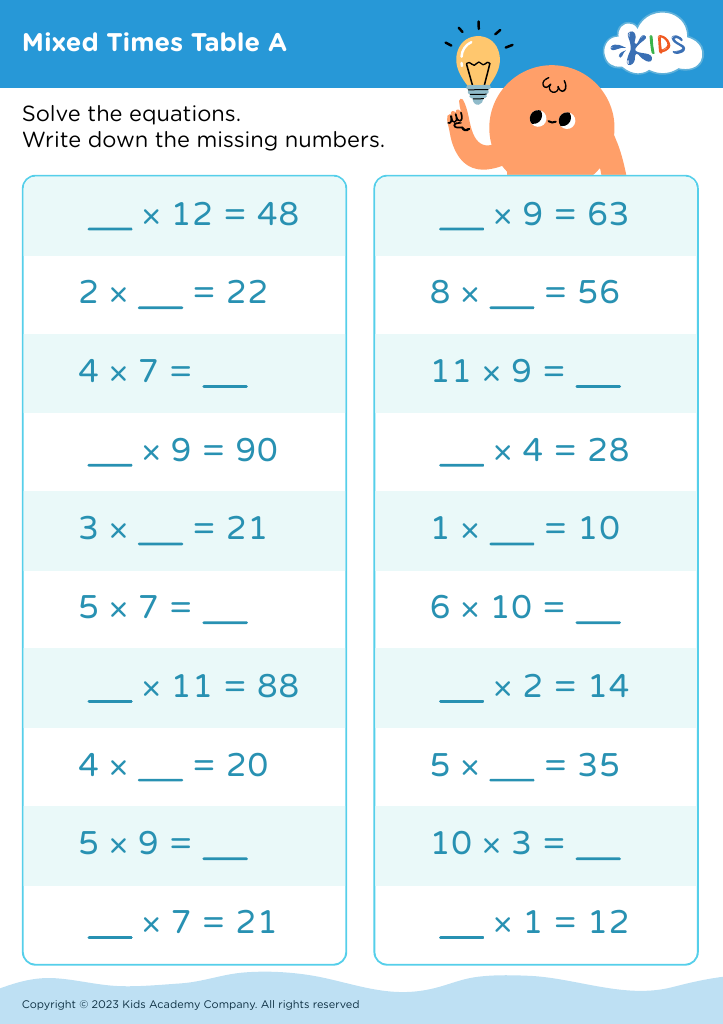
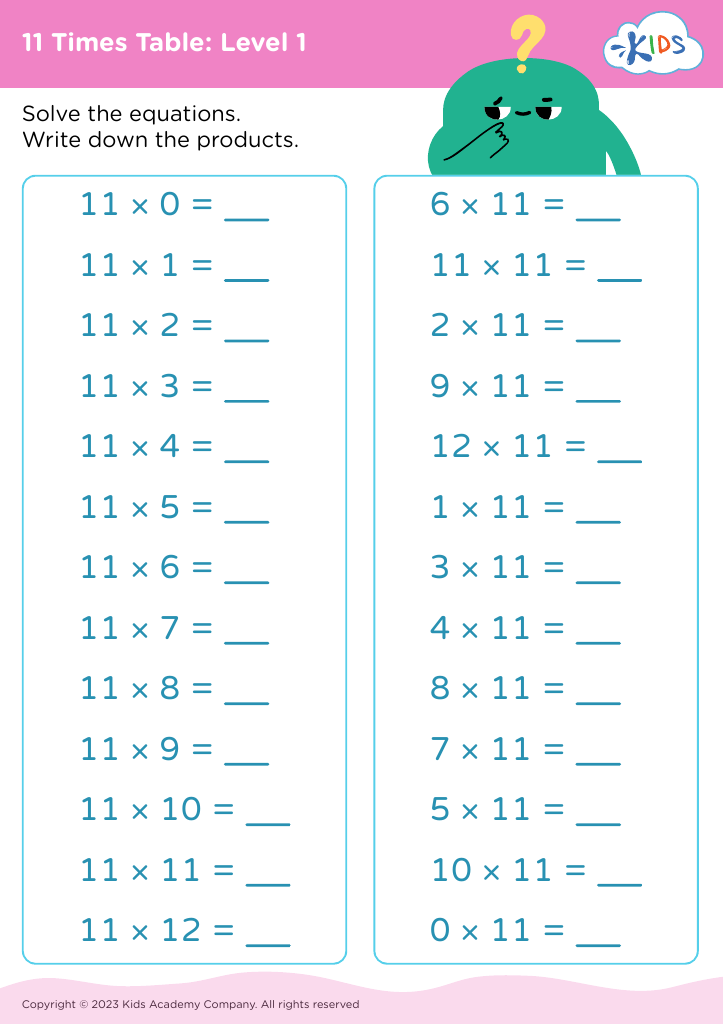
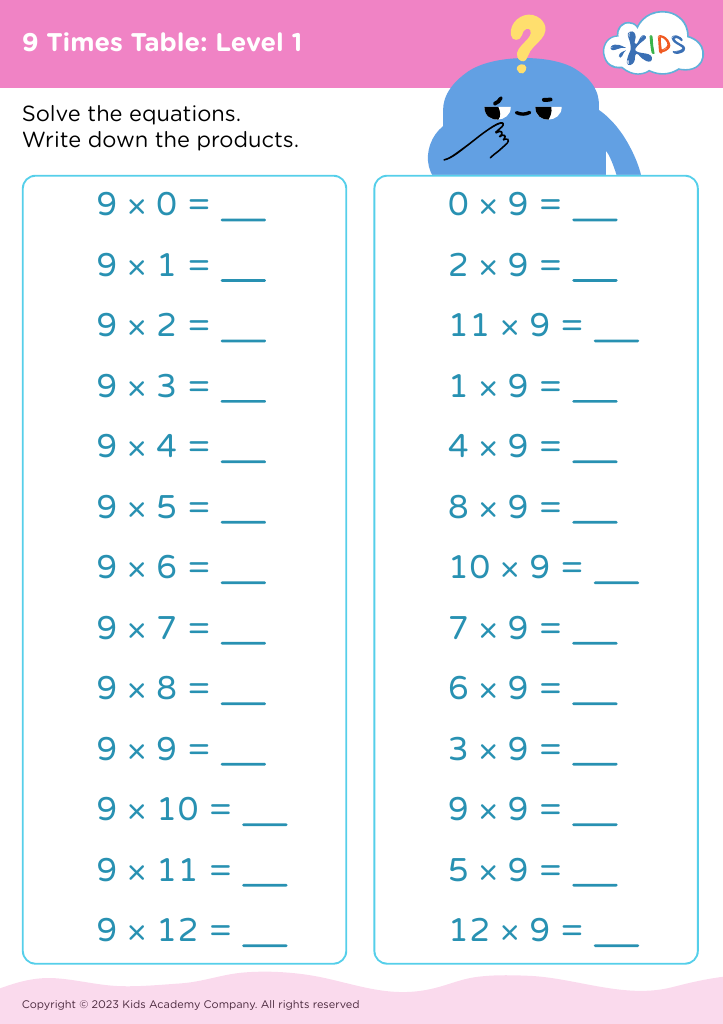





Finding the right foundation in mathematics is crucial for children aged 3-9, and mastering Times Tables is a key aspect of that foundation. Understanding multiplication and being able to recall times tables efficiently can significantly boost a child's confidence and competence in math, laying the groundwork for more complex concepts later on.
For parents and teachers, promoting Times Tables is important because it fosters problem-solving skills and critical thinking. As children repeatedly practice and memorize these facts, they're not just learning numbers but also developing a number sense that will benefit them in everyday situations. Moreover, knowing their times tables can improve fluency in other areas of math—like division, fractions, and even word problems—enabling children to tackle challenges with greater ease.
Additionally, Times Tables are often a part of school assessments and curricula, so consistent practice can lead to improved performance in class. Engaging parents and educators in this learning process can create a supportive environment for children, making learning fun and collaborative. Ultimately, prioritizing Times Tables helps create lifelong learners with a solid mathematical foundation, empowering them to succeed in more advanced mathematical studies in the future.








