Sight Words Worksheets for Ages 3-9 - Page 10
234 filtered results
-
From - To
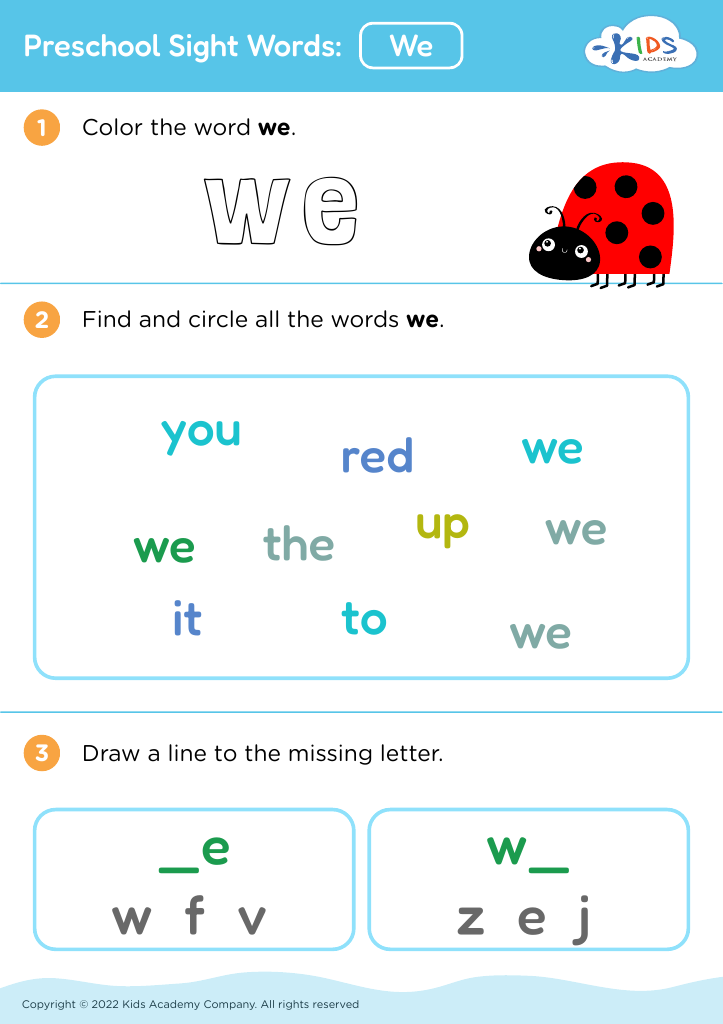



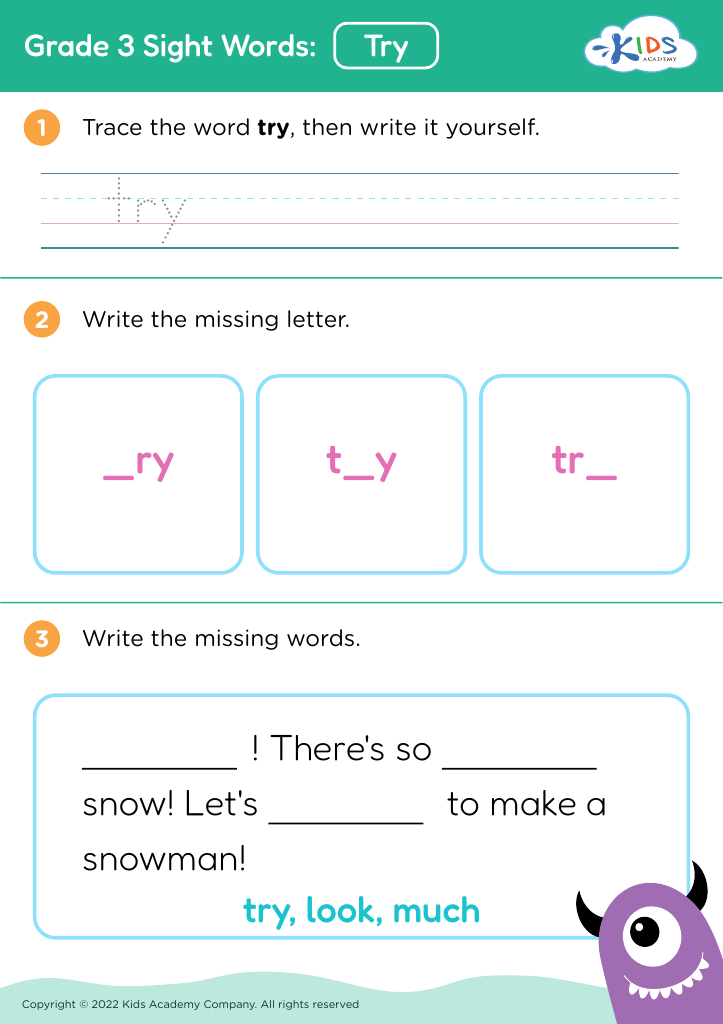
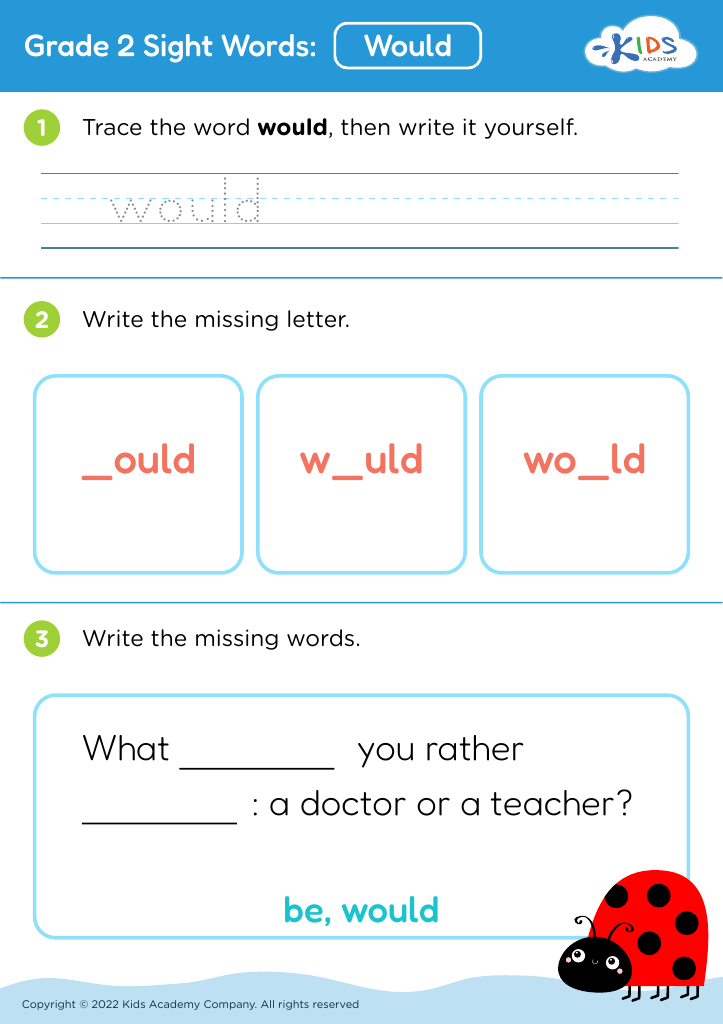
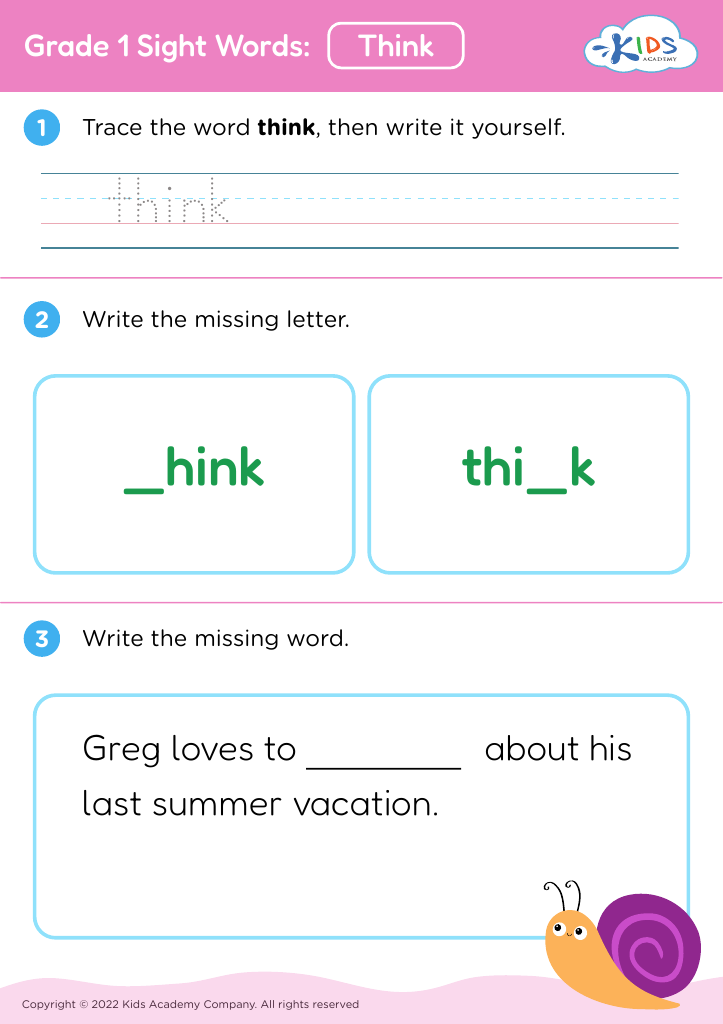
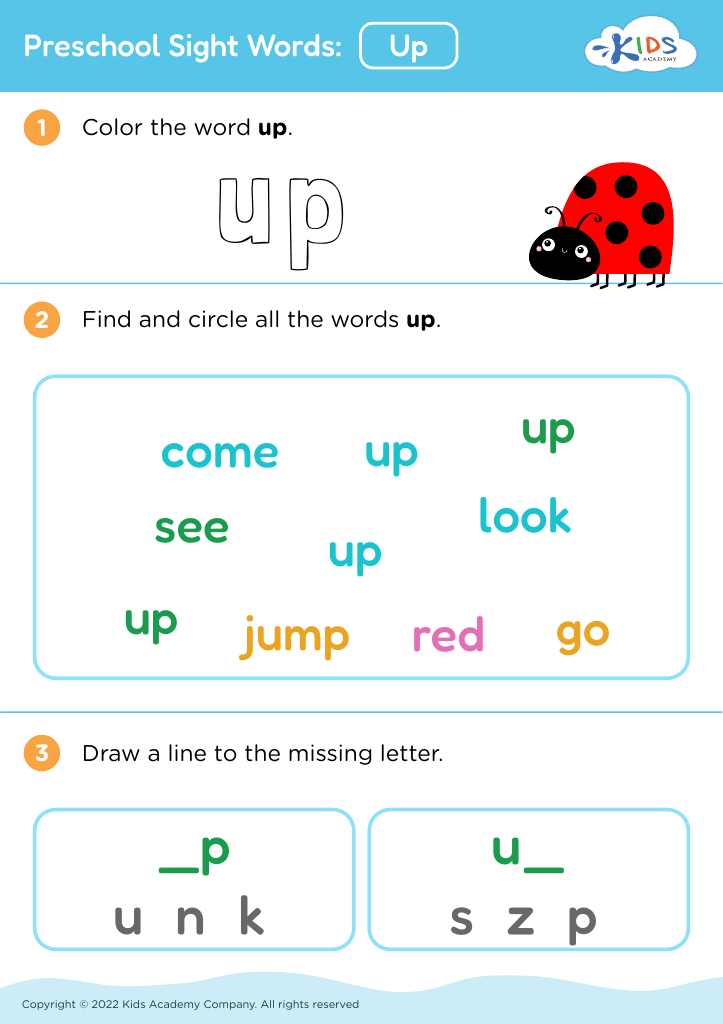
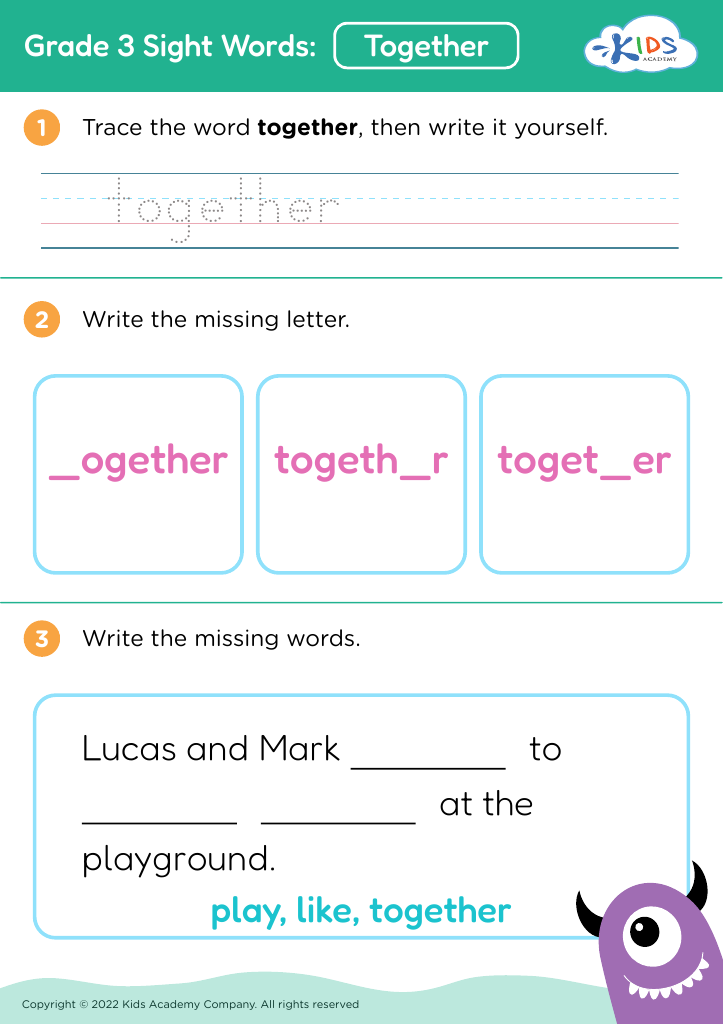
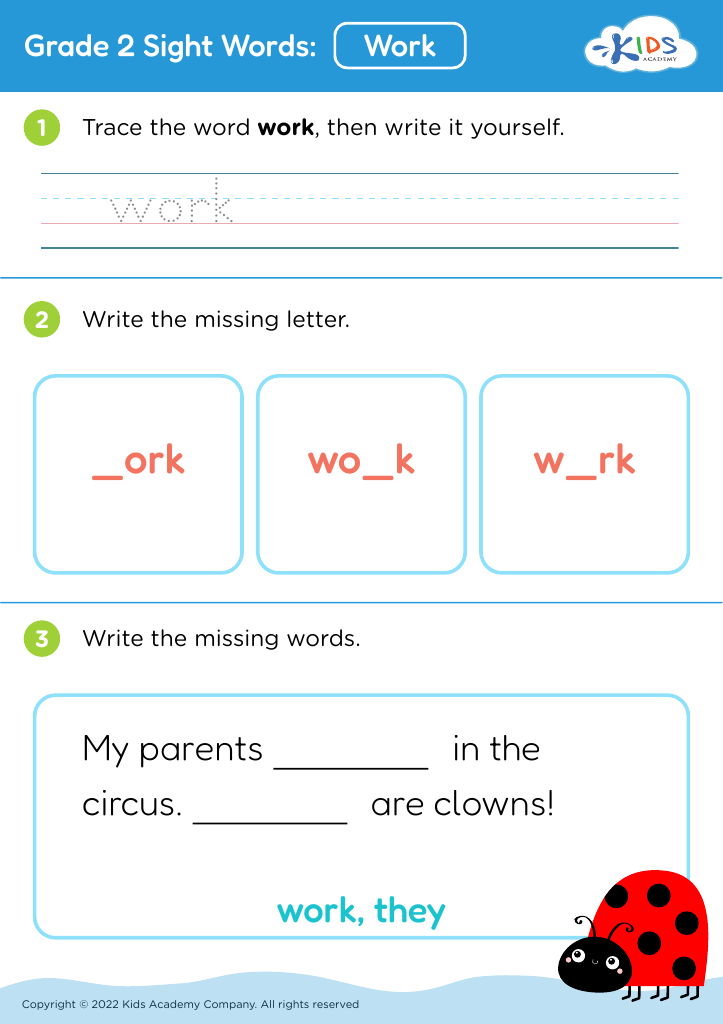
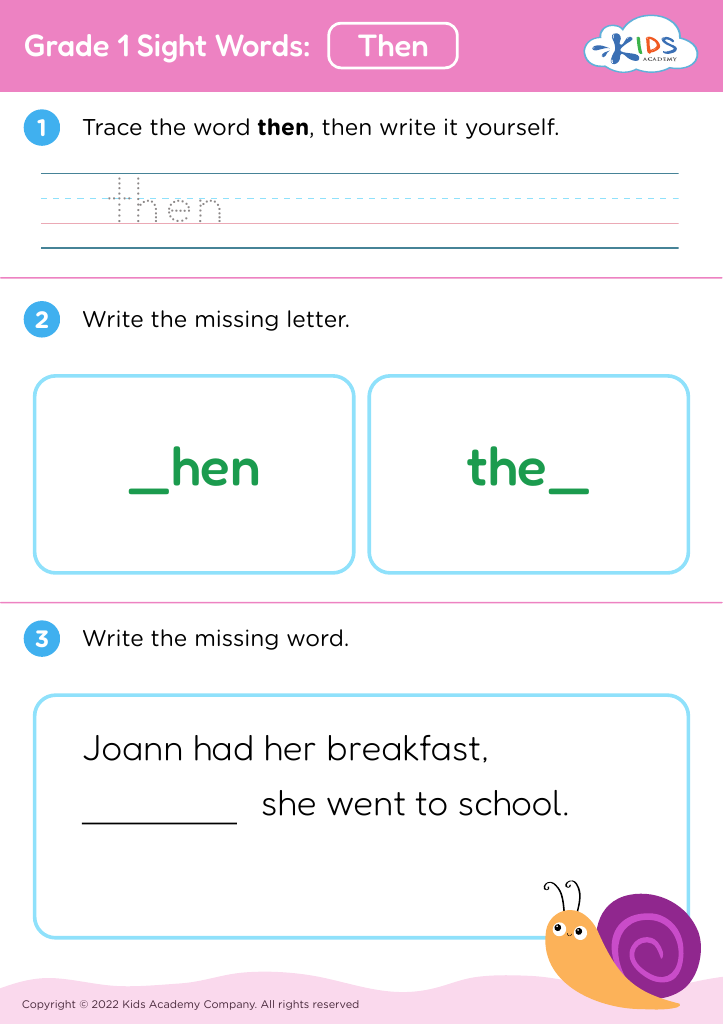
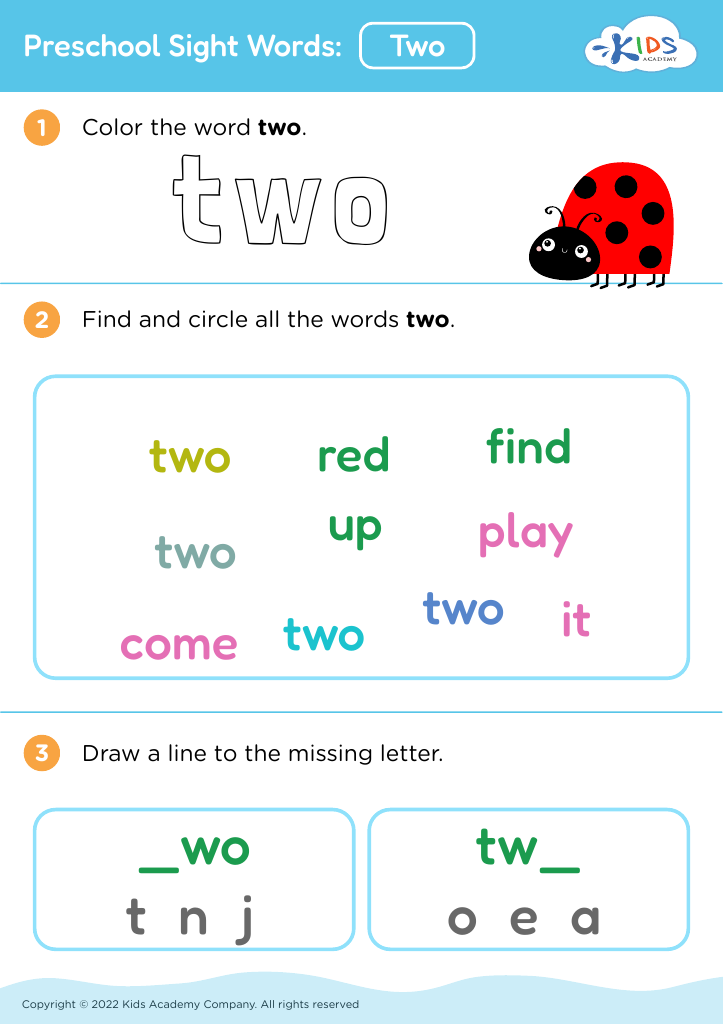
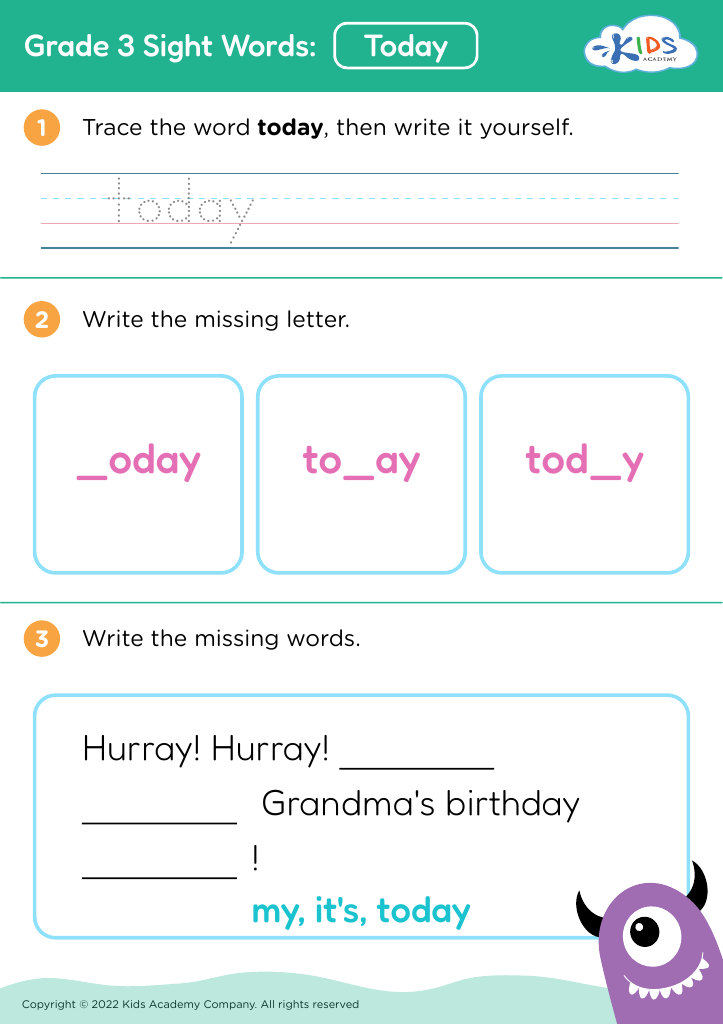
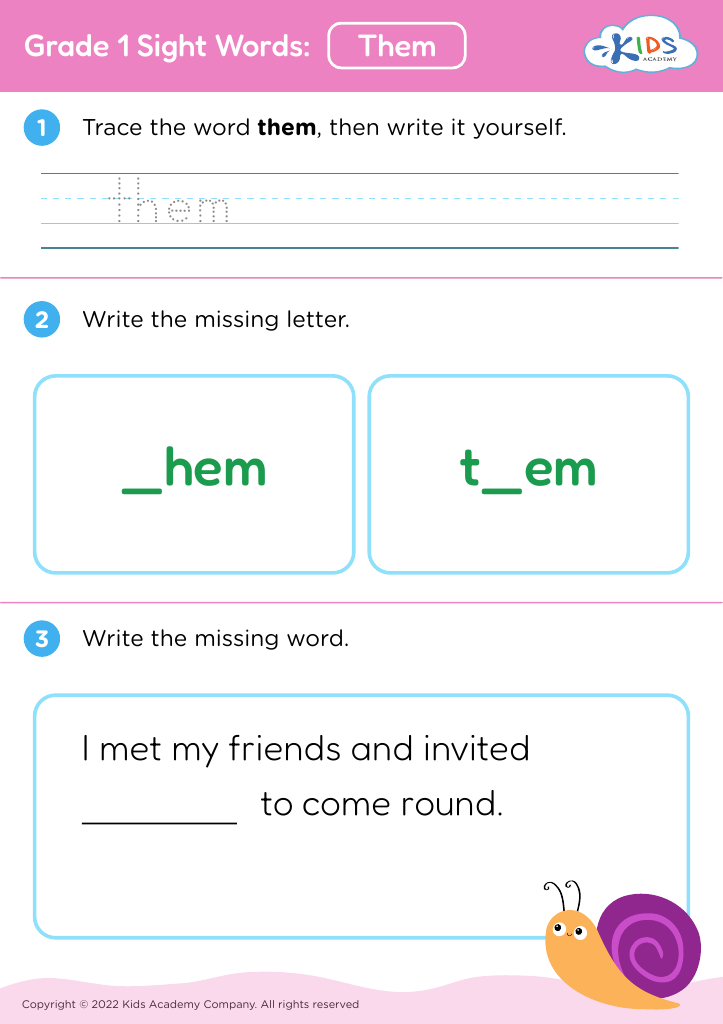
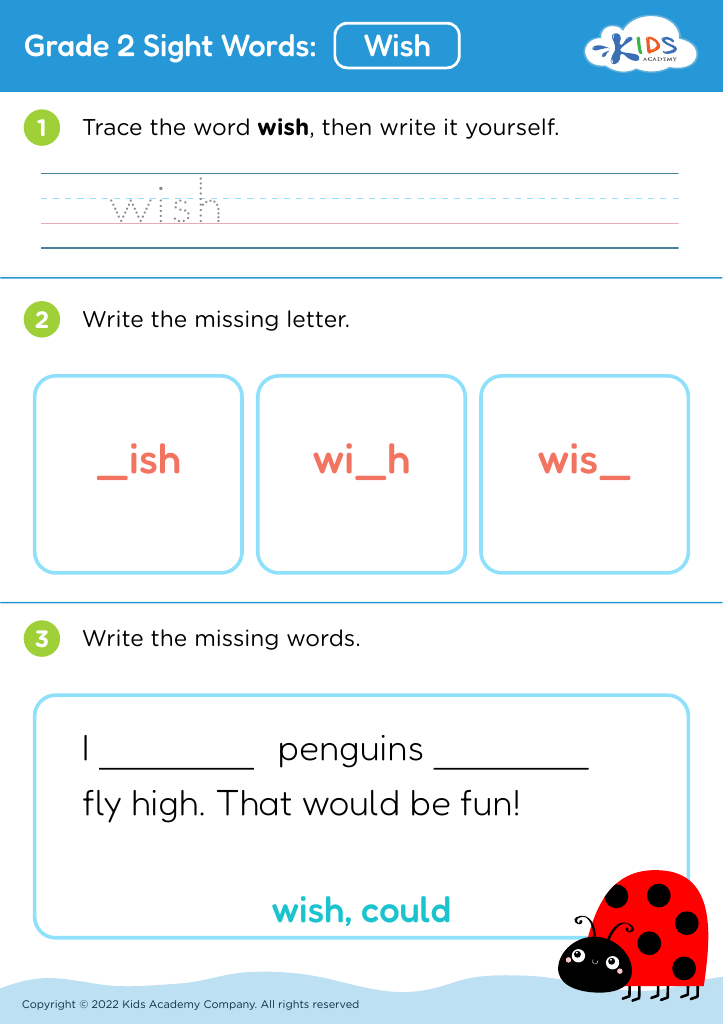
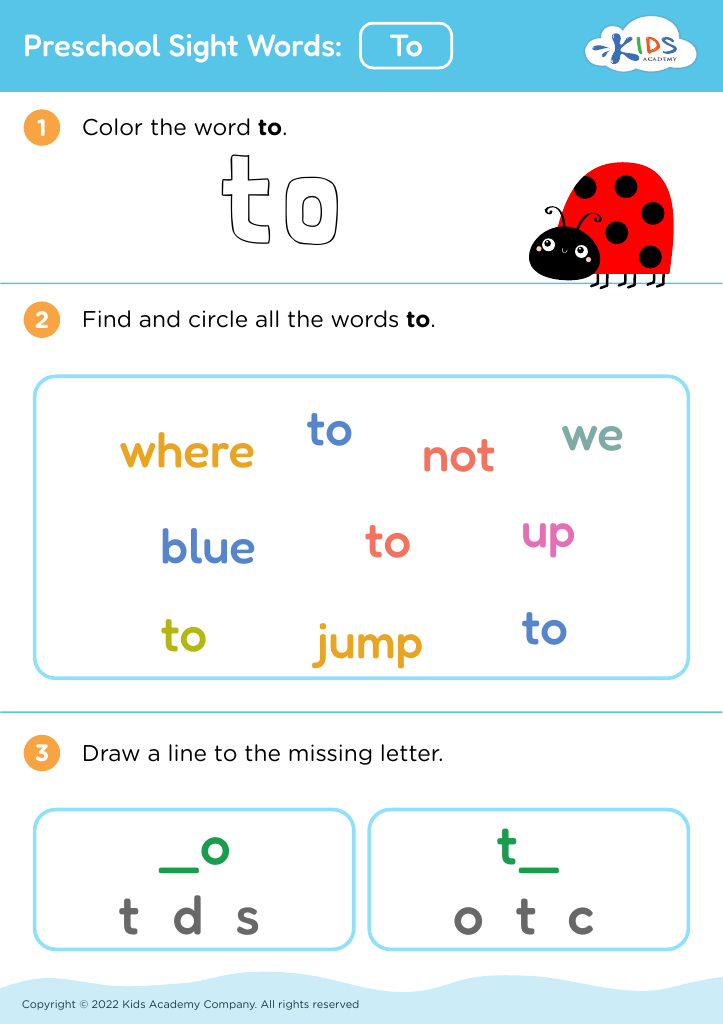
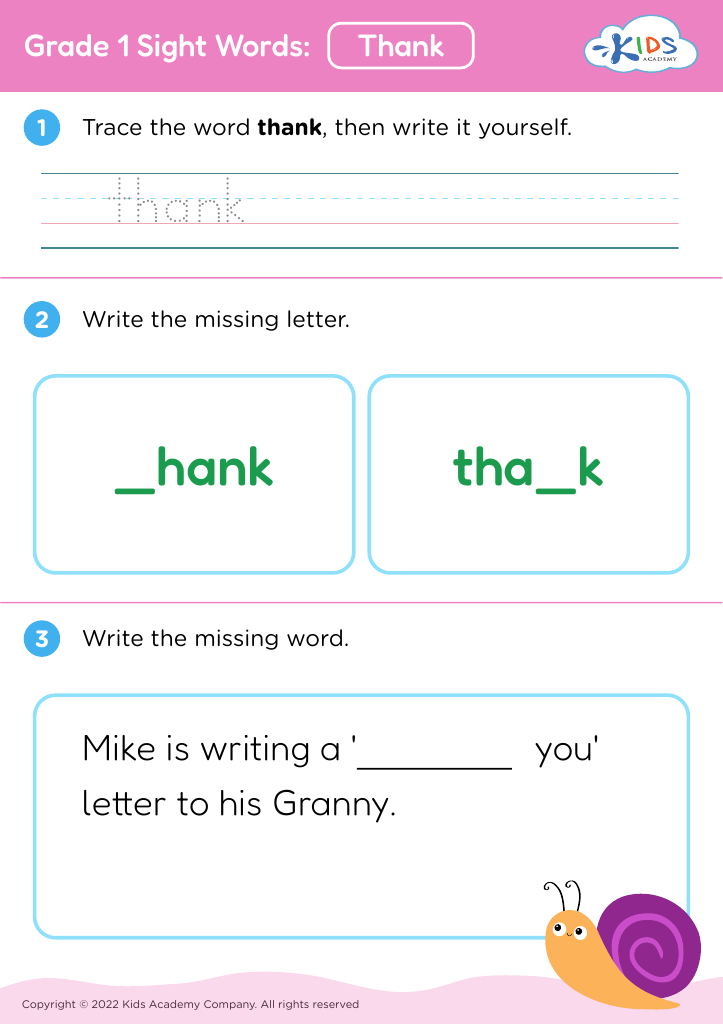
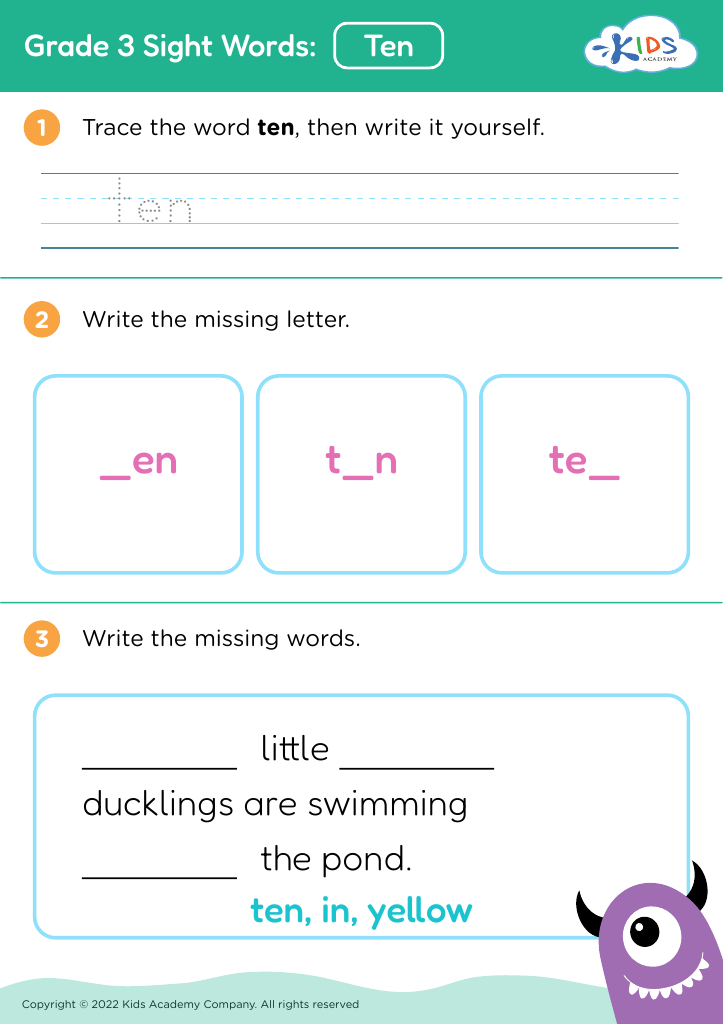
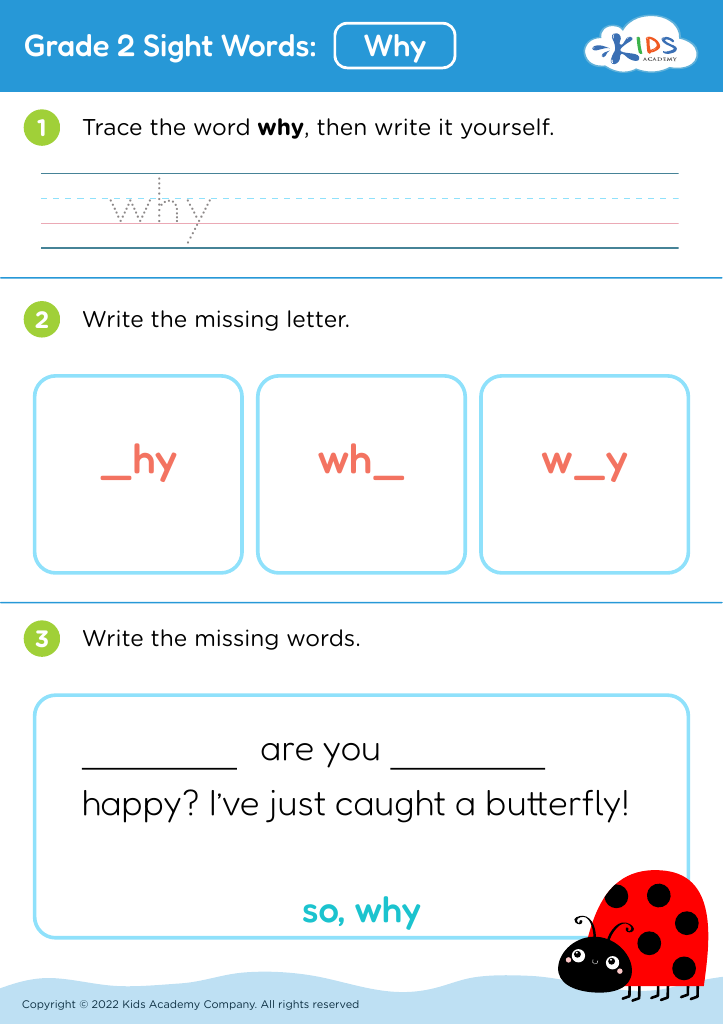
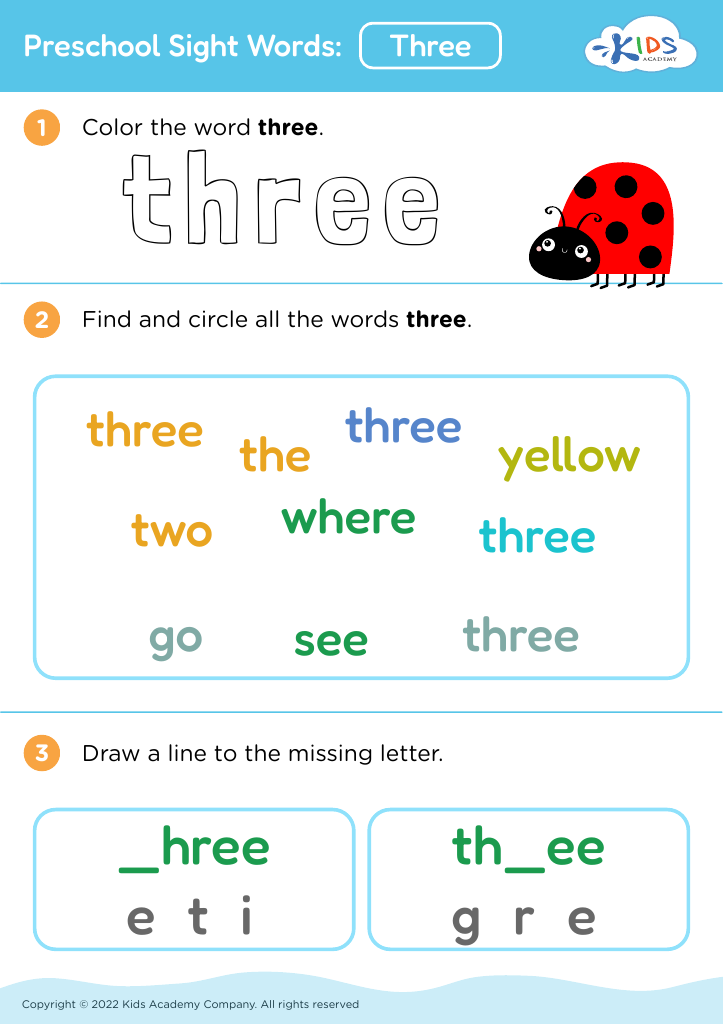
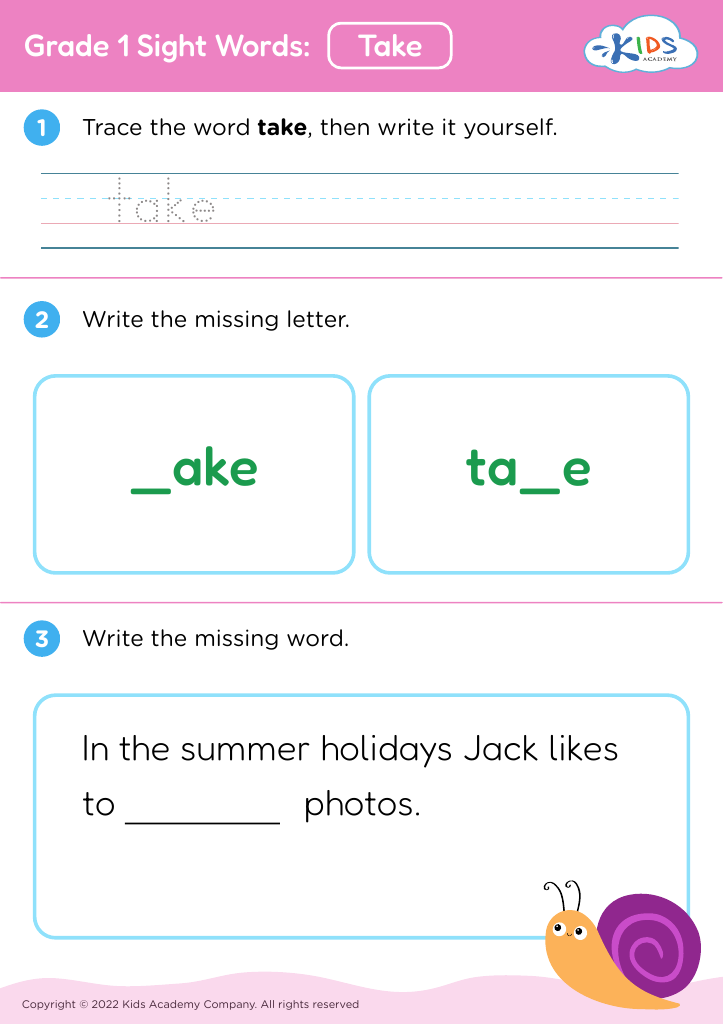








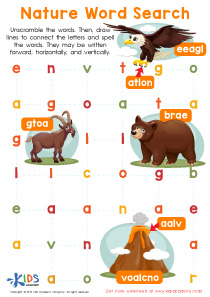
Sight words are critical for early literacy development in children aged 3 to 9. These words, frequently encountered in reading materials, often do not follow standard phonetic rules, so they cannot always be sounded out. Teaching children to recognize these words instantly helps them become more fluent readers. When children can read sight words automatically, they spend less time decoding and more time comprehending, which improves their overall reading experiences.
Parents and teachers should pay close attention to sight words because they serve as building blocks for young readers. Familiarity with these words strengthens a child’s confidence and encourages a love for reading. Additionally, mastering sight words aids in developing vocabulary and enhances writing skills, allowing children to express themselves more effectively.
Moreover, a solid foundation in sight words can significantly reduce frustration and anxiety associated with reading struggles, fostering a positive attitude towards learning. By integrating fun activities and consistent practice with sight words into learning routines, caregivers can support children in becoming proficient, enthusiastic readers. Investing time in teaching sight words not only equips children with essential literacy skills but also sets the stage for lifelong learning and success in academics.