Observational skills development Science Worksheets for Ages 3-9
3 filtered results
-
From - To
Enhance your child's observational skills with our engaging Science Worksheets, designed for ages 3-9! These printable resources offer fun activities that encourage young learners to explore, analyze, and document their surroundings. With vibrant images and interactive exercises, children will develop critical thinking abilities while discovering the world around them. From nature observations to simple experiments, our worksheets foster a hands-on learning approach, making science accessible and enjoyable. Perfect for both classroom settings and home education, our materials help cultivate curiosity and a love for learning. Empower your child to become a keen observer with our thoughtfully crafted science worksheets today!
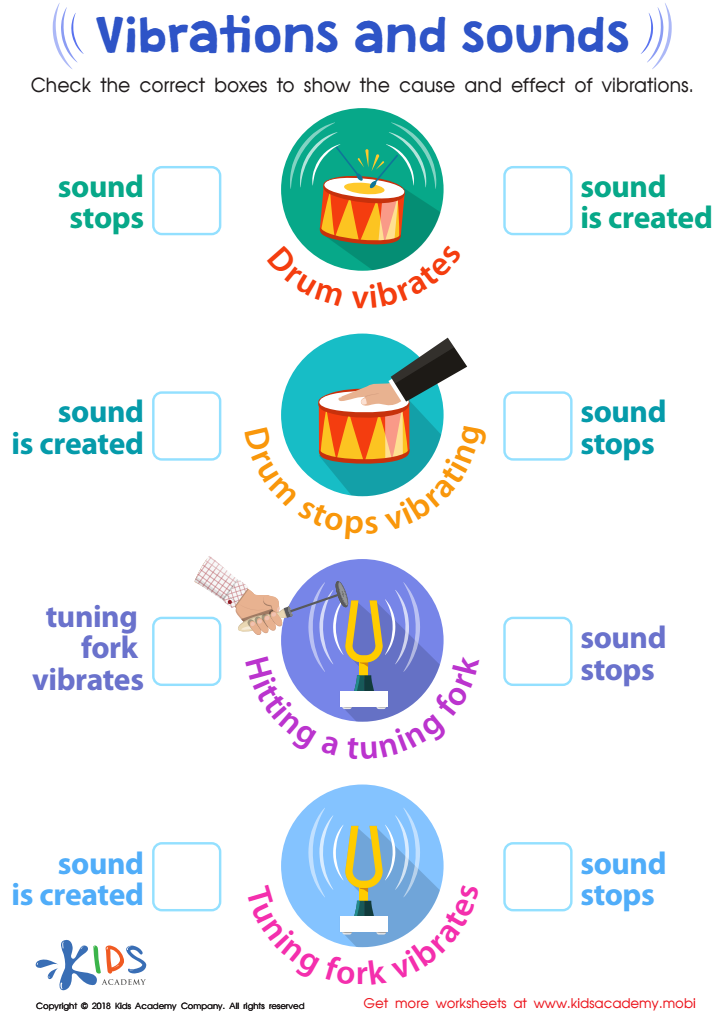
Vibrations and Sounds Worksheet
 Assign to My Students
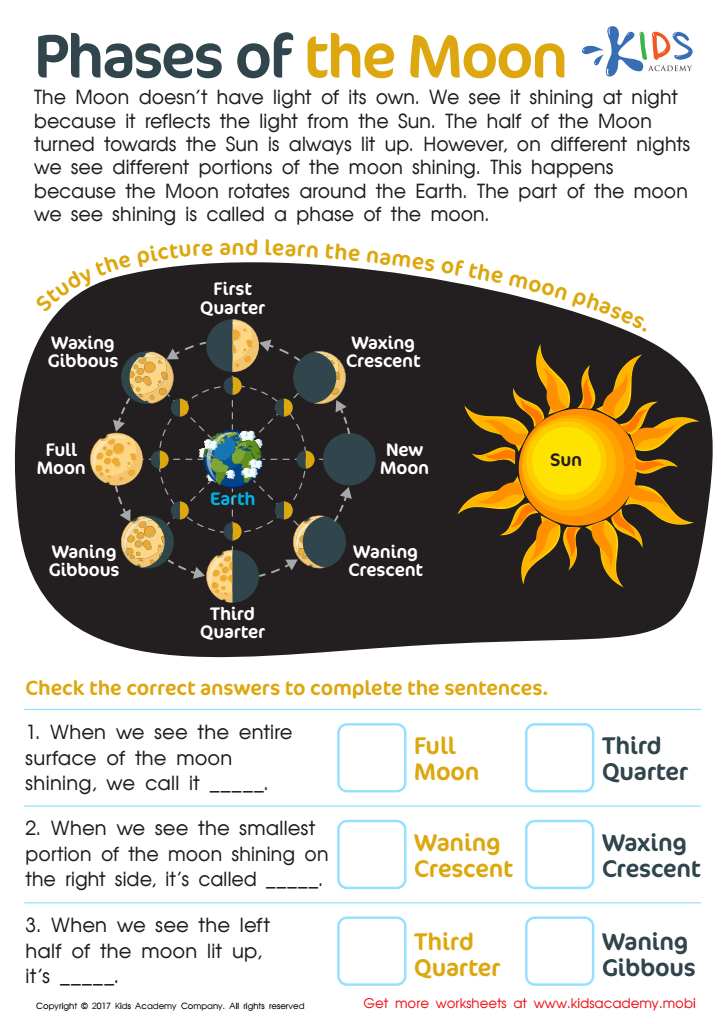
Phases of The Moon Worksheet
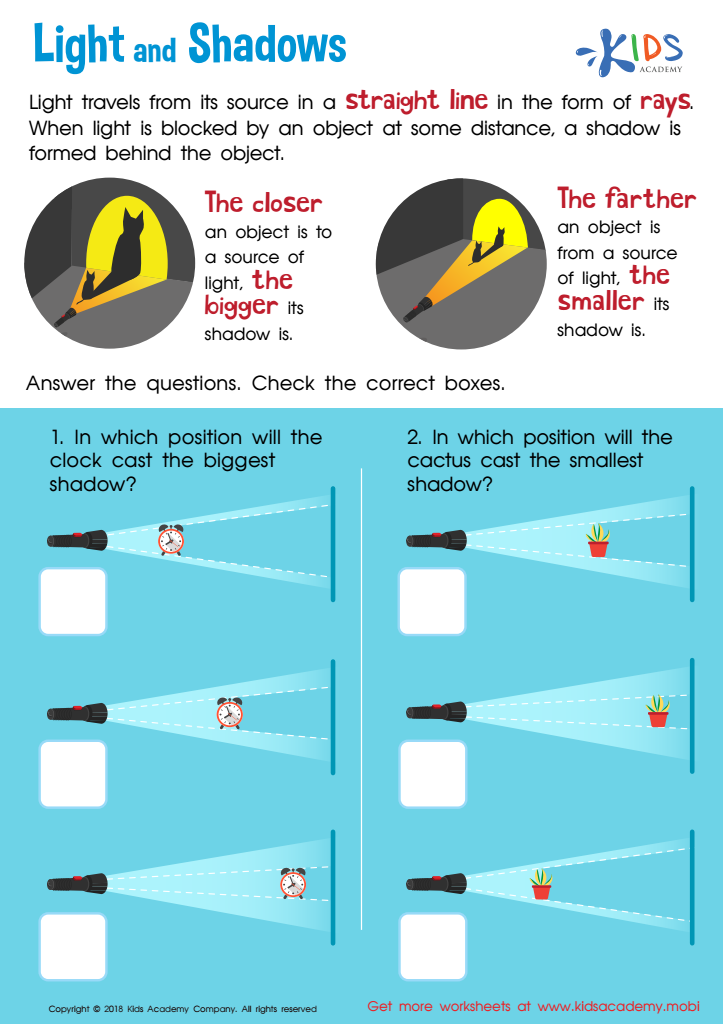
Light and Shadow Worksheet for Grade 3








Observational skills are crucial for young learners aged 3-9 as they form the foundation for scientific thinking, critical analysis, and everyday problem-solving. In this developmental stage, children naturally explore their environments, and encouraging their observational skills enhances their ability to notice details, ask questions, and make connections.
By fostering observational skills in science, parents and teachers can help children engage with their surroundings, stimulating curiosity and a love for learning. Observational activities, such as nature walks, simple experiments, or classroom activities, empower children to actively participate in their education. They learn to identify patterns, compare and contrast, and draw conclusions based on their findings, which reinforces their understanding of scientific concepts.
Moreover, strong observational skills support language development as children articulate their thoughts and reflections on what they observe. This practice builds vocabulary and communication skills essential for academic success. Lastly, in a world filled with information, teaching effective observation fosters critical thinking, preparing children to navigate complexities with discernment. Investing time in nurturing these skills ensures that young learners develop a solid foundation for future educational experiences, fostering their growth as inquisitive, thoughtful individuals.







