Reading readiness Worksheets for 3-Year-Olds
5 filtered results
-
From - To
Unlock the world of words for your little learners with our carefully crafted Reading Readiness Worksheets designed for 3-year-olds. At Kids Academy, our printable worksheets are specifically tailored to nurture early literacy skills through engaging and interactive activities. Each worksheet focuses on key foundational skills such as letter recognition, phonemic awareness, and vocabulary building. With colorful illustrations and fun exercises, these resources make learning enjoyable and effective. Perfect for home or classroom use, our worksheets offer a delightful path to reading success, ensuring your child's bright beginning in literacy. Explore them today and watch your child's reading confidence grow!
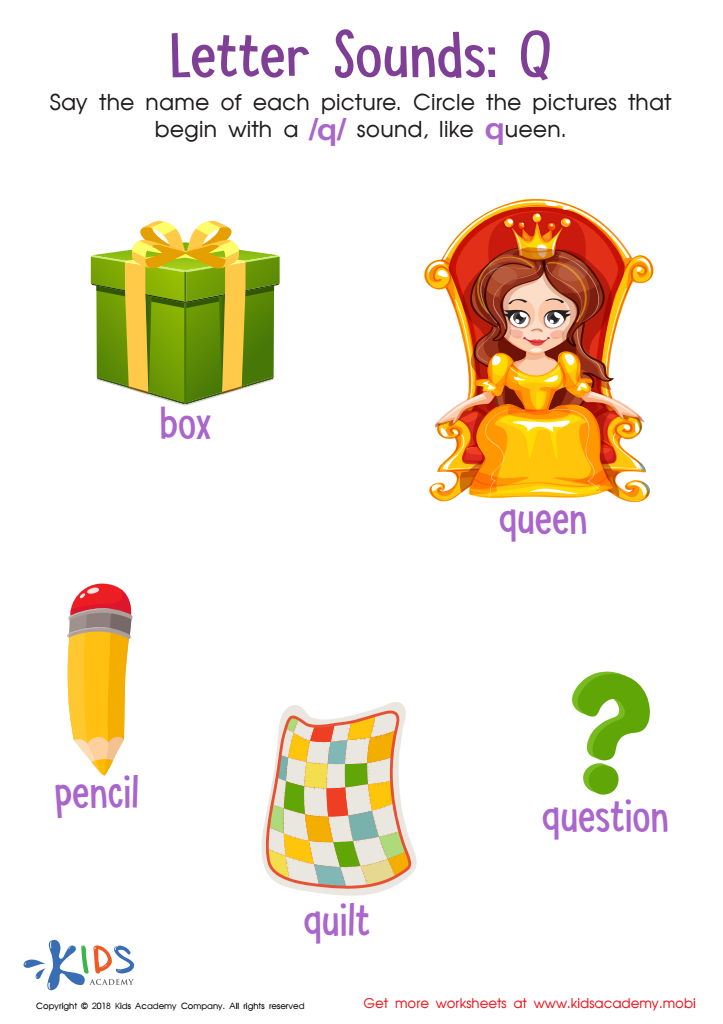
Letter Q Sounds Worksheet
 Assign to My Students
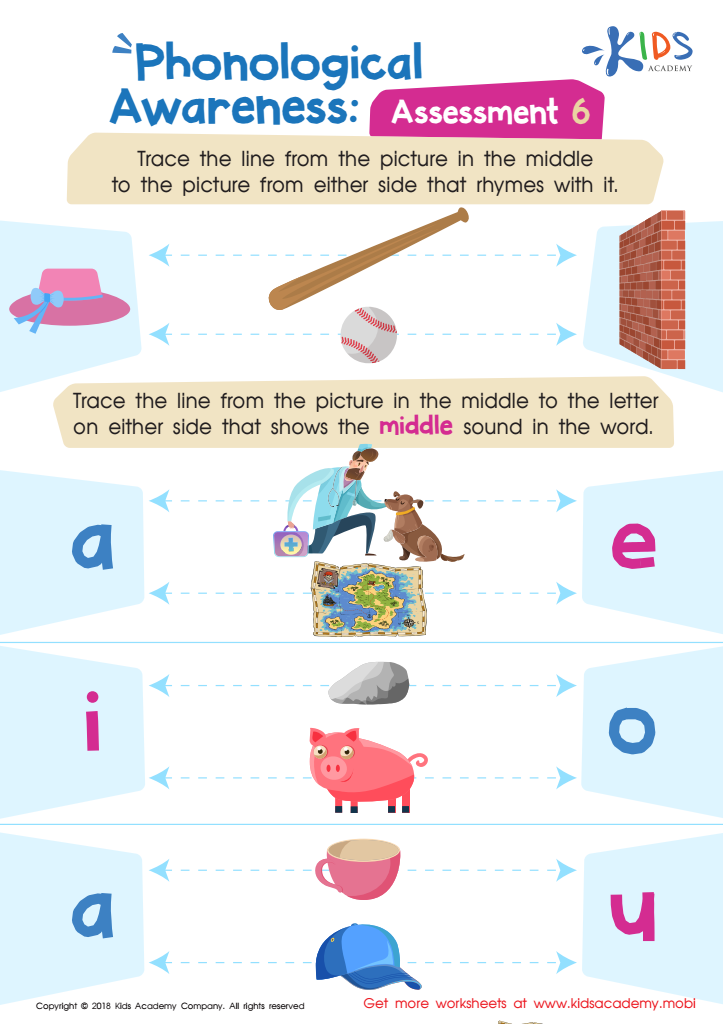
Phonological Awareness: Assessment 6 Worksheet
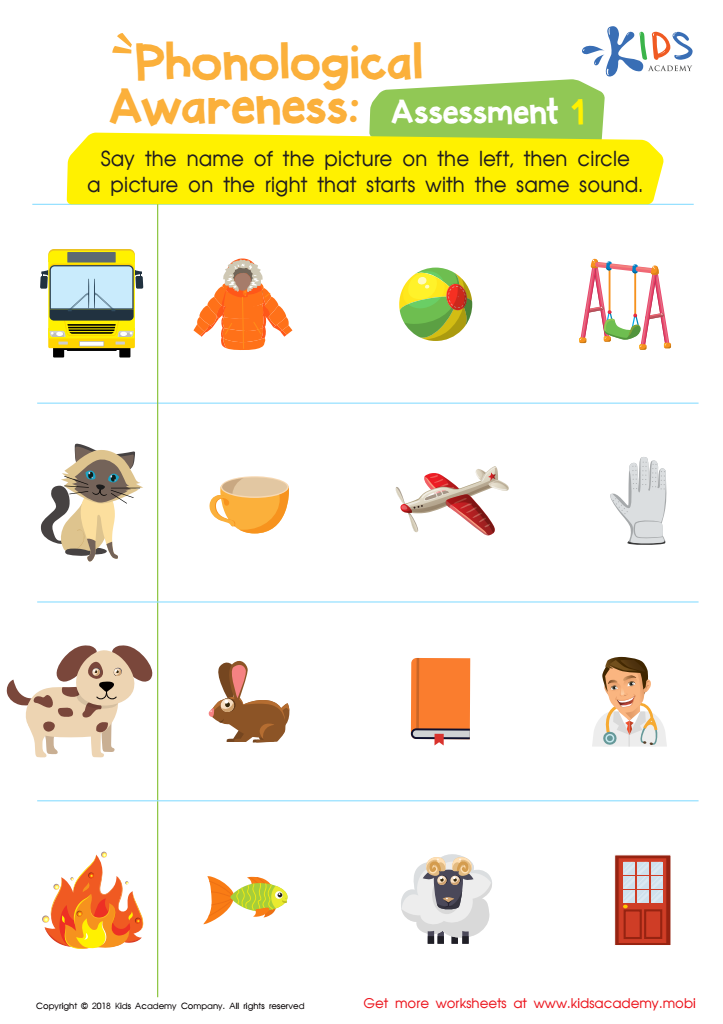
Phonological Awareness: Assessment 1 Worksheet
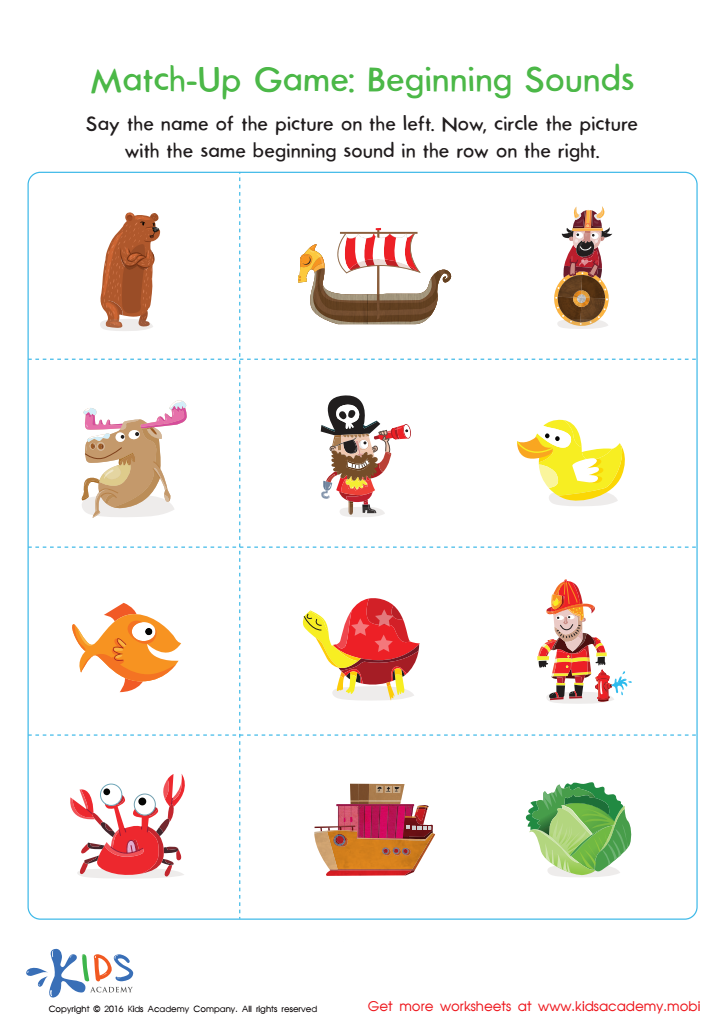
Match–Up Game: Beginning Sounds Worksheet
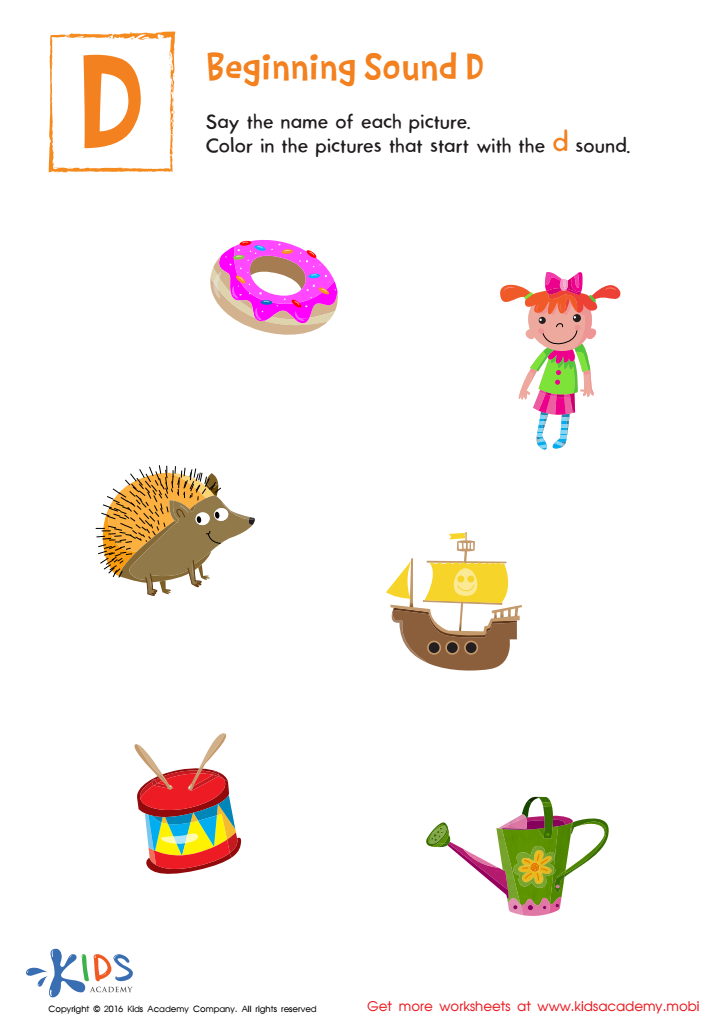
Beginning Sound D Worksheet







Reading readiness for 3-year-olds is crucial as it sets the foundation for future literacy and academic success. At this early stage, children's brains are rapidly developing, making it a prime time to spark a love for reading and learning. Here’s why parents and teachers should focus on reading readiness:
Firstly, it builds essential pre-literacy skills. Activities like storytelling, picture book reading, and alphabet games help children recognize letters, understand phonetic sounds, and enhance their vocabulary. This early familiarity with language structures paves the way for smoother reading and writing skills later.
Secondly, early reading readiness fosters cognitive development. Engaging in reading activities stimulates brain areas responsible for comprehension and critical thinking. It enhances memory, attention span, and problem-solving abilities.
Moreover, social and emotional benefits are significant. Reading sessions foster parent-child and teacher-student bonding, promoting a secure attachment. Sharing stories also teaches empathy, as children begin to understand different perspectives and emotions.
Finally, cultivating an early interest in reading encourages lifelong learning habits. Kids who associate reading with positive, fun experiences are more likely to become passionate, confident learners, setting them up for success in school and beyond.
In essence, fostering reading readiness beneath the age of three unlocks a world of limitless learning potential, ensuring children embark on their educational journey with confidence and joy.








