
Word Recognition Worksheets for 3-Year-Olds
18 filtered results
Difficulty Level
Grade
Age
-
From - To
Subject
Activity
Standards
Our Word Recognition Worksheets for 3-Year-Olds are designed to establish a strong foundation in early reading skills through engaging and interactive activities. Each worksheet focuses on familiarizing young learners with essential sight words, enhancing their reading fluency and boosting their confidence. Featuring vibrant illustrations and fun exercises, these worksheets make learning enjoyable and effective. Ideal for both classroom and homeschool settings, our resources cater to the unique needs of preschool children, ensuring they develop crucial word recognition abilities. Give your child a head start on their literacy journey with our thoughtfully crafted worksheets.
Favorites
With answer key
Interactive
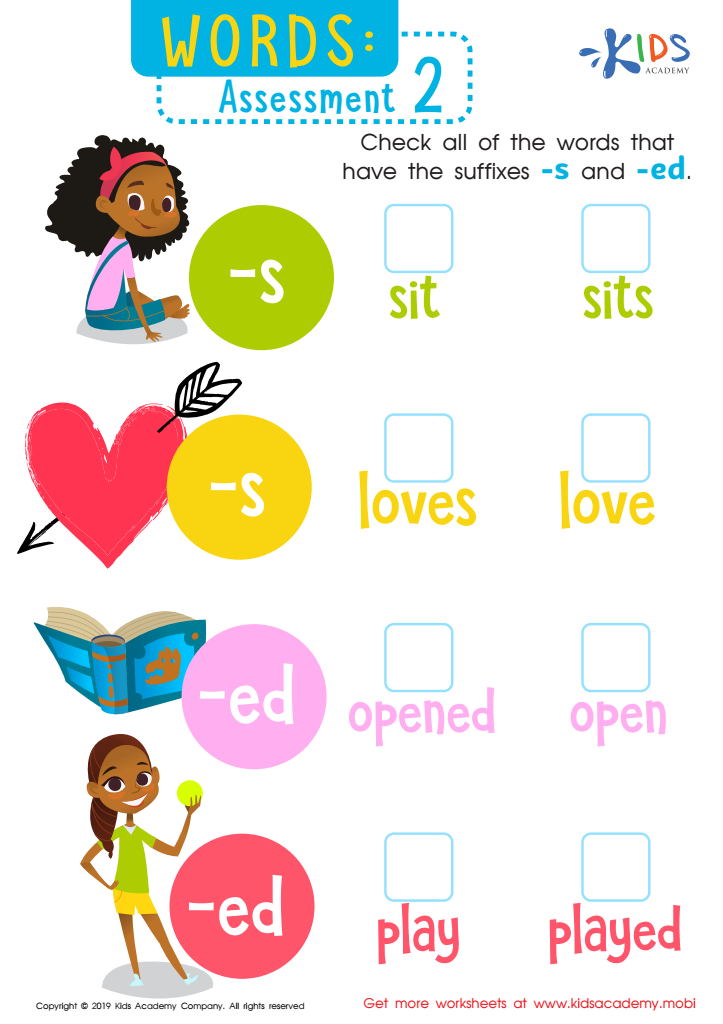
Words: Assessment 2 Worksheet
Test your child’s knowledge of -s and -ed word endings with this fun worksheet! They'll look at images and read the words, then choose the correct suffix to finish each one. Vivid illustrations make this an enjoyable learning experience!
Words: Assessment 2 Worksheet
Worksheet
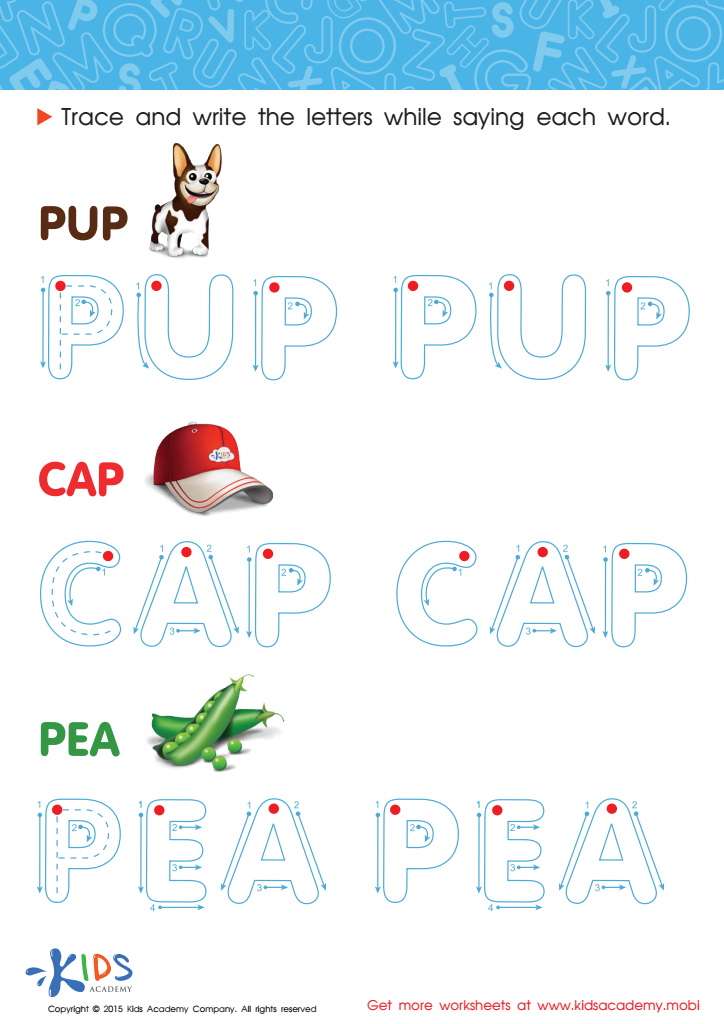
A Pup, a Cap and a Pea Spelling Worksheet
Practice tracing and writing with three new words. Carefully trace each word and try to remember it, then move on to the next one. Head to Kids Academy for more tracing worksheets!
Get your pencils ready! Let's practice tracing and writing three new words on Kids Academy's spelling worksheets. Carefully trace each line and remember the words. Pick more great worksheets on their website to continue practicing. Have fun!
A Pup, a Cap and a Pea Spelling Worksheet
Worksheet
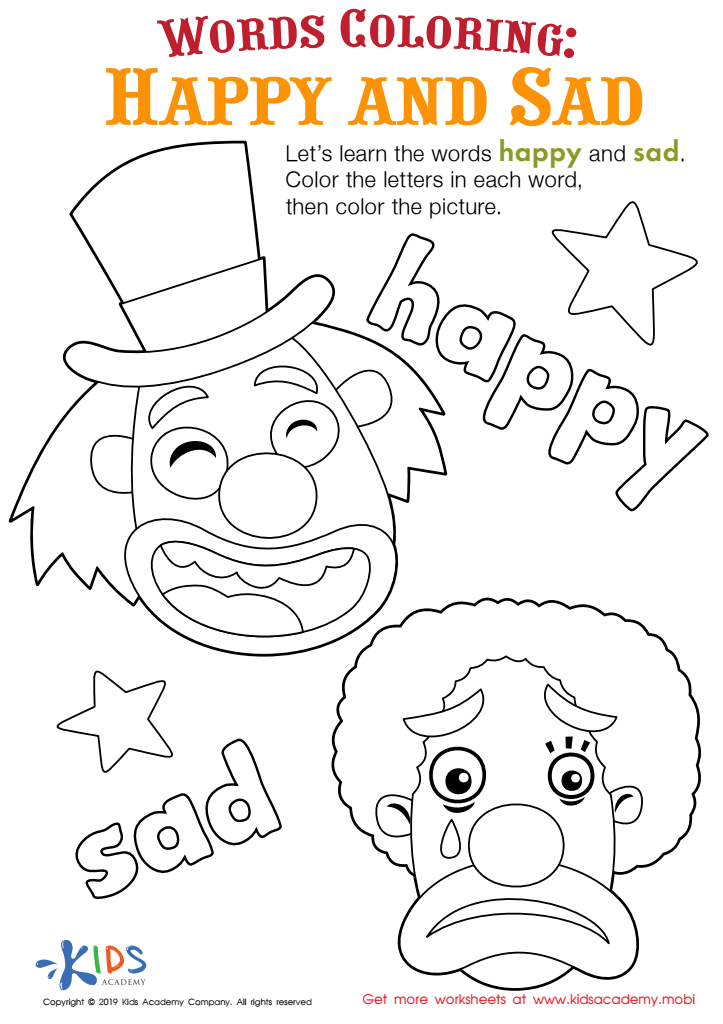
Happy and Sad Words Coloring Worksheet
Help students understand emotions by using this fun worksheet. It features smiling and sad clowns and the words 'happy' and 'sad'. Read the words with your students, then have them color the clowns and the emotion words. This PDF is an effective way to teach kids how to express how they feel.
Download (PDF)
 Assign to My Students
Assign to My Students
Happy and Sad Words Coloring Worksheet
Worksheet
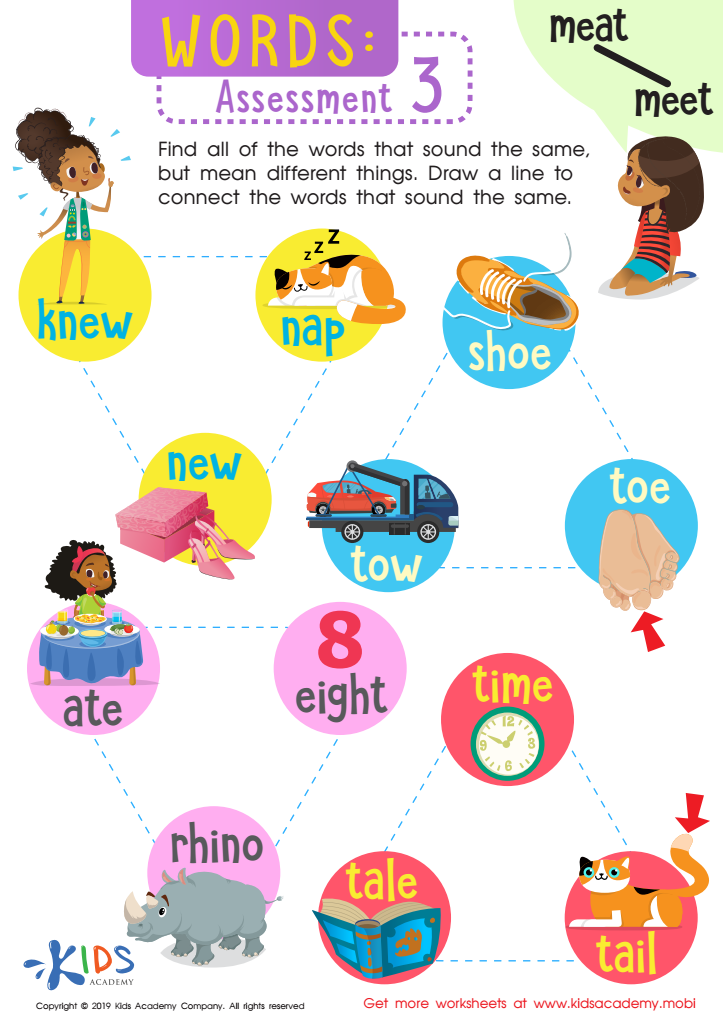
Words: Asessment 3 Worksheet
Assess your child's knowledge of homonyms with words like "toe" and "tow". This fun worksheet helps find words that sound the same but have different meanings and spellings. Use it to introduce homographs--words spelled the same with different meanings!
Words: Asessment 3 Worksheet
Worksheet
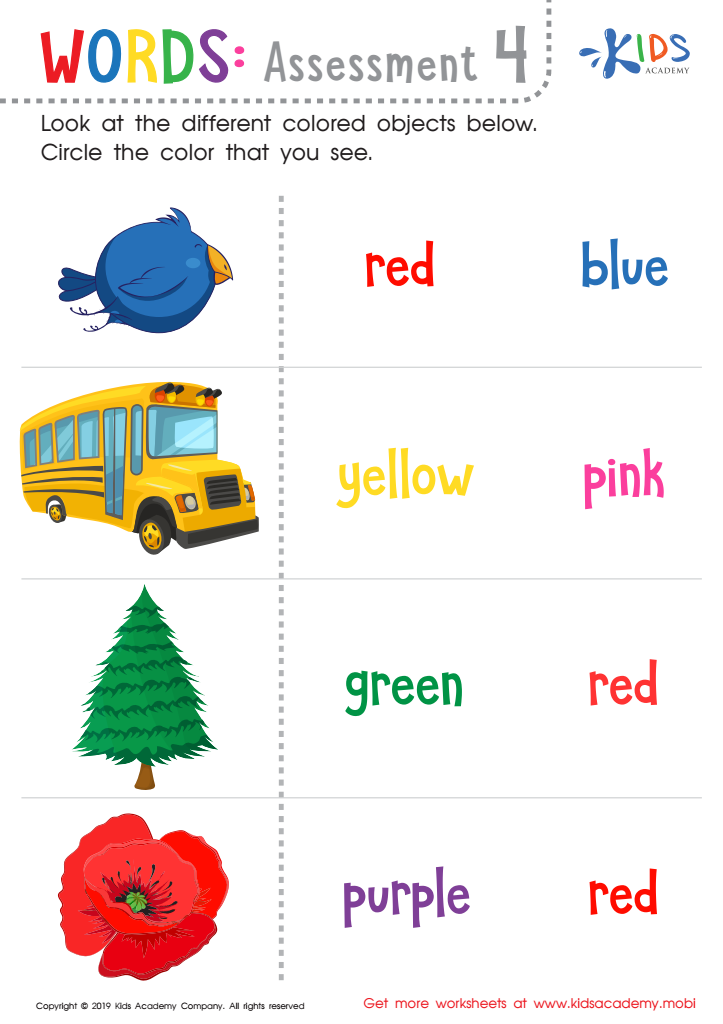
Words: Assessment 4 Worksheet
Look at the pictures and have your child circle the color they see. This free worksheet is great for assessing their knowledge of vocabulary words. It offers familiar images with words for kids to read and match with the colors. Help your child build their reading and understanding skills with this fun activity!
Words: Assessment 4 Worksheet
Worksheet
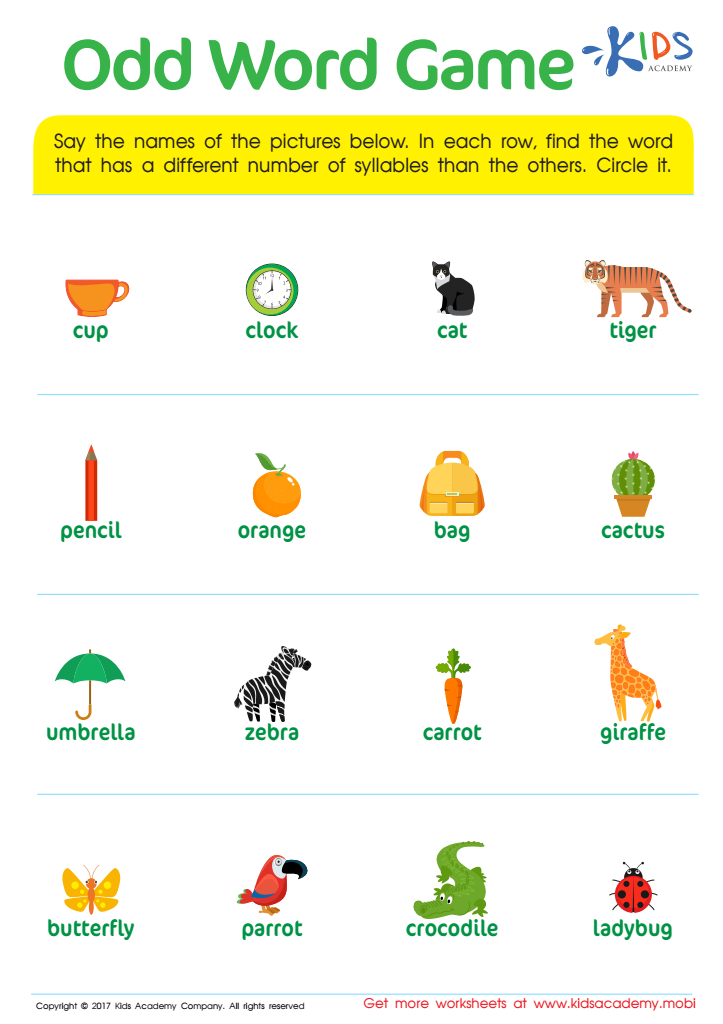
Count Syllables: Odd Word Game Worksheet
Counting syllables strengthens kids' decoding skills. This printable helps them say common item names and chunk words for fluency and accuracy. They don't even realize they're working on their reading! Bright colors make it fun, so it's a fast and easy way to practice.
Count Syllables: Odd Word Game Worksheet
Worksheet
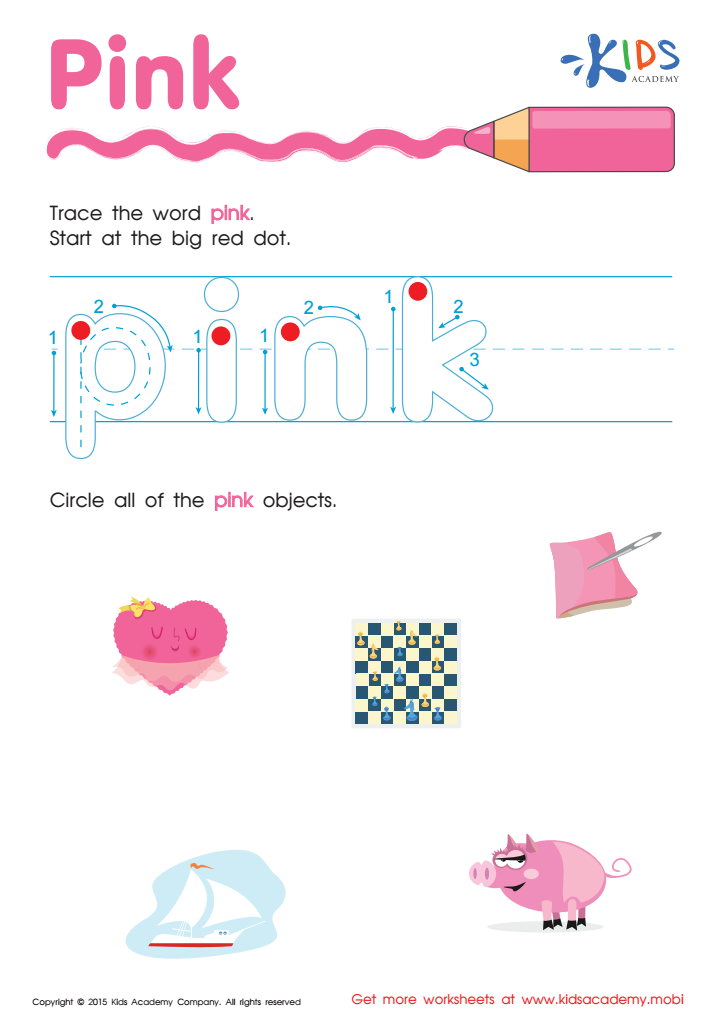
Pink Tracing Color Words Worksheet
Trace 'pink' with a pink crayon for an exciting handwriting lesson! Build fine motor skills and learn about sight words with this fun printable. Get creative and give it a splash of color for a colorful learning experience. For more tracing color words, explore here.
Pink Tracing Color Words Worksheet
Worksheet
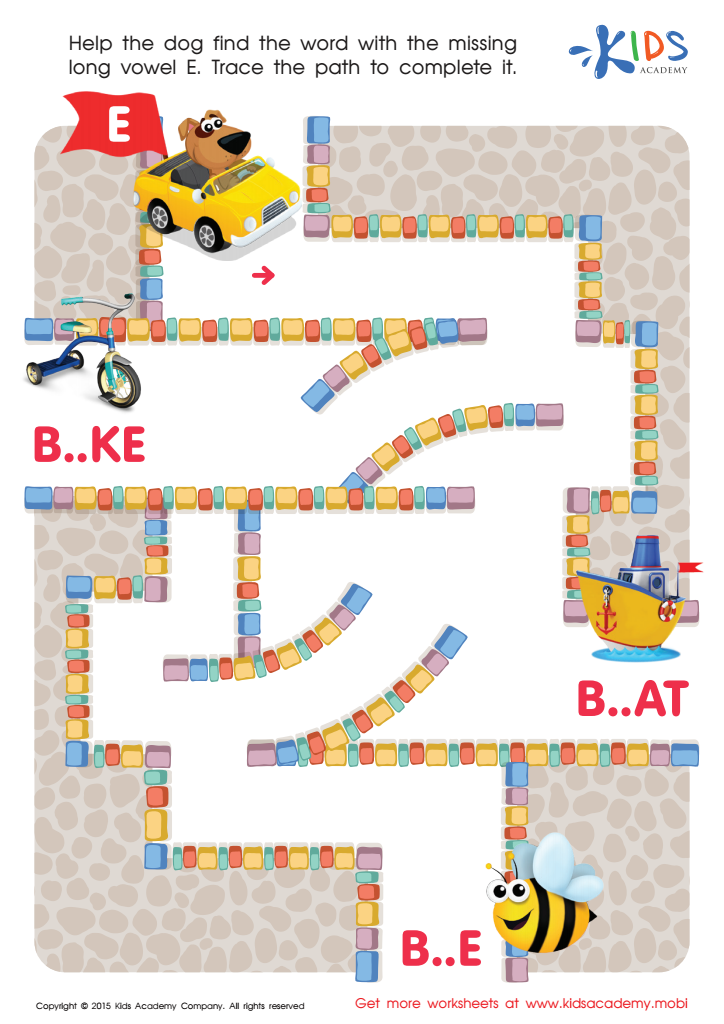
Long Vowel Sound E Worksheet
Practice distinguishing long and short vowel sound E with this free printable! Kids must complete the word “bee” by tracing the maze and adding the missing letter E. Remind them to say the word aloud to help sharpen their phonics ear. Get more phonics fun with the vowel sound E here.
Long Vowel Sound E Worksheet
Worksheet
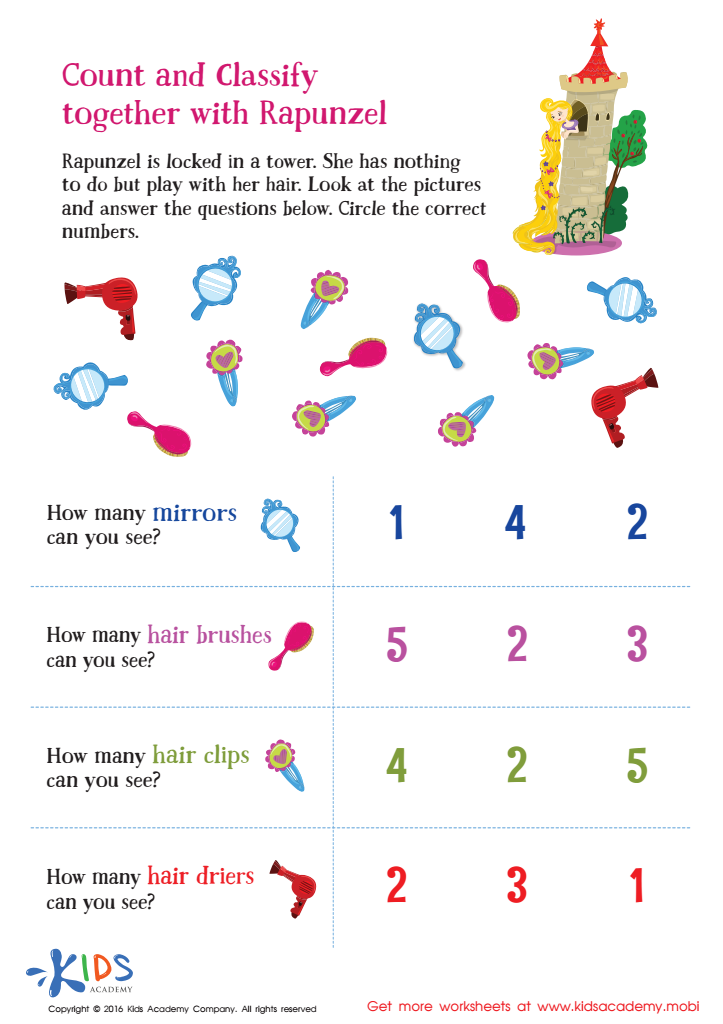
Fairy Tale Worksheet: Count and Classify with Rapunzel
Get printing and shine a light on your pre-math skills!
Fairy Tale Worksheet: Count and Classify with Rapunzel
Worksheet
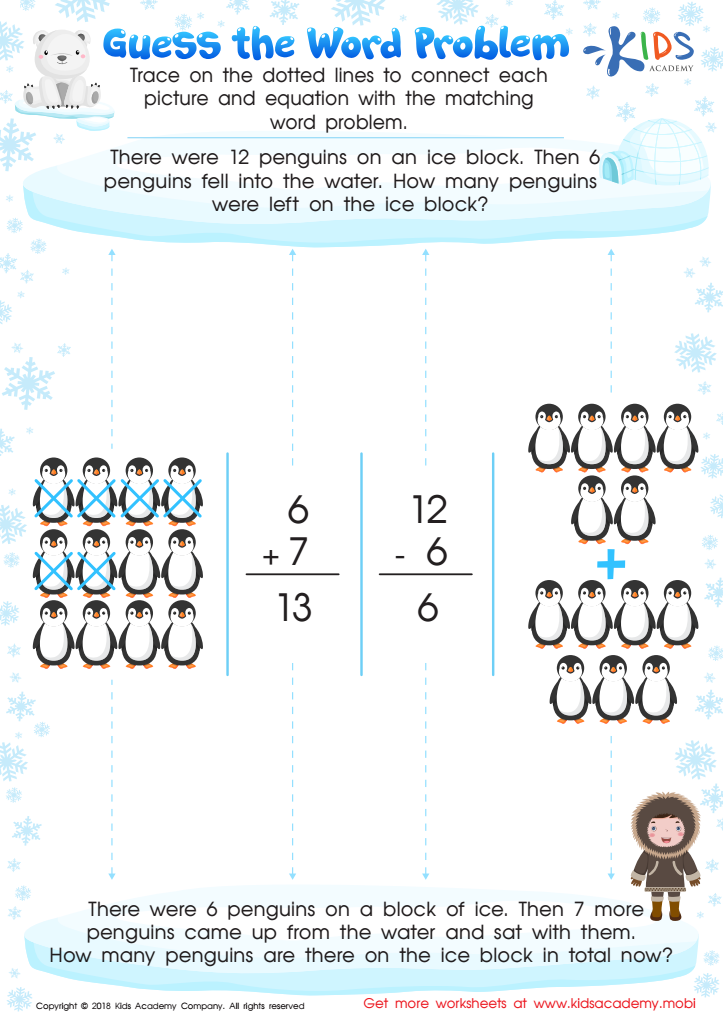
Guess the Word Problem Worksheet
Head to the Arctic Circle for math word problems with penguins, bears, and eskimos! This winter printable worksheet helps kids enjoy math with cute images. Guide kids through addition and subtraction in standard form with the penguins. Compare word problems to its written and pictorial forms for an enjoyable lesson!
Guess the Word Problem Worksheet
Worksheet
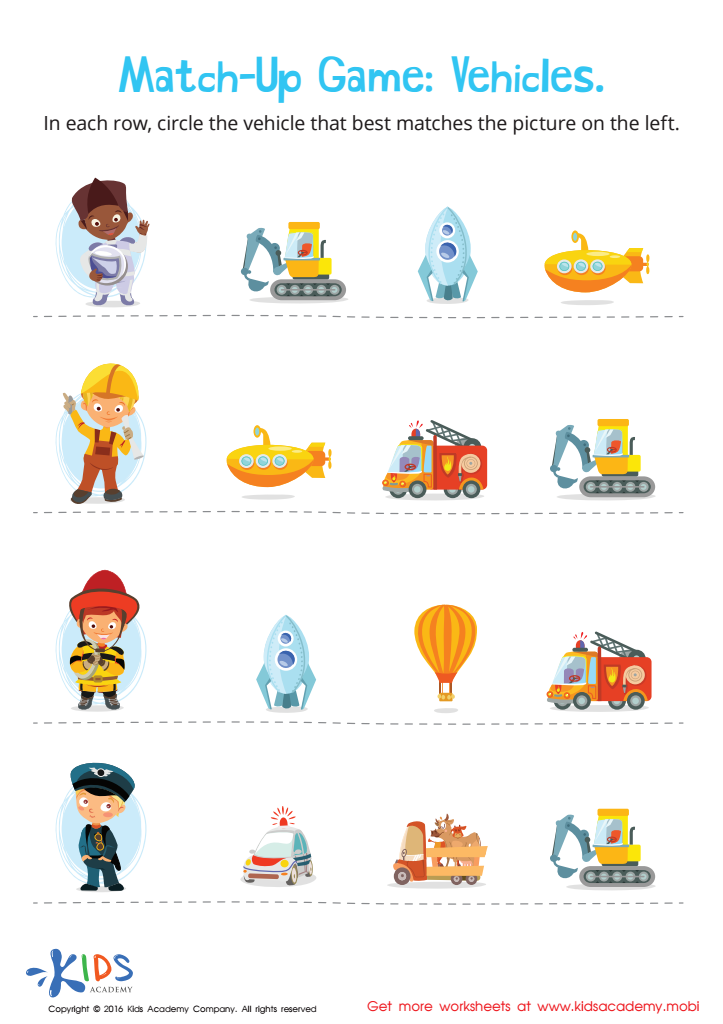
Vehicles Worksheet
Beep, beep! Your little driver will love this matching game! Matching vehicles with their drivers can help your child discover new jobs and practice problem-solving skills. It can even start a conversation about different careers. Don’t be surprised if they start playing with more cars and trucks! Use this and other sorting activities to practice with colors, shapes and patterns.
Vehicles Worksheet
Worksheet
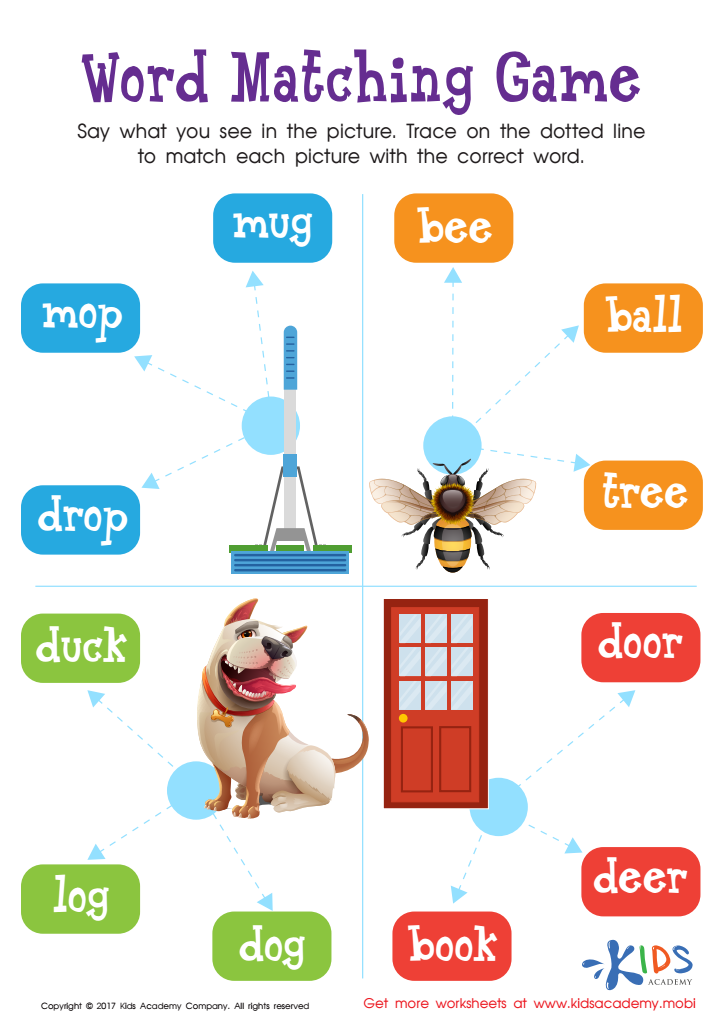
Word Matching Game Worksheet
Help your early reader develop prereading skills with this fun matching worksheet! Visual cues help them learn sight words, decode words in word families, and identify phonetic patterns. They'll practice discerning sounds past initial consonants while saying the name of the picture and finding the matching word - and reading at the same time!
Word Matching Game Worksheet
Worksheet
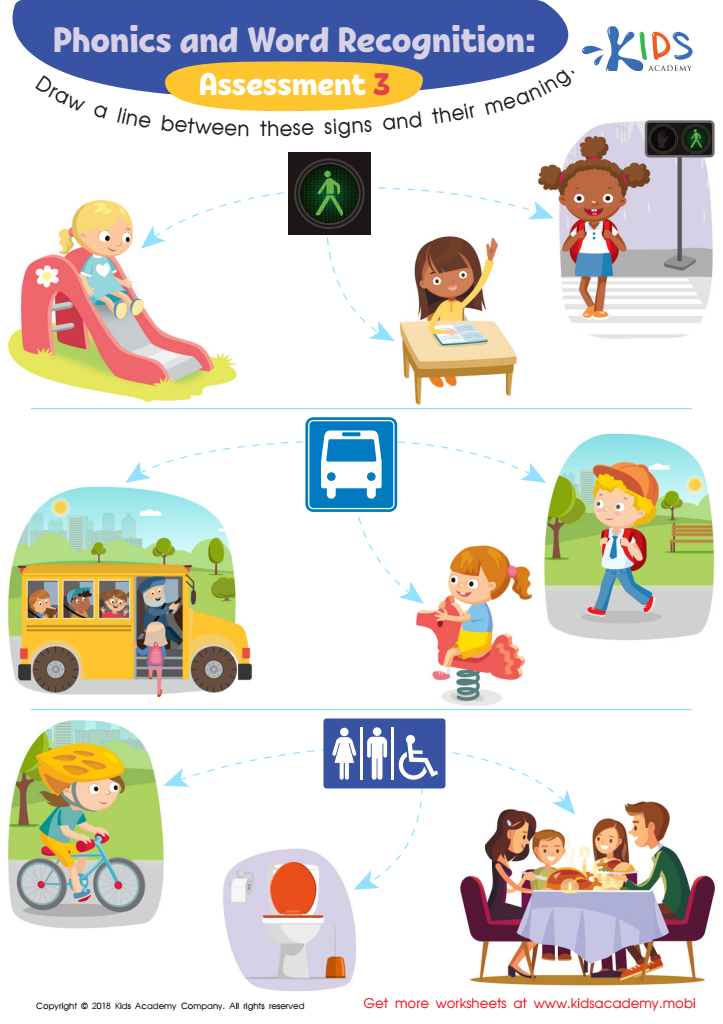
Phonological Awareness: Assessment 3 ELA Worksheet
Want to test your preschooler's language skills, phonetic decoding and word recognition? This worksheet uses their knowledge of community helpers to match signs with depictions. It also works on fine motor skills, a key pre-reading skill.
Phonological Awareness: Assessment 3 ELA Worksheet
Worksheet
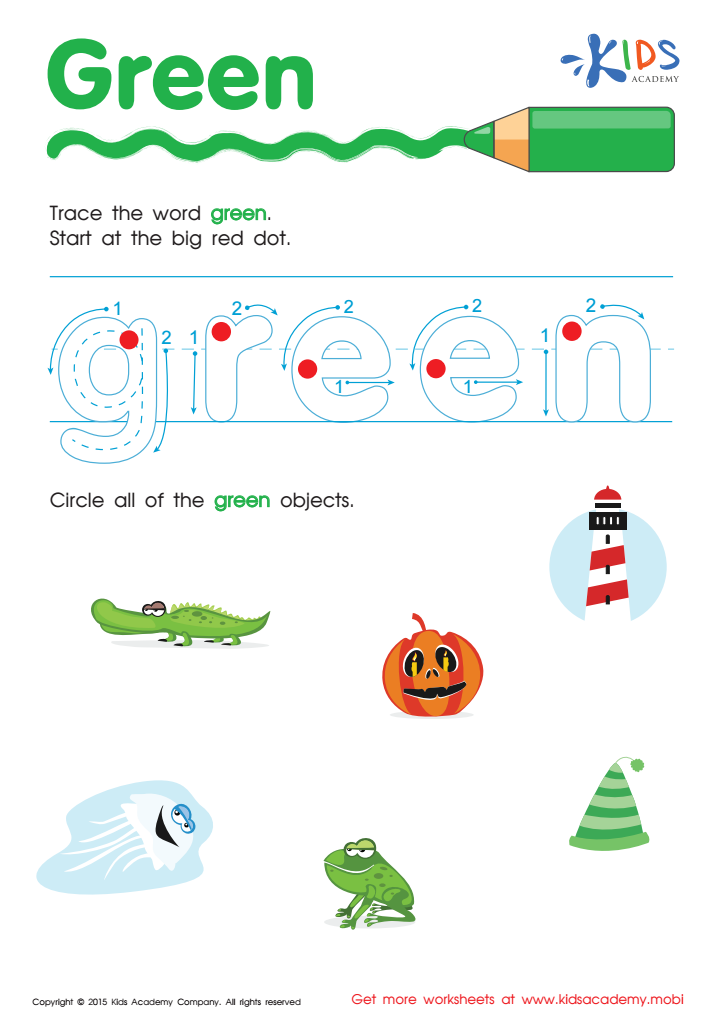
Green Tracing Color Words Worksheet
Encourage writing and spelling practice with this vibrant free handwriting worksheet. Have your child trace the new name of a primary color, "green," and circle green items in the picture. Ask them what else can be green for a challenging activity. Through this worksheet, your kindergartener can learn and play at the same time. For more free printables, look here.
Green Tracing Color Words Worksheet
Worksheet
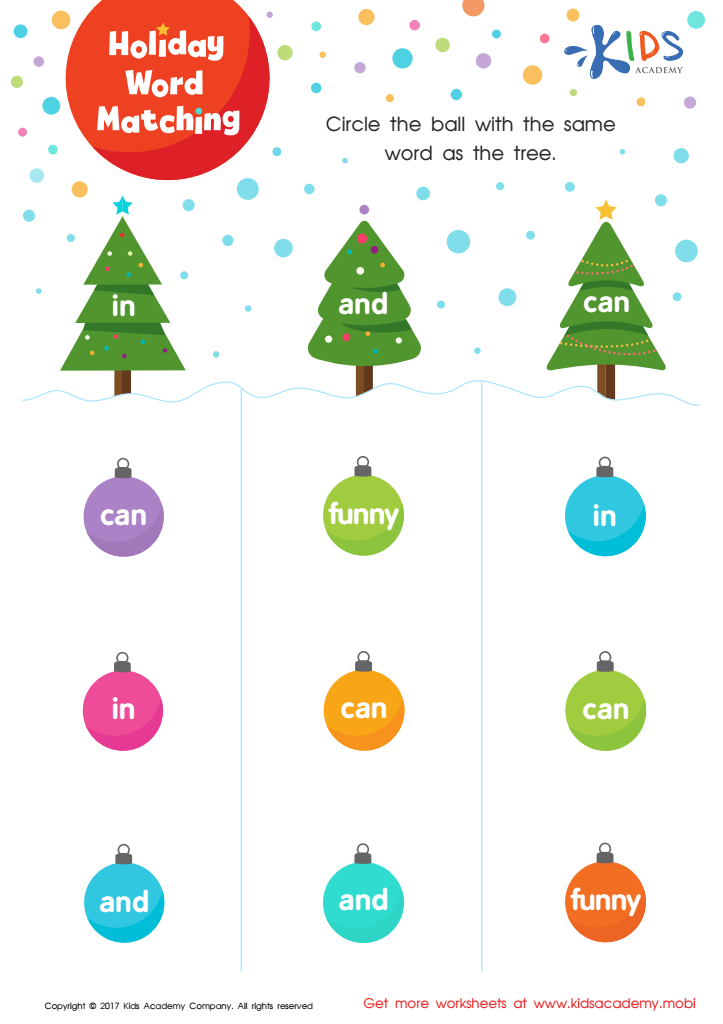
Holiday Word Matching Worksheet
Decorate with Kids Academy this year! Keep kids learning this holiday season with this festive worksheet. Let them look for sight words on Christmas trees then circle the matching ornament to decorate. It's a fun and educational way to enjoy the holidays!
Holiday Word Matching Worksheet
Worksheet
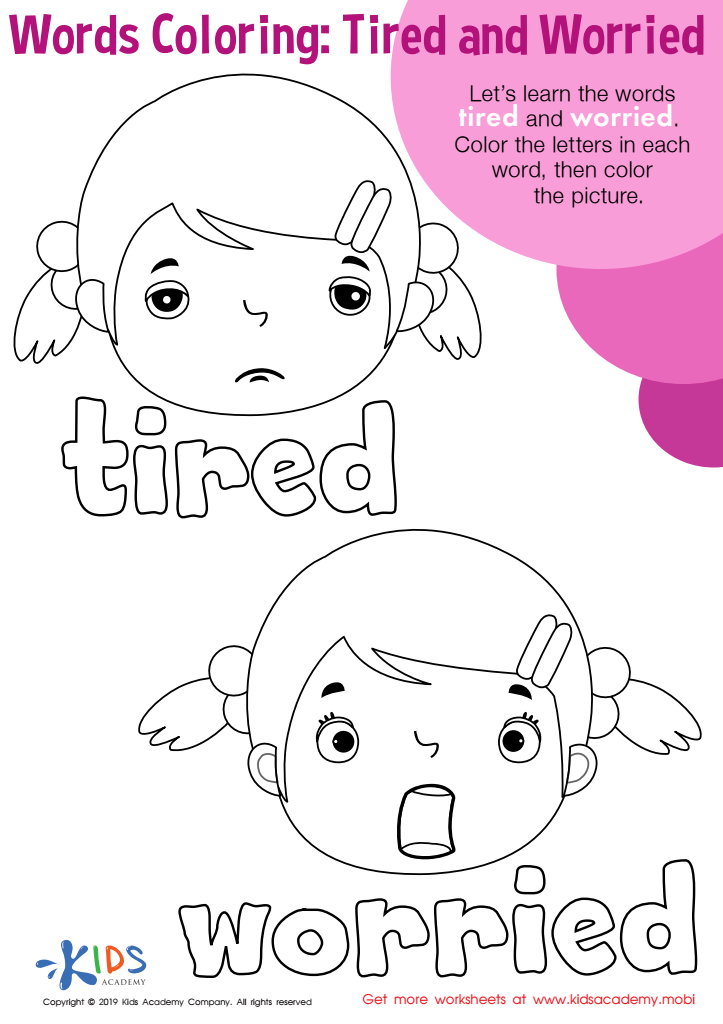
Tired and Worried Words Coloring Worksheet
Teach your students about "tired" and "worried" with this worksheet. Have them read and color the emotion words, then color the pictures of a tired girl and a worried girl. Discuss what makes them tired and worried. Expand their vocabulary with this fun coloring activity!
Download (PDF)
Assign to My Students
Assign to My Students
Tired and Worried Words Coloring Worksheet
Worksheet
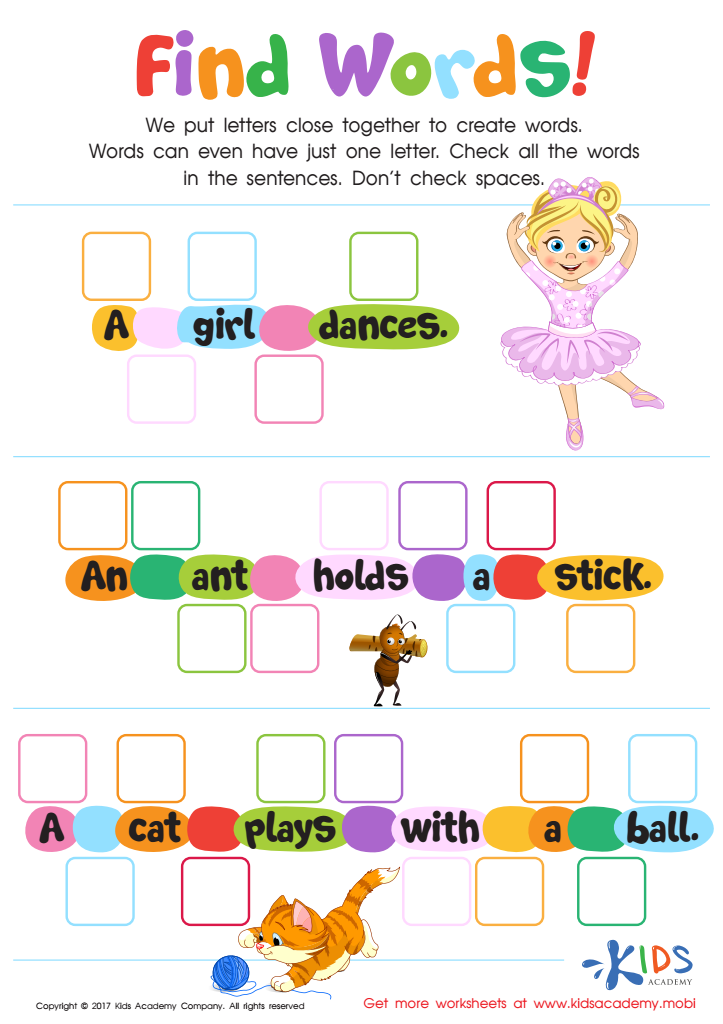
Find Words Worksheet
Help your little learner recognize that one letter words can be words too using this fun worksheet! As they work on it, they'll learn how to spot the gaps between words and become more familiar with written language. Download it now and get them started!
Find Words Worksheet
Worksheet
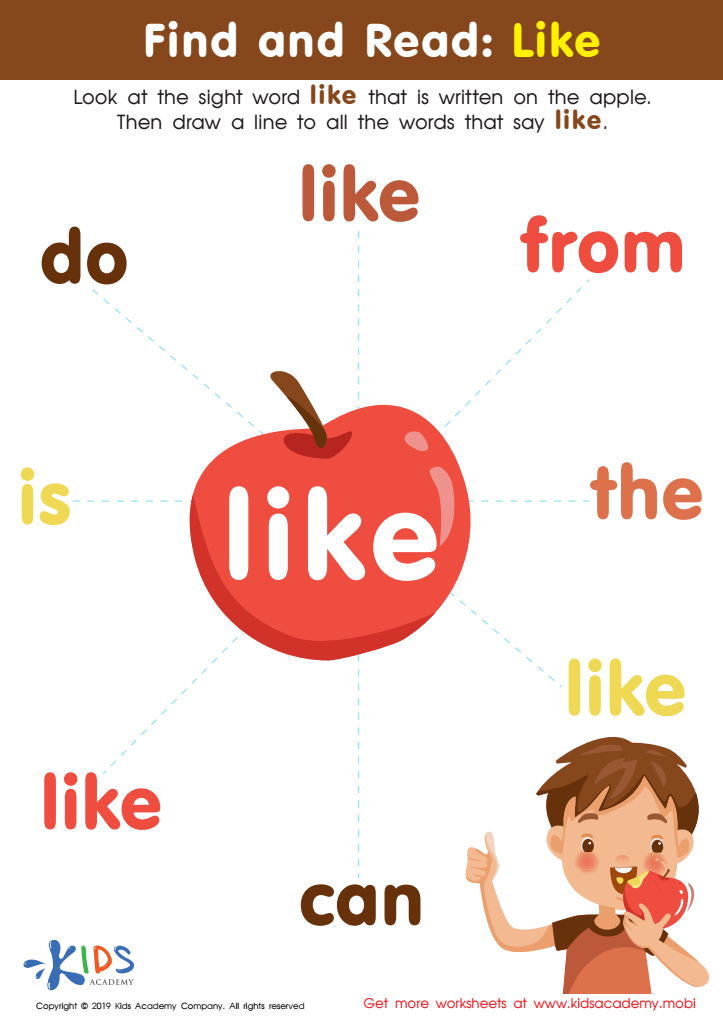
Find and Read: Like Worksheet
Reading starts with learning sight words. This free PDF worksheet helps kids learn the word "like" in various ways. It encourages their visual discrimination skills with its colorful design and traceable lines. It's a great way to help them recognize and differentiate this common sight word from other words that look similar.
Find and Read: Like Worksheet
Worksheet
Join Kids Academy for Free
Who is primarily going to use this learning content?




Word recognition is crucial for 3-year-olds as it lays the groundwork for language development, literacy skills, and cognitive growth. At this tender age, children are in a rapid learning phase where their brains are highly receptive to new information.
First, early word recognition enables them to understand and use language effectively, enhancing their communication skills. When children identify and recognize words, they can express their needs, thoughts, and emotions more clearly, which fosters stronger interpersonal relationships.
Furthermore, word recognition is a stepping stone to reading. Recognizing words helps in developing phonemic awareness, the ability to hear and manipulate sounds in words, which is fundamental for reading proficiency. As children start recognizing common words associated with everyday objects, they build a vocabulary base that is essential for reading comprehension later on.
In addition, early word recognition stimulates cognitive development. It enhances memory, attention, and thinking skills by encouraging pattern recognition and problem-solving abilities. Young children who are adept at word recognition tend to perform better in academic settings, as they find learning new concepts easier due to their strong language foundation.
Lastly, fostering a child’s love for reading and learning from an early age offers long-term educational benefits, setting them up for success well into their school years and beyond. Therefore, parents and teachers should prioritize word recognition activities, such as reading aloud, interactive word games, and letter-based toys, to support this critical aspect of early development.








