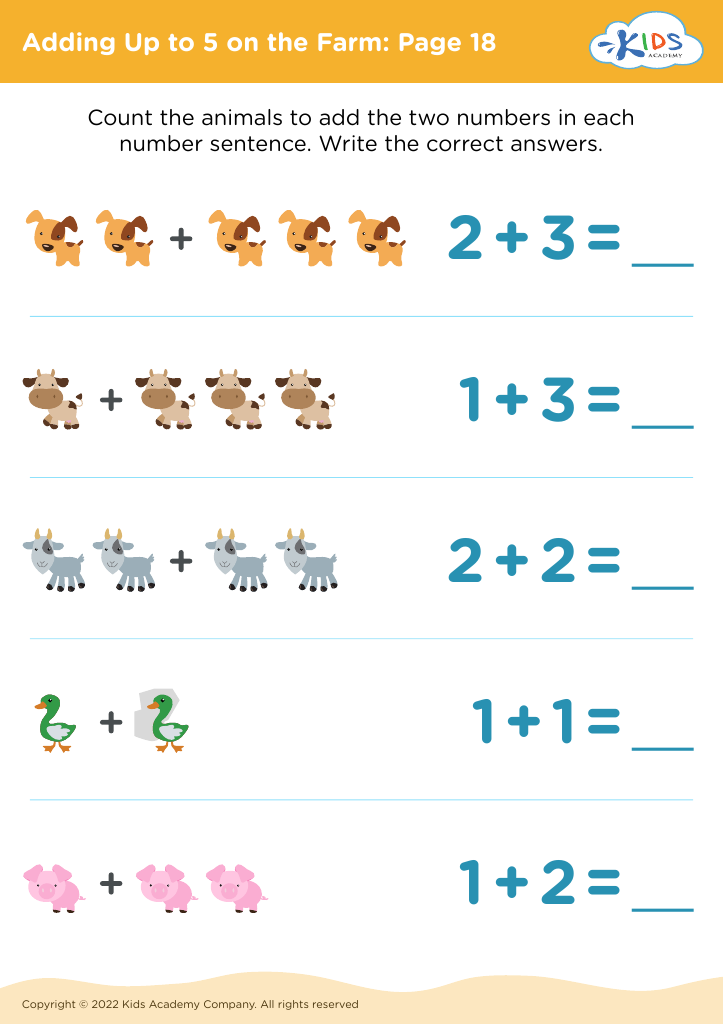
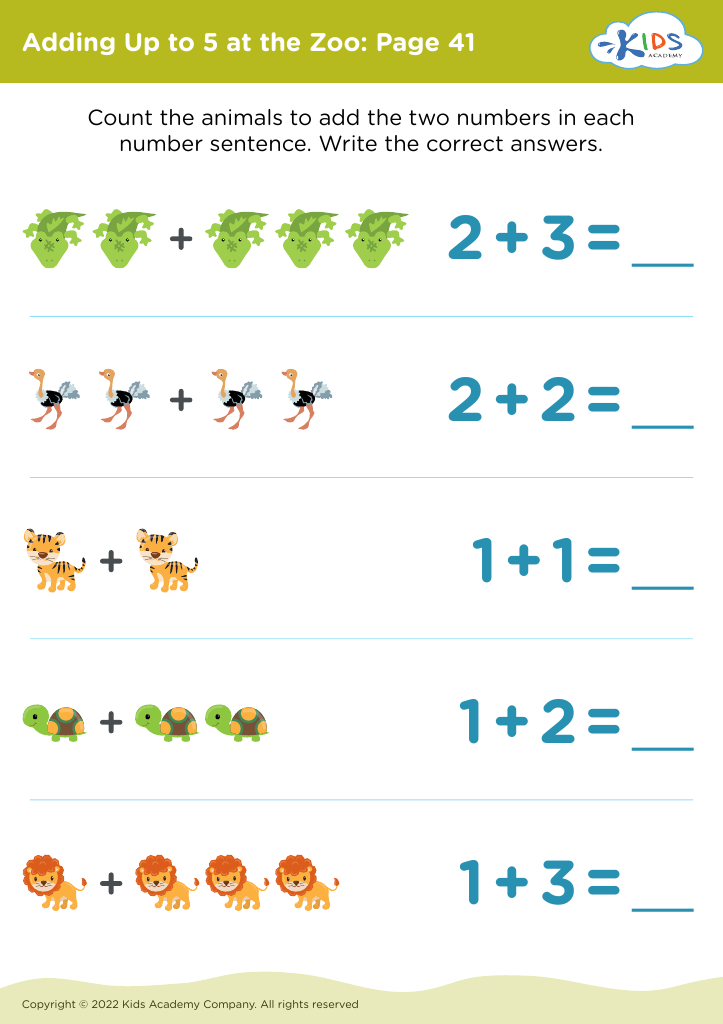
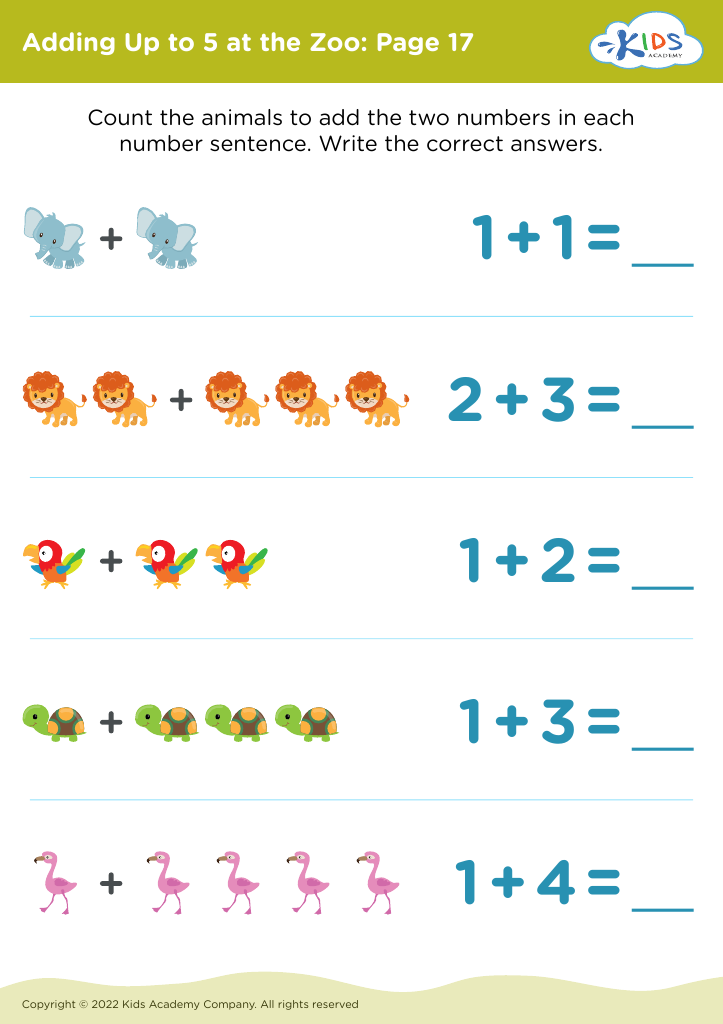
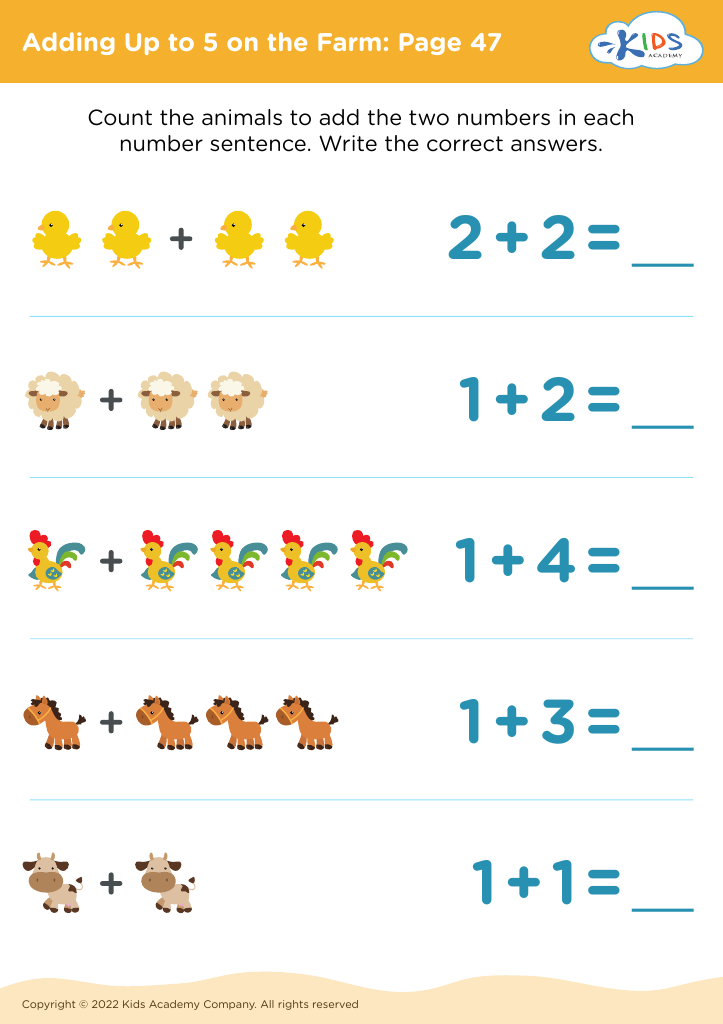
Discover our engaging Animal Identification Math Worksheets for 3-Year-Olds, specially crafted to make learning fun! At Kids Academy, we combine math and early science skills with vibrant, kid-friendly animals to captivate young learners. These worksheets encourage number recognition, counting, and pattern matching, all while introducing children to the fascinating world of animals. Perfect for preschoolers, each activity develops critical thinking and fine motor skills. Download and print today to jump-start your child's educational journey with playful and effective learning tools designed for little minds. Nurture their curiosity and love for learning with Kids Academy!
Check out this FREE Trial Lesson on Math for age 3!

Find 1 Less

Favorites
With answer key
Interactive
  • 3
  • Animal identification
  • Math
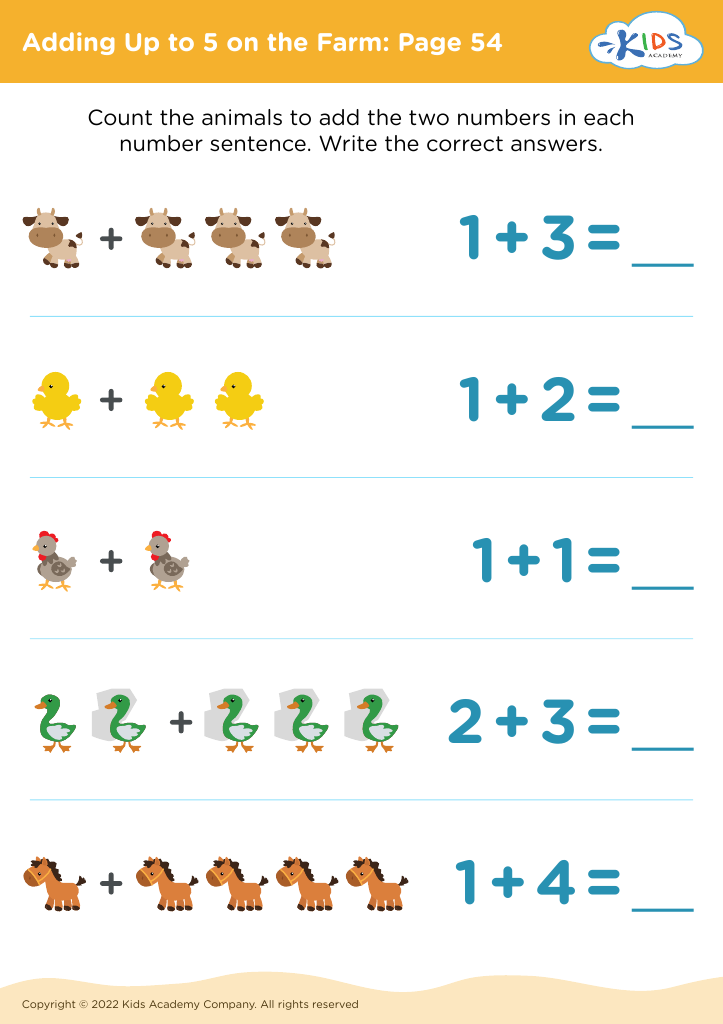
Adding Up to 5 on the Farm: Page 54
Worksheet
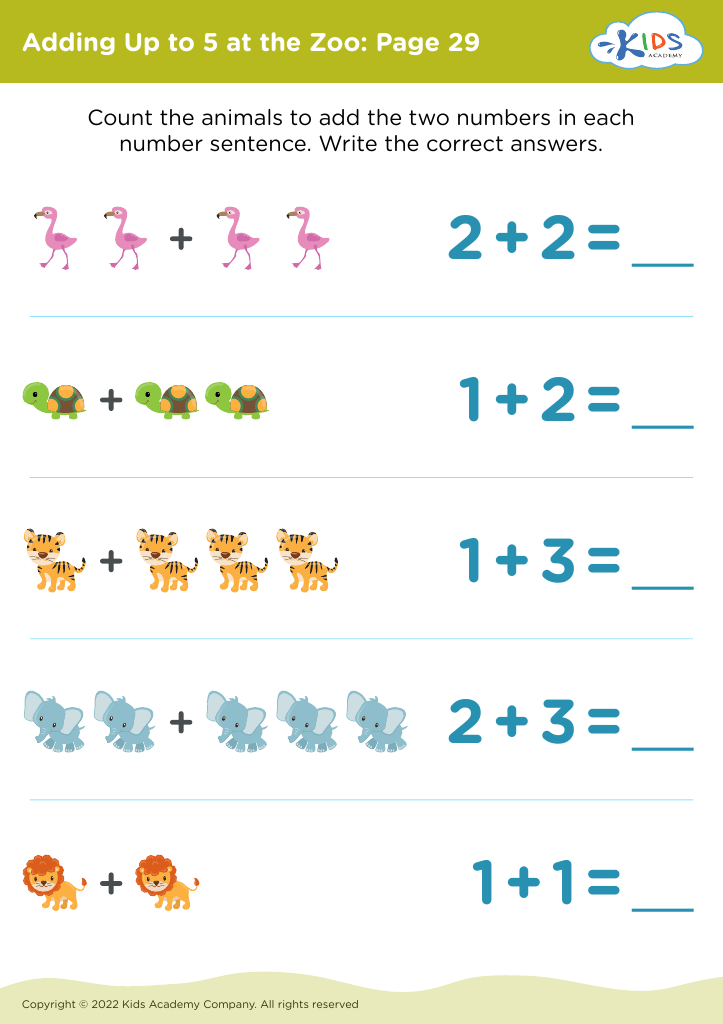
Adding Up to 5 at the Zoo: Page 29
Worksheet
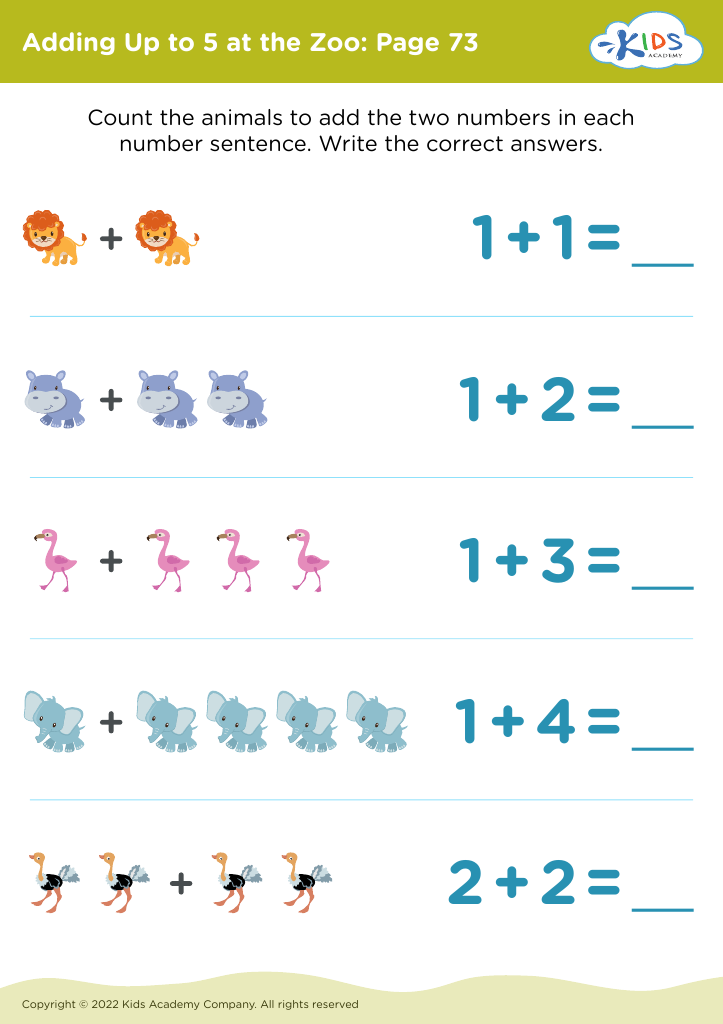
Adding Up to 5 at the Zoo: Page 73
Worksheet
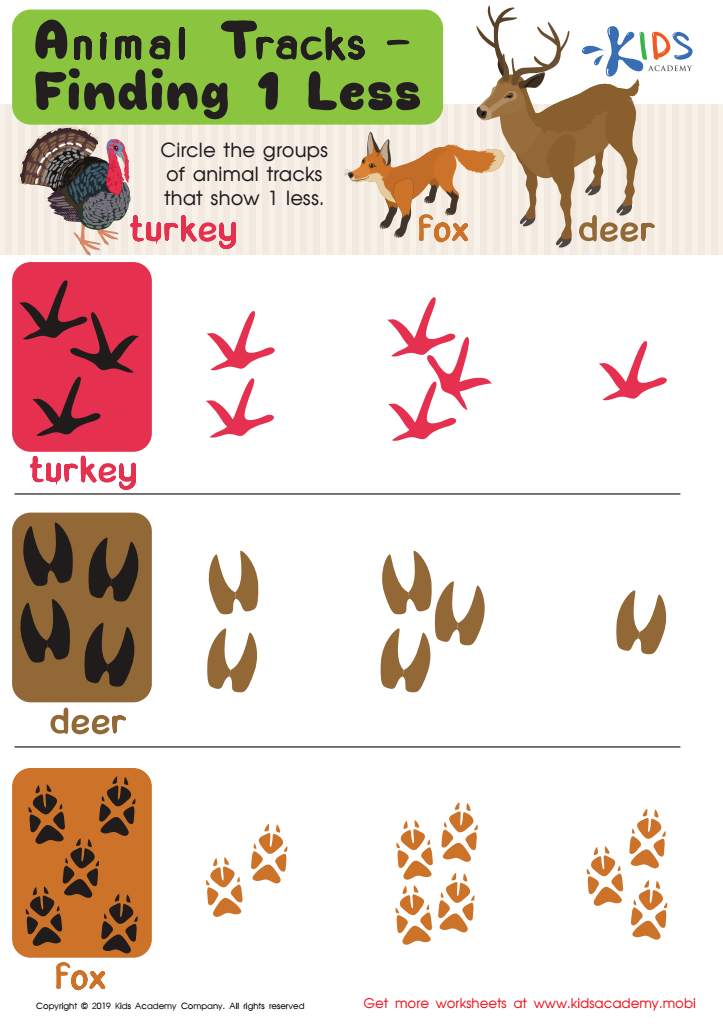
Animal Tracks: Find 1 Less Worksheet

Animal Tracks: Find 1 Less Worksheet

Animals are all around us - wild and domestic. Ask your kids to name their favourites, then use this animal tracks worksheet to explore more. Help them circle the groups with 1 less animal track. It's a great way to learn about the creatures we share our world with!
Animal Tracks: Find 1 Less Worksheet
Worksheet
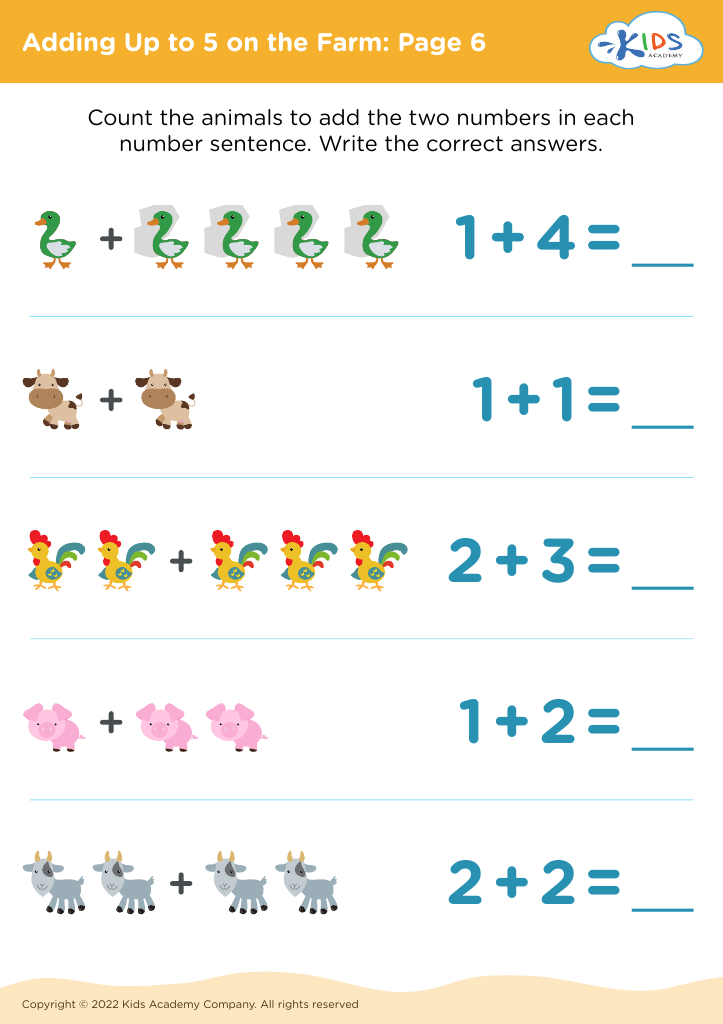
Adding Up to 5 on the Farm: Page 6
Worksheet
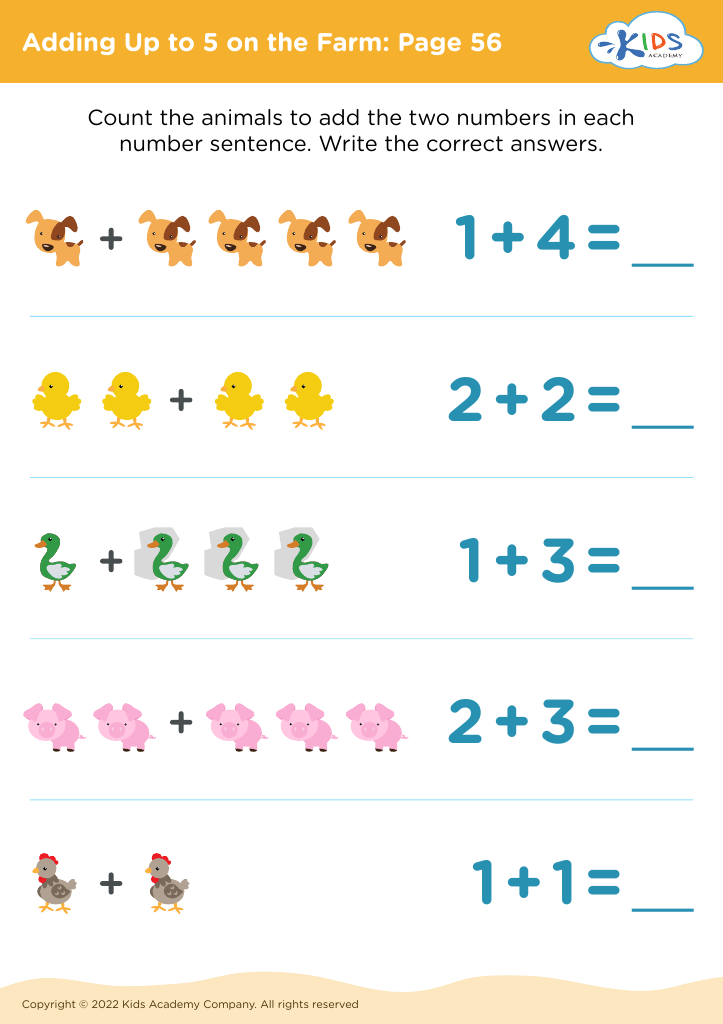
Adding Up to 5 on the Farm: Page 56
Worksheet
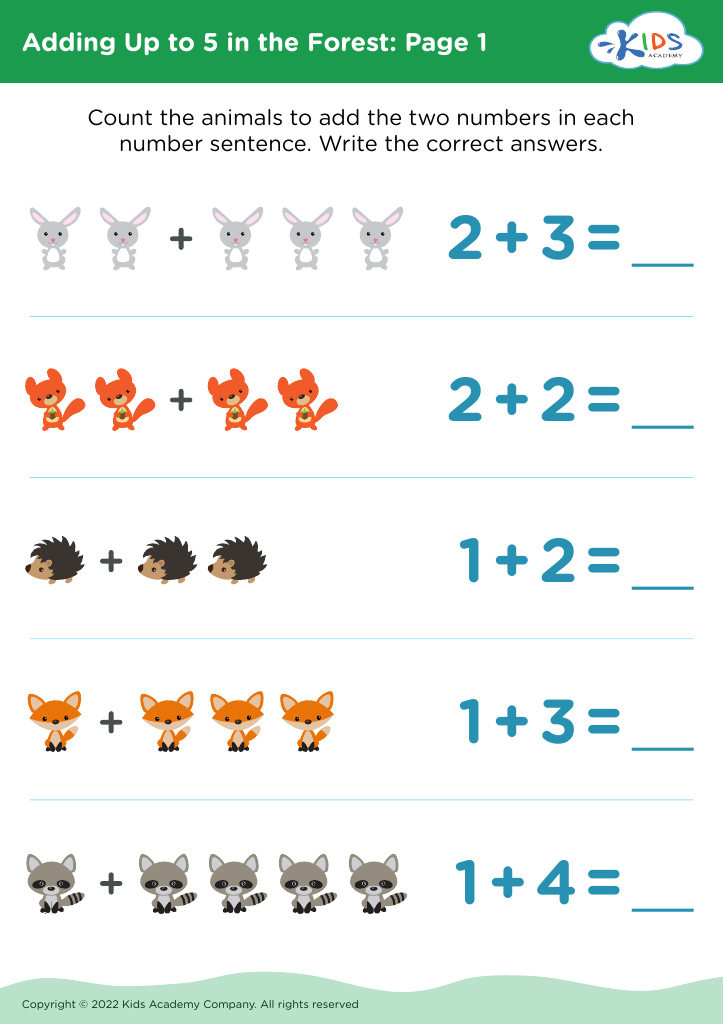
Adding Up to 5 in the Forest: Page 1
Worksheet
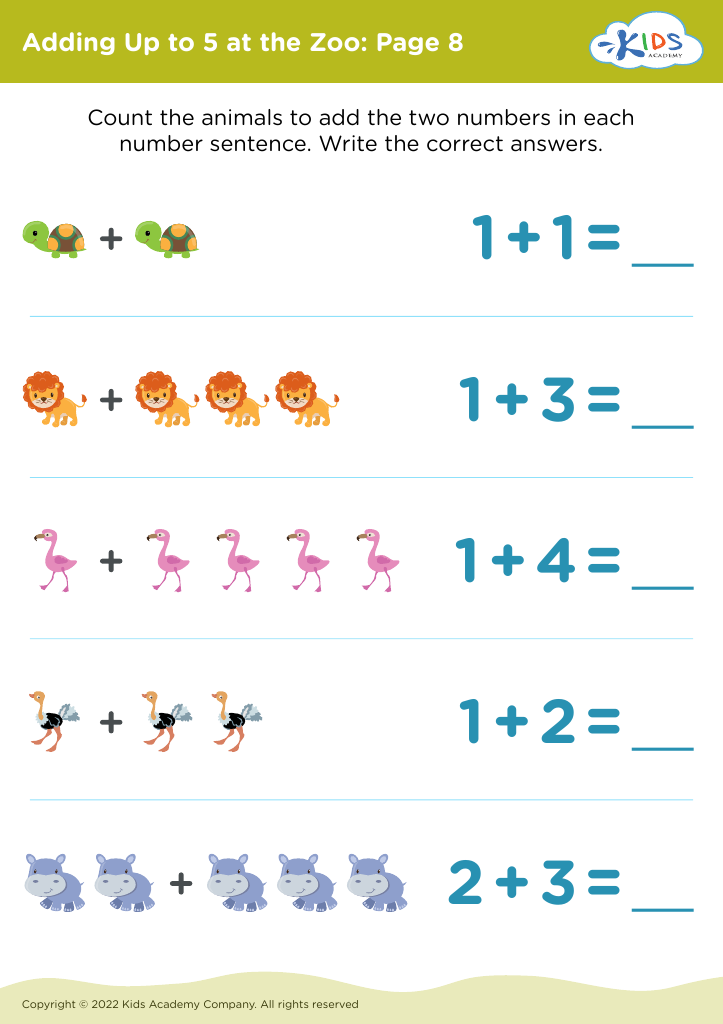
Adding Up to 5 at the Zoo: Page 8

Adding Up to 5 at the Zoo: Page 8

Adding Up to 5 at the Zoo: Page 8
Worksheet
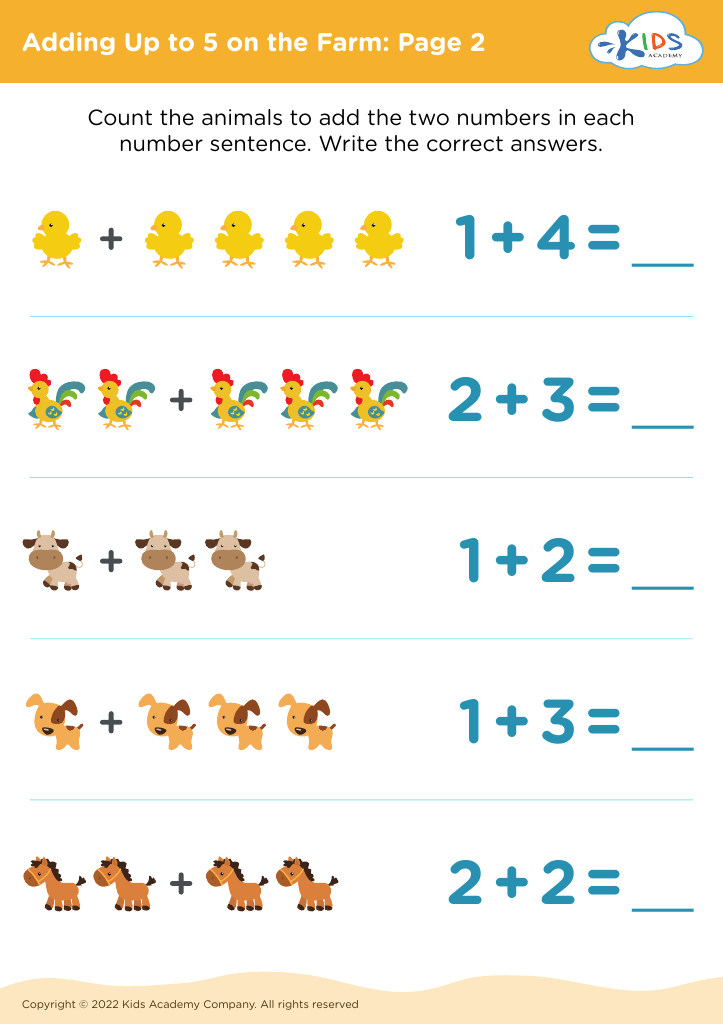
Adding Up to 5 on the Farm: Page 2
Worksheet
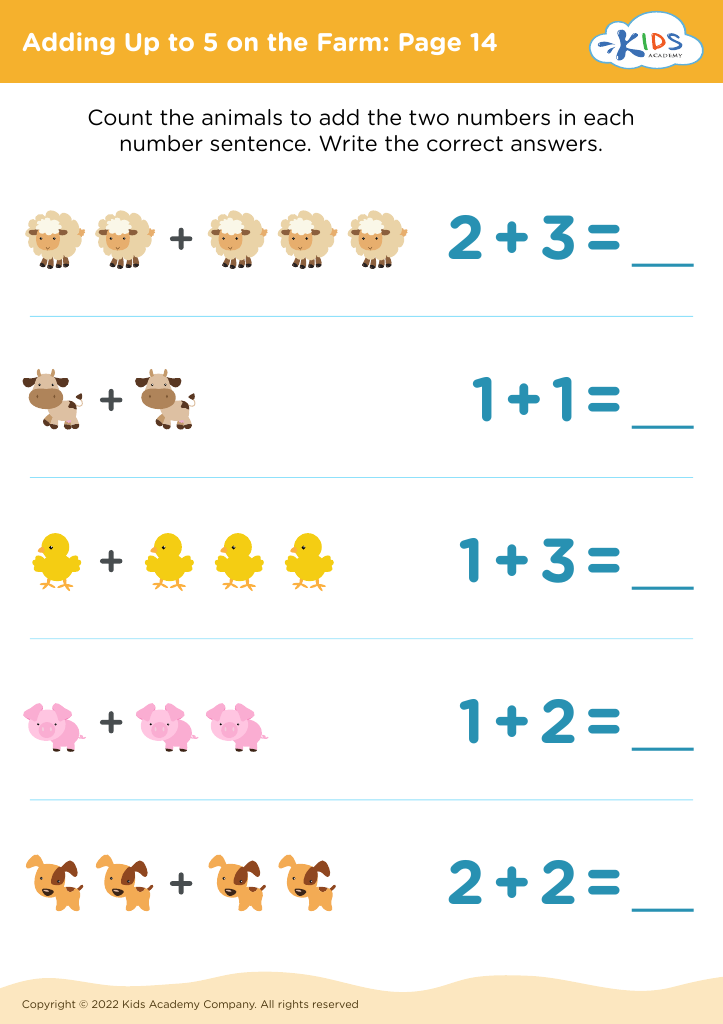
Adding Up to 5 on the Farm: Page 14
Worksheet
Preschool Matching Worksheets

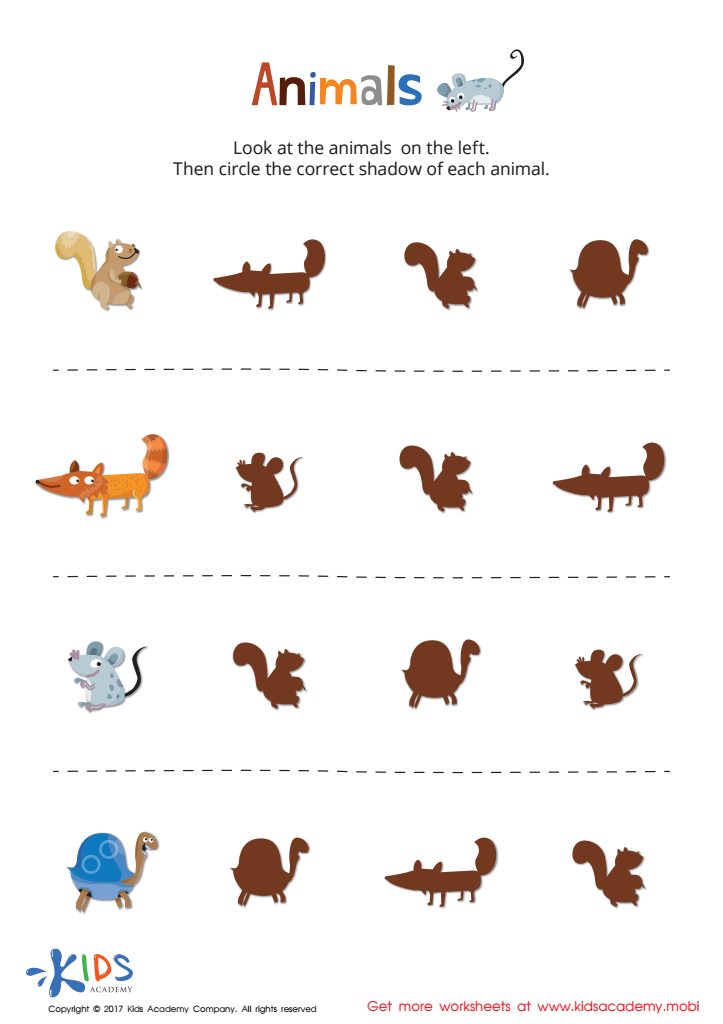
Animal Shadows Sorting Worksheet
This fun worksheet helps your child sharpen many skills. It features animals to match shapes and practice relative directions. Your child will sort animal features, practice spatial recognition, and recognize right/left. Plus, you can use it to start conversations about the animals. And try it also with fruits and veggies to boost sorting skills.
Animal Shadows Sorting Worksheet
Worksheet
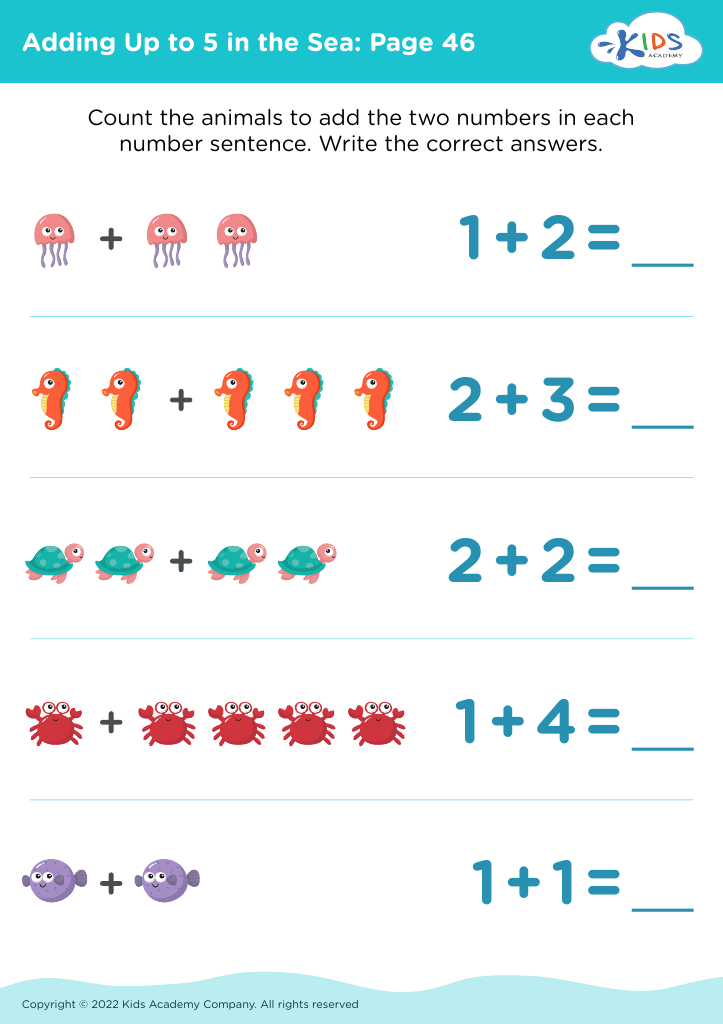
Adding Up to 5 in the Sea: Page 46
Worksheet
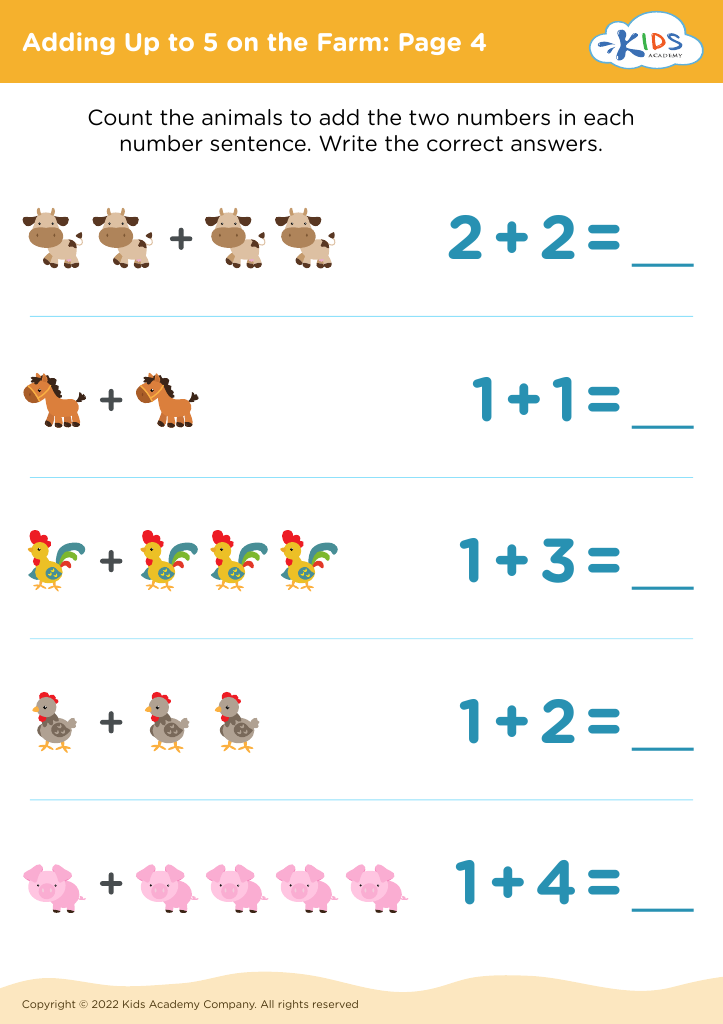
Adding Up to 5 on the Farm: Page 4
Worksheet
Adding Up to 5 on the Farm: Page 18
Worksheet
Adding Up to 5 at the Zoo: Page 41
Worksheet
Adding Up to 5 at the Zoo: Page 17
Worksheet
Adding Up to 5 on the Farm: Page 47
Worksheet
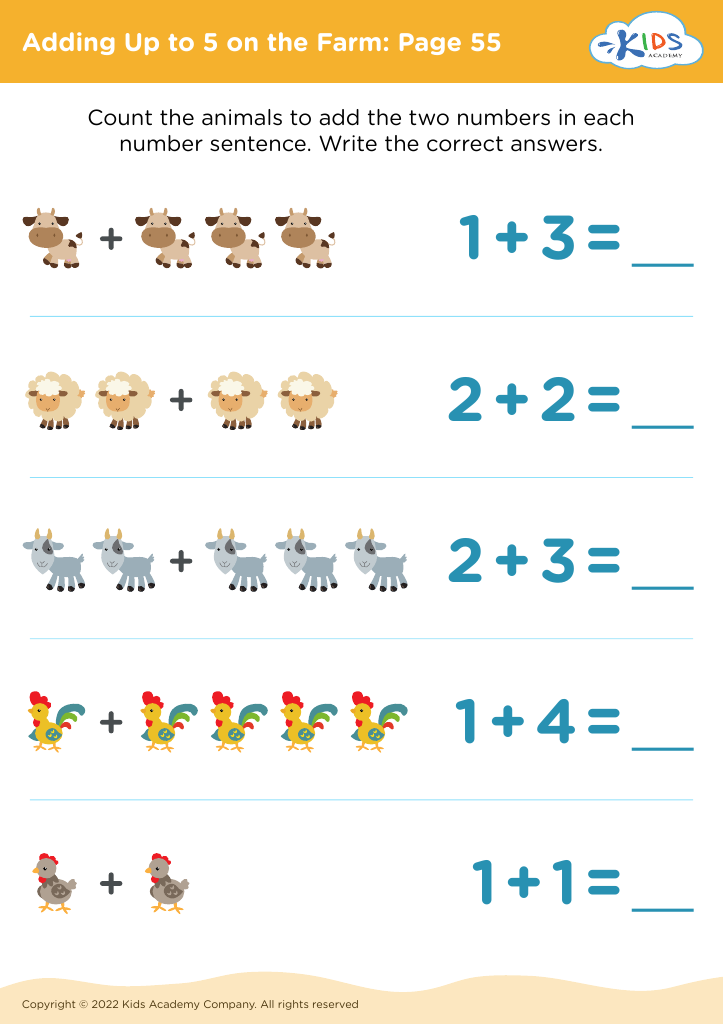
Adding Up to 5 on the Farm: Page 55
Worksheet
Animal Paw Prints Worksheet

Animal Prints Match-Up Worksheet
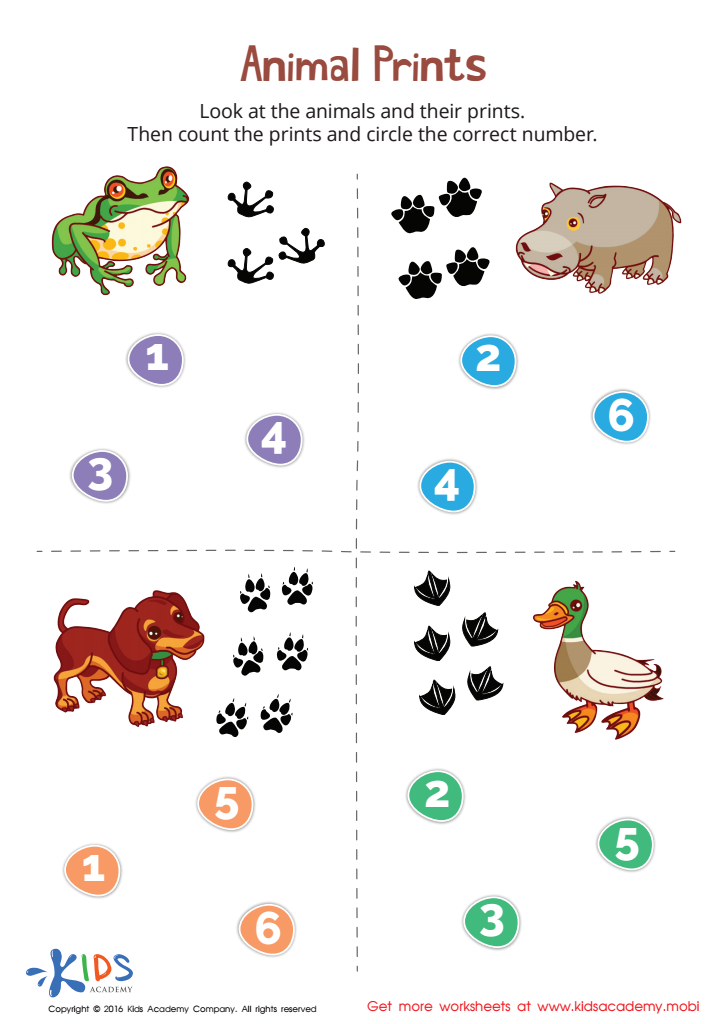
Help your little learner build early math skills with this fun animal paw prints worksheet. With it, they'll count, recognize numbers, and learn about the animals that make the paw prints. Talk to them about the prints and ask them to count. They'll love exploring and learning about the different animals, all while sharpening essential math skills!
Animal Prints Match-Up Worksheet
Worksheet
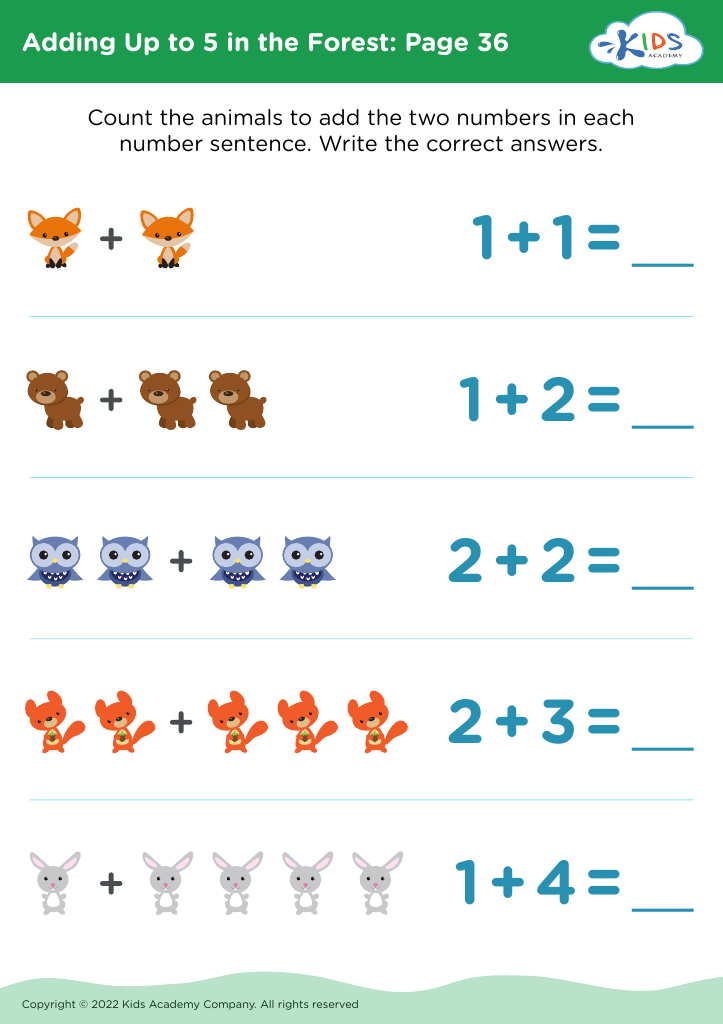
Adding Up to 5 in the Forest: Page 36
Worksheet
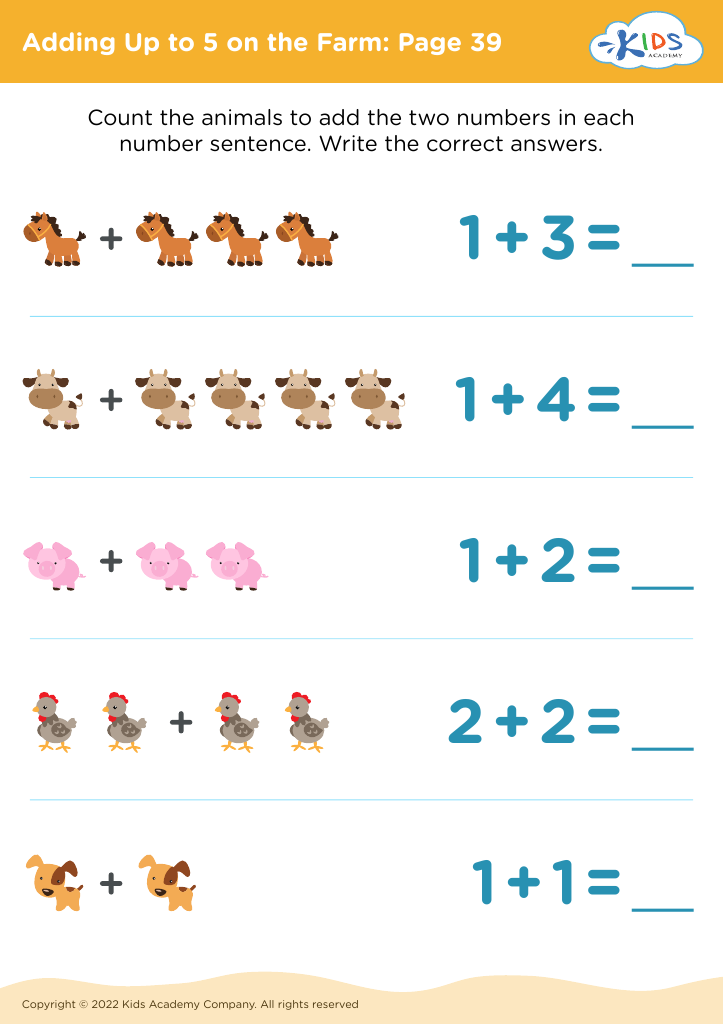
Adding Up to 5 on the Farm: Page 39
Worksheet
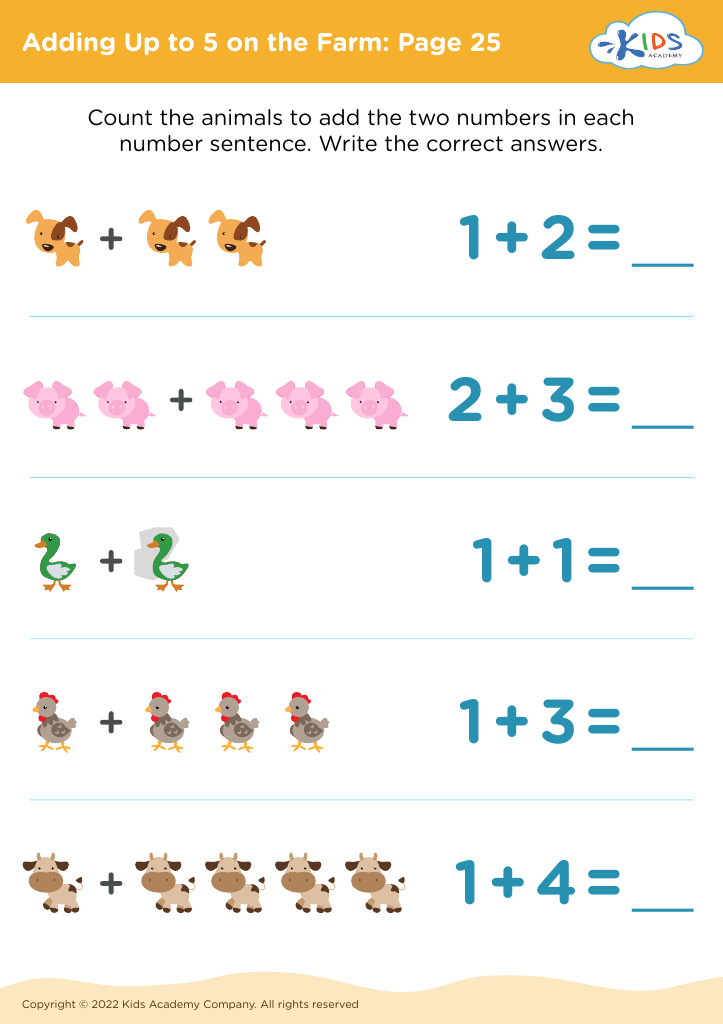
Adding Up to 5 on the Farm: Page 25
Worksheet
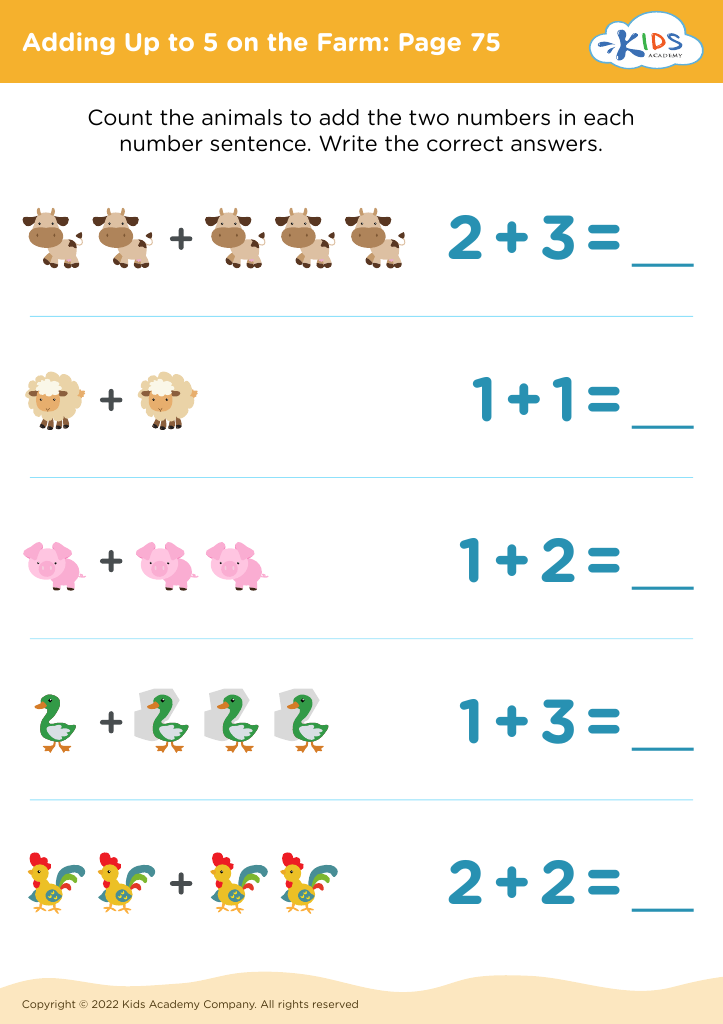
Adding Up to 5 on the Farm: Page 75
Worksheet
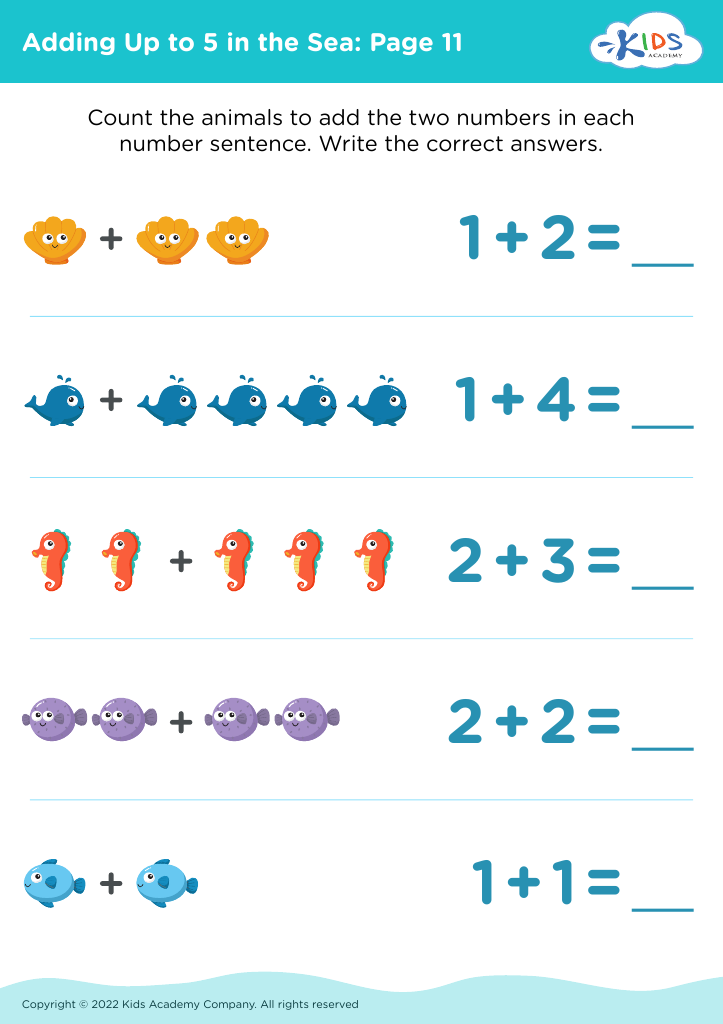
Adding Up to 5 in the Sea: Page 11
Worksheet


Understanding animal identification at a young age has multiple developmental benefits for 3-year-olds, weaving in essential skills like math, cognitive development, and even social-emotional growth. First and foremost, much like recognizing letters in the alphabet, identifying animals strengthens visualization and discernment skills. It lays a foundation for categorization, a key mathematical competency. Children begin to understand attributes like size, color, and patterning, which are precursors to more complex concepts like counting, sequencing, and sorting.

Parents and teachers often overlook the social-emotional components involved in these exercises: learning about animals fosters empathy and curiosity about the natural world, which can later branch into humane education and environmental stewardship. When kids classify animals by number of legs, types of habitat, or dietary habits, they engage in critical thinking that naturally utilizes basic mathematical principles. Introducing this framework through animals, an inherently engaging topic for young kids, ensures material retention better than more abstract concepts.

Moreover, these activities support language development through vocabulary building. Terms like "mammal", "reptile", and "insect" not only broaden word banks but also set up interdisciplinary learning bridges that connect science and math. By fostering an early interest in these areas through playful yet structured activities, caregivers and educators set children on a path towards engaged, holistic education.