
Shape Recognition Reading Worksheets for 3-Year-Olds
5 filtered results
Difficulty Level
Grade
Age
-
From - To
Subject
Activity
Standards
Our "Shape Recognition Reading Worksheets for 3-Year-Olds" are expertly crafted to foster early learning and development for preschoolers. Engaging and colorful, these worksheets combine reading skills with shape recognition, vital for young learners. By identifying and matching shapes, children enhance their cognitive abilities, reading comprehension, and fine motor skills. Tailored for 3-year-olds, these printable worksheets make learning fun and interactive. With activities designed for little hands, kids build confidence and a love for learning. Explore our diverse collection to support your child's early education journey. Start shaping their future today!
Favorites
With answer key
Interactive
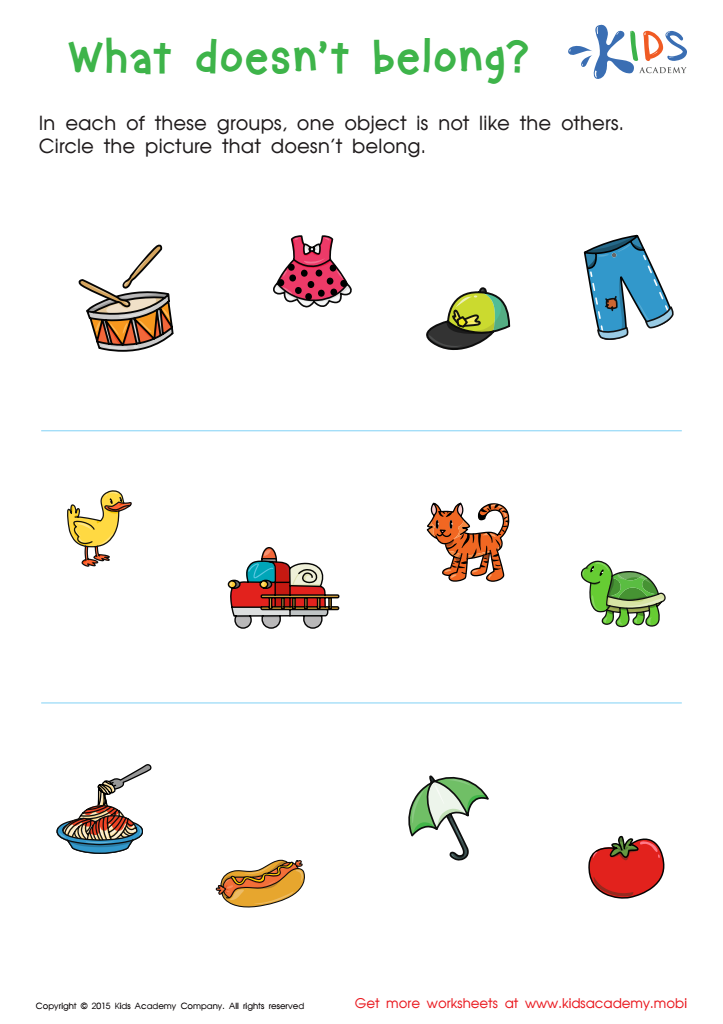
First Words: What Doesn't Belong Worksheet
Categorizing items is an important skill for little learners. Sorting and classifying objects helps kids make sense of the world. With this "what doesn't belong" worksheet, your child will practice problem-solving, strengthen categorization and improve logical reasoning skills. It's perfect for toddlers and preschoolers, with bright and exciting images giving their minds a challenging workout!
 Assign to My Students
First Words: What Doesn't Belong Worksheet
Worksheet
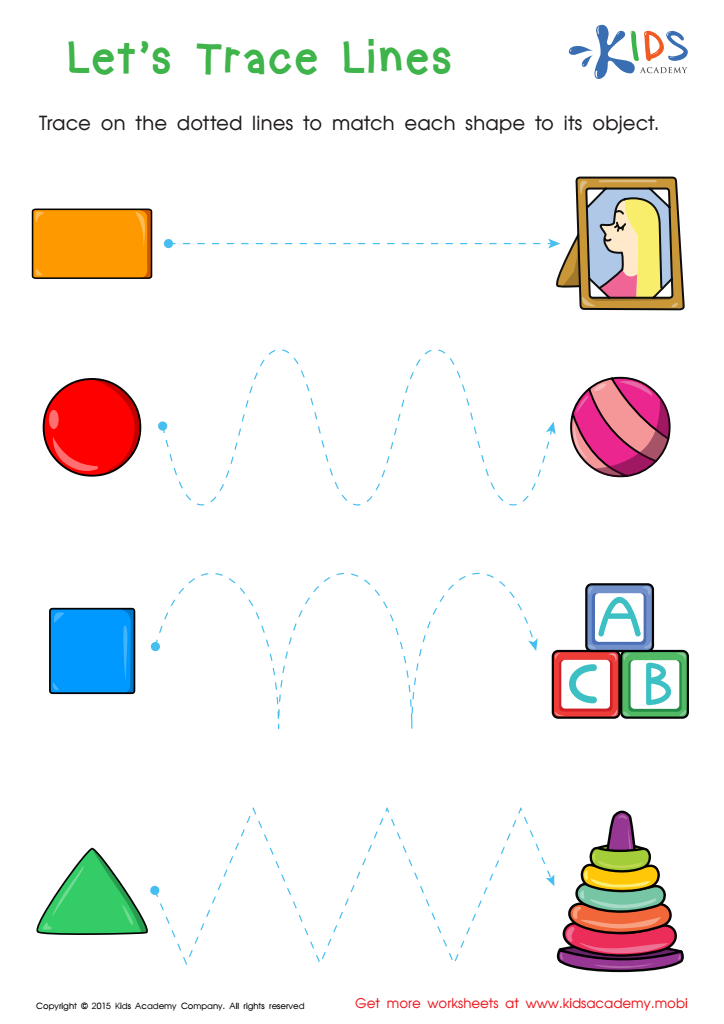
First Words: Let's Trace Lines Worksheet
Printable tracing lines for toddlers will provide your little one with the skills needed for future handwriting success. Proper grip, fine motor skills, and hand-to-eye coordination are key. Let's get their writing journey off to a great start!
First Words: Let's Trace Lines Worksheet
Worksheet
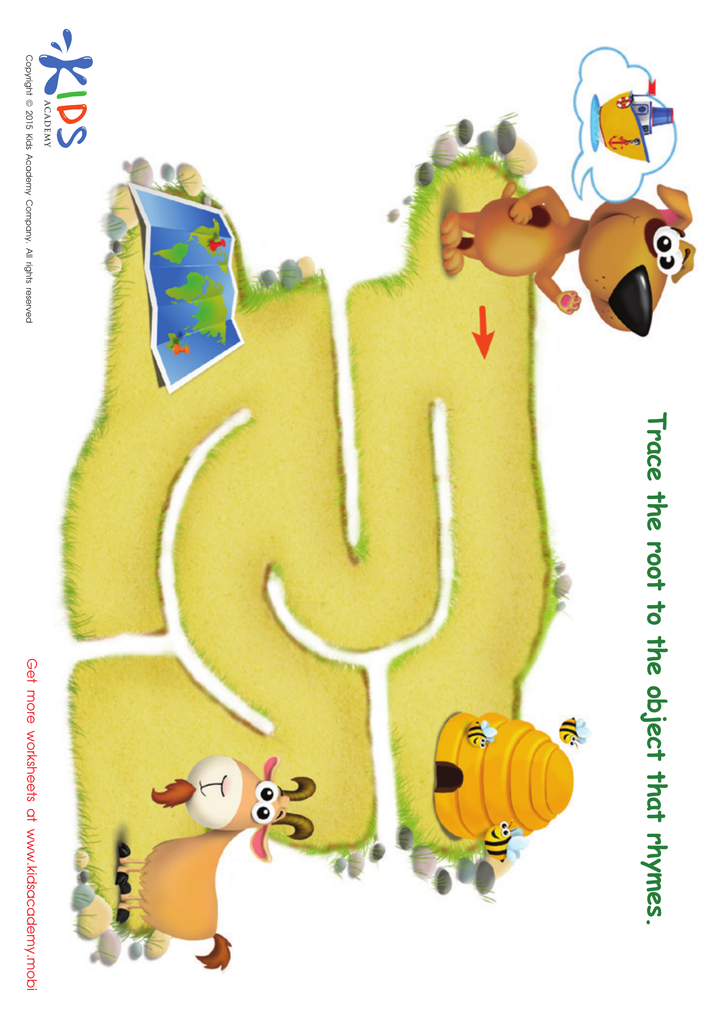
Boat Rhyming Words Worksheet
Help your preschooler complete the maze and rhyme with their favorite pooch! Draw a line from the dog to the matching item - is it a hive, a map or a goat? This fun activity lets them name the root words of pictures, and listen for rhymes to help them with phonics and reading.
Boat Rhyming Words Worksheet
Worksheet
Join Kids Academy for Free
Who is primarily going to use this learning content?


.jpg)





Shape recognition reading is a crucial developmental milestone for 3-year-olds that offers a wide range of cognitive benefits. When young children begin to differentiate and identify shapes, they build foundational skills that are essential for later academic learning, including reading and mathematics.
Engaging in shape recognition exercises helps enhance children’s visual perception and spatial awareness. By distinguishing circles, squares, and triangles, children develop keen observational skills and improve their attention to detail. These abilities are vital for recognizing letters and numbers, which are often made up of simple shapes. For instance, understanding the circular shape in the letter "O" or the triangular edges in the letter "A" can make it easier for children to learn the alphabet and subsequently read words.
Beyond cognitive development, shape recognition activities also foster fine motor skills. Handling shape sorters, drawing shapes, or using shape-based puzzles require hand-eye coordination and dexterity, which are integral to writing.
Moreover, shape recognition promotes problem-solving and classification skills. Children learn to group shapes by their attributes and discern patterns, laying the groundwork for logical reasoning used in subjects like math.
By focusing on shape recognition at an early age, parents and teachers not only support immediate learning gains but also set children on a path toward academic success that incorporates strong cognitive, motor, and analytical skills.








