Check out this FREE "Basic Addition Skills" Trial Lesson for age 4-5!

T

Favorites
With answer key
Interactive
  • 4-5
  • Basic Addition Skills
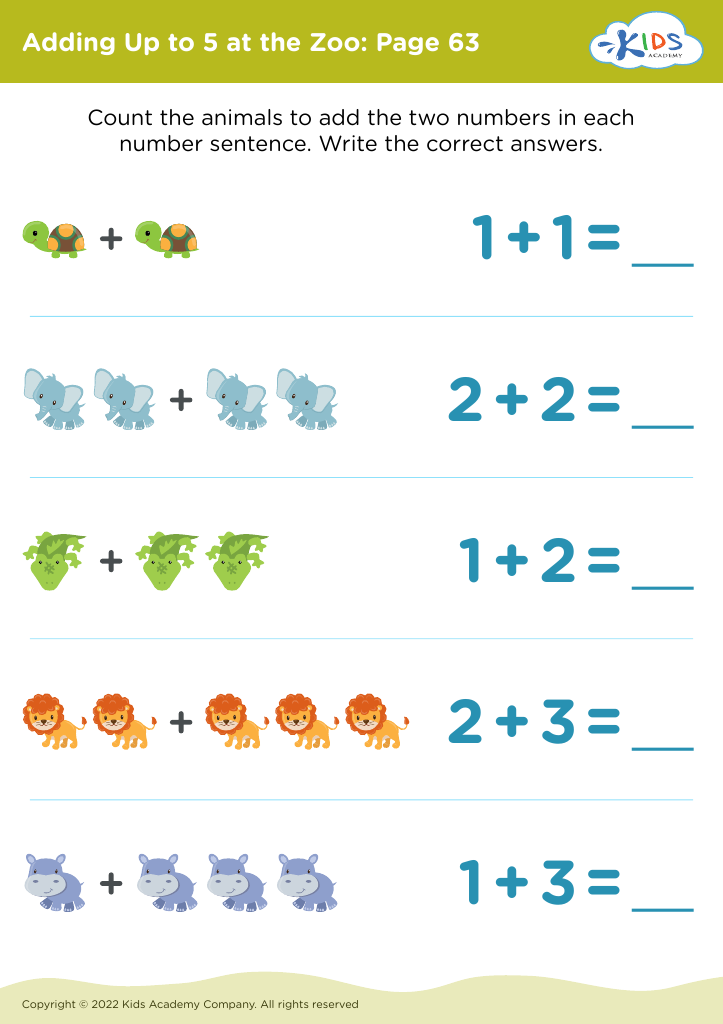
Adding Up to 5 at the Zoo: Page 63
Worksheet
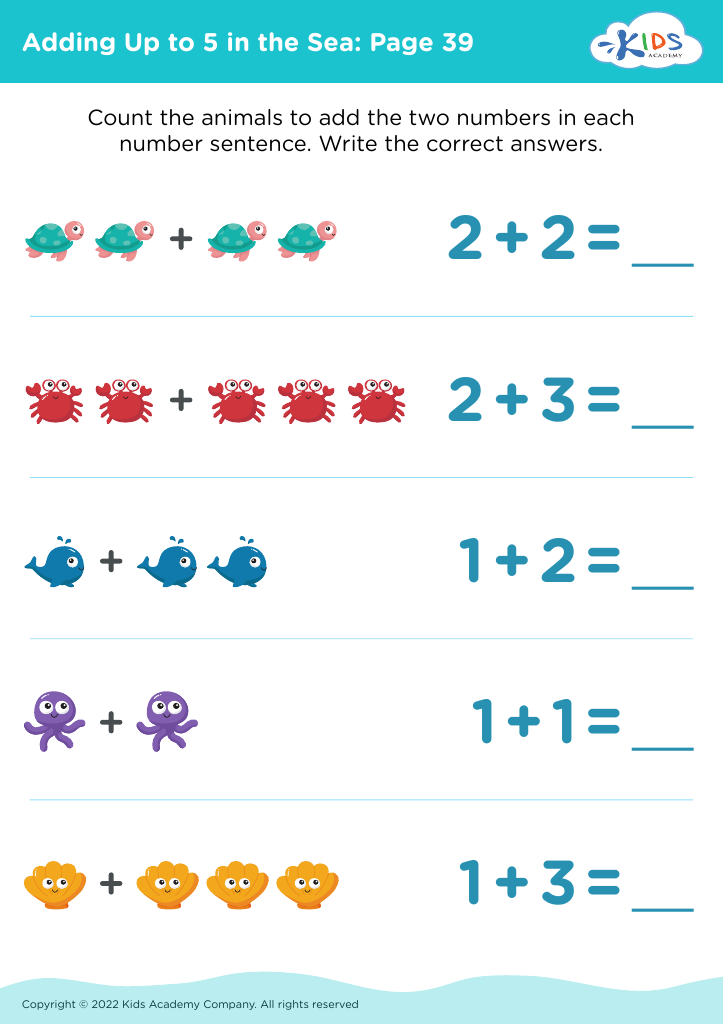
Adding Up to 5 in the Sea: Page 39
Worksheet
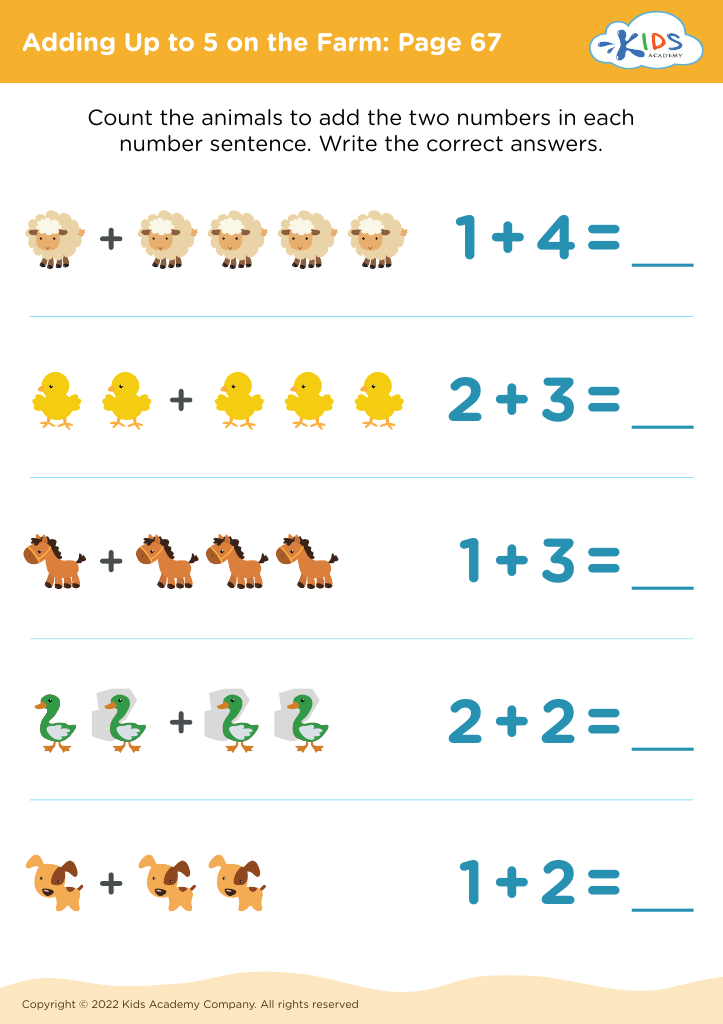
Adding Up to 5 on the Farm: Page 67
Worksheet
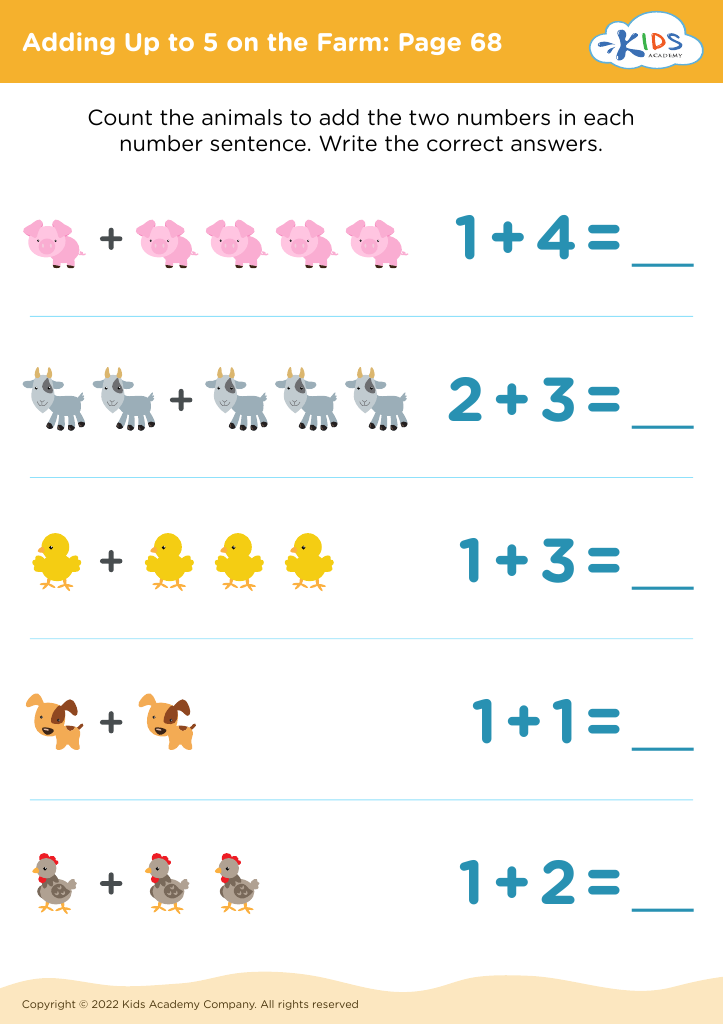
Adding Up to 5 on the Farm: Page 68
Worksheet
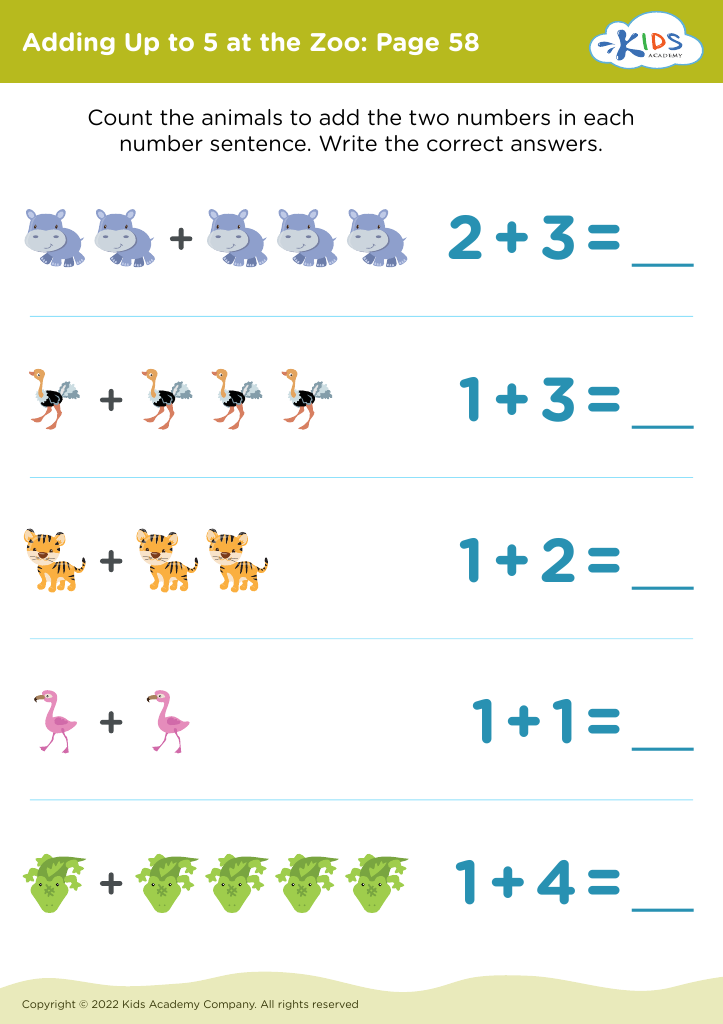
Adding Up to 5 at the Zoo: Page 58
Worksheet
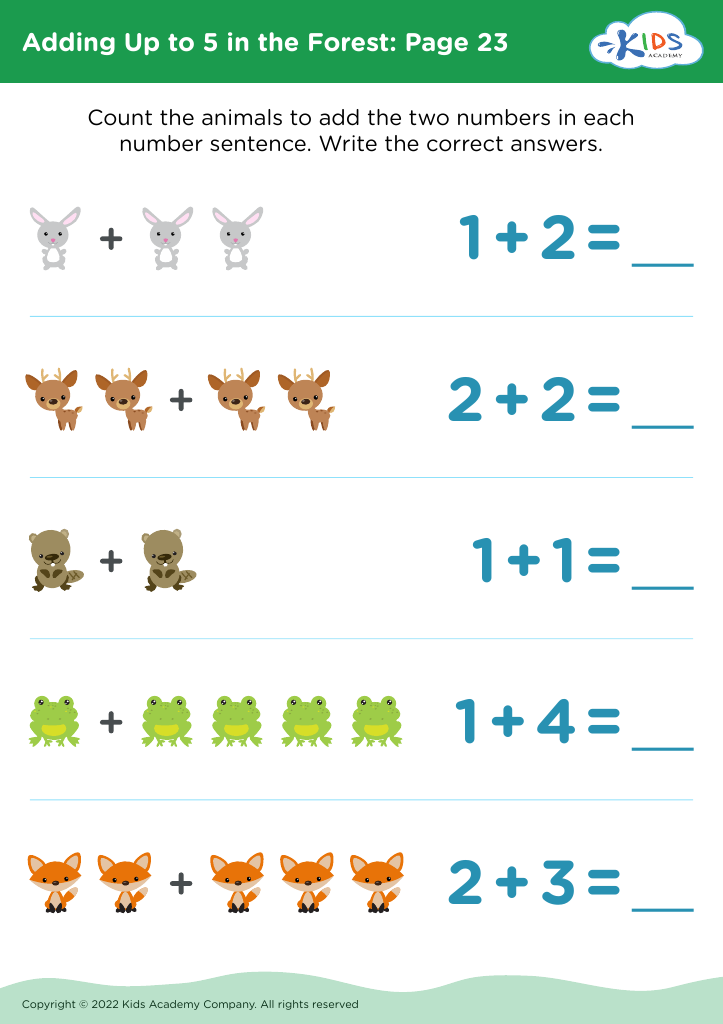
Adding Up to 5 in the Forest: Page 23
Worksheet
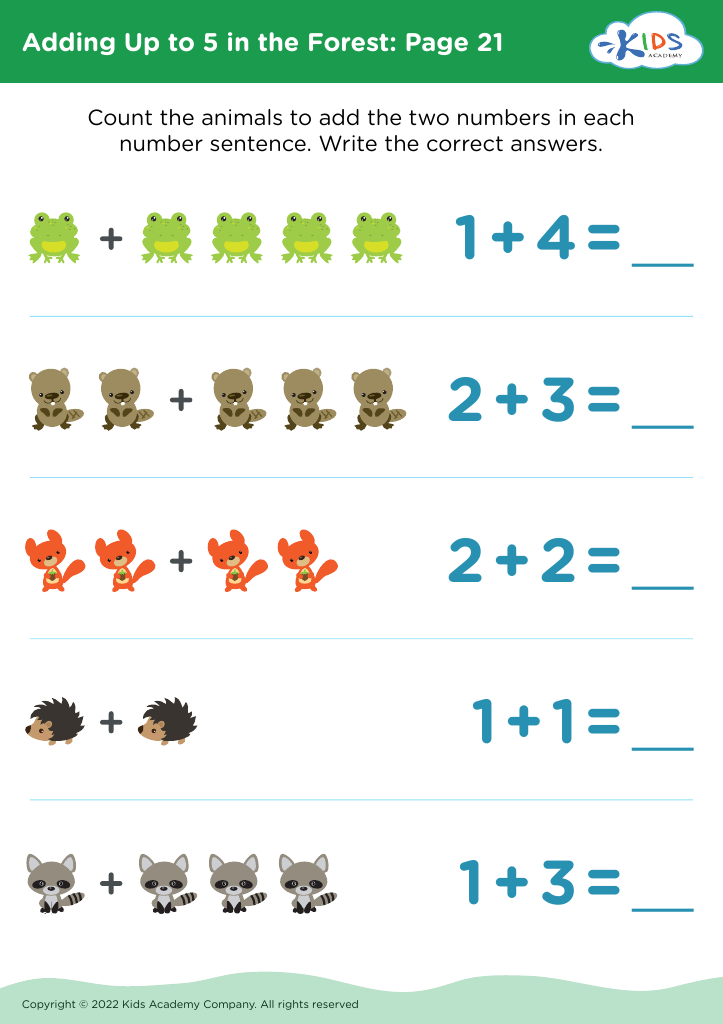
Adding Up to 5 in the Forest: Page 21
Worksheet
Check Bingo Worksheet

Check Bingo Worksheet

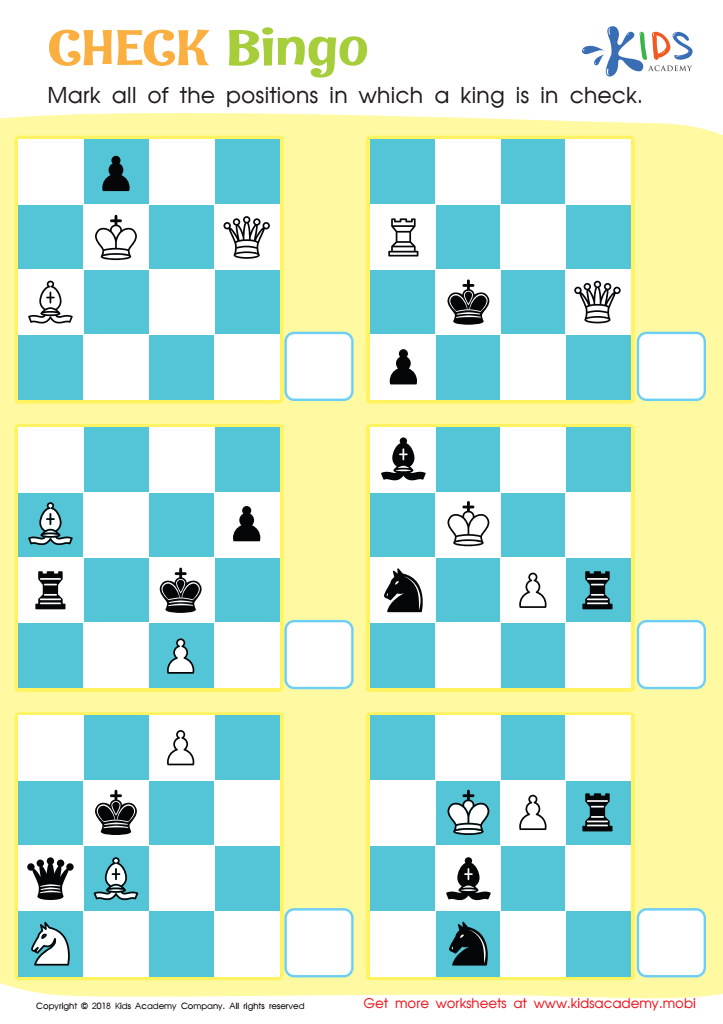
Chess helps young minds build critical thinking, problem-solving and logical reasoning skills. This free PDF worksheet is a fun way to teach these skills. It explains the concept of check and includes gameboards with kings in various positions. Students mark off the boards where a king isn't in check, and they're ready to move onto checkmate!
Check Bingo Worksheet
Worksheet
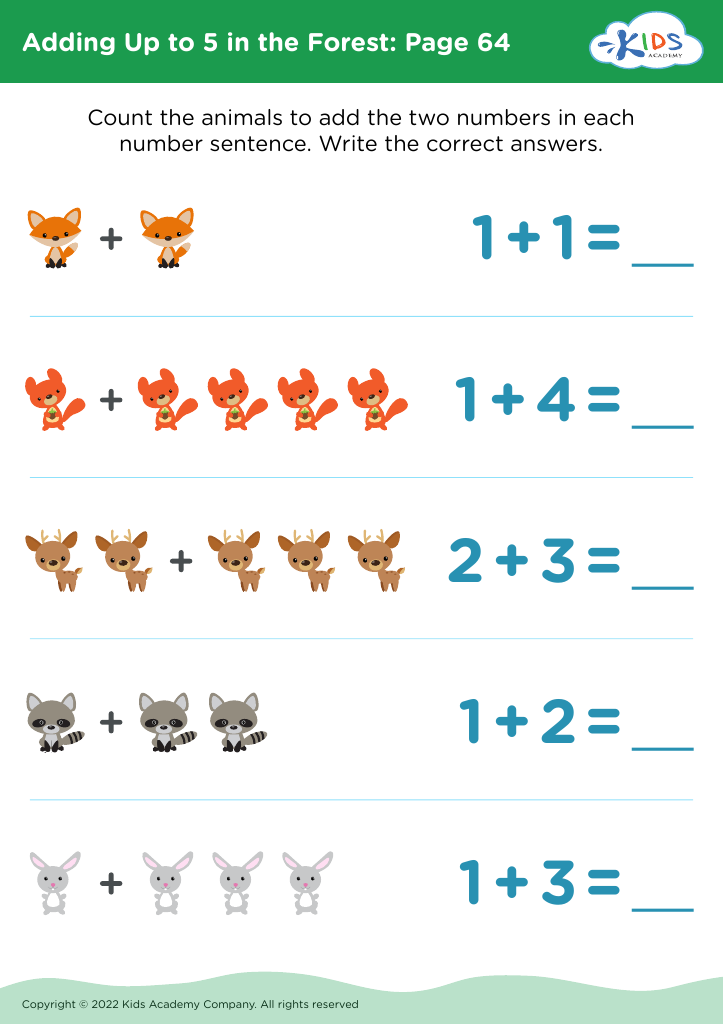
Adding Up to 5 in the Forest: Page 64
Worksheet
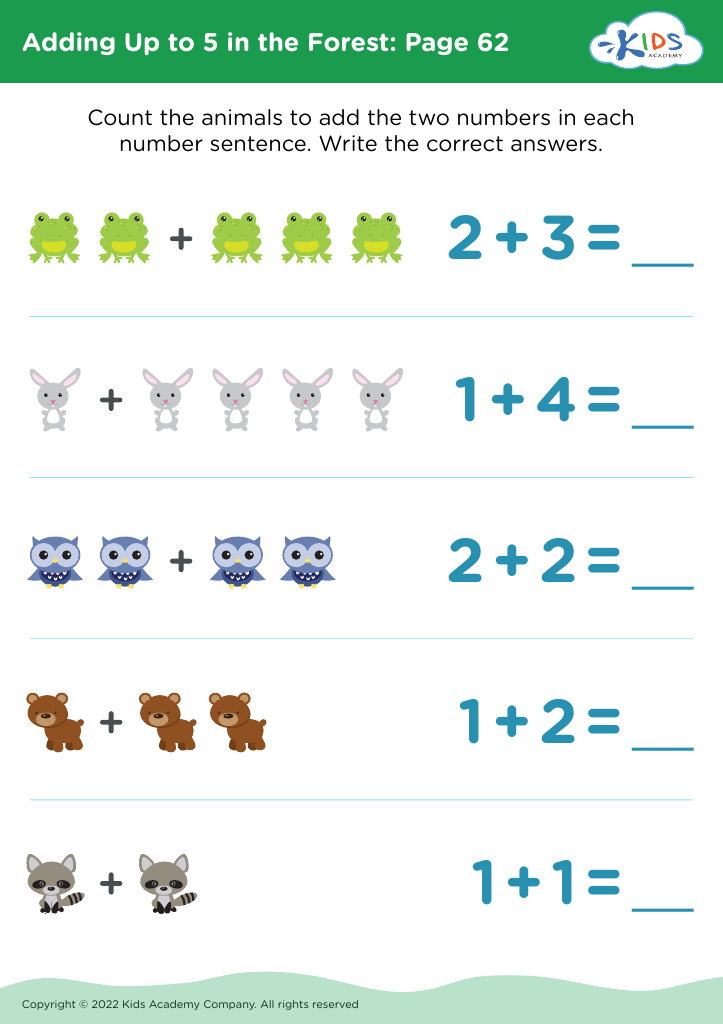
Adding Up to 5 in the Forest: Page 62
Worksheet
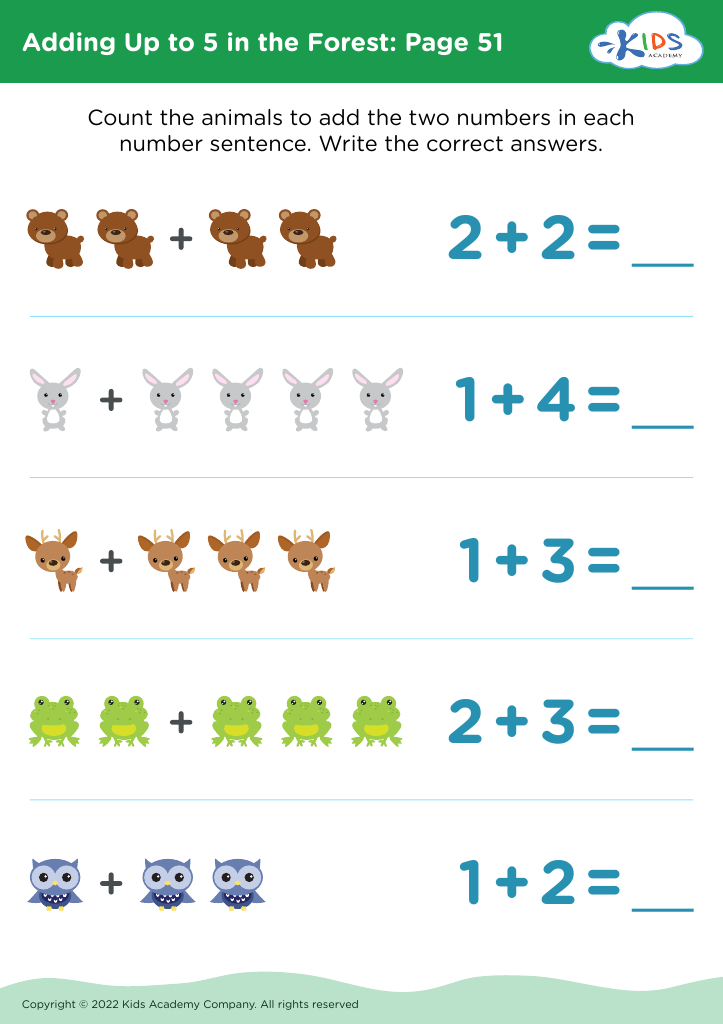
Adding Up to 5 in the Forest: Page 51
Worksheet
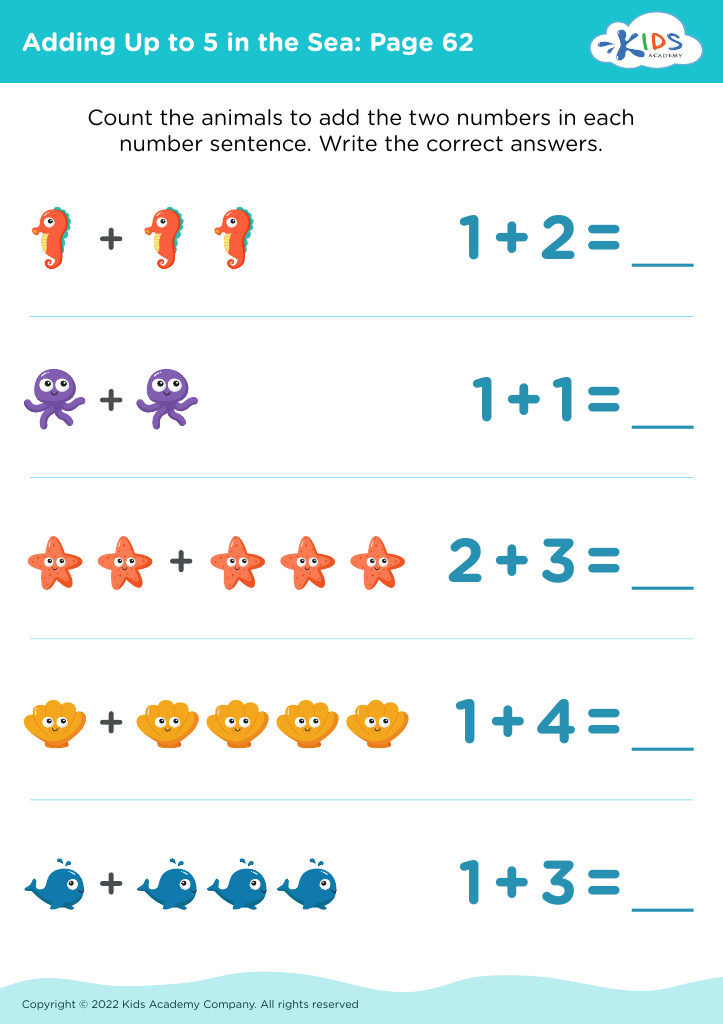
Adding Up to 5 in the Sea: Page 62
Worksheet
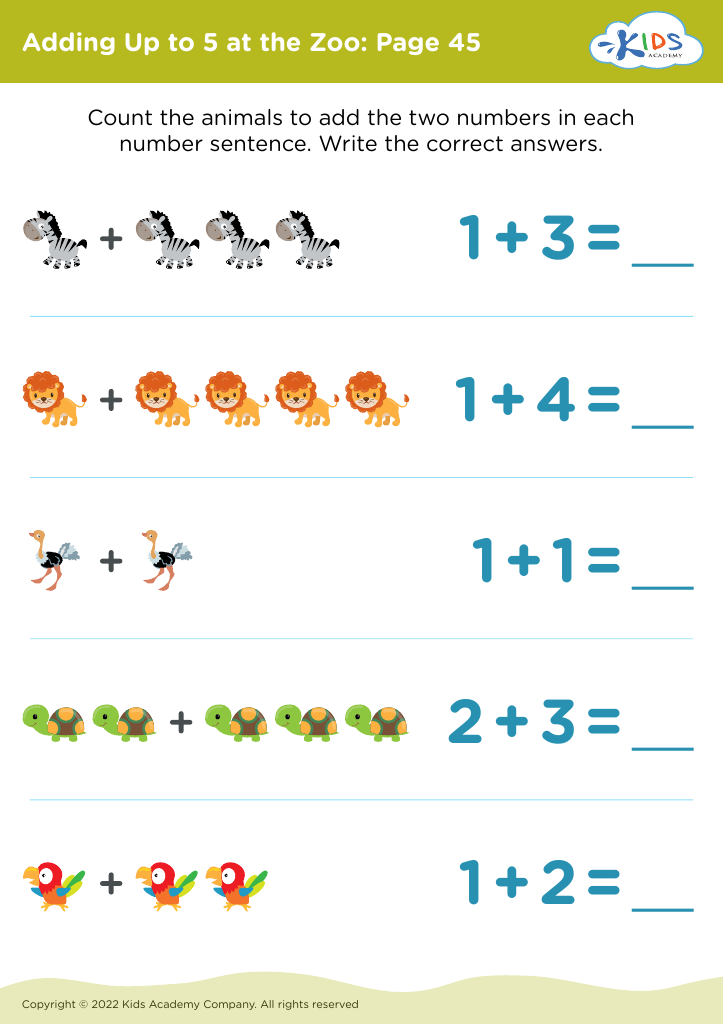
Adding Up to 5 at the Zoo: Page 45
Worksheet
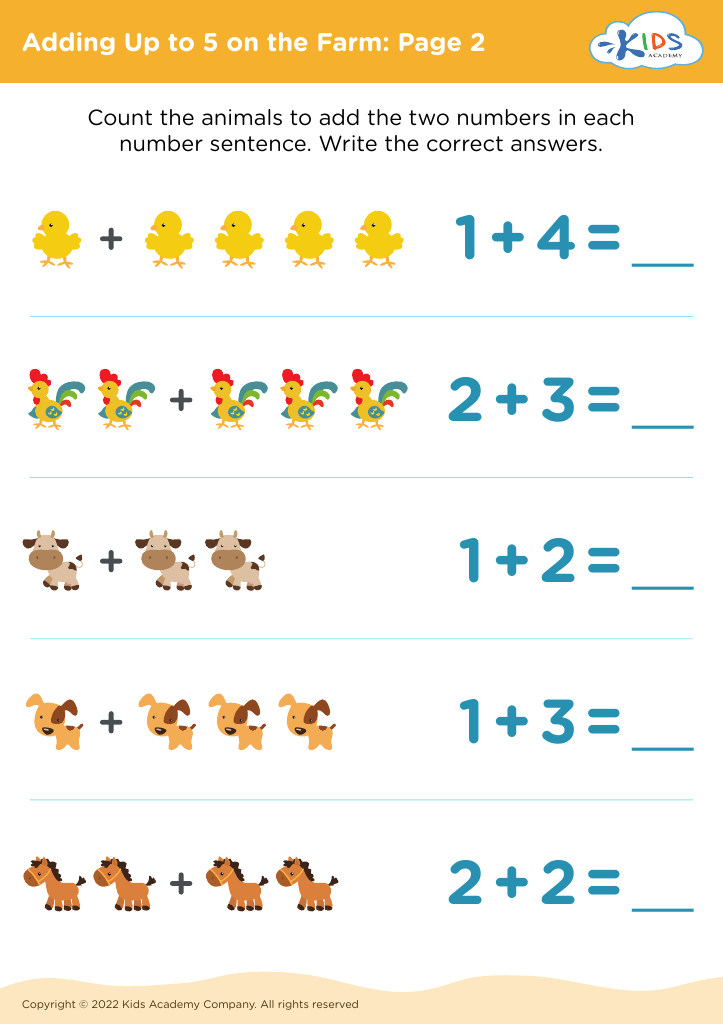
Adding Up to 5 on the Farm: Page 2
Worksheet
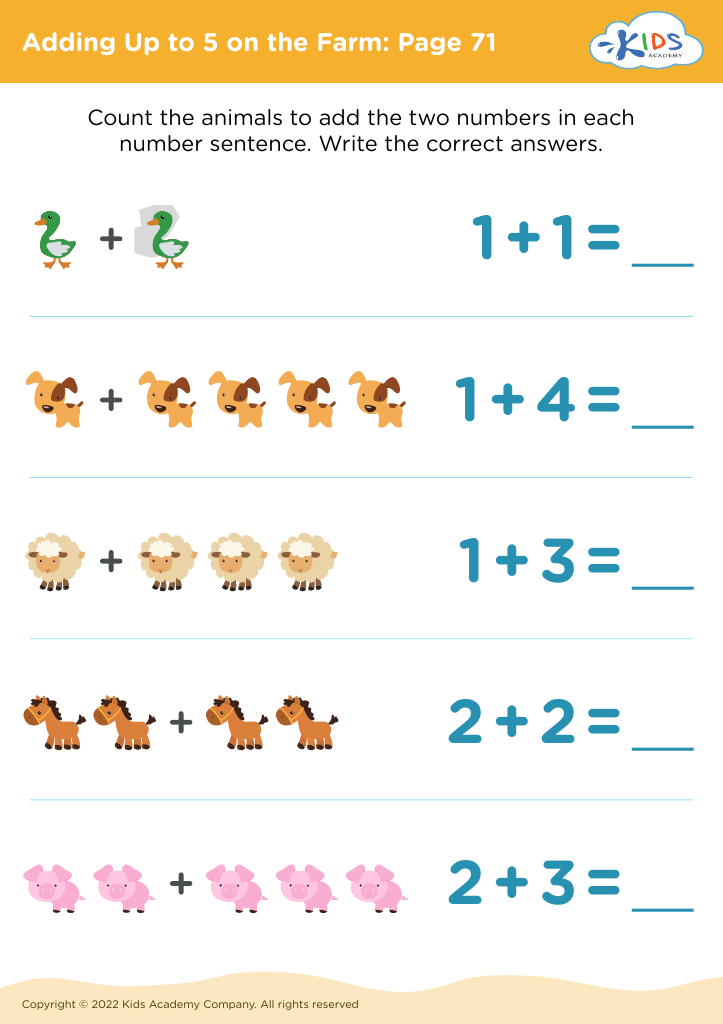
Adding Up to 5 on the Farm: Page 71
Worksheet
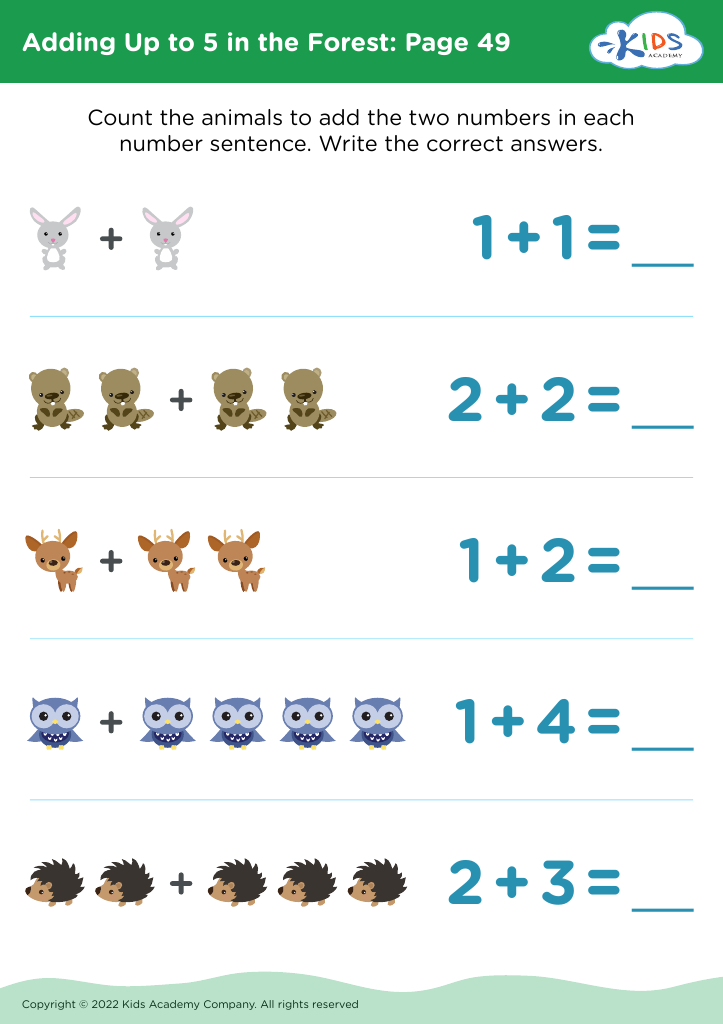
Adding Up to 5 in the Forest: Page 49
Worksheet
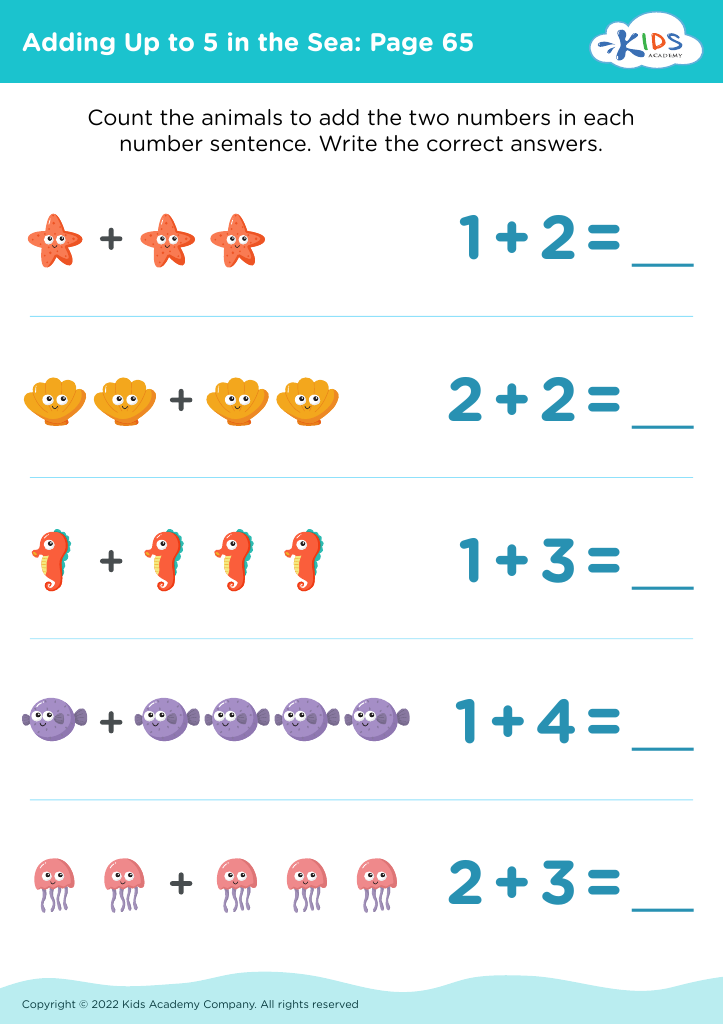
Adding Up to 5 in the Sea: Page 65
Worksheet
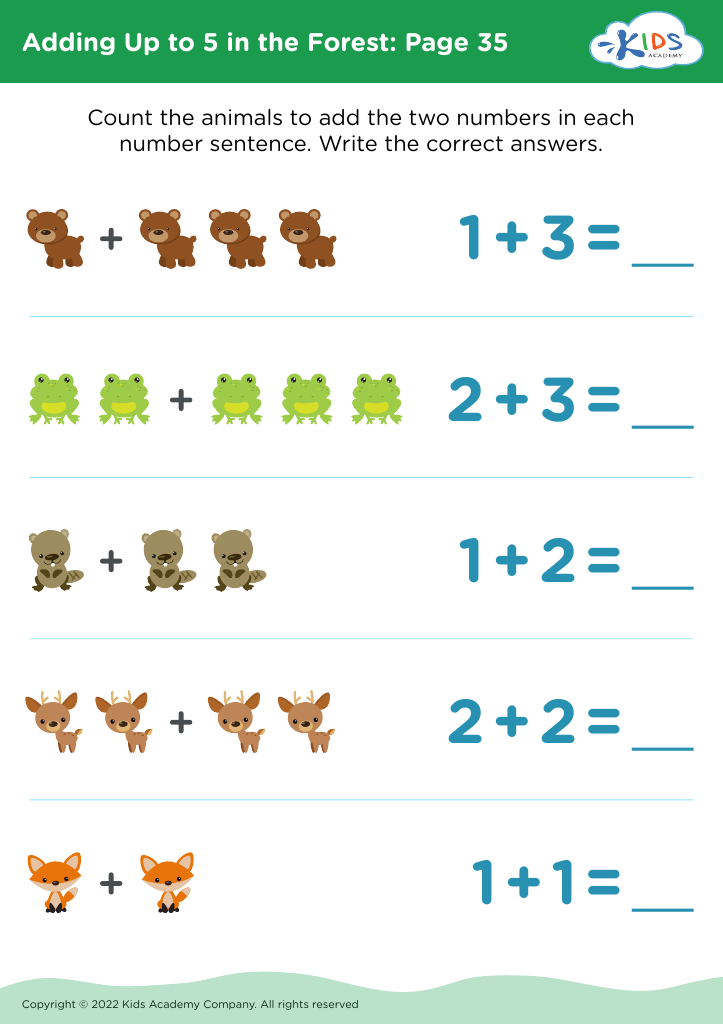
Adding Up to 5 in the Forest: Page 35
Worksheet
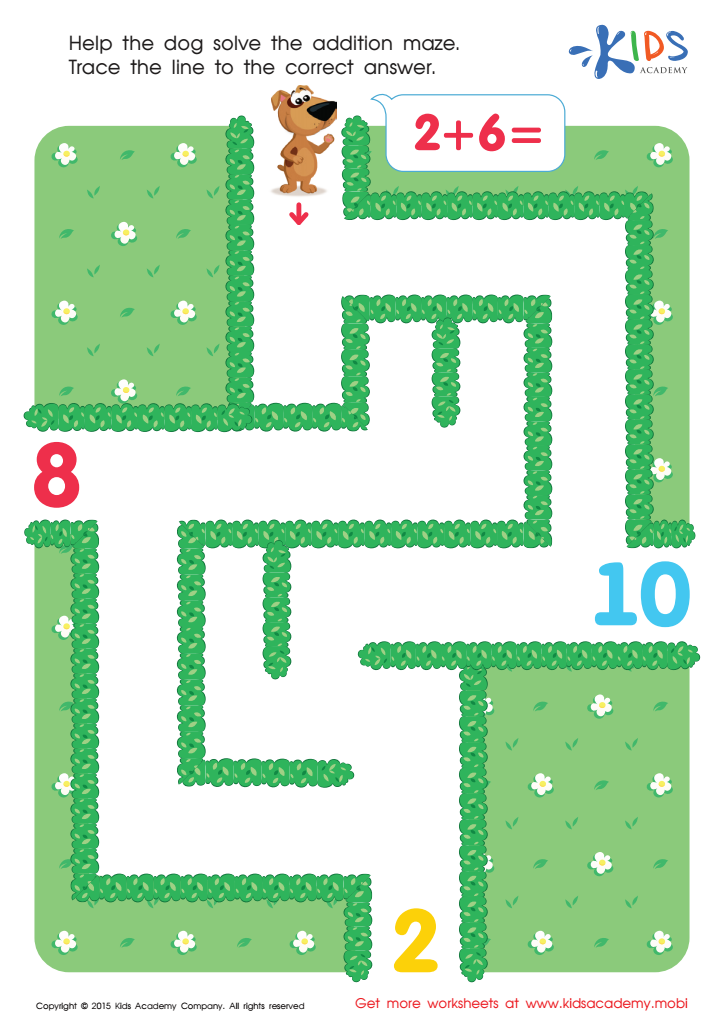
Math: Two Plus Six Addition PDF Worksheet

Two Plus Six Addition Worksheet
Make maths fun and interesting for your preschooler with our kindergarten addition worksheets. Help the dog to trace the right path to the correct answer and explore our free printable addition and subtraction worksheets. Visit our site for more study materials.
Two Plus Six Addition Worksheet
Worksheet
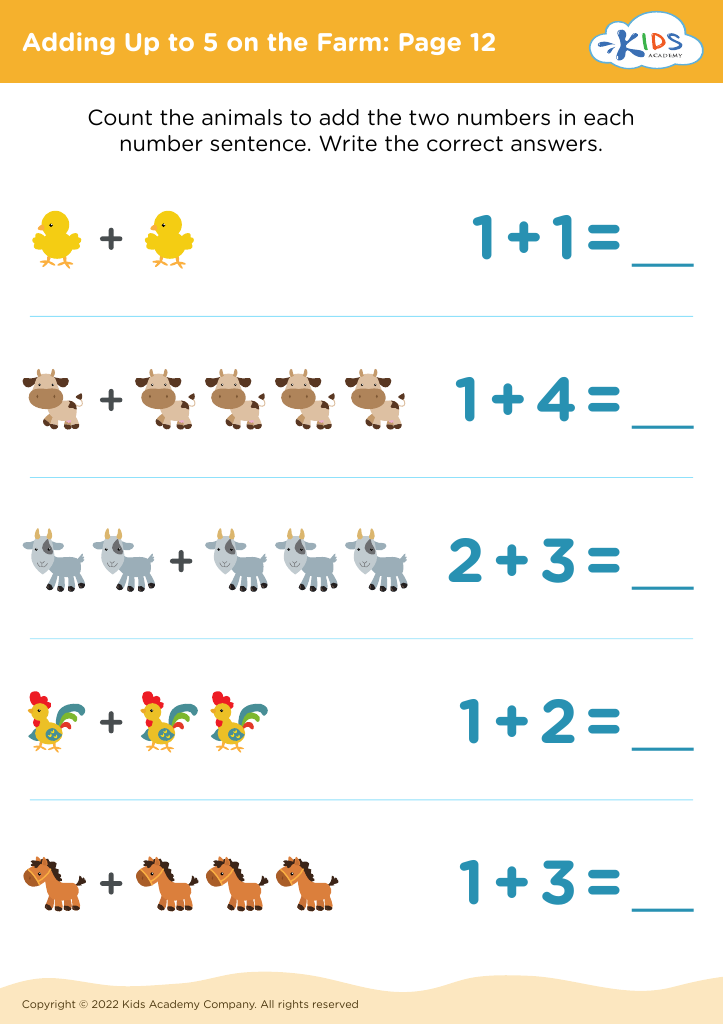
Adding Up to 5 on the Farm: Page 12
Worksheet
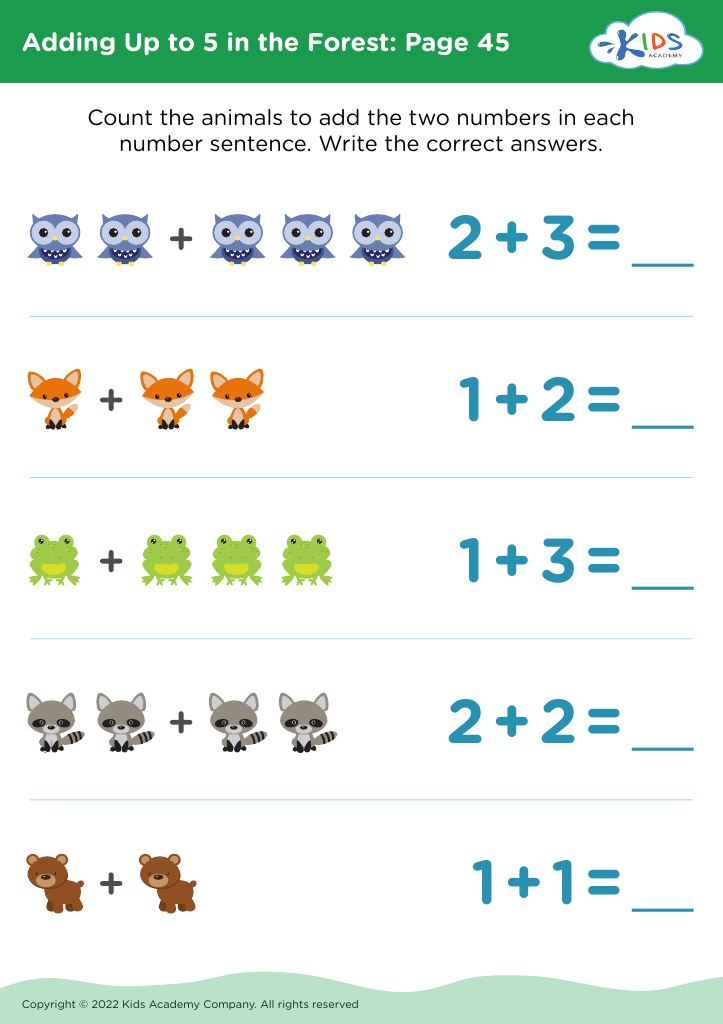
Adding Up to 5 in the Forest: Page 45
Worksheet
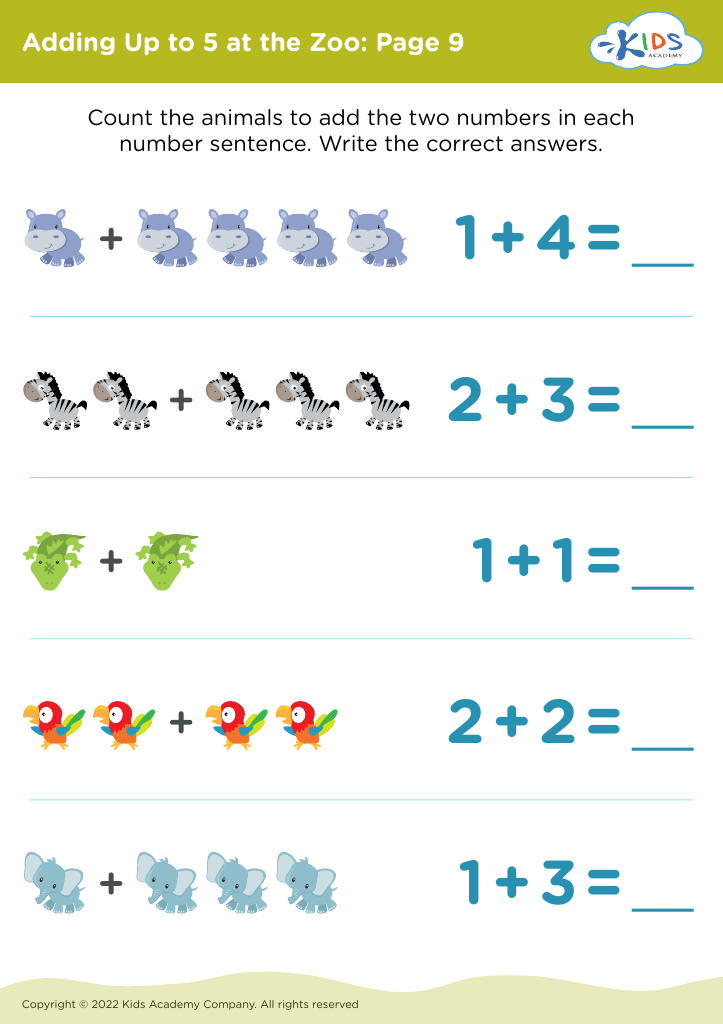
Adding Up to 5 at the Zoo: Page 9

Adding Up to 5 at the Zoo: Page 9

Adding Up to 5 at the Zoo: Page 9
Worksheet
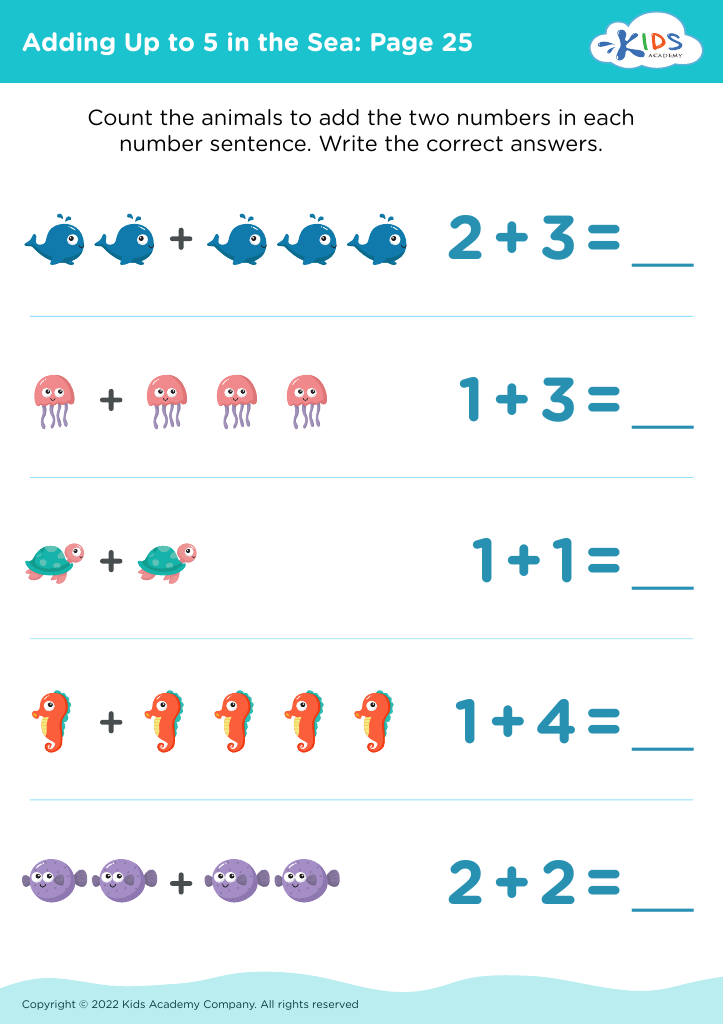
Adding Up to 5 in the Sea: Page 25
Worksheet
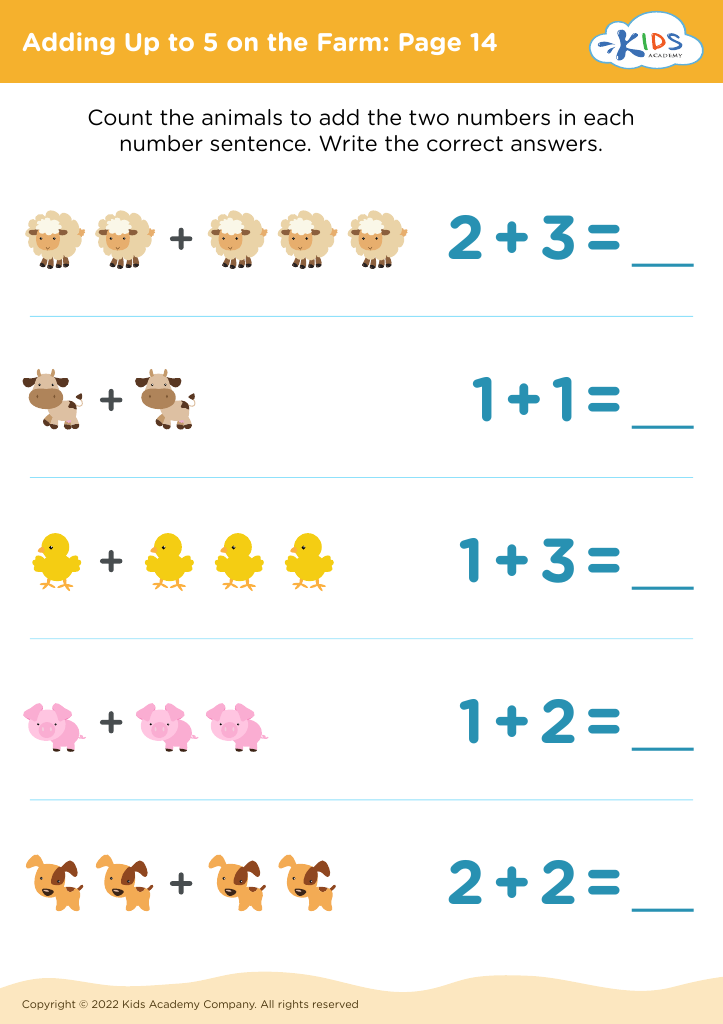
Adding Up to 5 on the Farm: Page 14
Worksheet


Basic addition skills are foundational for young children, typically aged 4-5, as they embark on their educational journey. These skills play a critical role in their overall cognitive development and future academic success. Firstly, mastering basic addition fosters number sense, allowing children to understand and work with numbers confidently. This sets the stage for more advanced mathematical concepts and problem-solving abilities later on.

For parents and teachers, emphasizing basic addition is crucial because it promotes logical thinking and reasoning. These skills are not only essential in math but also in everyday activities, such as counting objects, understanding time, and managing simple transactions. Encouraging children to practice addition strengthens their memory and concentration, enabling them to focus better in various learning scenarios.

Furthermore, early proficiency in addition boosts children's self-esteem and fosters a positive attitude toward learning. When children experience success and feel competent in their abilities, they are more likely to be motivated and engaged in their studies.

Lastly, basic addition skills lay the groundwork for a lifelong love of learning. When children see the relevance and fun in math, they become curious and enthusiastic learners. In summary, ensuring children develop strong basic addition skills sets a critical educational foundation, paving the way for future learning and everyday life skills.