Lowercase identification Worksheets for Ages 4-5
5 filtered results
-
From - To
Unlock your child's reading potential with our Lowercase Identification Worksheets for Ages 4-5! These engaging, expertly-crafted resources are designed to help early learners recognize and differentiate lowercase letters. Each worksheet combines fun activities with educational content, promoting letter familiarity while boosting their confidence. Perfect for at-home practice or classroom use, these worksheets make learning an interactive adventure. Encourage young minds to explore the alphabet through tracing, matching, and coloring exercises. Give your child a head start on their literacy journey with tools that make foundational skills fun and accessible! Download today and watch them thrive!
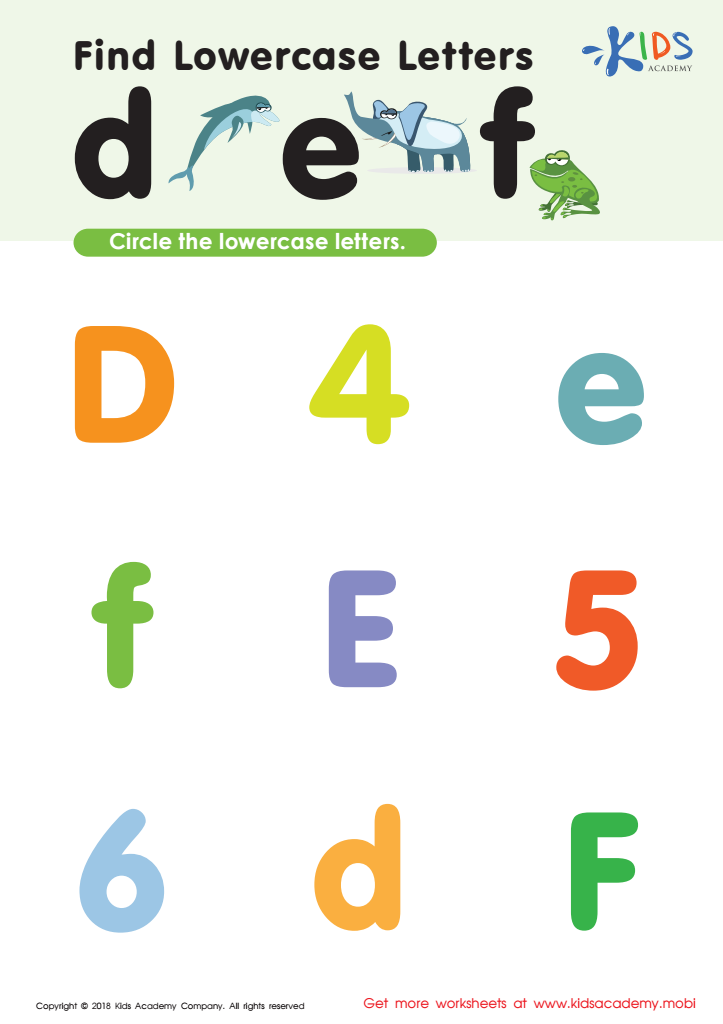
Find Lowercase Letters d e f Worksheet
 Assign to My Students
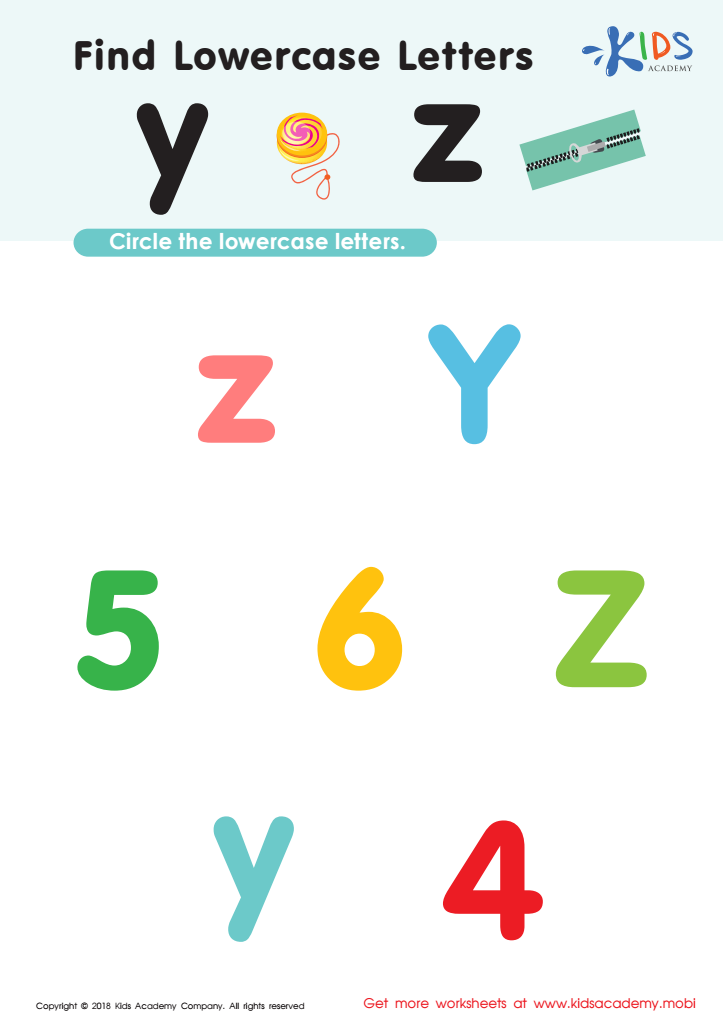
Find Lowercase Letters y z Worksheet
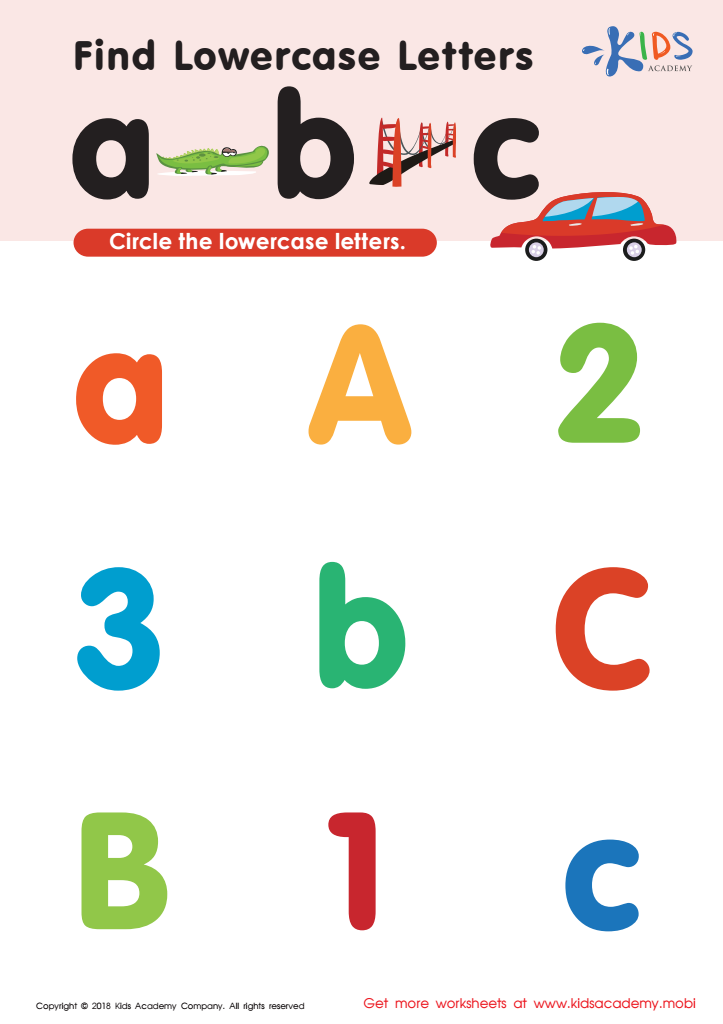
Find lowercase letters a b c Worksheet
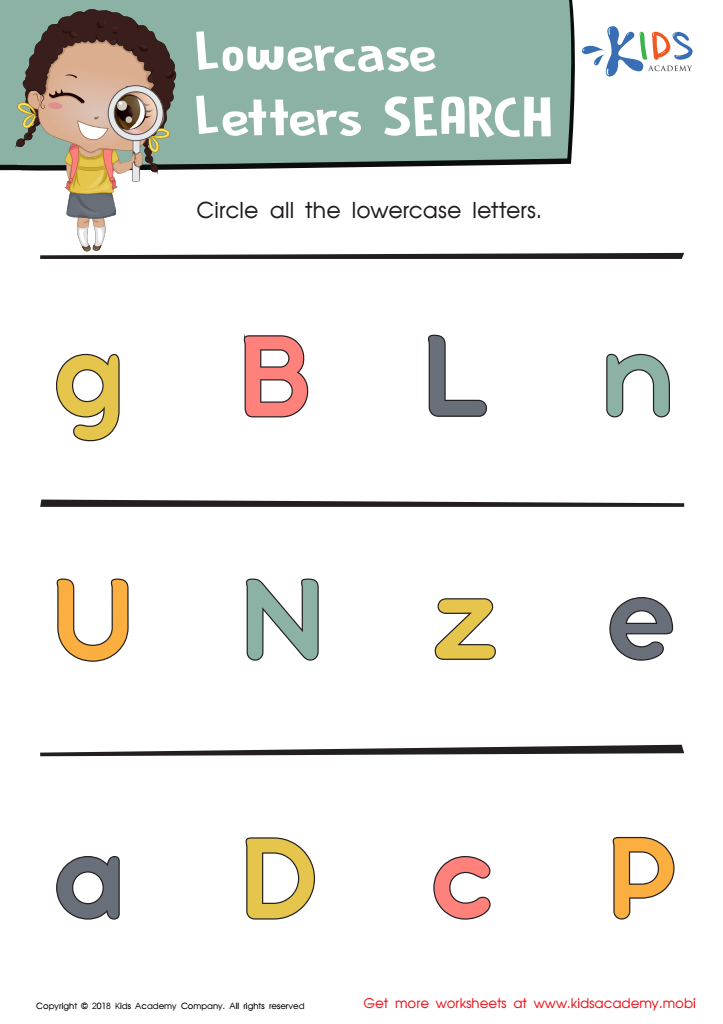
Lowercase Letters Search: Assessment Worksheet
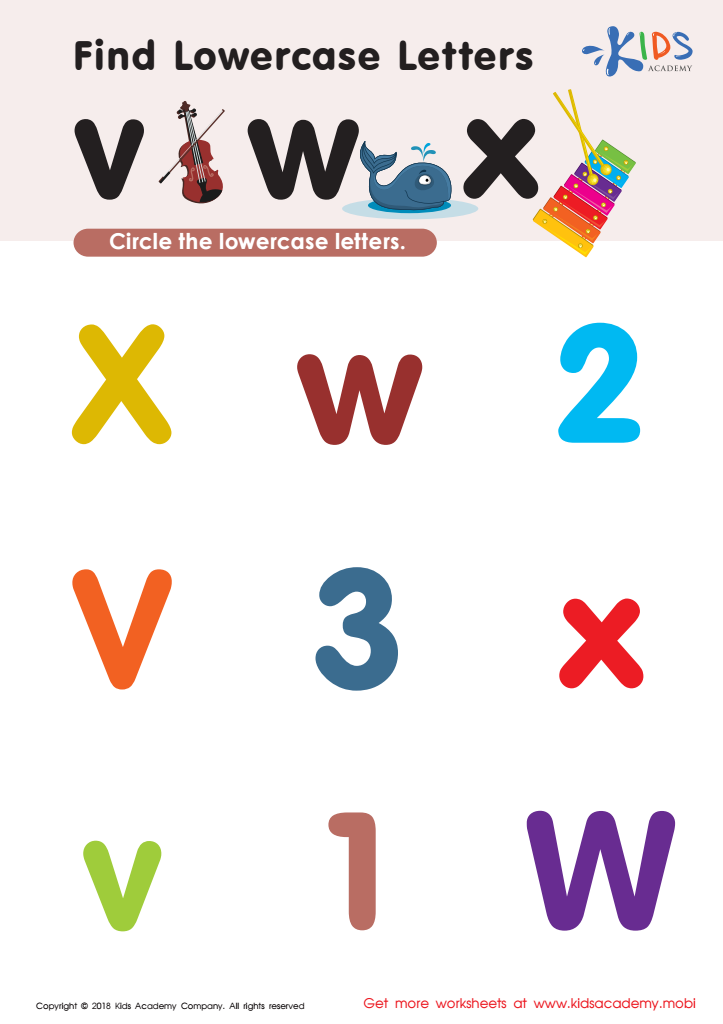
Find Lowercase Letters v w x Worksheet








The ability for children aged 4-5 to identify lowercase letters is a crucial building block for literacy development. At this age, children are typically developing foundational reading and writing skills. Most of the text they will encounter in books, signs, and classroom materials is in lowercase form. Thus, familiarity with lowercase letters enhances their ability to recognize words and understand sentences, which is critical for early reading skills.
Moreover, lowercase identification promotes cognitive development by enhancing children's visual discrimination skills. The ability to differentiate between similar-looking letters (like 'b' and 'd') is essential not just for literacy, but for broader cognitive tasks that rely on fine distinctions.
From a fine motor skills perspective, being able to write lowercase letters helps children practice control and coordination. Lowercase letters often contain more curves and various forms than uppercase letters, improving fine motor dexterity.
For teachers and parents, emphasizing lowercase letter recognition ensures that children are prepared to transition seamlessly from pre-reading activities to actual reading. It serves as a cornerstone not only for reading fluency but also for subsequent academic success. Early familiarity with lowercase letters creates a more balanced and comprehensive approach to literacy, making learning to read smoother and more efficient.








