Cognitive Development 2D Shapes Worksheets for Ages 4-5
8 filtered results
-
From - To
Unlock your child's potential with our "Cognitive Development 2D Shapes Worksheets" tailored for ages 4-5. These expertly designed resources help young learners recognize, identify, and understand basic 2D shapes through engaging activities. Enhancing cognitive skills, they promote critical thinking, spatial awareness, and foundational math concepts. Our worksheets offer hands-on experiences that make learning both fun and educational, setting the stage for academic success. Perfect for preschoolers and kindergarteners, each activity is structured to build confidence and shape recognition. Start your child's educational journey today with our interactive and productive 2D shapes worksheets.
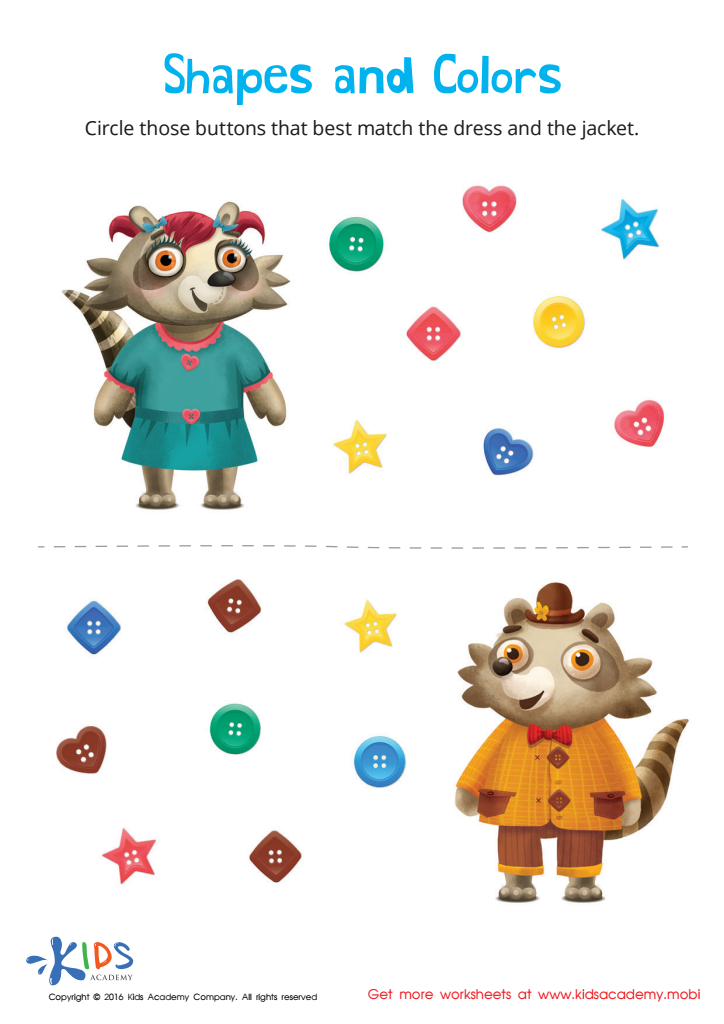
Matching: Shapes and Colors Worksheet
 Assign to My Students











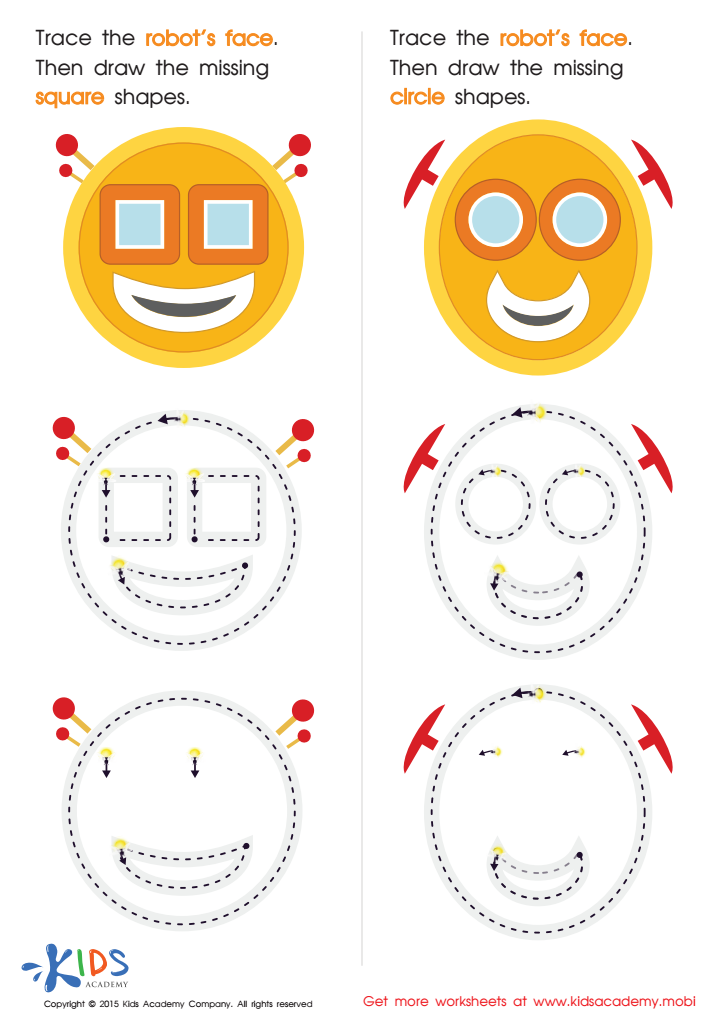
Practicing to Draw Circles And Squares Printable
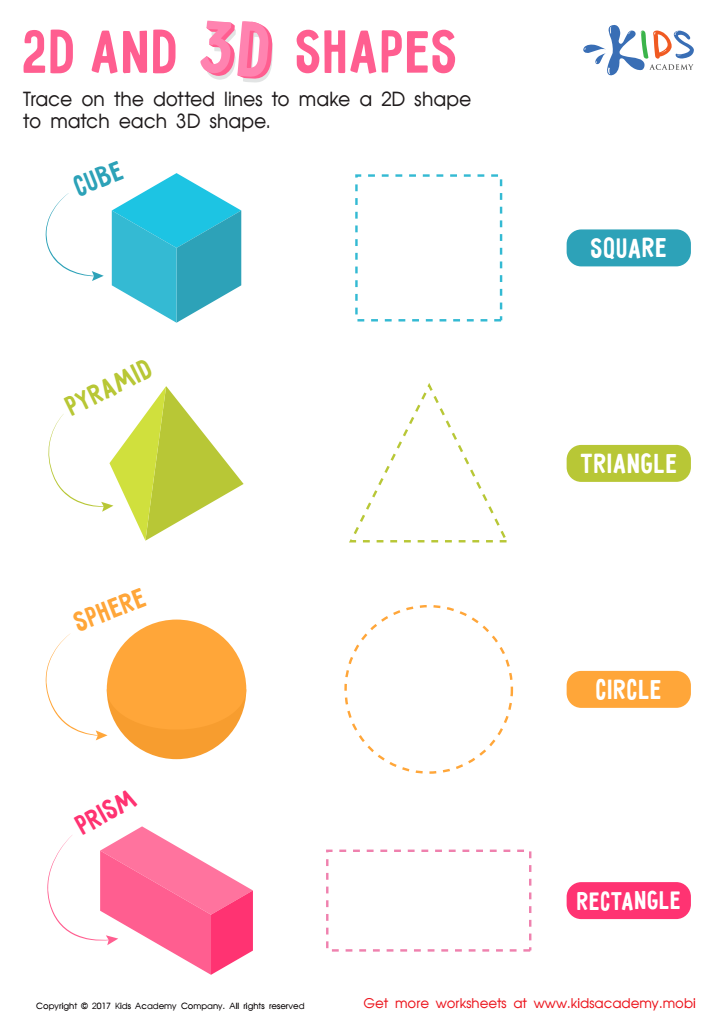
2D and 3D Shapes Worksheet
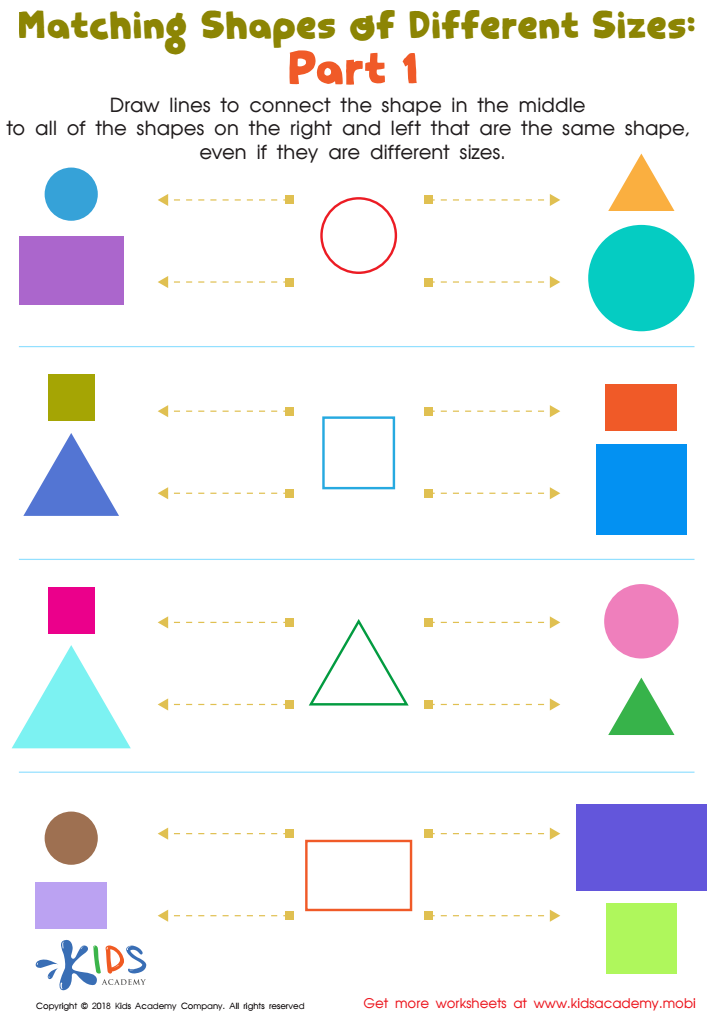
Geometry: part 1 Worksheet
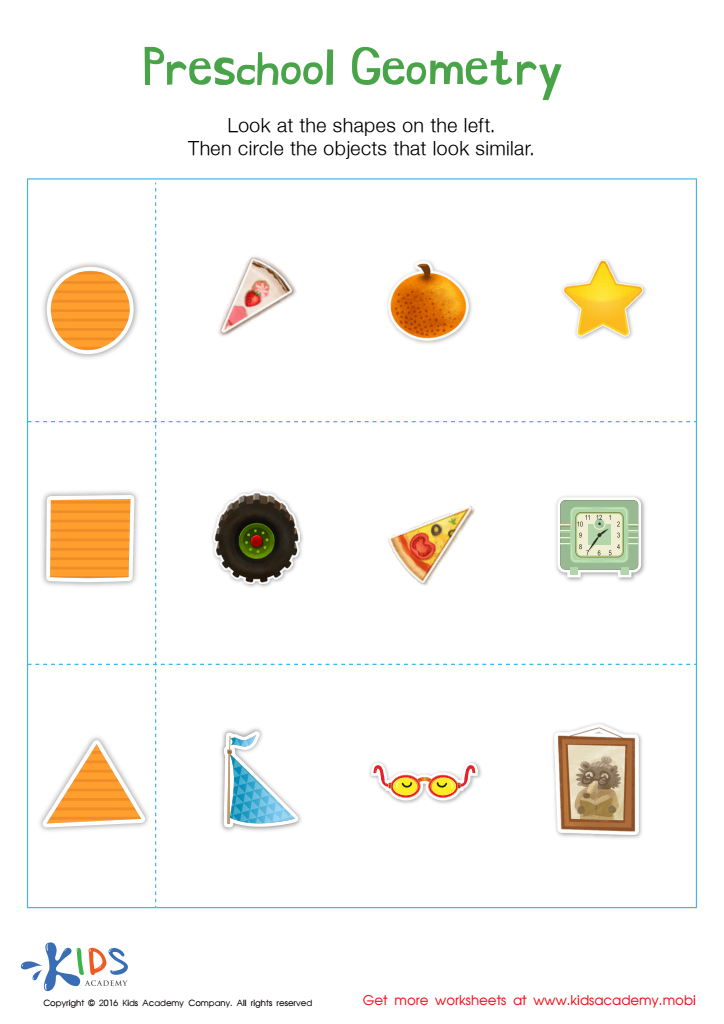
Preschool Geometry Match Up Worksheet
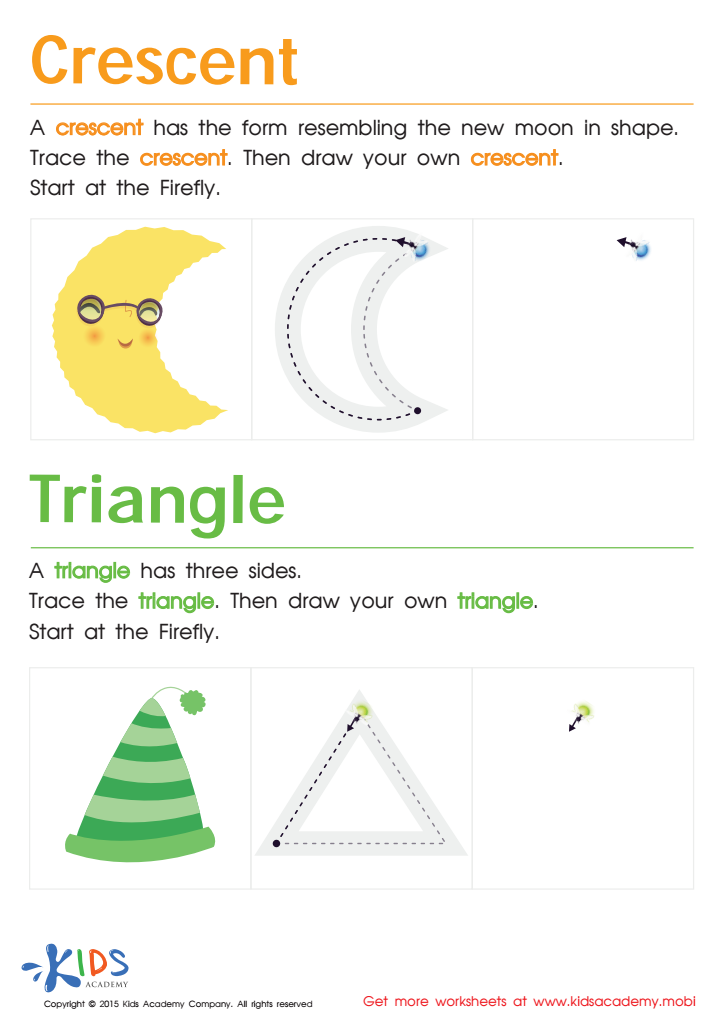
Learning to Draw Crescents And Triangles Worksheet
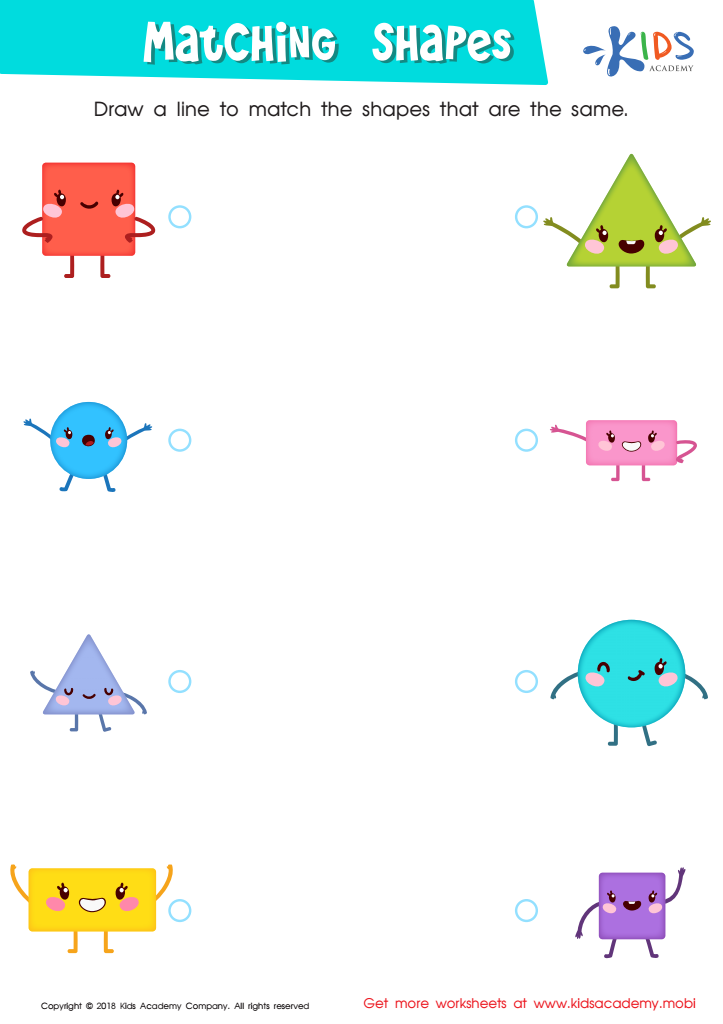
Matching Shapes Worksheet
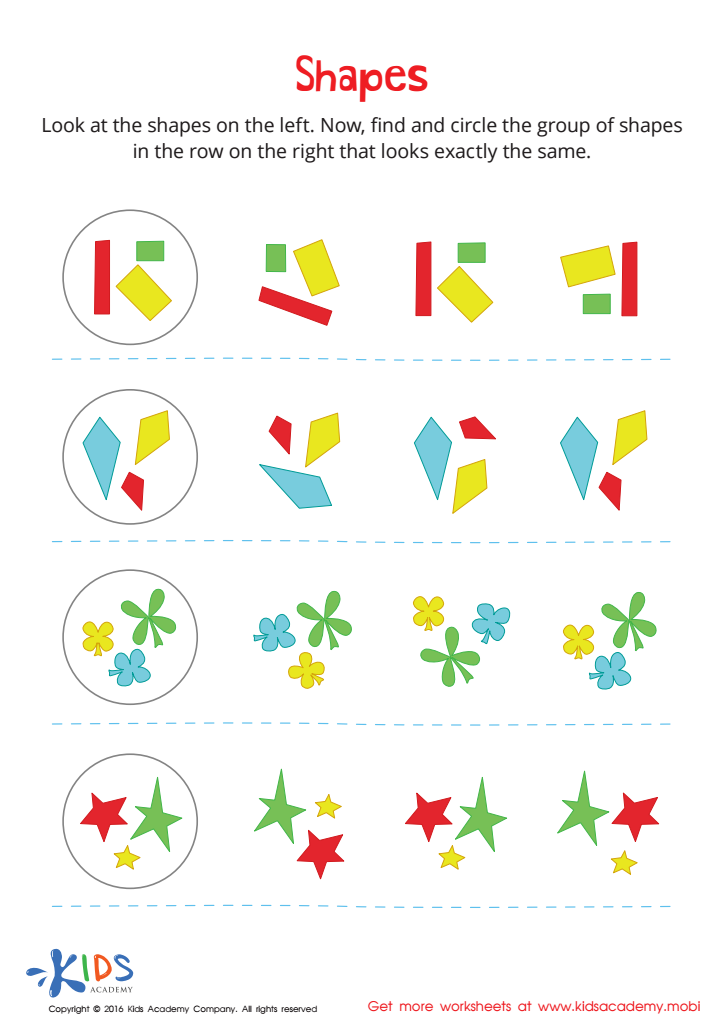
Shapes Worksheet








Cognitive development in early childhood lays the foundation for all later learning, and understanding 2D shapes plays a pivotal role in this developmental stage. For children aged 4-5, learning about circles, squares, triangles, and other geometric shapes is not merely about recognizing and naming forms; it's about enhancing essential cognitive skills such as visual perception, spatial awareness, and problem-solving.
Firstly, recognizing and differentiating between 2D shapes helps children improve their visual discrimination skills, which are crucial for reading and writing. The ability to identify subtle differences in shapes translates to recognizing letters and numbers, which are fundamental for literacy and numeracy proficiency.
Secondly, engaging with shapes cultivates spatial reasoning and geometry skills. These underpin advanced mathematical concepts and are involved in daily tasks like navigating environments and understanding architecture. For instance, children learn how shapes combine to form patterns or structures, which promotes logical thinking and creativity.
Additionally, learning about shapes during play also fosters social and emotional development. When children play with shape puzzles or create pictures using shapes, they are practicing cooperation, patience, and perseverance.
Thus, incorporating cognitive development activities focused on 2D shapes for ages 4-5 ensures a well-rounded growth trajectory that extends beyond math, influencing various facets of intellectual, social, and emotional growth.








