Cognitive Development Adding Up to 5 Worksheets for Ages 4-5
95 filtered results
-
From - To
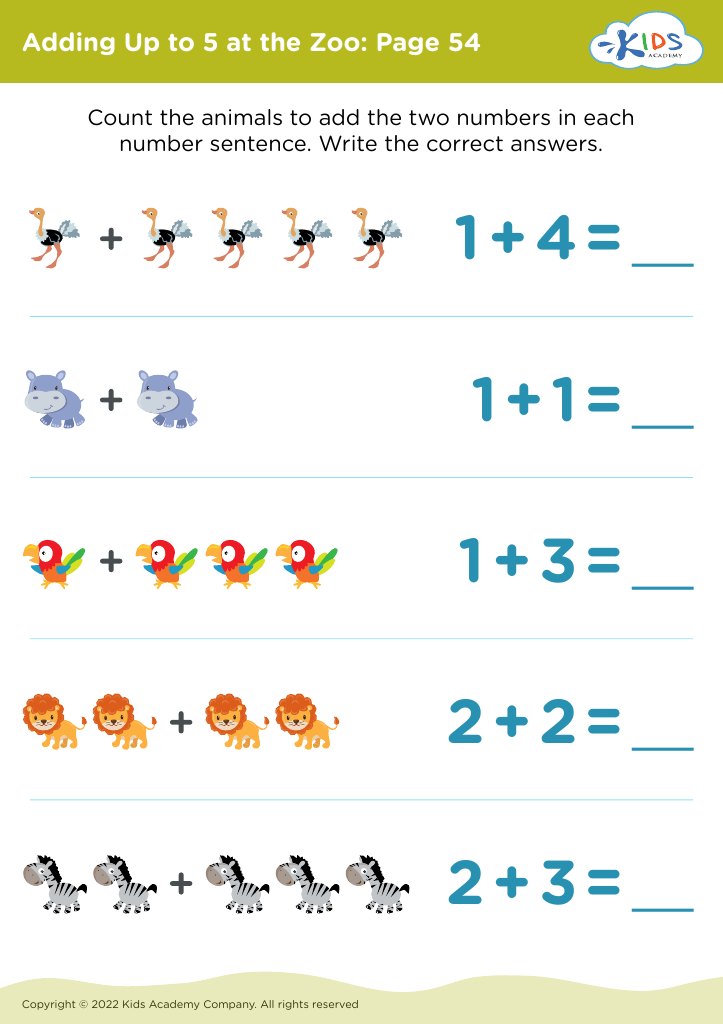
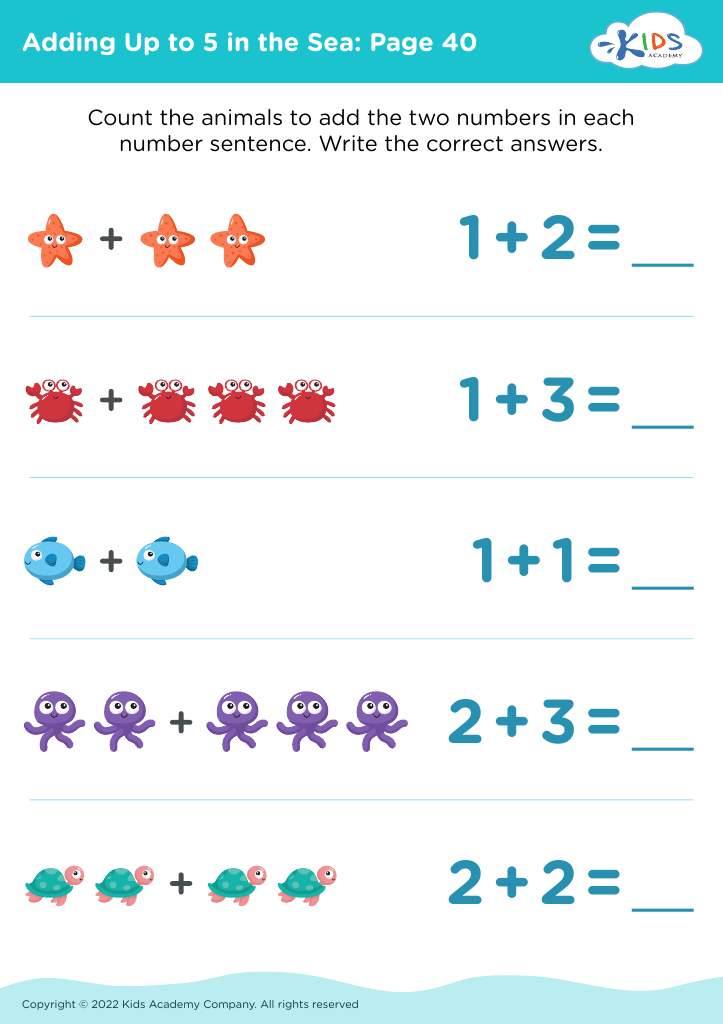
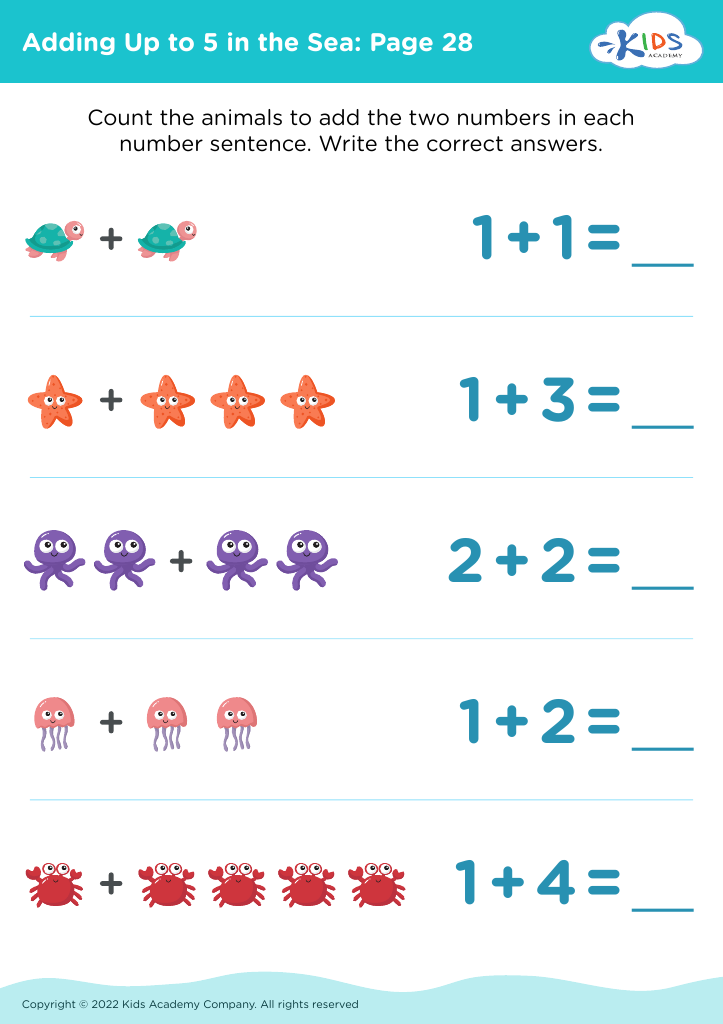
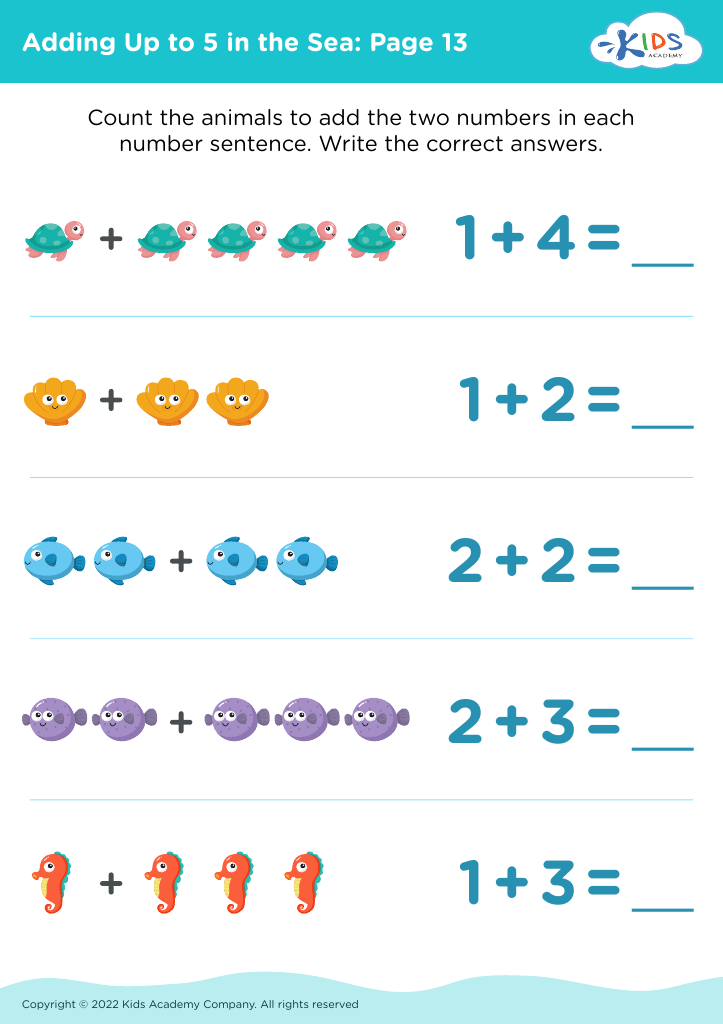
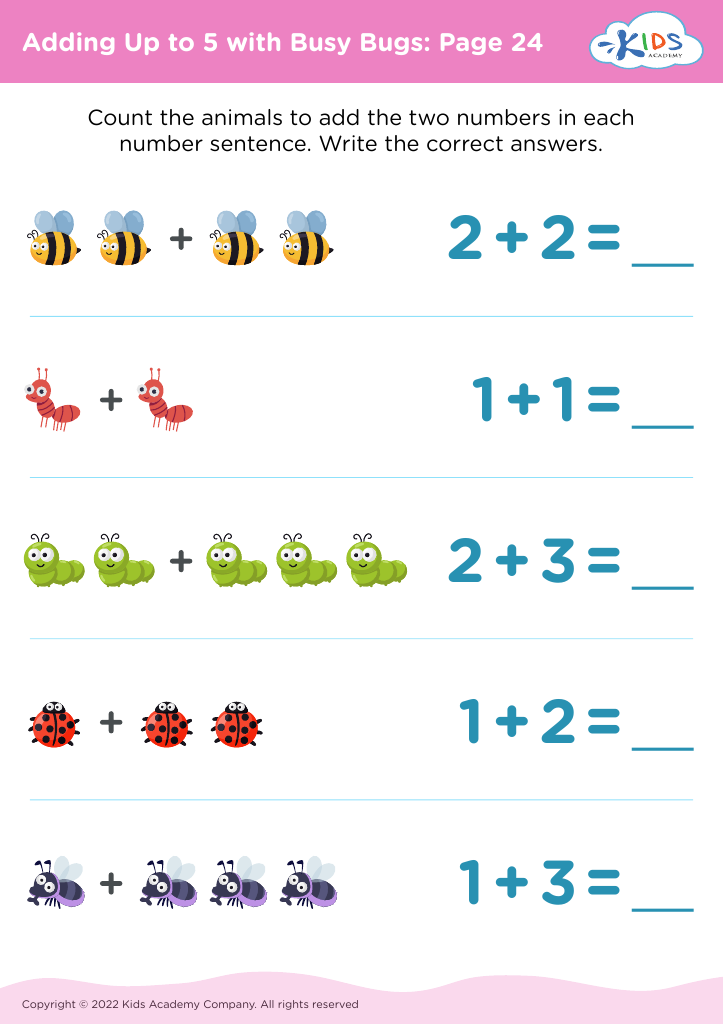
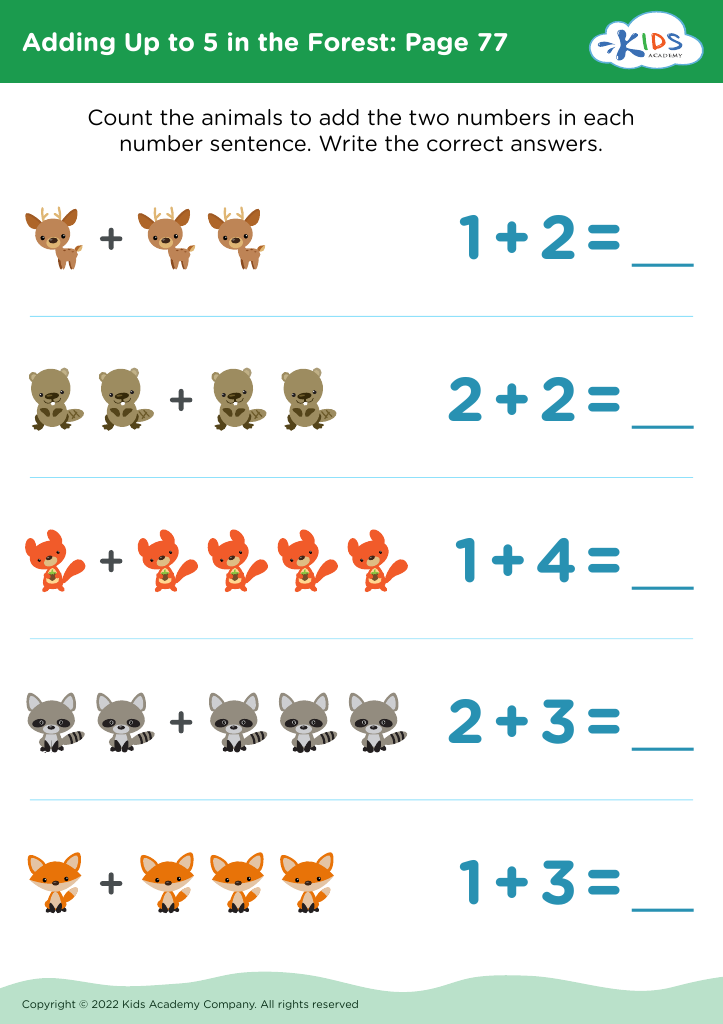
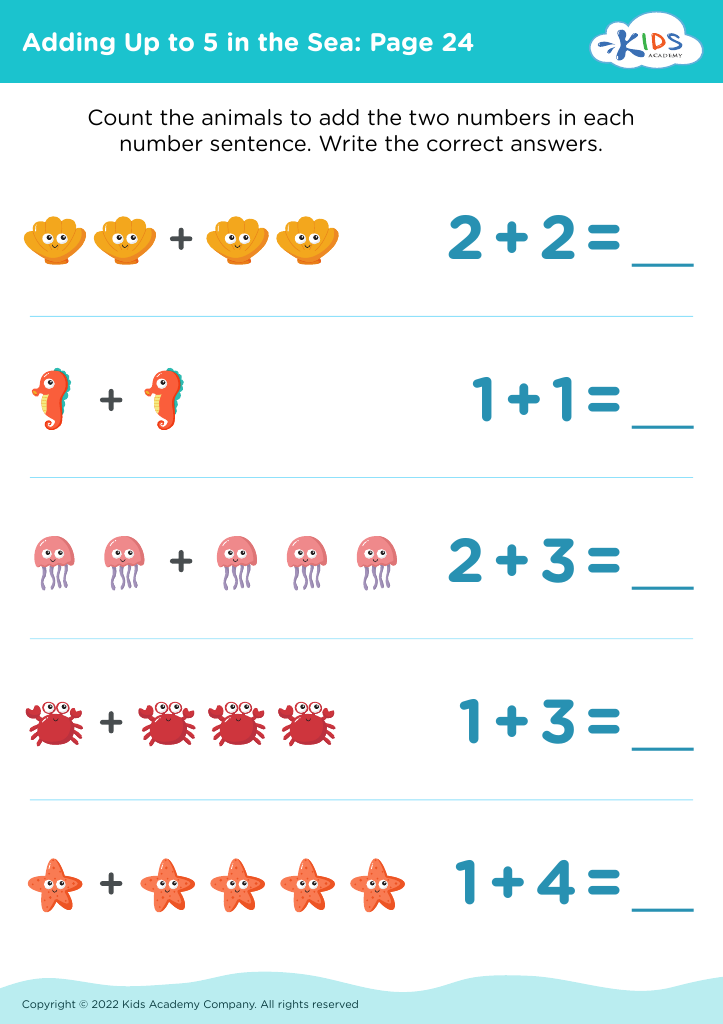
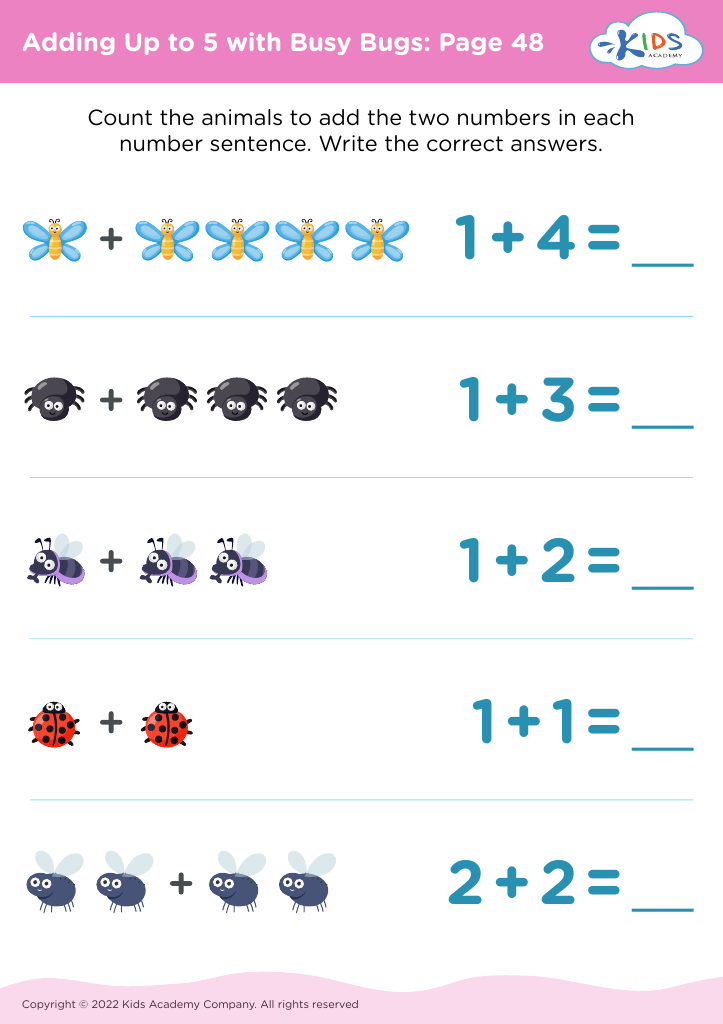
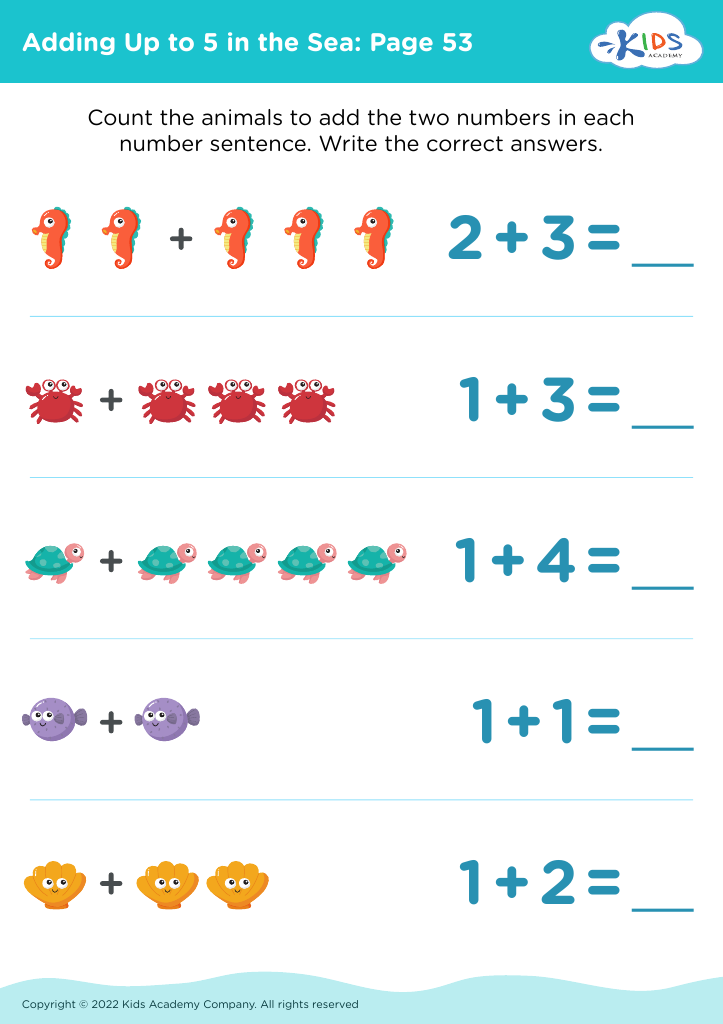
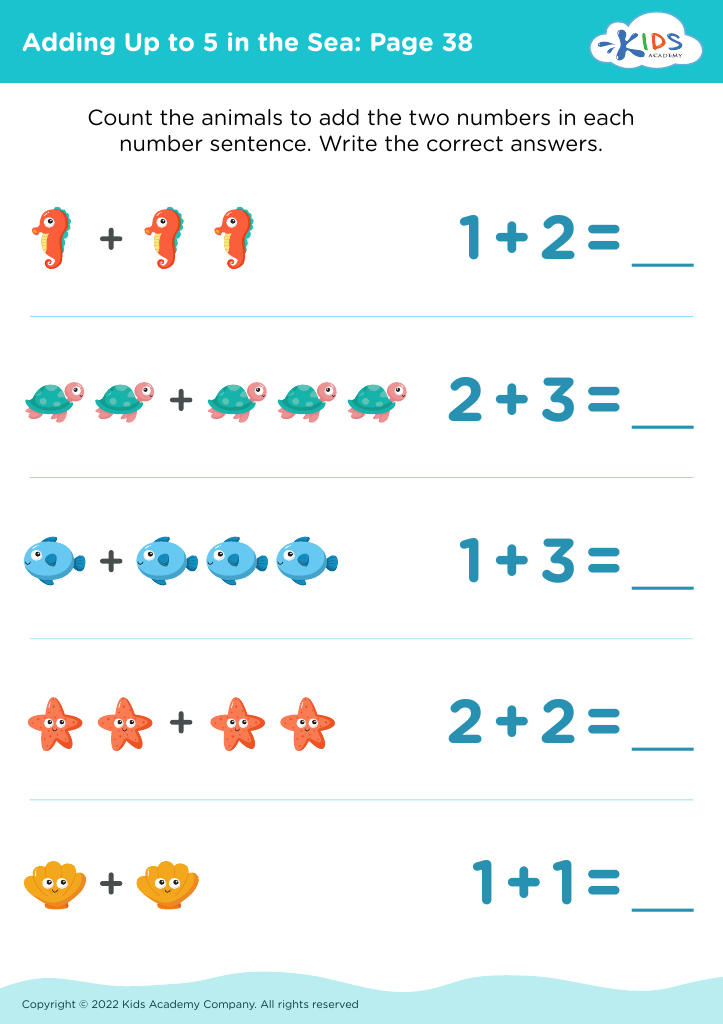
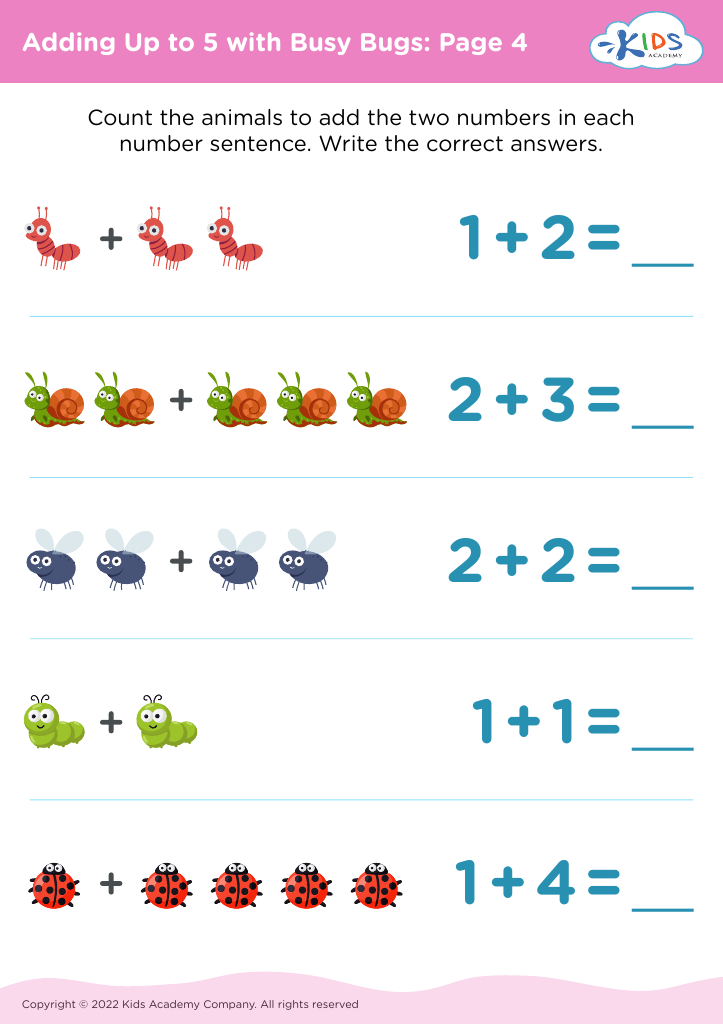
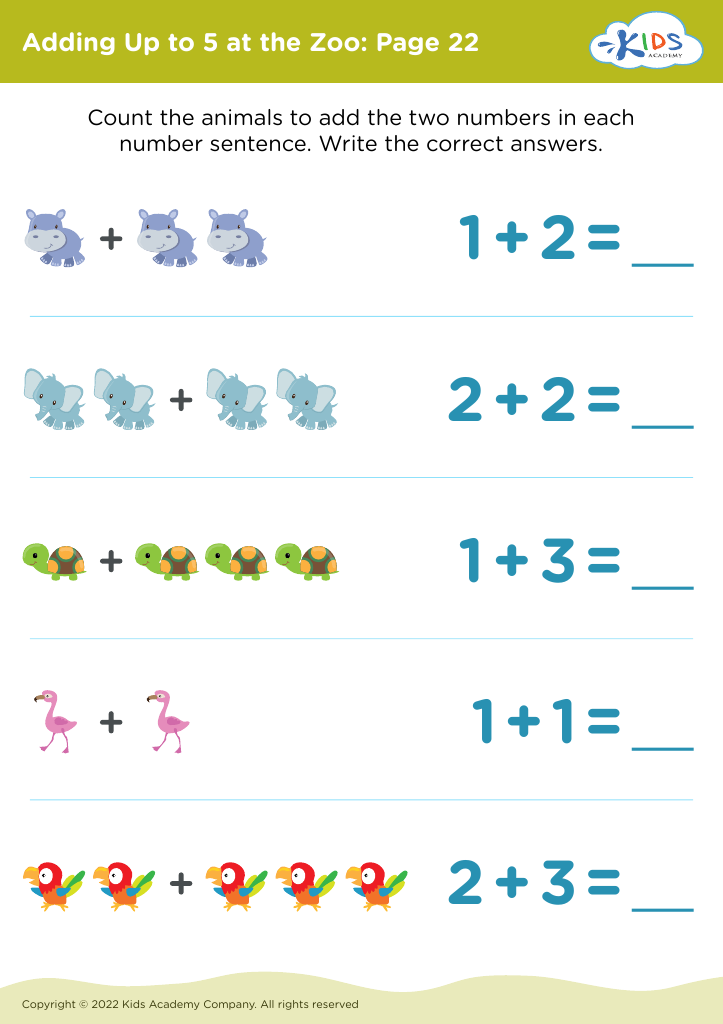
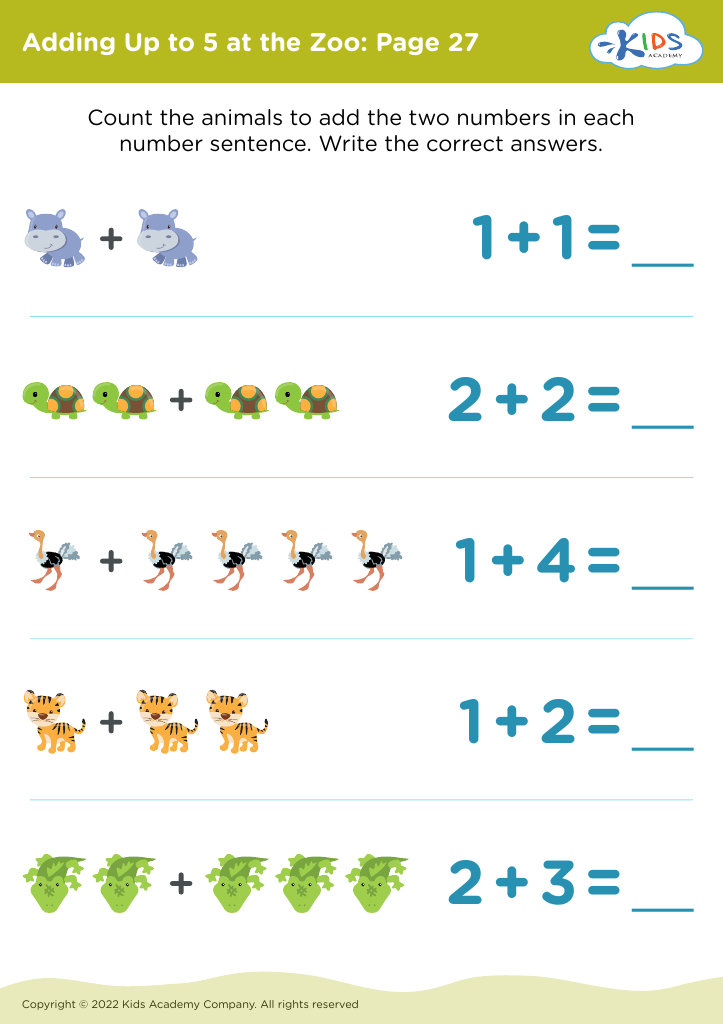
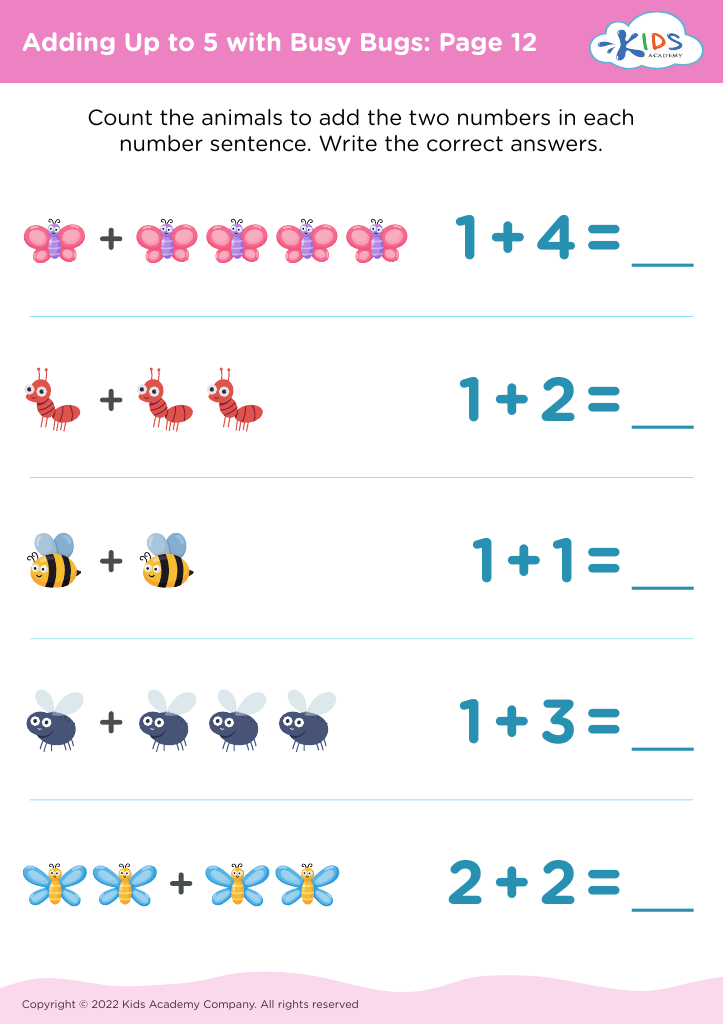
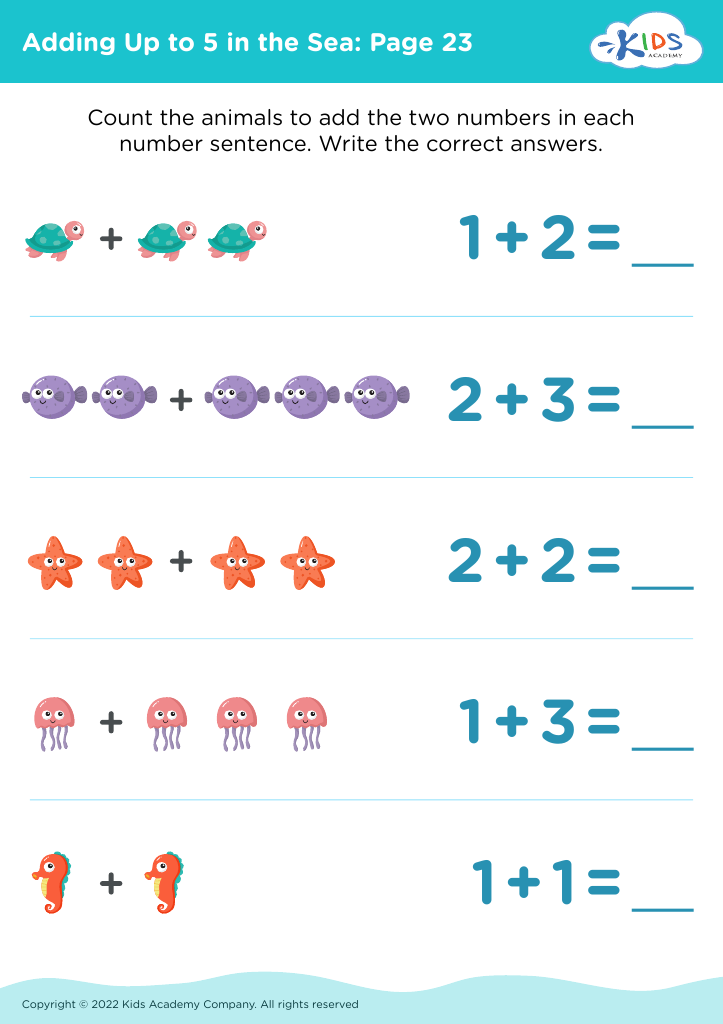
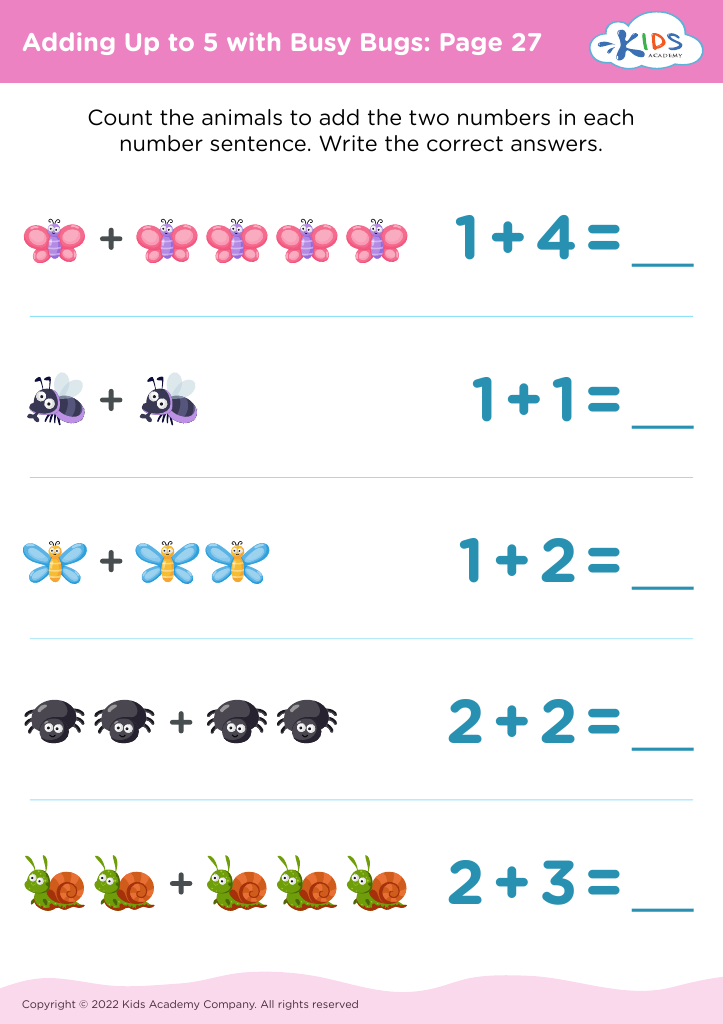
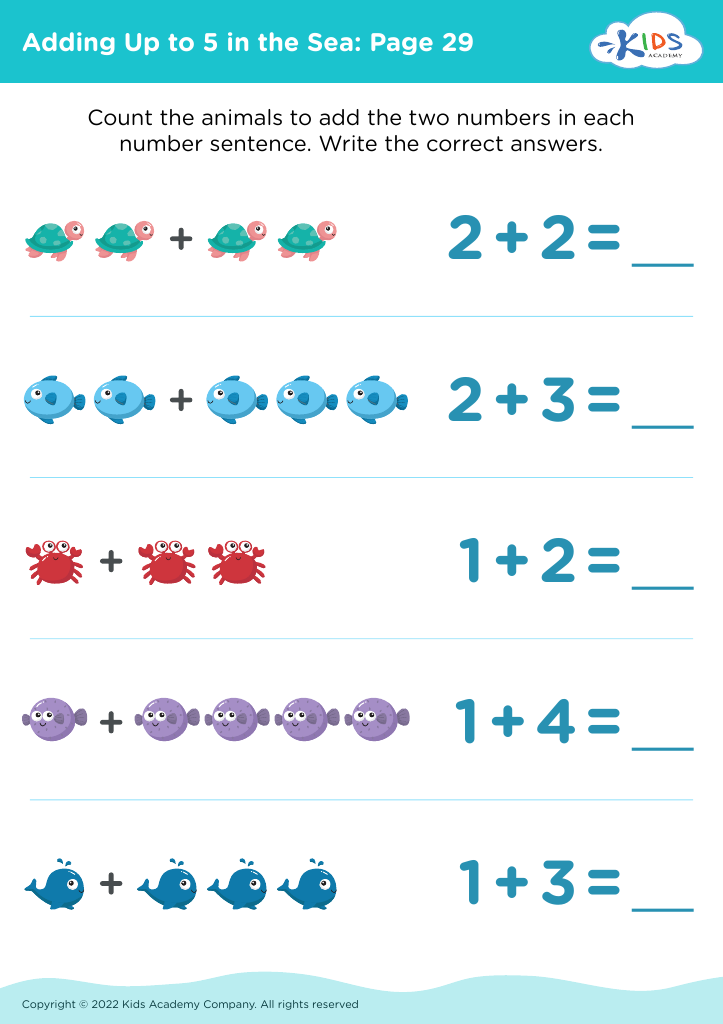
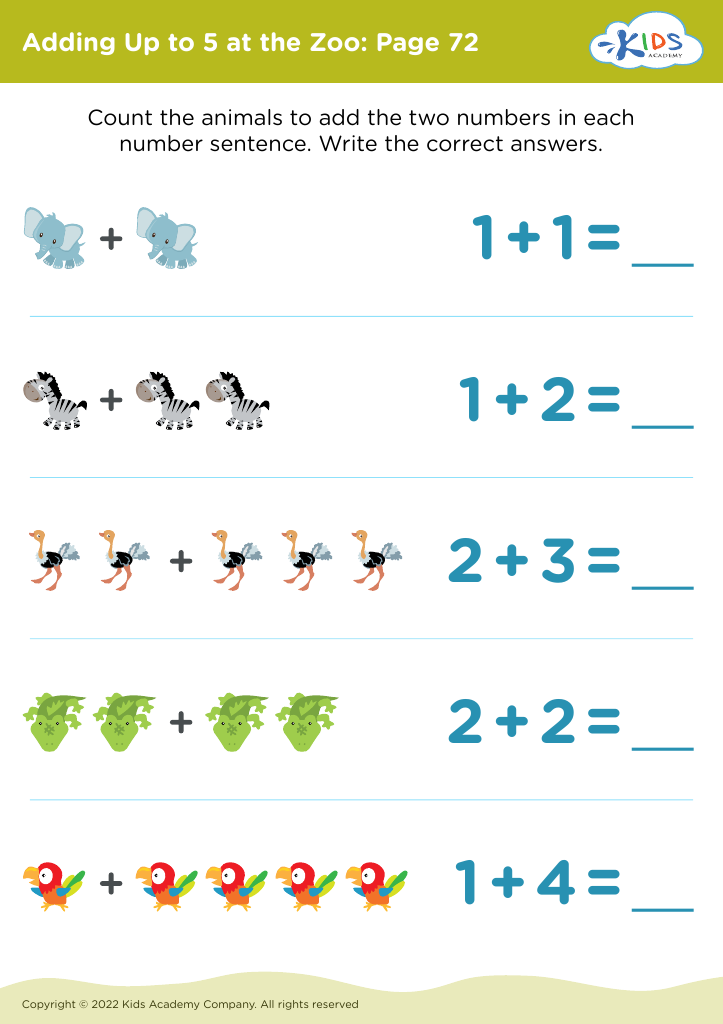
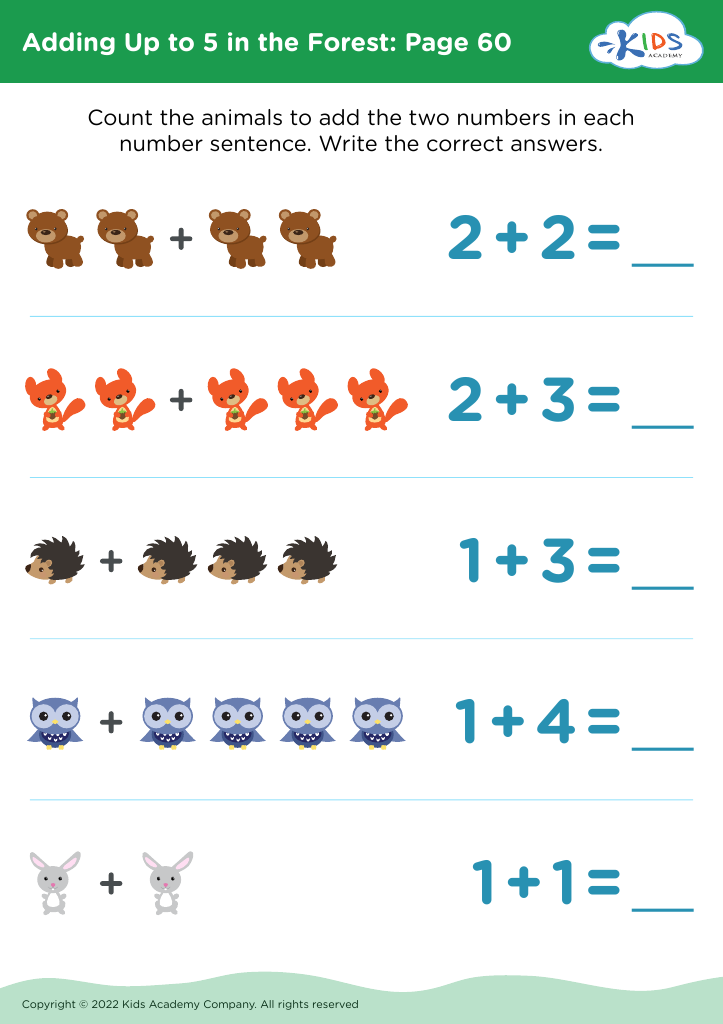
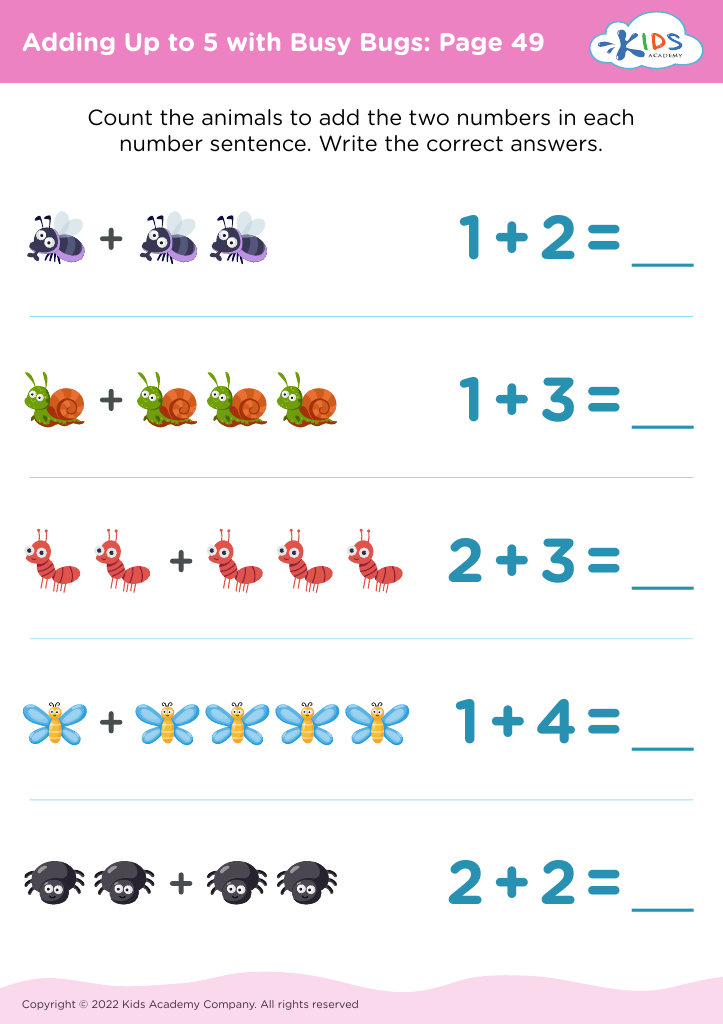
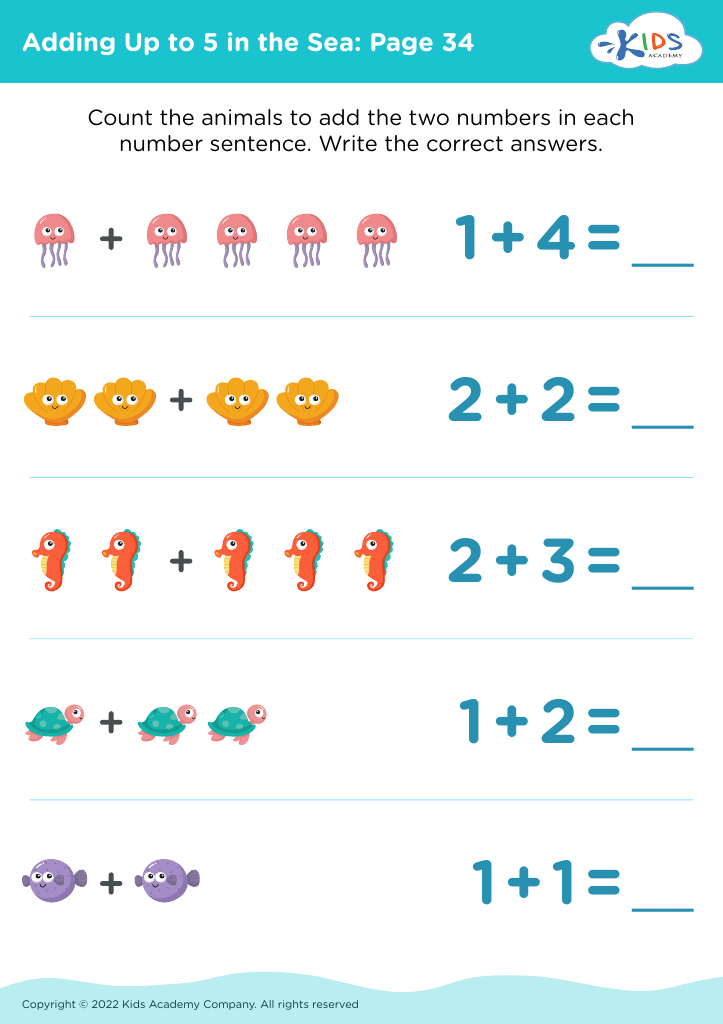
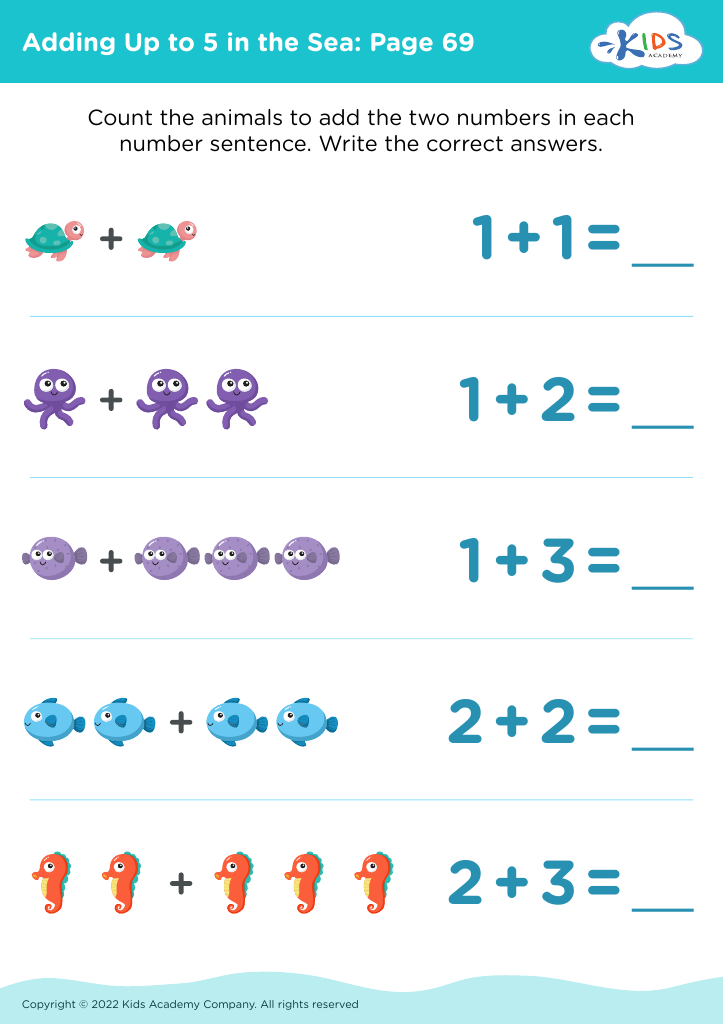
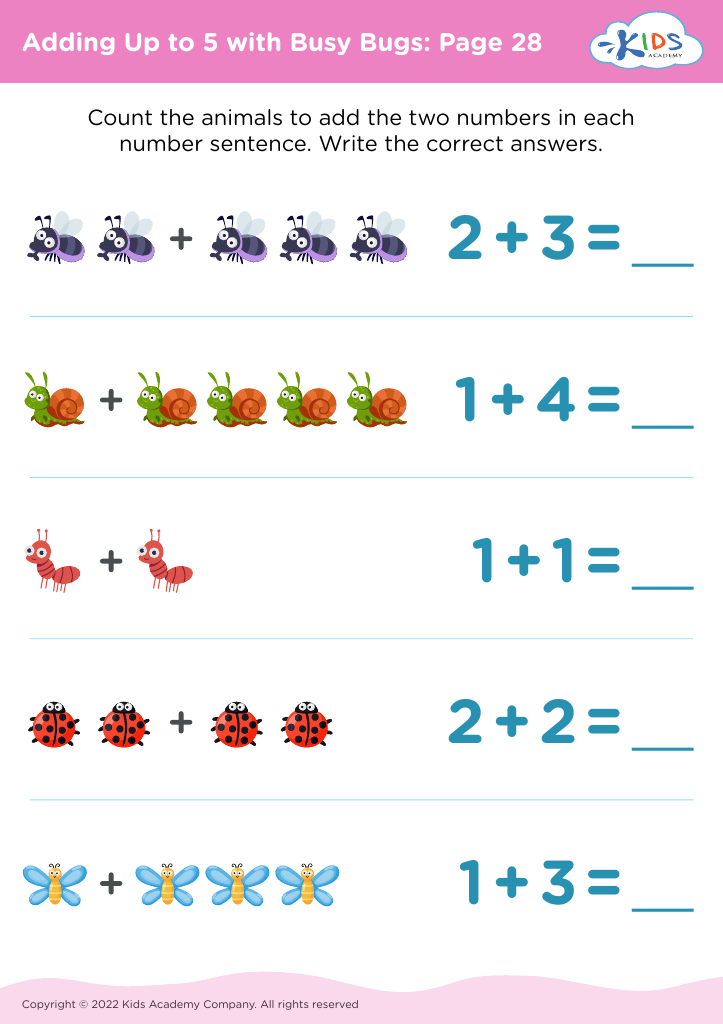
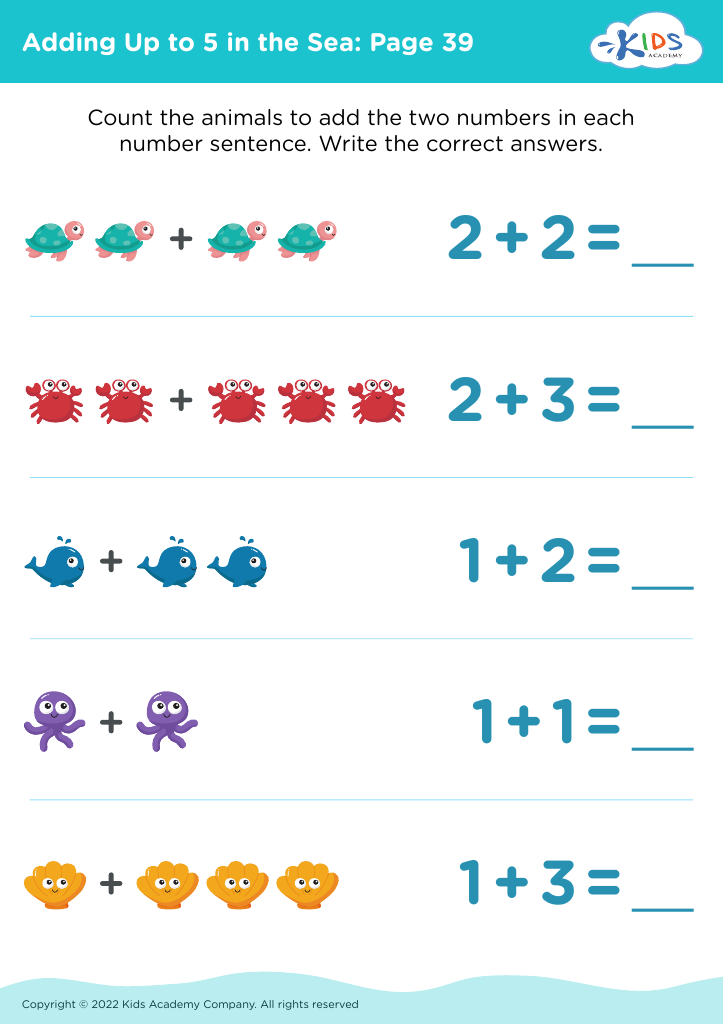
Enhance your child's cognitive development with our engaging "Adding Up to 5" worksheets, designed specifically for ages 4-5. These interactive activities cultivate early math skills while promoting critical thinking and problem-solving. Kids will explore simple math concepts through fun visuals and hands-on exercises that make learning enjoyable. Our worksheets are tailored to support developmental milestones, encouraging number recognition, counting, and basic addition. Perfect for home or classroom use, these resources aim to foster a strong foundation in early math while nurturing creativity and curiosity. Download the worksheets today and watch your little one's confidence soar in their mathematical journey!





.jpg)


Parents and teachers should be aware of the importance of cognitive development, particularly in skills such as "Adding Up to 5," as it forms the foundation for later mathematical understanding and learning. Around ages 4-5, children are at a critical stage where they start to explore numbers and basic arithmetic, which significantly influences their problem-solving skills, logical thinking, and everyday decision-making.
Engaging children in simple addition activities using visual aids, counting objects, or interactive games not only enhances their computational skills but also boosts their confidence. These early experiences shape their attitudes toward math, making them more likely to embrace mathematics and tackle challenges positively in later years.
Moreover, developing an understanding of numbers fosters a sense of achievement and can positively affect a child's self-esteem. Parents and teachers providing supportive learning environments enable children to explore and enjoy math, transforming it from a daunting task into an engaging experience.
Furthermore, children who grasp early mathematical concepts often perform better academically in the future. Recognizing and nurturing these cognitive skills not only enriches the child's educational journey but also prepares them effectively for the complexities of future learning and real-world applications of mathematics.








